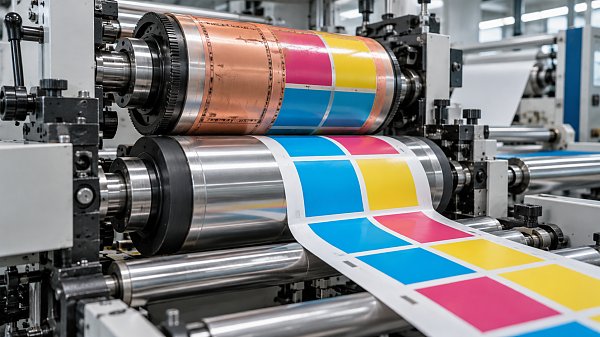
Why Color Measurement Systems Matter for Consistent Flexo Printing
A press can be mechanically stable, the plates can be correct, and the ink supplier can meet specification—yet a flexographic job may still drift away from the approved brand color. The change may be subtle at first: a red that becomes slightly warmer, a gray that gains a color cast, or a barcode background that no longer provides enough contrast. By the time the variation is obvious to the eye, a large quantity of packaging may already be affected.
This is why Color Measurement Systems matter in flexo printing. They turn color from a matter of visual judgment into a controlled production variable. For quality control teams, this means clearer acceptance criteria and faster decisions. For safety and compliance personnel, it provides documented evidence that printed packaging, labels, warnings, and traceability elements remain legible and consistent throughout production.
In corrugated packaging, folding cartons, flexible packaging, and commercial print work, color is rarely just decoration. It carries brand identity, product instructions, hazard communication, lot information, and machine-readable codes. A reliable measurement process helps ensure that these elements continue to work as intended from the first approved sheet to the final pallet.
Color consistency is a production control issue, not only a design issue
Flexographic printing is highly adaptable, but its many variables can make repeatable color challenging. Ink viscosity, pH in water-based ink systems, anilox roller condition, plate wear, substrate absorbency, drying behavior, press speed, doctor blade performance, and ambient conditions can all influence the final result. On uncoated corrugated board, changes in liner quality or moisture can further alter ink holdout and perceived color.
Operators often recognize a problem through experience. They may see that the print looks “too heavy,” “too dull,” or “not quite like the drawdown.” That experience is valuable, especially when a press is running under time pressure. However, visual assessment alone is not enough for a repeatable quality system. Human perception changes with lighting, viewing angle, fatigue, and surrounding colors. Two trained people can assess the same print differently, particularly when the deviation is small.
Color Measurement Systems provide a shared language. Instead of debating whether a blue “looks close,” the team can compare a measured result with an approved target and a defined tolerance. The discussion moves from opinion to evidence.
What a Color Measurement System actually measures
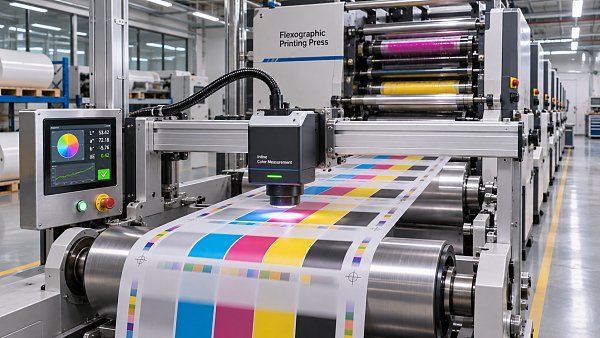
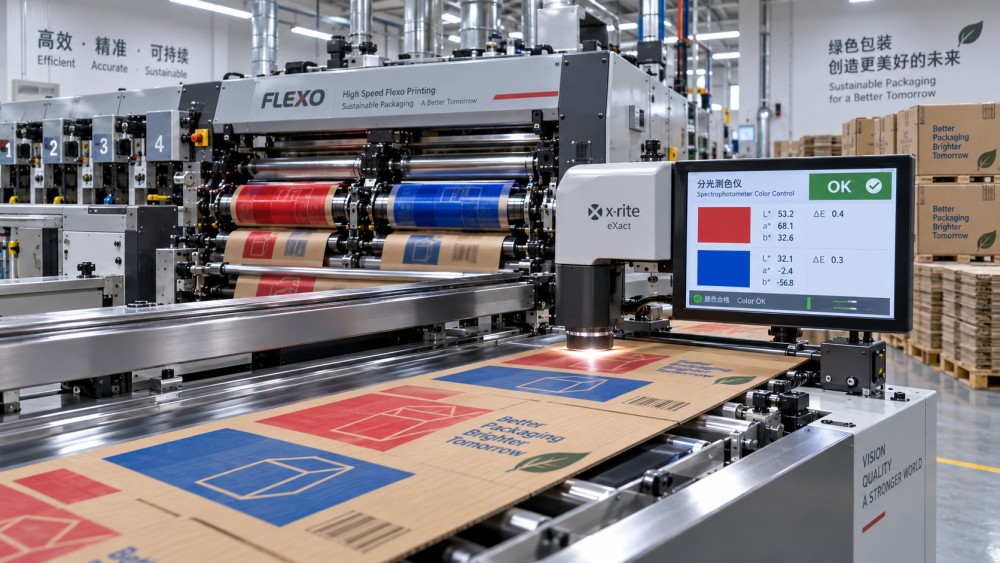
At its core, a color measurement system usually combines a spectrophotometer or densitometer, color management software, approved reference data, and a documented workflow. The exact configuration depends on the application, but the objective is the same: measure printed color consistently, compare it against a standard, and use the result to guide production decisions.
Many systems use spectral data to calculate color values in a recognized color space, commonly CIELAB. This makes it possible to express the difference between a production sample and a target as a numerical color difference, often referred to as Delta E or ΔE. A lower difference generally indicates a closer match, but the acceptable limit should never be treated as universal. Tolerance depends on the brand requirement, ink and substrate combination, viewing conditions, print process capability, and the role of the printed feature.
For process printing, teams may also monitor density, dot gain or tone value increase, trapping, print contrast, and gray balance. In flexo work, these measurements can reveal whether a color shift is linked to excessive ink film, plate pressure, anilox transfer, registration behavior, or another process condition. Measurement is not simply a pass/fail gate; it is a way to understand what the press is doing.
Why flexo presses benefit from measurable standards
A flexographic press is designed for productive, high-volume output, often across long runs or repeated jobs. That efficiency becomes a risk when color variation is noticed late. If a print team waits until an end-of-run inspection to discover that a spot color has moved outside tolerance, the cost can include wasted substrate, rework, delayed shipment, ink consumption, and difficult conversations with a customer.
With color measurement integrated into the pressroom routine, verification can occur at meaningful control points: during make-ready, after the first approved production samples, following an ink adjustment, after a roll or board change, at planned intervals during the run, and when a press stops and restarts. The best frequency is not necessarily the most frequent one. It should reflect the stability of the process and the risk associated with the job.
For example, a plain shipping carton with a single dark logo may require a different level of monitoring from pharmaceutical secondary packaging, retail-ready displays, or food packaging carrying tightly controlled brand colors and mandatory information. Quality teams should establish inspection plans that match real risk rather than applying one rigid routine to every product.
From approved target to practical pressroom action
A measurement system is only useful when the reference is trustworthy. The approved color target should be clearly defined before production begins. Depending on the workflow, it may be based on a signed physical standard, an approved drawdown, a digital color library, a previous production standard, or a customer-supplied specification. The team also needs to know which substrate, ink system, and viewing condition apply to that target.
This point is often underestimated. A color target that was approved on coated paper may not reproduce identically on kraft liner or a highly absorbent recycled board. Trying to force a visually identical match across fundamentally different materials can create unnecessary press adjustments and unstable results. In such cases, the better approach may be to establish substrate-specific targets and tolerances that preserve the intended brand appearance while respecting process reality.
When a result falls outside tolerance, the response should be structured. Check whether the instrument is calibrated and the sample was measured correctly. Confirm that the correct standard and job parameters are loaded. Then investigate likely process causes: ink condition, viscosity or pH, anilox cleanliness, doctor blade wear, plate mounting, impression setting, substrate change, drying, or contamination. A measured deviation tells the team that something has changed; process knowledge identifies what to correct.
Color control also supports packaging safety and traceability
For safety managers, consistent color measurement has relevance beyond aesthetics. Packaging frequently uses color to organize information and draw attention to warnings, instructions, handling symbols, tamper messages, and product identification. If a critical graphic becomes too light, too low in contrast, or visually confused with another element, the risk may extend beyond a brand complaint.
Barcode performance is a familiar example. A barcode is not judged only by whether it appears black enough to the eye. Print contrast, edge definition, quiet zones, registration, and substrate effects all influence scanning performance. A color measurement system does not replace barcode verification, but it can help maintain stable ink laydown and background conditions that support reliable code printing. The same principle applies to printed variable data, batch marks, and color-coded product differentiation.
Documented color records can also strengthen traceability. When a complaint arises, quality teams can review measurements taken at defined stages of the run, identify whether a trend occurred, and compare the affected production with approved limits. This does not eliminate the need for retained samples, inspection records, or corrective-action procedures. It does make those procedures more informative.
Common mistakes that weaken color measurement programs
The most common failure is buying an instrument without building a workflow around it. A handheld spectrophotometer left in a cabinet will not improve color consistency. The system needs assigned responsibility, calibration routines, sampling rules, approved standards, clear tolerances, and a way to communicate results between prepress, ink kitchen, press operators, and quality personnel.
Another mistake is measuring under inconsistent conditions. Samples should be taken from representative printed areas, on clean and dry material, with the same measurement geometry and backing method where applicable. Corrugated board deserves particular attention because flute structure, surface variation, and board thickness can influence readings. Teams should define where on the sheet or web measurements are taken and avoid comparing results collected through different methods.
It is also unwise to treat a single numerical tolerance as the whole quality decision. A job can technically meet a broad ΔE limit while still showing visible variation in a sensitive brand color, poor gray balance, or uneven appearance across a large solid area. Conversely, a small numerical difference may be acceptable if the visual result, customer standard, and intended use support that conclusion. Instrumental measurement and controlled visual evaluation should work together, not compete.
Choosing Color Measurement Systems for a packaging operation
The right system depends on the type of work being produced. A plant printing short, frequently changing jobs may value quick setup, intuitive job selection, and easy reporting. A high-volume corrugated operation may place greater emphasis on robust instruments, repeatable measurement on textured substrates, and integration with production data. A converter serving regulated markets may need secure records, batch-level reporting, and defined approval workflows.
Before selecting equipment or software, quality leaders should ask practical questions:
- Which colors or printed features cause the most disputes, rework, or customer complaints?
- Are standards available for every recurring job, and are they linked to the correct substrate?
- Can operators understand the result quickly enough to make timely adjustments?
- How will the plant manage instrument calibration, verification, and operator training?
- Does the system support the reporting and traceability expected by customers or internal quality procedures?
- Will measurement data be kept separate, or connected to job tickets, inspection records, and digital production management tools?
For many packaging plants, the most useful approach is not the most complex system. It is the system that can be used consistently on every relevant shift, across different operators, and under real production conditions.
A stronger link between quality, waste reduction, and customer confidence
Color measurement does not remove the craft from flexographic printing. Skilled operators still make the adjustments, recognize unusual press behavior, and balance quality with production needs. What measurement changes is the reliability of the decision-making process. It gives experienced people evidence they can act on, and it gives newer team members a clearer path to consistent work.
For commercial printers and corrugated packaging producers, this can reduce avoidable trial-and-error during make-ready, limit unnecessary ink corrections, and identify drift before it becomes a large-scale waste event. For brand owners, it supports a more consistent appearance across repeat orders, sites, and production periods. For quality and safety teams, it creates a more defensible record that critical printed packaging elements were monitored rather than assumed to be correct.
As packaging operations become more connected, Color Measurement Systems can also become part of a broader production-control environment alongside vision inspection, barcode verification, job management, maintenance alerts, and automated reporting. The goal is not to collect data for its own sake. It is to make color stability visible early enough that the plant can protect product quality, delivery performance, and material efficiency.
In flexo printing, consistency is built through disciplined control of many small variables. Color measurement gives those variables a measurable outcome. When standards are realistic, sampling is well planned, and teams know how to respond to deviations, color becomes less of a recurring uncertainty—and more of a stable, manageable part of the production process.
Related News
 How Do Flexo Wash-up Systems Reduce Ink Changeover Time?Discover how Flexo Wash-up Systems reduce ink changeover time, limit contamination, and improve press availability—and learn how to measure savings before investing.Print Fluidics Scientist
 How Can Flexo Wash-up Systems Reduce Press Downtime?Flexo Wash-up Systems reduce press downtime through consistent cleaning and faster changeovers. Discover how to prevent contamination and restart with confidence.Print Fluidics Scientist
 How Do Print Register Control Systems Improve Print Accuracy?Print Register Control Systems improve color alignment, reduce setup waste, and help prevent drift. Discover how they work and what to check for consistent print quality.Print Fluidics Scientist
 How to Choose Inline Color Measurement Systems for Flexo PressesChoose inline color measurement systems for flexo presses with confidence. Compare accuracy, substrate compatibility, integration, and production costs.Print Fluidics Scientist
 How to Choose a Printing Sleeve for a Flexographic PressChoose the right printing sleeve for your flexographic press. Compare fit, repeat length, materials and maintenance to improve print consistency.Print Fluidics Scientist
 How Impression Rollers Affect Flexographic Print QualityImpression Rollers can make or break flexographic print quality. Discover how to prevent common defects, protect substrates and improve consistency.Print Fluidics Scientist