Which Factors Matter Most in a CPCS Flexographic Press Comparison?
The greatest weight in a CPCS flexographic press comparison should go to saleable output on representative jobs, repeatable print quality, and the time lost between orders. Rated speed becomes useful only after the press demonstrates acceptable registration, color, drying, and substrate handling at that speed. Purchase price belongs in the evaluation, but a cheaper machine loses its advantage when routine jobs require slower running, excessive setup sheets, or repeated adjustment.
The priority changes with the production mix. Short runs place greater value on changeover and recovery after stops. Long repeat orders emphasize sustained speed and color stability. Corrugated post-printing adds board transport and crush control, while flexible packaging places different demands on web tension, drying, and ink compatibility. Establish these conditions before comparing individual specifications.
Define the production envelope before scoring machines
A comparison becomes unreliable when machines are evaluated against different materials or job assumptions. Start with a representative set of orders covering common work, difficult work, and commercially important exceptions. Record substrate construction, dimensions, print coverage, color count, minimum text size, barcode requirements, and the finishing route.
For corrugated sheets, include flute profile, caliper variation, warp, surface absorbency, and liner quality. For paper or film webs, document width, thickness, stretch behavior, coating, and surface treatment where relevant. A demonstration on smooth, flat material does not establish performance on the material that creates most production interruptions.
Machine architecture also sets the comparison boundary. Central impression, stack, and inline web presses have different transport arrangements; corrugated sheet-fed presses introduce feeding and sheet-support considerations. Compare machines against the same application requirements, while allowing different technical approaches to prove their results.
Measure registration through speed changes and restarts
A registration figure without test conditions offers little basis for selection. Establish whether the stated tolerance describes steady running, variation across the print width, repeat-to-repeat movement, or recovery after acceleration. Define the measurement method and acceptance limit against the actual artwork.
Registration errors have different causes. Movement between colors can arise from drive synchronization, plate mounting, web stretch, or sheet transport. Print-to-cut drift concerns the relationship between printing and converting. On corrugated board, inconsistent feeding or changes in sheet position can produce errors that registration controls alone cannot resolve.
Run fine reverses, small text, overlapping colors, and barcodes where they represent real work. Inspect both sides of the sheet or web width, and sample at several speeds. A press that produces one excellent sample after prolonged adjustment has demonstrated a narrower capability than a press that repeatedly returns to the same result.
Stops deserve explicit attention. Record the waste and time required to regain acceptable register and color after a planned interruption. If frequent stops are part of normal production, recovery behavior directly affects usable capacity.
Evaluate substrate handling and ink transfer together
Substrate compatibility is an operating range that needs evidence. On corrugated presses, excessive impression can improve apparent ink coverage while crushing flutes or increasing dot gain. Light pressure protects board structure but exposes weaknesses in ink transfer, plate selection, or surface consistency. Examine print quality alongside board condition.
Feeding trials should include the least cooperative material that remains within the agreed specification. Watch for doubles, skew, missed feeds, marking, and unstable sheet spacing. On web presses, observe tension stability during acceleration, deceleration, and roll changes where applicable. A stable web path at one speed does not establish control across the operating cycle.
Anilox selection must match the image and ink system. Cell volume influences the available ink film; line count alone does not describe transfer behavior. Heavy solids and fine screens create competing demands, so assess the proposed roller set against the actual job range. Confirm the volume units used in quotations before comparing values.
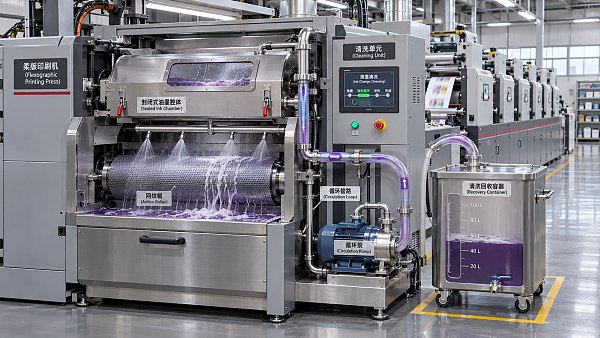
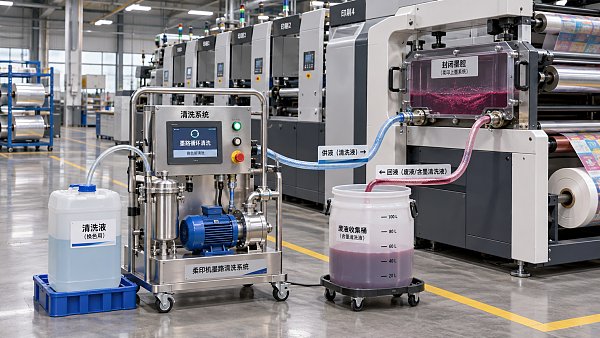
Ask how rollers are identified, cleaned, inspected, and exchanged. Plugged cells, wear, and inconsistent cleaning can resemble ink formulation problems. Doctor blade alignment, chamber sealing, and ink circulation also affect uniformity, especially across wider formats.
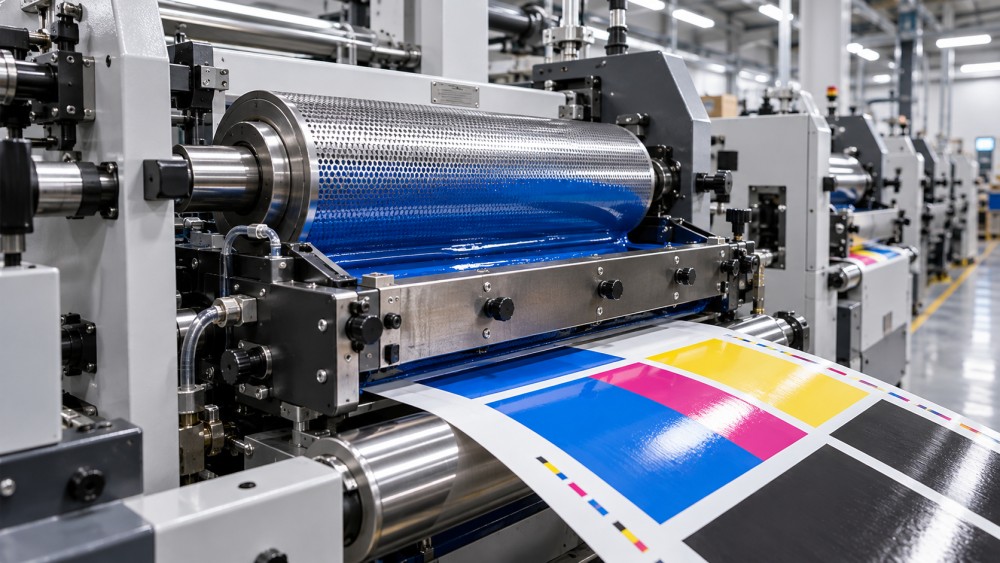
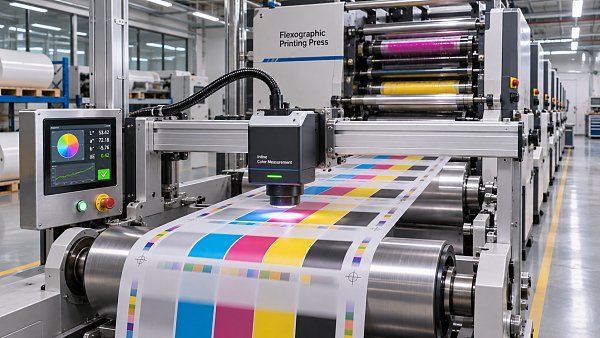
For water-based inks, assess viscosity, pH, temperature, and circulation under sustained running. For solvent-based or UV systems, evaluate the relevant drying or curing conditions and substrate compatibility. Color measurements should use an agreed method and consistent sample conditions; otherwise, differences in backing or measurement procedure can obscure the machine’s actual performance.
Drying capacity can set the real speed limit
Mechanical speed often exceeds the speed at which a particular ink and substrate combination produces acceptable output. Drying demand rises with ink coverage and deposited ink volume. Absorbent paper, coated surfaces, and films respond differently, so a light-coverage demonstration cannot establish performance for dense graphics.
Assess drying or curing after the material has passed through the next relevant process. Inspect for setoff, blocking, scuffing, adhesion loss, and substrate distortion as applicable. Surface dryness at delivery does not establish that the print will withstand stacking, rewinding, folding, or further converting.
Utility conditions belong in this assessment. Record the required electrical supply, airflow, exhaust, compressed air, and cooling arrangements for the offered configuration. An installation that lacks the necessary extraction or cooling capacity will restrict production regardless of the press specification.
Time the complete changeover, including the first acceptable output
Changeover claims often use different starting and finishing points. One figure might cover plate exchange; another includes cleaning, ink replacement, settings recall, register adjustment, and approval. Use a common definition: the interval from the last acceptable product of one job to the first acceptable product of the next, with readiness for stable production confirmed.
Demonstrate changes that resemble the schedule. A repeat order using stored settings is different from a new job with unfamiliar artwork. Changing between similar colors is different from cleaning a dark ink before a light shade. Include plate, anilox, substrate, and format changes where these occur routinely.
Record labor involvement as well as elapsed time. Tasks completed simultaneously during a demonstration may require staffing unavailable on the intended shift. Automation has value when it removes recurring work or reduces variation; its presence on an option list does not establish the size of that benefit.
Keep startup waste separate from steady-running rejects. Their causes and remedies differ, and combining them hides whether a press struggles during setup or loses quality after production stabilizes.
Connect inspection, maintenance, and downstream performance
Inspection equipment needs a defined response path. Detecting a defect is useful only when the system reliably identifies the affected product, initiates the agreed action, and preserves traceability. Establish which defects are detectable at production speed, how sensitivity is set, and what happens when an image or code cannot be read.
A camera that measures color-to-color registration does not automatically verify barcode quality, missing print, or print-to-die alignment. Demonstrate required functions individually. Record false rejects as well as missed defects because excessive rejection reduces saleable output and encourages sensitivity settings that weaken detection.
Downstream constraints can overturn a favorable press comparison. On a linked corrugated line, transfer stability, rotary die-cutting, folding, gluing, and stacking must support the intended rate. For separate processes, confirm that printed material retains the dimensional and handling characteristics needed at the next machine.
Maintenance access affects both planned service and fault recovery. Inspect access to ink chambers, guards, drives, bearings, and cleaning points. Identify which tasks require shutdown, specialist intervention, lifting equipment, or removal of adjacent assemblies. Service intervals should be accompanied by task descriptions and realistic access requirements.
Availability claims require consistent definitions. Distinguish scheduled production time, planned maintenance, breakdowns, setup, and waiting for materials. A single uptime percentage cannot explain whether stoppages originate in the press, its auxiliaries, or the surrounding production system. Spare-part availability and diagnostic access help establish the likely duration of an interruption.
Convert trial results into a defensible selection
Apply mandatory acceptance criteria before weighted scoring. Required substrate range, print quality, installation fit, and downstream compatibility are pass-or-fail conditions. A machine that fails one of these requirements should not recover its ranking through a high speed score or a low purchase price.
For the remaining candidates, assign weights according to the actual order mix. Avoid counting the same advantage twice: faster changeover already contributes to productive time, while lower startup waste contributes to material cost. Separate measured results from supplier declarations and unresolved assumptions.
A useful economic measure is total evaluated operating cost divided by saleable output. Keep the time period, product definition, and cost boundary identical. Include the costs relevant to the comparison, such as substrate losses, ink, plates, energy, routine maintenance, labor, and capital ownership. Normalize output to equivalent finished area or product quantities when formats differ.
Use sustained trial speed, observed changeover losses, and demonstrated quality yield in the calculation. Nameplate speed multiplied by scheduled hours overstates capacity when the schedule contains frequent changes or the dryer limits demanding jobs. Test how the ranking changes with shorter runs, more difficult substrates, or increased maintenance time; these scenarios expose dependence on optimistic assumptions.
The final acceptance record should specify the tested materials, artwork, ink system, speed, sampling method, waste definition, staffing, and installed options. Any untested requirement should remain an explicit open item with an agreed verification method. This gives the eventual installation a measurable performance reference and makes the comparison useful beyond the demonstration floor.
Related News
 How Do Flexo Wash-up Systems Reduce Ink Changeover Time?Discover how Flexo Wash-up Systems reduce ink changeover time, limit contamination, and improve press availability—and learn how to measure savings before investing.Print Fluidics Scientist
 How Can Flexo Wash-up Systems Reduce Press Downtime?Flexo Wash-up Systems reduce press downtime through consistent cleaning and faster changeovers. Discover how to prevent contamination and restart with confidence.Print Fluidics Scientist
 How Do Print Register Control Systems Improve Print Accuracy?Print Register Control Systems improve color alignment, reduce setup waste, and help prevent drift. Discover how they work and what to check for consistent print quality.Print Fluidics Scientist
 How to Choose Inline Color Measurement Systems for Flexo PressesChoose inline color measurement systems for flexo presses with confidence. Compare accuracy, substrate compatibility, integration, and production costs.Print Fluidics Scientist
 How to Choose a Printing Sleeve for a Flexographic PressChoose the right printing sleeve for your flexographic press. Compare fit, repeat length, materials and maintenance to improve print consistency.Print Fluidics Scientist
 How Impression Rollers Affect Flexographic Print QualityImpression Rollers can make or break flexographic print quality. Discover how to prevent common defects, protect substrates and improve consistency.Print Fluidics Scientist