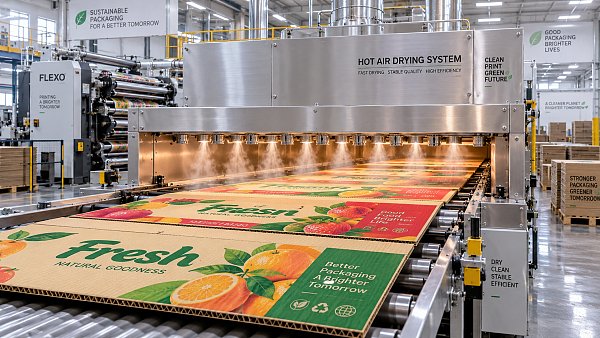
Selecting a print register system manufacturer requires more than comparing quoted prices or maximum press speed. Technical evaluators must assess performance under actual press, substrate, ink, and workflow conditions.
The strongest supplier is rarely the one promising the smallest registration number in isolation. It is the manufacturer that can maintain control through speed changes, web variation, repeat jobs, and frequent changeovers.
For flexographic, offset, digital hybrid, and corrugated packaging operations, registration capability directly influences color consistency, barcode readability, waste levels, throughput, and customer acceptance of finished packaging.
A disciplined evaluation should connect engineering specifications with measurable production outcomes. Compare accuracy, sensing, control response, integration, serviceability, data access, and evidence from installations similar to your own.
Start With Registration Performance Under Real Production Conditions
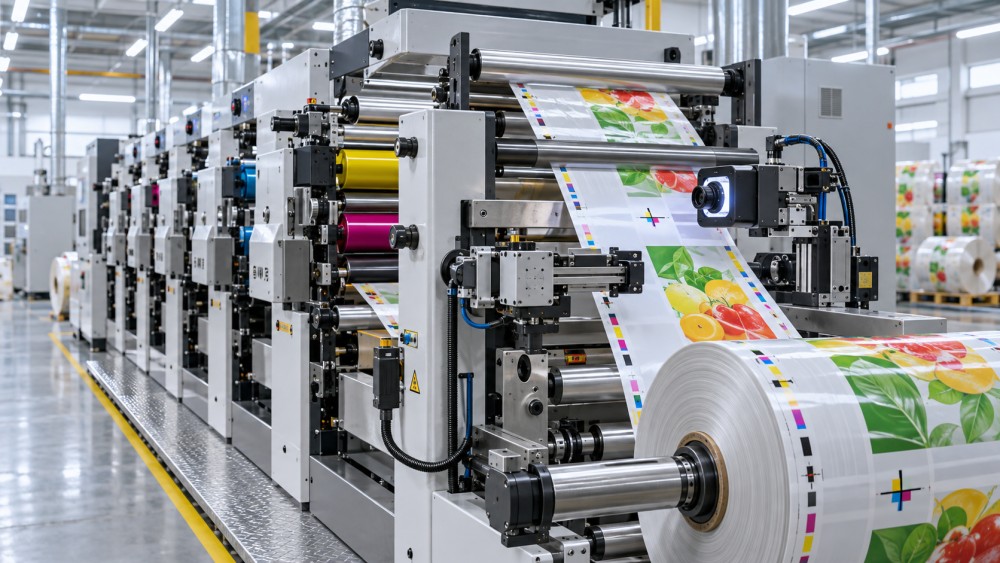
Registration accuracy is the first comparison point, but it should never be evaluated as a single brochure figure. Ask how accuracy is defined, measured, repeated, and maintained during production.
A supplier may state a correction precision in microns, yet that result could apply only to controlled laboratory conditions, stable substrates, moderate speed, and a limited operating range.
Technical evaluators should request performance data across the actual material mix. Paper grades, coated liners, recycled boards, films, metallized substrates, and laminated structures respond differently during printing.
Web stretch, moisture variation, thermal expansion, cylinder condition, plate mounting quality, and tension instability can all affect register. A capable system must identify and compensate for these disturbances.
Compare static accuracy with dynamic accuracy. Static performance describes correction after a machine reaches stable operation, while dynamic performance shows how well the system reacts during acceleration or disturbance.
Dynamic capability matters especially on high-speed flexographic presses, pre-print lines, and corrugated converting equipment. Production losses often occur during changing conditions rather than stable, ideal runs.
Ask each print register system manufacturer for test methods, sampling frequency, acceptable deviation thresholds, and results from similar applications. Vague claims of “high precision” are insufficient for capital approval.
Evaluate repeatability separately from absolute accuracy. A system may consistently hold a small offset, which operators can correct, but inconsistent drift creates waste and makes reliable color control difficult.
Registration needs also vary by product. Premium retail cartons, pharmaceutical packaging, security features, and fine graphics often require tighter tolerances than ordinary transport packaging or simple corrugated shipping cases.
Define acceptable tolerances by job category before contacting suppliers. This prevents overbuying advanced control technology where it adds little value, while avoiding under-specification for critical production requirements.
Compare Sensor Technology, Mark Recognition, and Inspection Capability
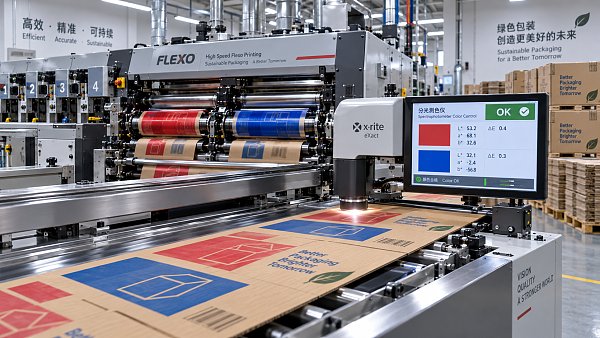
The sensing method largely determines what a register system can control. Compare camera resolution, lighting design, mark detection algorithms, contrast tolerance, and the physical location of sensors.
Registration marks are not always clean or consistent. Ink density changes, coating glare, substrate texture, dust, varnish, and print defects can reduce signal quality during long production runs.
Vision-based systems should reliably distinguish intended marks from printed artwork, scratches, board flutes, and random surface variation. Request demonstrations using representative samples rather than supplier-prepared test materials.
For flexographic packaging printing, assess whether the system detects both traditional register marks and image-based reference points. Image-based control may be valuable where visible marks are restricted.
Ask whether the system supports longitudinal, lateral, circumferential, and skew correction. Not every press needs every function, but missing control axes can limit value on demanding multicolor applications.
Lighting deserves close attention because it affects recognition stability. Adjustable illumination, multiple wavelengths, polarized light, and enclosed sensor arrangements can improve reliability with reflective or variable substrates.
Compare how the supplier handles poor mark quality. A useful system should provide confidence indicators, alarms, stored images, and clear diagnostic information instead of silently applying unreliable corrections.
Inline inspection integration is also important. Registration control corrects deviations, while inspection verifies finished output and identifies defects that may appear despite acceptable measured register values.
Where coding, serialization, or traceability is required, confirm that the platform can exchange events with vision inspection equipment. This is especially relevant for pharmaceutical cartons and regulated consumer packaging.
Look beyond hardware compatibility. The practical question is whether registration, inspection, and rejection data can be reviewed together to identify recurring press, plate, material, or operator-related issues.
Evaluate Response Time, Control Logic, and Press Integration
Fast sensing is not automatically useful unless the control loop can act quickly and predictably. Compare image acquisition, processing latency, command transmission, actuator response, and correction verification.
A print register system manufacturer should explain how its controller avoids overcorrection. Aggressive corrections can create oscillation, while conservative settings may allow unacceptable waste before the process stabilizes.
Ask whether control parameters adapt automatically to press speed, substrate behavior, job type, and operating mode. Fixed settings can be adequate for simple work but become burdensome across varied packaging orders.
Integration with existing machinery is a major technical and commercial risk. Confirm communication protocols, available interfaces, encoder compatibility, servo access, and responsibility for system-level commissioning.
Document which supplier owns each boundary. The register-system provider, press builder, automation integrator, and plant engineering team should agree on controls access, wiring, mechanical interfaces, and acceptance testing.
For older presses, evaluate retrofit feasibility carefully. A technically capable sensor may deliver weak results if the existing drive system, bearings, web handling, or plate cylinders cannot respond consistently.
Review actuator architecture as closely as the camera. Registration control may use servo motors, lateral adjustment units, compensators, plate-cylinder positioning, or web-guiding devices, each with different limitations.
Consider failure behavior. If a sensor loses a mark or the controller communication fails, operators need a safe, understandable fallback mode that prevents uncontrolled correction or unnecessary press stoppage.
Integration should include the operator interface. Screens must show current deviation, correction direction, alarm priority, production status, and troubleshooting information without forcing operators through confusing configuration menus.
During supplier discussions, request a controls architecture diagram and a signal list. These documents reveal whether integration assumptions are realistic before installation work begins and schedules become constrained.
Test Compatibility With Your Full Print and Converting Workflow
Registration performance should be assessed across the complete workflow, not only at the print unit. Die-cutting, creasing, foil stamping, laminating, folder gluing, and coding can introduce downstream alignment risks.
In folding carton production, printed-image alignment with die-cut and crease positions can be as important as intercolor registration. A technically accurate print may still fail when converting alignment drifts.
Corrugated packaging creates additional challenges because board caliper, warp, flute profile, and sheet handling vary. Confirm whether the proposed system is proven on the relevant corrugated printing configuration.
For pre-print applications, web-register control must account for later corrugating conditions. The value of stable print register depends on maintaining usable alignment after bonding, slitting, scoring, and conversion.
Ink and coating compatibility must also be reviewed. Water-based inks, UV inks, metallic effects, varnishes, and low-contrast graphics may affect sensor recognition and register-mark design requirements.
Ask whether software stores job recipes. Repeatable job settings can reduce setup time, support consistent restarts, and prevent experienced operators from becoming the only source of process knowledge.
Recipe management should include permissions and revision history where quality requirements are strict. This helps plants determine which settings were used when a customer complaint or process deviation occurs.
Evaluate compatibility with production management systems as well. Register data can support job costing, waste analysis, maintenance planning, quality reporting, and continuous improvement when it is available in usable formats.
Open connectivity is preferable to isolated data islands. Confirm support for the plant’s industrial network, data export requirements, cybersecurity policy, and preferred connection to MES or production reporting tools.
A supplier that understands the whole workflow can recommend appropriate boundaries. That may mean a simpler system for stable single-purpose work or a broader control platform for variable, traceable production.
Compare Reliability, Maintenance Burden, and Service Support
Long-term reliability often creates more value than a marginal difference in purchase price. Lost production from unstable registration can consume savings quickly through waste, rework, delayed deliveries, and labor.
Ask for component information, expected service intervals, sensor cleaning requirements, environmental limits, and spare-part availability. Packaging plants are dusty, humid, and often subject to vibration and temperature variation.
Inspect the physical design of cameras, enclosures, cables, mounting brackets, and adjustment mechanisms. Robust mounting is essential because vibration or accidental movement can undermine precise measurement.
Maintenance should be achievable by plant personnel. Compare calibration procedures, diagnostic tools, replacement time, remote support capability, documentation quality, and the availability of local trained service engineers.
Request a clear service-level commitment. Important details include response times, remote-access procedures, spare-parts stocking locations, escalation paths, software support periods, and charges after warranty expiration.
Software lifecycle management is increasingly important. Confirm how firmware updates are validated, whether older hardware remains supported, and how the supplier handles cybersecurity patches without disrupting production.
References should be relevant rather than numerous. Speak with plants using comparable presses, speeds, substrates, job lengths, and operating patterns, then ask about uptime, support responsiveness, and actual waste reduction.
Pay particular attention to difficult operating periods. Reference users can explain how the system behaves during startup, frequent job changes, defective marks, operator turnover, and unplanned equipment interruptions.
Training should cover more than basic operation. Operators, maintenance technicians, process engineers, and quality teams need role-specific instruction so diagnostic capability remains inside the plant after commissioning.
Assess supplier stability as part of risk management. A manufacturer with a sustainable installed base, clear product roadmap, and accessible technical support is generally safer for systems expected to operate for years.
Calculate Value Through Waste, Uptime, and Changeover Performance
The correct investment decision compares lifecycle economics, not equipment price alone. Registration systems affect setup waste, running waste, restart losses, labor input, customer claims, and achievable production capacity.
Build a baseline from current performance before evaluating proposals. Measure average setup sheets, register-related rejects, correction time, quality holds, repeat-job startup time, and waste by product category.
Then ask suppliers to state expected improvements and assumptions. Their proposal should identify which process conditions must be present for promised gains, rather than presenting generic savings percentages.
Short-run packaging operations may gain most from faster setup and repeatable recipes. High-volume operations may gain more from stable running register, reduced operator intervention, and fewer quality-related stoppages.
Include material cost accurately. Paperboard, linerboard, specialty substrates, ink, coating, plates, adhesive, energy, and disposal costs can make a small waste reduction financially significant over annual volume.
Labor savings should be treated realistically. Automation may not always reduce headcount, but it can move skilled operators from repetitive correction work toward quality monitoring, preparation, and higher-value tasks.
Consider revenue protection as well. Stable registration supports brand appearance, readable barcodes, accurate legal information, and dependable delivery performance, all of which protect customer relationships and contract margins.
Use a formal acceptance plan before issuing an order. Define target substrates, speeds, colors, tolerance limits, test duration, reject measurement, alarm handling, and the conditions that constitute successful performance.
Acceptance testing should simulate normal work, including speed changes and job transitions. A short demonstration on one ideal sample does not prove the system will meet plant-wide production expectations.
A strong commercial comparison converts technical differences into operating consequences. This allows engineering, production, quality, and finance teams to evaluate the same decision using shared evidence.
Use a Structured Supplier Comparison Before Making the Final Choice
Create a weighted comparison matrix instead of relying on demonstrations or sales presentations. Assign priorities based on your actual risk profile, production mix, quality requirements, and planned equipment life.
Typical categories include accuracy, dynamic response, mark recognition, actuator compatibility, workflow integration, uptime, maintenance, service coverage, data access, installation risk, and total cost of ownership.
Weight the categories carefully. A high-speed packaging plant producing regulated cartons may prioritize inspection integration and traceability, while a simple converter may place more weight on serviceability and affordability.
Require every bidder to answer the same technical questionnaire. Standardized responses make omissions visible and reduce the tendency to compare polished marketing language with detailed engineering commitments.
Include site-visit findings and reference interviews in the scoring process. Practical observations about installation quality, operator use, and support behavior frequently reveal more than product specifications alone.
Do not select solely on a low purchase price or an impressive maximum speed. The best print register system manufacturer is the one that can prove stable, supportable performance in your specific process.
Technical evaluators should also consider future requirements. New substrates, shorter runs, more demanding graphics, connected production systems, and tighter traceability rules can change what represents adequate capability.
Choosing a scalable platform may be justified when expansion is likely. However, avoid paying for functions that cannot be integrated, maintained, or used effectively by the current operating team.
The final recommendation should clearly state assumptions, residual risks, validation requirements, and expected operational benefits. This makes the investment decision defensible long after the supplier selection meeting ends.
Conclusion
Selecting a print register system manufacturer is fundamentally a production-risk decision. Accuracy matters, but sustained performance depends equally on sensing, control response, press integration, maintenance, and qualified service support.
The most useful comparison combines technical trials, workflow compatibility checks, reference evidence, and lifecycle cost analysis. By testing suppliers against real operating conditions, evaluators can reduce waste and protect quality.
A well-matched register system improves more than print alignment. It strengthens repeatability, accelerates changeovers, supports traceability, and gives packaging and commercial printing operations a more dependable basis for growth.