What to Compare Before Investing in Flexographic Presses
It usually starts with a deceptively simple question in a meeting: should the next press purchase focus on speed, print quality, lower labor dependence, or lower waste? The problem is that Flexographic Presses often look comparable on a brochure. Two machines may appear close in format, color stations, and quoted output, yet behave very differently once they are asked to run mixed jobs, maintain color across shifts, or switch from one substrate to another without creating piles of setup waste.
That gap between brochure comparison and production reality is where many buying discussions become difficult. If you are trying to justify capital spending, the risk is not only choosing a machine that is too expensive. It is also choosing one that quietly creates recurring cost through longer changeovers, unstable ink transfer, difficult maintenance access, or poor fit with the jobs you actually run. A better buying process starts by comparing the press through the daily situations it will face, not through headline claims alone.
One useful way to approach the decision is to imagine a normal production week rather than a factory ideal. Short runs may sit next to repeat jobs. One customer may expect tight brand color control, while another may require reliable print on recycled or uneven substrates. At the same time, operators still need to clean, change plates, manage anilox rolls, verify registration, and keep output moving. When viewed from that angle, the comparison becomes much clearer.
Start with the jobs that create the most friction
A common mistake is to evaluate a press around the easiest work in the plant. That makes almost any machine look acceptable. A more realistic method is to identify the jobs that currently cause the most delay, spoilage, rework, or operator stress. Those are the jobs that reveal whether a new investment will improve operations or simply move the same problems to a newer platform.
For some operations, the friction point is frequent SKU changeover. For others, it is maintaining stable print on corrugated board with variation in surface profile and absorbency. In labels or folding carton work, the issue may be finer graphics, tighter register tolerance, or curing behavior that affects downstream converting. Before comparing machine models, write down where time is being lost now: setup, color matching, drying, substrate handling, defect detection, or maintenance stoppages. Without that, the press selection process tends to drift toward whichever option sounds more advanced.
Do not treat maximum speed as production speed
Quoted speed matters, but only in context. A press rated for very high output can still underperform in practical terms if the machine slows down significantly on the substrates you use most, if drying cannot keep up with coverage levels, or if operators need too much time to stabilize color after each restart. The better question is not “How fast can it run?” but “At what speed can it run consistently while producing sellable work?”
This is where print process details matter. In flexo, stable ink transfer depends on the interaction between the anilox, doctor blade system, plate, ink characteristics, impression setting, and substrate behavior. If the machine design supports repeatable control of those variables, speed becomes usable. If not, headline speed becomes a number that looks good in procurement documents but does little for real OEE.
When reviewing Flexographic Presses, ask how the press holds registration and color density during acceleration, deceleration, and longer runs. Ask what happens when the job changes from a straightforward design to one with larger solids, finer text, or more demanding brand colors. These are the conditions that expose whether the machine has enough control depth for your workload.
Substrate range is often more important than buyers expect
Many buying teams underestimate how much future flexibility matters. A press that runs one substrate family very well may become limiting when packaging demand changes, sustainability requirements tighten, or customers ask for different paper-based formats. The packaging market does not stay still, and machine choices that seem efficient for today’s mix can narrow options later.
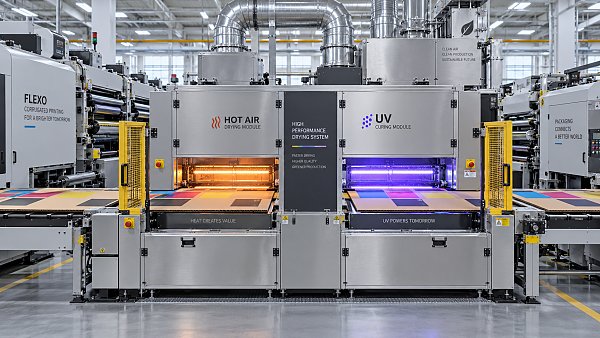
That is why substrate handling should be compared in practical terms. How stable is web tension or sheet transport across lighter, heavier, smoother, or more absorbent materials? How well does the inking and drying configuration adapt to aqueous or UV systems if your application range may shift? Can the press maintain print quality when board properties vary from batch to batch? These are not technical side notes. They directly affect waste, rejections, and operator intervention.
For operations tied to corrugated or paper-based packaging, this matters even more because surface inconsistency and flute-related challenges can turn a seemingly capable press into a frequent source of compromise. A machine should not only print the sample shown at the sales stage. It should handle the variability that appears in normal procurement and daily production.
Automation is worth comparing line by line, not as a general claim
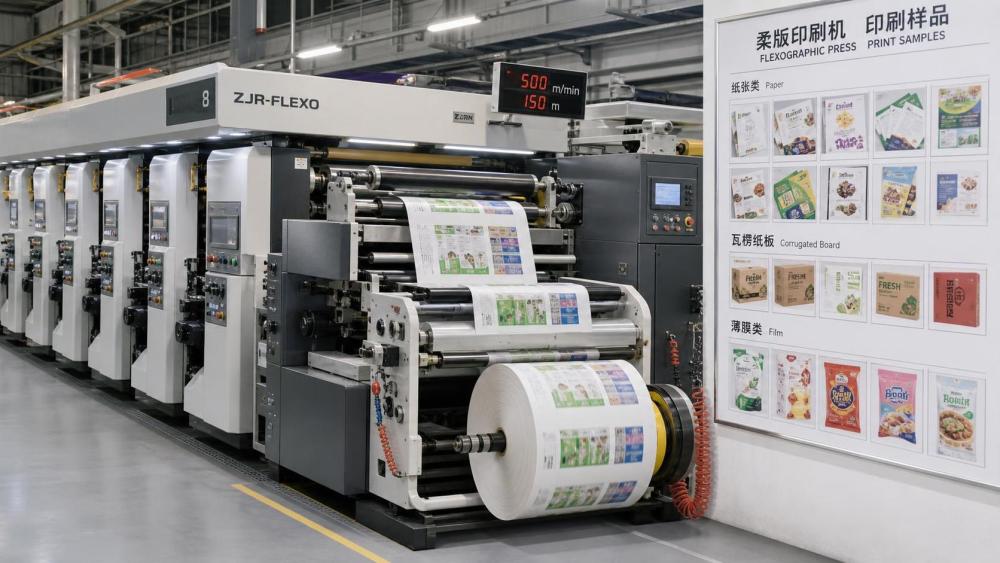
Automation can reduce labor dependency and setup variability, but the term itself is too broad to be useful unless it is broken down. One press may offer automated registration, preset impression settings, sleeve handling assistance, job memory, viscosity control, camera-based inspection, or wash-up support. Another may advertise automation while leaving several setup-critical tasks fully manual.
The difference becomes obvious during changeover. If your production relies on many short or medium runs, automation depth can have more value than a small increase in top speed. Less manual adjustment usually means less interpretation by individual operators, fewer restart corrections, and more predictable output from shift to shift.
Still, automation should not be evaluated as a feature race. Some plants buy advanced functions they rarely use because the workflows around them were never prepared. It is worth asking whether the press can be integrated into the discipline your team already has or is willing to build. A highly automated press still needs process ownership, stored job standards, controlled anilox management, and consistent prepress inputs. Without that, extra functions may sit underused while maintenance complexity grows.
Waste control begins before the first saleable sheet
In procurement discussions, waste is often reduced to substrate cost per job. The more expensive issue is setup spoilage and restart spoilage repeated across months and years. Small differences in makeready behavior can become a major operating cost, especially when runs are shorter and versioning is common.
Compare how each press supports faster achievement of sellable print. This includes repeatable anilox selection, accessible washing systems, stable doctor blade chambers, registration control, and visibility into defect causes. If one machine needs more trial-and-error to hit acceptable color, that inefficiency will continue long after the purchase order is signed.
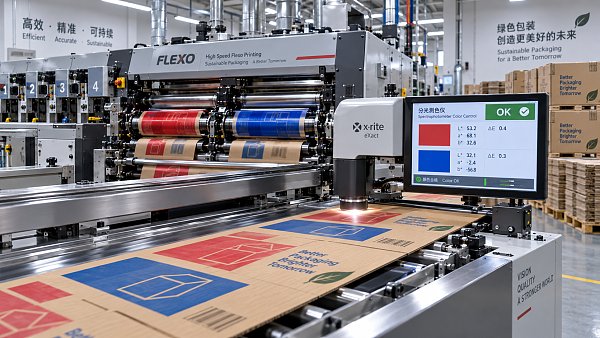
Decision-makers also benefit from looking beyond the press alone. In some environments, print inspection and coding verification play a significant role in limiting waste from missed defects. High-speed line-scan inspection or integrated monitoring can help identify color shift, registration drift, or print inconsistency earlier, especially where packaging compliance or serialization accuracy is sensitive. That does not replace a sound press choice, but it affects the total comparison because defect containment is part of production economics.
Maintenance access tells you a lot about long-term ownership
Maintenance rarely dominates the early buying conversation, yet it often shapes daily satisfaction after installation. A press that performs well on trial day can still become frustrating if cleaning is awkward, wear components are hard to reach, or calibration tasks require too much downtime. Maintenance design affects uptime in ordinary, repeated ways that do not always appear in technical presentations.
When comparing machines, look closely at access to the inking system, print stations, drying components, drive areas, and wash-up zones. Ask what routine maintenance looks like at operator level and what tasks need specialist intervention. Also ask how the machine behaves when something minor goes wrong. Can staff identify the issue quickly, or does troubleshooting depend heavily on external support?
This is also the point where spare parts logic and service structure matter. Not because every plant wants a premium service contract, but because uncertainty around parts availability or troubleshooting can turn a short stop into a long disruption. A lower initial purchase price can lose its advantage if maintenance demands are underestimated.
Print quality comparison should be tied to your commercial risk
Some buyers compare print quality in abstract terms, as if every improvement has the same business value. It does not. The right level of print capability depends on what happens when quality drifts. If your work includes demanding brand graphics, retail-facing packaging, barcodes, or pharmaceutical-related print control, inconsistency carries more than aesthetic consequences. If the output is simpler transport packaging, the economic threshold may be different.
That means the evaluation should focus on the print risks that matter in your order book. Fine line work, solids, trapping behavior, registration stability, repeatability on re-runs, and compatibility with inspection systems all deserve attention, but not equally in every plant. A disciplined comparison links print performance to the consequences of failure, not just to visual preference during a sample review.
Look at the press as part of a converting flow
A press may look efficient in isolation but create problems downstream. Drying conditions can affect die-cutting or gluing performance. Register variation can complicate converting accuracy. Curl, marking, or surface damage can slow later stages. If the printed output feeds flatbed die-cutters, folder gluers, coding stations, or vision inspection, the press should be judged by how calmly the whole chain runs afterward.
This is especially relevant in packaging environments where equipment acts as a sequence rather than standalone islands. A press choice that improves image quality but introduces unstable sheet or web behavior may not improve the plant result. Buyers who compare machine investments in isolation often miss this. Buyers who compare them in relation to the full line usually make better decisions.
Where outside technical intelligence can help
Some teams already know their pain points but struggle to translate them into machine comparison criteria. In those cases, structured technical intelligence is often more useful than another round of supplier presentations. Detailed understanding of ink transfer behavior, anilox function, drying limits, substrate variability, changeover mechanics, and OEE loss points can help narrow the evaluation to what will actually affect operating cost.
For businesses working around corrugated systems, flexo printing, die-cutting, folder gluing, or inspection-heavy packaging, external industry analysis can also help connect press decisions to wider production realities such as waste control, compliance pressure, and packaging-line coordination. That kind of information is most useful when it stays practical: not telling buyers what to purchase, but helping them compare options with fewer blind spots.
A more reliable way to make the final comparison
By the time you are down to a short list, the most helpful question is often the simplest one: which press is most likely to produce acceptable work repeatedly, with the least operational strain, across the jobs that matter most? That question naturally brings together the right factors: stable quality, realistic throughput, manageable waste, accessible maintenance, suitable automation, and fit with your substrate mix.
If one machine looks impressive mainly under ideal conditions while another looks steadier across imperfect but normal conditions, the steadier option often deserves more attention. Press investment is rarely won or lost on a single feature. It is usually decided by whether the machine remains predictable when orders vary, operators rotate, materials change, and schedules tighten.
So before investing in Flexographic Presses, compare the things that show up after the installation excitement fades: how quickly the press reaches sellable output, how well it tolerates substrate variation, how much operator judgment it still depends on, how easily it can be maintained, and how cleanly it supports the rest of the packaging process. That is where the real cost difference usually lives, and it is also where a better decision becomes easier to defend.
Related News
 How an Impression Roller for Flexo Printing Affects Print QualityDiscover how an impression roller for flexo printing influences ink transfer, dot gain, alignment, and print consistency. Learn practical setup and troubleshooting tips.Print Fluidics Scientist
 Why Color Measurement Systems Matter for Consistent Flexo PrintingColor Measurement Systems help flexo printers achieve consistent brand colors, reduce waste, improve traceability, and protect packaging quality across every production run.Print Fluidics Scientist
 What to Check Before Choosing a Print Dryers Supplier for Your PressPrint dryers supplier selection guide: compare drying methods, press integration, energy use, maintenance, safety, and support to improve print quality and uptime.Print Fluidics Scientist
 How to Compare Web Tension Controller Manufacturers for Flexo PressesWeb tension controller manufacturer comparison guide for flexo presses: assess stability, sensing, integration, service, and real-world substrate performance.Print Fluidics Scientist
 How Hot Air Print Dryers Improve Ink Drying on Flexo LinesHot air print dryers improve flexo ink drying with balanced airflow, controlled heat, and reliable results for faster packaging production.Print Fluidics Scientist
 How to Choose a Plate Cylinder Manufacturer for Reliable Print QualityChoose a reliable plate cylinder manufacturer with proven precision, balance control, material expertise, and press compatibility for consistent print quality.Print Fluidics Scientist