What to Check Before Choosing a Print Dryers Supplier for Your Press
What to Check Before Choosing a Print Dryers Supplier for Your Press
A print dryer is easy to underestimate during a press project. It often appears late in the equipment discussion, after print units, anilox rolls, registration systems, feeders, and delivery sections have already received most of the attention. Yet drying performance can decide whether a press reaches its expected output, whether ink stays stable from the first pallet to the last, and whether downstream converting runs smoothly or becomes a source of rejects.
For commercial printers, corrugated plants, carton converters, and packaging engineering teams, selecting a print dryers supplier should not begin with a quotation for heater capacity. The better starting point is the production condition the dryer must support: substrate type, ink chemistry, press speed, print coverage, repeat length, line layout, job mix, and the quality risks that matter to the finished package. A dryer that performs well on coated paper with moderate coverage may behave very differently on porous corrugated board, recycled liner, metallized stock, film-laminated carton, or a job with heavy solids and frequent stop-start operation.
The practical question is not simply, “Can this unit dry ink?” Nearly any dryer can do that under favorable conditions. The question is whether it can dry the actual work consistently, without damaging the sheet, distorting the board, creating odor concerns, overloading plant utilities, or forcing the press to slow down whenever the job becomes difficult.
Start with the Ink, Substrate, and Production Window
Before comparing suppliers, document the production window in enough detail that a technical team can make a meaningful proposal. “Water-based flexo on corrugated” is not sufficient. Water-based ink on light test liner, for example, may require a different balance of heat and airflow than the same ink on a heavy recycled board with variable moisture. A UV system raises another set of questions: lamp type, curing dose, heat exposure, shadowed areas, substrate sensitivity, and whether the ink, coating, adhesive, and any later converting process are compatible.
Ask the supplier to address the most demanding jobs, not the average ones. These may include high-coverage solids, dark colors, dense varnishes, multi-color work, or orders where the printed sheet moves directly into die-cutting, folder gluing, stacking, or coding. If the print is technically dry but still prone to set-off in the stack, scuffing at the die-cutter, or poor glue adhesion, the dryer has not solved the real production problem.
This is particularly relevant in packaging plants handling short runs and frequent order changes. A system may achieve good results after a long stabilization period, but that offers limited value if operators need to change board grades, ink coverage, or job conditions several times in one shift. Review how drying recipes are stored, recalled, adjusted, and protected from unauthorized changes. The operator interface matters more than many project teams expect.
Drying Method Must Match the Press, Not the Brochure
A supplier may offer hot-air, infrared, UV, LED-UV, or combined drying arrangements. None is universally “best.” Each method has operating boundaries, and those boundaries become clearer when viewed in the context of the press line rather than as a stand-alone component.
Hot-air drying depends heavily on air volume, temperature control, nozzle design, exhaust balance, and dwell time. It is often discussed in terms of heat, but airflow management deserves equal attention. Inadequate exhaust can leave moisture or solvent-laden air around the sheet; excessive airflow or poor nozzle positioning can create flutter, cooling issues, or unstable sheet travel. On corrugated board, the engineering team should look carefully at how the dryer may affect moisture balance and board flatness. A flat sheet at press delivery is more valuable than a nominally fast drying result that creates warp later in converting.
Infrared can provide rapid surface heating, but it should be assessed with care on heat-sensitive substrates or work containing large solid areas. UV and LED-UV systems require equally disciplined review. The curing source, reflector or optics condition, cooling method, monitoring arrangement, and access for maintenance all affect long-term performance. For packaging applications, project teams should also confirm ink and coating supplier guidance, especially where food-contact requirements, odor expectations, or migration-related risk must be managed through the full packaging specification.
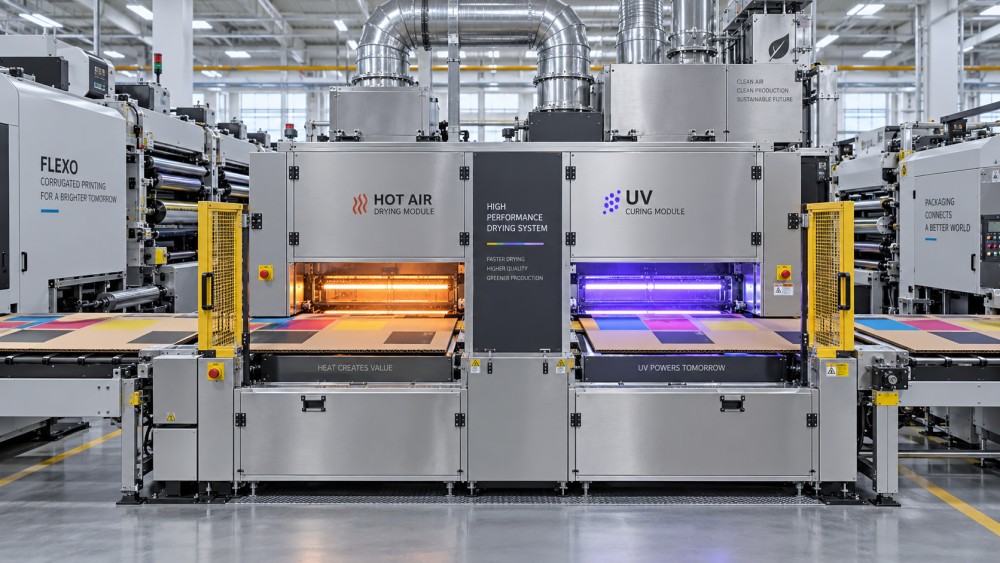
A useful supplier discussion includes a process map: where ink is applied, where drying occurs, how the substrate travels, where heat is removed, where exhaust leaves the building, and what happens before the next print unit or finishing station. This often exposes issues that are invisible in a standard quotation.
Check Integration Points Before Promising Any Press Speed
Dryer capacity cannot be separated from press integration. A technically capable drying module may still become a commissioning problem if it does not communicate correctly with press speed, emergency-stop logic, web or sheet transport, interlocks, ink supply equipment, and plant extraction systems.
The supplier should be able to explain how the dryer reacts during acceleration, deceleration, press stops, and emergency conditions. This is not an academic concern. Heat remaining on a stationary substrate, delayed air shutdown, or an unclear restart sequence can create waste and operator risk. Ask for the control philosophy in practical terms: what signals the dryer receives, what it controls, what alarms it generates, and what the press can continue doing if a dryer fault occurs.
Physical integration deserves the same attention. Measure available length, service clearance, access doors, cable routing, duct routes, roof penetrations, and space for filter replacement or lamp changes. In a crowded carton or corrugated plant, the least expensive dryer can become the costliest option if building modifications, exhaust ducting, guarding changes, or press relocation are discovered after the purchase order is issued.
For retrofit projects, obtain current press drawings where possible and verify them on site. Older machines often have undocumented modifications. A competent print dryers supplier will want information on existing electrical supply, compressed air, ventilation, controls, and mechanical mounting points before committing to a final arrangement.
Energy Use Should Be Evaluated as a System Cost
Comparing only connected load can lead to the wrong decision. The relevant cost is how the dryer consumes energy across real production patterns: warm-up, idle time, job changeovers, short runs, full-speed operation, and partial-load conditions. A unit with a lower headline power figure may not necessarily be the lower-cost system if it takes too long to stabilize or cannot reduce output effectively when coverage drops.
Ask suppliers to state their assumptions. What substrate is being printed? At what speed? With what ink coverage? Is the proposed configuration based on continuous full-load running or a mixed production day? How is exhaust air handled, and is heat recovery technically possible or appropriate for the site? The answers need not be identical across suppliers, but the assumptions must be visible. Otherwise, cost comparisons become misleading.
For plants pursuing better production data management, it is also worth asking whether energy use, operating hours, alarm history, and key process conditions can be made available to the plant’s monitoring environment. Not every line needs deep connectivity, but a dryer treated as a black box is harder to improve over time.
Maintenance Access Is a Production Issue, Not a Service Detail
Drying equipment works in a demanding environment: airborne paper dust, ink mist, heat, vibration, and frequent production changes. Filters load up, sensors drift, ducts collect contamination, fans wear, and curing components eventually require replacement. A supplier evaluation should therefore include routine maintenance tasks, not just warranty language.
Request a clear maintenance schedule with the activities expected from operators, in-house maintenance staff, and supplier technicians. Check whether consumables and common spares can be identified before commissioning. For a remote packaging plant, lead times for a fan motor, sensor, power component, lamp, or control module may matter far more than a small difference in initial price.
There is also a human factor. If filter access requires awkward dismantling, or if lamp replacement needs special lifting arrangements that the plant does not have, routine maintenance will be delayed. That eventually shows up as variable drying, rising energy use, or unexplained press downtime. Good equipment is not only efficient when new; it remains manageable after months of ordinary factory use.
Review Safety, Ventilation, and Responsibility Boundaries
Dryers introduce heat, electrical systems, moving air, and—in some applications—vapors or radiation sources into the press area. The supplier should provide clear documentation for guarding, emergency stops, over-temperature protection, airflow monitoring, electrical protection, and required extraction interfaces. The final design must be checked against applicable local regulations, insurer expectations, building rules, and site safety procedures.
Do not leave ventilation responsibility vague. Clarify who designs the exhaust connection, who supplies ducting, who confirms airflow at the installation, and who is responsible if the plant environment prevents the dryer from meeting its intended performance. Similar questions apply to electrical installation, fire protection interfaces, controls integration, and structural work. Many avoidable project disputes come from assumptions between the press builder, dryer supplier, mechanical contractor, and site engineering team.
Assess the Supplier’s Project Discipline, Not Just Its Equipment
The strongest technical offer is usually one that asks difficult questions early. A supplier that requests ink data, substrate samples, press layout, production speeds, site utilities, and downstream process details is generally taking the application seriously. Be cautious when a proposal appears fully defined before the operating conditions have been discussed.
For major installations, the proposal should distinguish between guaranteed scope, customer-provided conditions, exclusions, commissioning support, operator training, documentation, and acceptance criteria. “Drying performance” should be described in a way that can be reviewed during testing, while recognizing that final results depend on ink, substrate, press condition, ambient environment, and operator settings.
It is also reasonable to ask how the supplier supports fault diagnosis after startup. Can its service team access relevant alarm history? Are manuals written for operators as well as engineers? Is remote support available where site policy permits it? The answers reveal whether the supplier sees delivery as the end of the project or the beginning of an operating relationship.
Use a Comparable Review Sheet Before Making the Decision
A disciplined comparison prevents price from becoming the only visible difference. The review below is useful when several dryer proposals appear similar on the surface.
For teams evaluating wider press, converting, and packaging automation investments, drying should be treated as part of the production system. It influences print quality, board behavior, line speed, inspection performance, stacking, die-cutting, gluing, and ultimately delivery reliability. Platforms such as Global Commercial Print & Corrugated Packaging Intelligence help make these connections clearer by placing equipment decisions in the context of the whole packaging workflow rather than isolating one machine specification.
The right print dryers supplier is not necessarily the one offering the highest nominal capacity or the shortest delivery promise. It is the supplier that can demonstrate a credible match between drying technology, your press conditions, site constraints, maintenance capability, and the work your factory actually needs to deliver. Get those conditions defined before the order is placed, and commissioning becomes a controlled engineering task rather than an expensive period of trial and error.
Related News
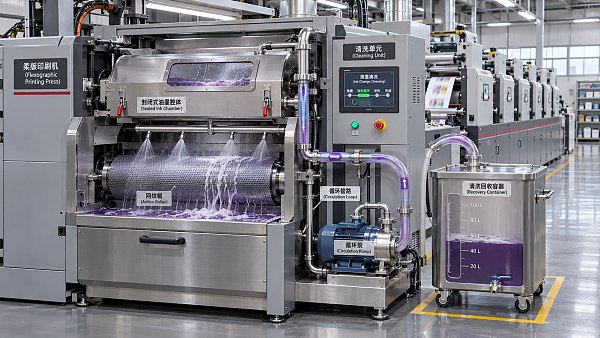
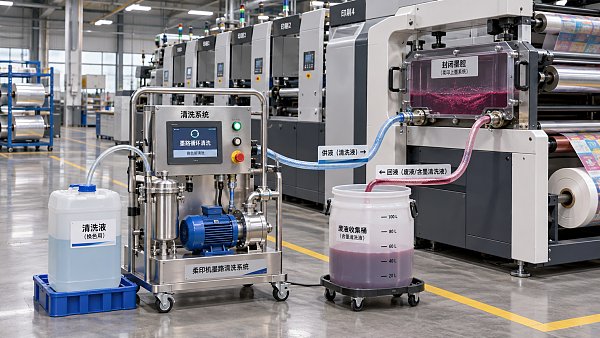
 How Do Flexo Wash-up Systems Reduce Ink Changeover Time?Discover how Flexo Wash-up Systems reduce ink changeover time, limit contamination, and improve press availability—and learn how to measure savings before investing.Print Fluidics Scientist
 How Can Flexo Wash-up Systems Reduce Press Downtime?Flexo Wash-up Systems reduce press downtime through consistent cleaning and faster changeovers. Discover how to prevent contamination and restart with confidence.Print Fluidics Scientist
 How Do Print Register Control Systems Improve Print Accuracy?Print Register Control Systems improve color alignment, reduce setup waste, and help prevent drift. Discover how they work and what to check for consistent print quality.Print Fluidics Scientist
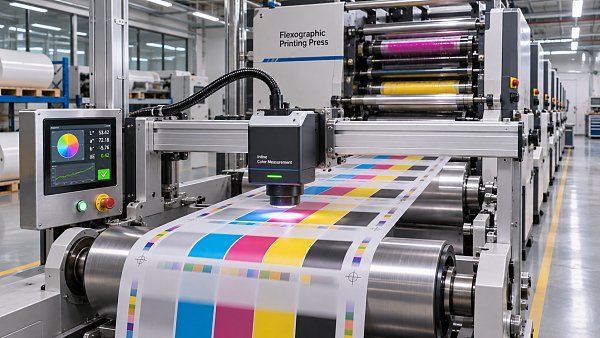
 How to Choose Inline Color Measurement Systems for Flexo PressesChoose inline color measurement systems for flexo presses with confidence. Compare accuracy, substrate compatibility, integration, and production costs.Print Fluidics Scientist
 How to Choose a Printing Sleeve for a Flexographic PressChoose the right printing sleeve for your flexographic press. Compare fit, repeat length, materials and maintenance to improve print consistency.Print Fluidics Scientist
 How Impression Rollers Affect Flexographic Print QualityImpression Rollers can make or break flexographic print quality. Discover how to prevent common defects, protect substrates and improve consistency.Print Fluidics Scientist