What Speed Can a Flexographic Press Maintain on Corrugated Board?
A flexographic press can maintain very different speeds on corrugated board even when two jobs use the same machine. The useful figure is the sustainable production speed: the rate held while printed sheets remain within agreed color, registration, drying, and board-handling tolerances. A press may reach a higher mechanical maximum during a short trial, yet lose output through start-up waste, sheet skew, ink build-up, drying limits, or frequent stops.
For a straightforward one- or two-color shipping case with stable board, moderate coverage, and uncomplicated artwork, a well-set press can run close to its normal production capability. Dense graphics, fine reverse type, tight barcode requirements, warped sheets, or frequent order changes lower the realistic rate. The practical question is therefore not “What is the top speed?” but “At what speed does this job leave the press consistently acceptable without creating downstream trouble?”
Start with net output, not the nameplate rating
Press specifications commonly state a maximum sheet rate or linear speed. That rating is useful for comparing machine architecture, but it does not represent finished saleable output. A production rate should include the time spent reaching color, correcting registration, clearing feeder interruptions, washing ink units, replacing plates, and removing unacceptable sheets.
A simple way to frame the comparison is:
Net production output = acceptable sheets delivered ÷ total elapsed production time.
Total elapsed time includes normal running, planned changeover, and brief interruptions that occur often enough to affect the shift. This measure exposes an important difference between a press that runs very fast only on ideal material and one that holds a slightly lower rate through ordinary variation in board and ink.
When reviewing a reported speed, establish whether it refers to dry running, a single-color test, a continuous job after make-ready, or a complete order cycle. These conditions can produce numbers that sound comparable while describing very different realities. The repeat length, sheet size, number of colors, die-cutting arrangement, and delivery method also need to be stated.
The board sets an early limit
Corrugated board is not a dimensionally uniform printing substrate. Its flute structure, liner properties, moisture condition, flatness, and caliper affect how it passes through the feeder, printing nip, and delivery section. A press can only maintain speed when sheets enter squarely and remain stable between printing units.
Lighter single-wall material is often easier to accelerate and transfer, but it can be more susceptible to edge damage, flutter, and handling marks. Heavier double-wall or triple-wall board has greater stiffness and mass. It may demand more controlled feeding and delivery, particularly on large formats. Neither grade is automatically “faster”; the press setup and the sheet condition decide whether the material remains predictable at speed.
Warp deserves separate attention. A board sheet can look acceptable in a stack while still lifting at one edge as it enters the feeder. This creates intermittent skew rather than a constant registration error. Increasing press speed usually makes the symptom more frequent, but the root cause may be moisture imbalance, uneven tension from prior converting, or board storage conditions. Slowing down can protect output temporarily, but it does not correct the material source of the problem.
Flute profile and compression resistance also affect print appearance. Excessive impression pressure may force ink into low areas unevenly, crush flute structure, or create washboard effects. At higher speeds, the temptation to compensate for weak density by adding pressure can turn a color issue into a board-quality issue. A cleaner route is to confirm plate mounting, anilox selection, ink condition, and contact settings before changing the press rate.
Print content changes the sustainable speed window
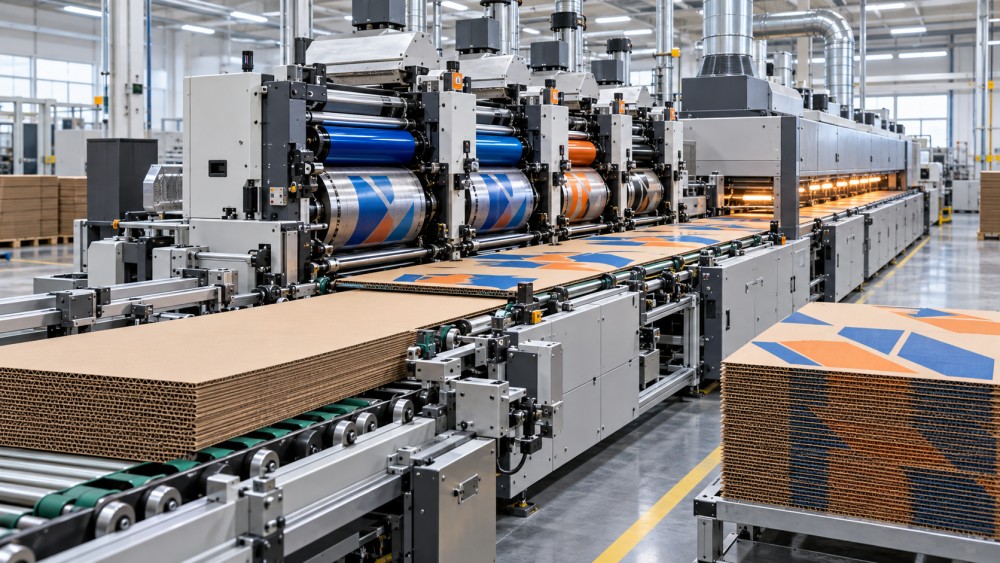
A large solid panel, fine linework, screened images, and barcode symbols stress a flexographic press in different ways. A job with sparse line art may remain stable at a relatively high rate because ink transfer and registration tolerance are forgiving. Broad solids need even ink film thickness across the sheet. Fine text and small knockouts reveal bounce, plate movement, and registration variation that may be invisible in larger graphics.
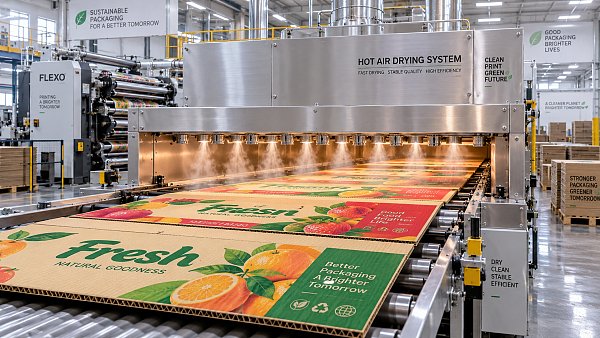
High coverage also raises the drying load. Water-based ink must release enough water before sheets are stacked or passed to a subsequent process. If air volume, temperature, exhaust balance, or dwell time is inadequate, the press can appear to print well at the delivery end while sheets later offset in the stack. Speed should not be raised until rub resistance and set-off are checked after the printed board has had time to stabilize.
Registration requirements can be more restrictive than ink density. A multi-color design with thin traps, rules, or barcode elements needs stable sheet positioning from the feeder through every print station. A press with automated registration control can reduce correction time, yet the control system cannot fully overcome a sheet that moves inconsistently because its leading edge is damaged or its surface is irregular.
Ink, anilox, and drying must work as one system
Speed is often blamed on ink when the underlying issue is the interaction between ink, anilox roller, plate, doctor blade, and drying system. A clogged or worn anilox roller reduces available cell volume and causes weak, uneven color. Raising speed will not restore density. Adding more ink film through pressure or formulation changes can increase dot gain, dirty reverse areas, or drying difficulty.
With water-based inks, viscosity and pH drift during a run can change transfer behavior. Temperature, evaporation, circulation, and dilution practices influence that drift. A job may begin cleanly at a given speed and lose consistency later, leading to repeated press adjustments that interrupt production. Monitoring the ink condition at regular intervals is more useful than reacting only after color has moved visibly.
Doctor blade performance matters especially where solid coverage is demanding. Streaks or light bands that recur at the same position are not necessarily a speed problem. They can point to blade wear, debris, damaged cells, poor chamber sealing, or insufficient ink circulation. Reducing speed may hide the defect for a period, but it can also reduce productivity without addressing the cause.
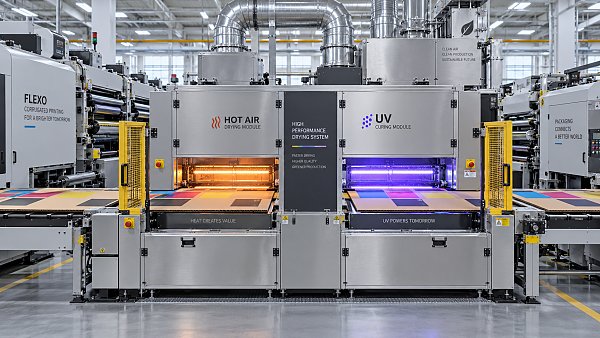
Drying capacity is a hard boundary. More press speed gives each sheet less drying time within the machine. If the printed surface remains tacky or vulnerable to scuffing, the result may be rejected after stacking, strapping, or die-cutting. Drying should be assessed with the actual board, coverage, ink film, and stack height rather than from an air-temperature setting alone.
Feeding and delivery reveal whether speed is truly stable
The feeder and delivery section often determine the usable ceiling before the print units do. Double sheets, missed sheets, late separation, leading-edge damage, and side-guide instability introduce quality variation that no registration adjustment can fully remove. These events also create short stops that sharply reduce net output.
A useful trial increases speed in controlled increments after print quality has settled. At each increment, inspect sheets from the beginning, middle, and end of a representative stack. Look beyond the face of the print: examine leading-edge crush, sheet-to-sheet scuffing, stack squareness, and whether the delivery is creating a pattern of damage at one corner. If a defect appears only after the stack grows, the limitation may be delivery deceleration or pile handling rather than the print process.
Feeder settings should match sheet size, caliper, and board stiffness. Excessive vacuum or aggressive feed components can mark softer liners; insufficient separation creates doubles. Small adjustments to timing, side guides, pile height, and air assistance can often recover a stable speed range. These settings should be documented by board family and format so the next repeat job does not begin from an unrelated baseline.
Changeovers can outweigh running speed
Short orders make the fastest running rate less important than the time required to reach acceptable production. Plate changes, ink changes, wash-up, anilox preparation, job data entry, feeder adjustment, and registration correction all consume capacity. A press that reaches a lower top rate but returns to controlled color quickly can produce more usable work across a mixed schedule than one optimized only for long runs.
Job sequencing affects this result. Grouping work with compatible ink families, similar board grades, related sheet sizes, or shared die-cutting requirements can reduce avoidable setup work. That does not require forcing incompatible jobs together; a poorly matched sequence can create contamination, unnecessary washing, or extended color matching. The aim is to remove needless changes while preserving the conditions required by each job.
Measured make-ready waste should remain separate from running waste. If color approval consumes many sheets, investigate plate mounting, ink presetting, anilox history, and stored job settings. If waste rises only after the press accelerates, inspect feeding, registration, drying, and delivery. Combining both numbers into a single total hides the corrective action.
Set a job-specific operating target
A practical operating target is established after the press has reached approved color and stable registration. Increase the rate until one of three conditions appears: quality drifts outside the accepted standard, interruptions begin to occur repeatedly, or a downstream limitation emerges. Then step back to the highest rate that holds without frequent intervention. That rate should be recorded with the job data, along with the board specification, ink system, anilox selection, plate details, drying settings, and any feeder or delivery adjustments.
The target should be revisited when the board source, flute combination, artwork, ink formulation, or finishing path changes. Reusing a historical rate without checking these variables is a common reason a familiar job suddenly produces excessive waste. Even a nominally identical board may behave differently if moisture content, liner surface, or caliper has shifted.
Signs that the rate is too high
- Registration corrections become more frequent even though the mechanical setting has not changed.
- Color density varies across the run, especially after ink has circulated for an extended period.
- Corner crush, leading-edge marks, or stack instability emerges at delivery.
- Dry ink appears acceptable immediately but scuffs, offsets, or transfers during later handling.
- Short feeder stops occur often enough that the average output no longer improves as speed increases.
The last point is especially important. A higher displayed rate can produce fewer acceptable sheets per hour when interruptions and waste rise faster than the speed gain.
Maintenance affects repeatable speed
Repeatability relies on basic mechanical condition. Worn feed belts, contaminated vacuum systems, loose mounting components, damaged bearings, uneven anilox surfaces, deteriorated doctor blades, and poorly maintained drying equipment all narrow the stable speed window. These faults do not always cause an obvious failure at low speed. They often appear as intermittent variation after acceleration, which leads to repeated adjustments and misleading conclusions about the job.
Cleaning standards for anilox rollers and ink circuits deserve particular discipline. A roller that is partially plugged may still print adequately on simple line work but fail on a solid-heavy job. Keeping condition records by ink unit and inspecting recurring defects against those records makes it easier to distinguish a job limitation from a maintenance issue.
A flexographic press on corrugated board should therefore be judged by the rate it can sustain through real board variation while protecting print quality, drying performance, and delivery condition. Maximum speed remains a useful capability reference. Net acceptable output over the full job cycle is the figure that shows whether that capability is being converted into dependable production.
Related News
 How Quick Change Unwind Stands Reduce Downtime on Flexo PressesDiscover how quick change unwind stands reduce flexo press downtime, streamline reel changes, and improve productivity—plus key tips to assess integration and ROI.Print Fluidics Scientist
 How an Impression Roller for Flexo Printing Affects Print QualityDiscover how an impression roller for flexo printing influences ink transfer, dot gain, alignment, and print consistency. Learn practical setup and troubleshooting tips.Print Fluidics Scientist
 Why Color Measurement Systems Matter for Consistent Flexo PrintingColor Measurement Systems help flexo printers achieve consistent brand colors, reduce waste, improve traceability, and protect packaging quality across every production run.Print Fluidics Scientist
 What to Check Before Choosing a Print Dryers Supplier for Your PressPrint dryers supplier selection guide: compare drying methods, press integration, energy use, maintenance, safety, and support to improve print quality and uptime.Print Fluidics Scientist
 How to Compare Web Tension Controller Manufacturers for Flexo PressesWeb tension controller manufacturer comparison guide for flexo presses: assess stability, sensing, integration, service, and real-world substrate performance.Print Fluidics Scientist
 How Hot Air Print Dryers Improve Ink Drying on Flexo LinesHot air print dryers improve flexo ink drying with balanced airflow, controlled heat, and reliable results for faster packaging production.Print Fluidics Scientist