UV Flexo Presses Explained for High-Speed Packaging Print Quality
High-speed packaging print quality in UV flexography is determined by the stability of the entire print-and-cure chain. A press can achieve clean solids and fine type at a demonstration speed yet produce unacceptable variation during a long job if ink transfer, web tension, plate mounting, UV dose, or registration correction drifts under production conditions. The useful technical question is therefore not whether a press uses UV ink, but whether its mechanical, fluid, curing, and control systems remain coordinated while substrate conditions and job requirements change.
UV Flexo Presses use radiation-curable inks that are transformed from a liquid film into a solid printed layer almost immediately after exposure to the appropriate UV energy. This rapid cure changes the production sequence. Sheets or webs do not need a long drying path, and downstream handling can begin sooner when adhesion and cure are adequate. The benefit is most apparent on substrates where absorption is limited, such as coated paperboard, metallized films, label facestocks, certain plastic films, and varnished packaging materials. It also creates a narrow process window: a visually dry surface is not proof of a complete cure through the ink film.
Print quality begins before the curing station
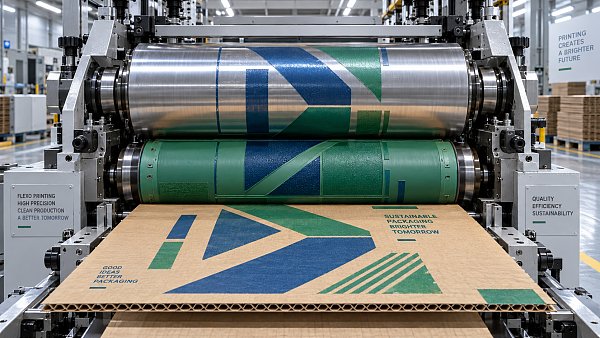
A flexographic unit meters ink through an anilox roller, transfers it to the plate, and then prints the image onto the substrate. Each transfer stage affects density, dot shape, edge definition, and ink film uniformity. UV chemistry does not remove the normal limitations of flexography. Excess plate pressure still expands dots and fills fine reverse type. Inadequate contact still causes weak solids, broken lines, and inconsistent coverage. A highly glossy cured surface can make these defects look less obvious under casual inspection while leaving barcode contrast or small-text legibility below the required level.
Anilox specification must be matched to image content and ink formulation rather than selected from line count alone. A finer cell structure is often associated with detail work, but its usable ink volume, cell opening, cleaning condition, and compatibility with the ink's pigment dispersion matter just as much. Heavy opaque white, dense brand colors, and tactile varnishes need sufficient volume to form a continuous film. Fine process work needs controlled delivery without flooding highlights. A single anilox choice that appears acceptable on a proof can become unstable when the job includes both broad solids and fine tonal screens.
Doctor blade condition is part of that metering system. Worn or damaged blades can leave streaks, contamination marks, or fluctuating ink density that are mistakenly attributed to plates or curing. Chamber seals that admit air or allow leakage may alter the ink condition and create visible defects around the anilox contact area. Inspection should distinguish a repeating defect tied to roller circumference from a random defect caused by debris, substrate variation, or web movement. Replacing a plate will not correct a recurring anilox or blade problem.
Ink film, opacity, and UV dose
UV ink must be considered as a curing system, not merely as a color. Pigments, opacity, print thickness, varnish layers, substrate reflectance, lamp type, lamp output, cooling, and press speed influence the energy reaching the lower portion of the film. Dense black, opaque white, metallic effects, and heavily pigmented spot colors can require a different curing response from lightly printed process colors. A clear overprint varnish introduces another layer and may alter surface slip, gloss, blocking behavior, or the energy path to ink beneath it.
Under-cure may present as surface odor, poor rub resistance, weak adhesion, transfer onto guide rollers, or subsequent problems during die-cutting, folding, gluing, and stacking. A surface can feel dry while incomplete polymerization remains within the film. Overexposure is not a universal correction. Excess heat or radiation can affect heat-sensitive films, distort thin unsupported materials, embrittle certain ink layers, reduce gloss, or create unwanted substrate deformation. The correct cure setting is the lowest stable operating range that meets the relevant performance tests for the printed construction.
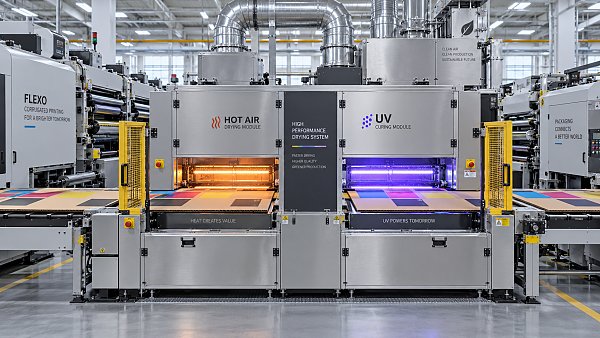
UV source selection changes this evaluation. Conventional arc lamps deliver a broad spectral output and may generate substantial heat. UV LED systems concentrate output in narrower wavelength ranges and can reduce some thermal loading, but the ink, coating, adhesive, and photoinitiator package must be formulated for that wavelength range. A press fitted with LED units is not automatically suitable for every UV ink previously used under arc lamps. Compatibility should be confirmed across all printed layers, including white, color, varnish, and any primer used before printing.
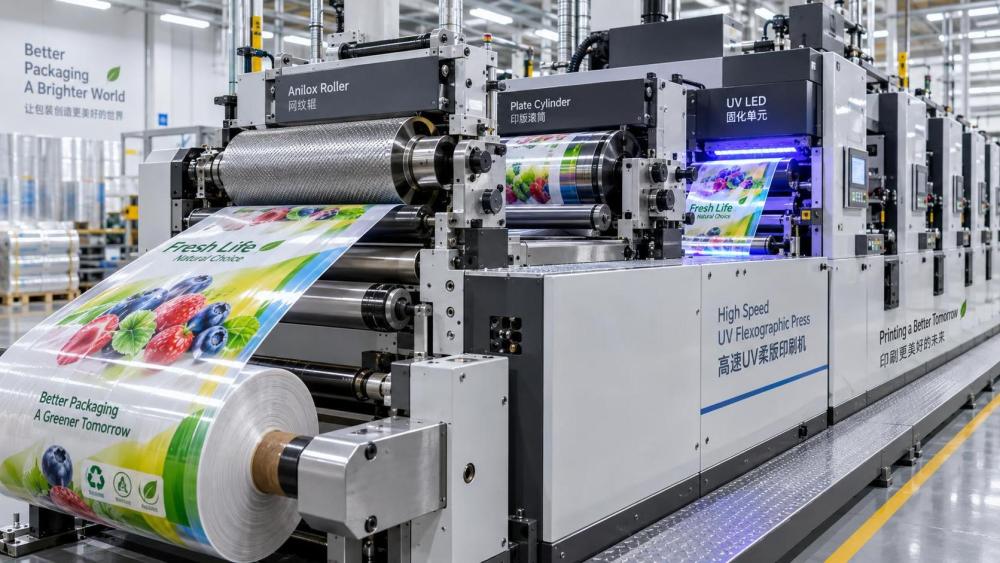
Curing performance also changes as lamps age, reflectors become contaminated, optics lose efficiency, or cooling conditions deteriorate. The controller may display a nominal power setting while the effective dose at the substrate has changed. Monitoring should therefore combine equipment readings with print-sample evaluation. Adhesion testing, rub assessment, odor review where relevant, and downstream conversion trials provide more useful evidence than a lamp-hours record alone.
Registration at speed is a web-control problem
Color-to-color registration depends on more than the register servo. Web tension, unwind behavior, splice quality, substrate caliper variation, print-unit temperature, plate repeat accuracy, and the response time of each correction loop all contribute. A web that is stable at low speed can stretch, flutter, or shift laterally when acceleration, large roll diameter, or changing environmental conditions alter tension. Such movement may appear as a color-register fault even when the register system is functioning correctly.
Film, paper, paperboard, and laminate structures do not react in the same way. Thin films are sensitive to tension and heat. Paper-based substrates can change dimension with moisture and may show different behavior across the web. Coated materials can have variable surface energy or local coating irregularities. When repeatable register error develops gradually through a run, the cause may be web elongation or thermal movement. When the error is intermittent and localized, a splice, damaged roll edge, unstable guide signal, or mechanical backlash is more plausible.
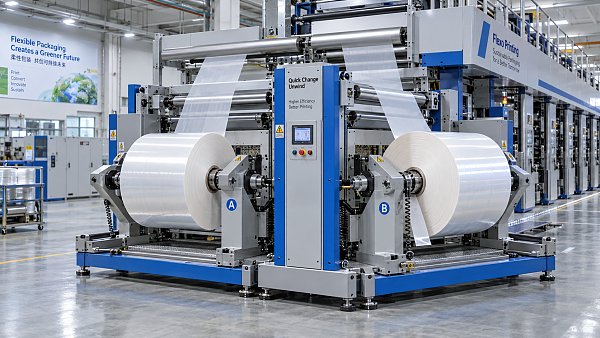
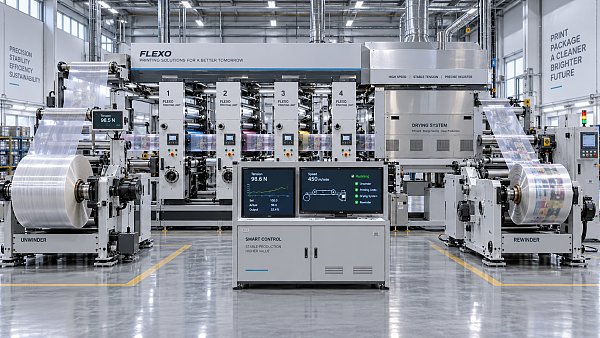
Good press design separates tension zones so that changes at the unwind, print stations, curing section, and rewind do not propagate uncontrollably through the web. Dancer systems, load cells, driven nip rolls, edge guides, and web-cleaning devices should be assessed as a connected arrangement. Adding high-gain automatic register correction to an unstable web can create oscillation: the correction chases a moving reference and produces alternating error. A stable tension profile gives the register system a problem it can actually solve.
Plates, sleeves, and impression settings
Photopolymer plate selection should correspond to the substrate, ink, line screen, image design, and expected run length. Plate hardness and surface structure influence ink release and dot reproduction. Plates that perform well on smooth labelstock may not deliver the same solids on textured paperboard. Mounting tape affects plate compression and can change both print pressure and tonal response. These choices should be controlled by job type rather than adjusted casually on press after defects appear.
Impression settings deserve close attention because flexography can create acceptable-looking results with excessive pressure until the job is examined closely. Over-impression may cause haloing around reverse text, dot gain, gear-like edge artifacts, and loss of fine highlights. It can also accelerate plate wear. Too little pressure produces incomplete transfer, especially in solids or rougher substrate areas. The correct setting is established by achieving continuous, even transfer with the least plate distortion, then retaining a documented baseline for repeat work.
Sleeve and cylinder condition affect repeatability. Runout, poor mounting cleanliness, damaged gears, or inaccurate sleeve seating can create periodic density or register defects. A defect that repeats at the plate cylinder circumference points toward a different investigation than one repeating at the anilox circumference or appearing only after a splice. Recording defect pitch before changing settings reduces unnecessary adjustments and preserves evidence of the actual source.
What high-speed capability should mean
Maximum mechanical speed is a limited measure of production capability. A useful assessment examines the speed at which the press maintains approved color, registration, cure, waste level, and substrate control through normal production events. These include acceleration, deceleration, roll changes, splices, ink replenishment, plate changes, wash-up, and transitions between jobs. A machine that reaches a high peak speed but requires frequent slowing for density correction or web stabilization has a different operating value from one that holds a lower stated speed consistently.
Color control needs a production reference
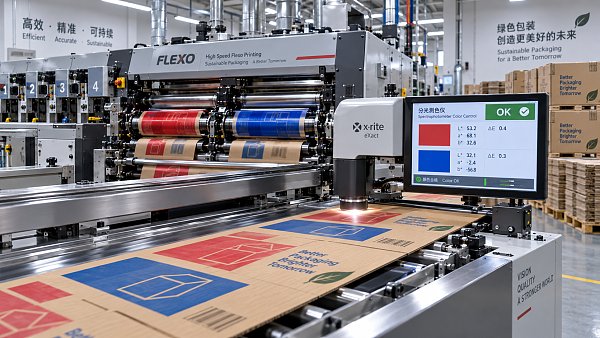
Color consistency requires defined targets, controlled ink preparation, and a measurement routine that reflects the package artwork. Solid density can be useful, but it does not fully describe hue, tone value, gray balance, opacity, or the appearance of a color viewed through a varnish. Spectral measurement and visual approval should be linked to a stable reference sample or approved target condition. The same ink may appear different when printed on white paperboard, clear film over a white underprint, metallized stock, or a colored recycled substrate.
Opacity is particularly easy to misread. A white layer can appear strong over one substrate yet provide insufficient hiding over a darker surface or variable recycled board. Increasing laydown may improve coverage but also makes curing more demanding and can affect trapping of subsequent colors. The better approach is to define the actual print construction, including substrate, primer, white, colors, varnish, and intended viewing side, before setting color and cure expectations.
Inline inspection supports process control when its tolerances are aligned with functional defects. Missing print, gross color change, registration displacement, streaks, and repeated contamination can be detected during the run. However, vision systems require stable lighting, correct reference files, and defect rules that separate meaningful faults from harmless substrate texture or artwork features. Excessively sensitive settings can create an unmanageable volume of false rejects; loose thresholds can allow critical defects through.
Changeover discipline protects repeatability
Short runs place more emphasis on the time between approved jobs. Plate identification, sleeve location, anilox assignment, ink traceability, stored register offsets, and documented impression baselines reduce the number of variables that must be rediscovered. Automation is valuable when it returns the press to a known physical condition, not simply when it reduces manual actions. Automatic wash-up still needs verification that residual ink, cleaning fluid, or debris has not affected the next color.
Maintenance should follow the mechanisms that create variation. Anilox cleaning preserves metering capacity. Blade and seal inspection prevents leaks and streaking. Servo, encoder, guide, and tension-sensor checks protect motion accuracy. UV equipment needs cleaning, cooling verification, and output monitoring. These tasks have different consequences: poor anilox cleaning changes ink delivery; a weak curing source changes chemical performance; unstable tension changes image position. Treating all defects as generic “press variation” delays correction.
Reliable packaging print quality comes from repeatable interaction between substrate, ink laydown, plate contact, web stability, registration, and cure. When those conditions are evaluated together, high speed becomes a sustained production state rather than a figure measured under simplified conditions.
Related News
 How Quick Change Unwind Stands Reduce Downtime on Flexo PressesDiscover how quick change unwind stands reduce flexo press downtime, streamline reel changes, and improve productivity—plus key tips to assess integration and ROI.Print Fluidics Scientist
 How an Impression Roller for Flexo Printing Affects Print QualityDiscover how an impression roller for flexo printing influences ink transfer, dot gain, alignment, and print consistency. Learn practical setup and troubleshooting tips.Print Fluidics Scientist
 Why Color Measurement Systems Matter for Consistent Flexo PrintingColor Measurement Systems help flexo printers achieve consistent brand colors, reduce waste, improve traceability, and protect packaging quality across every production run.Print Fluidics Scientist
 What to Check Before Choosing a Print Dryers Supplier for Your PressPrint dryers supplier selection guide: compare drying methods, press integration, energy use, maintenance, safety, and support to improve print quality and uptime.Print Fluidics Scientist
 How to Compare Web Tension Controller Manufacturers for Flexo PressesWeb tension controller manufacturer comparison guide for flexo presses: assess stability, sensing, integration, service, and real-world substrate performance.Print Fluidics Scientist
 How Hot Air Print Dryers Improve Ink Drying on Flexo LinesHot air print dryers improve flexo ink drying with balanced airflow, controlled heat, and reliable results for faster packaging production.Print Fluidics Scientist