Printing Sleeves Explained for Better Flexographic Print Quality
Printing sleeves play a critical role in achieving consistent, high-quality flexographic print results. The right sleeve improves plate mounting, registration, changeovers, and press reliability.
For packaging manufacturers, choosing printing sleeves is not simply a component purchase. It is an operating decision affecting quality, waste, labor, uptime, and long-term press performance.
Why Printing Sleeves Matter to Flexographic Printers
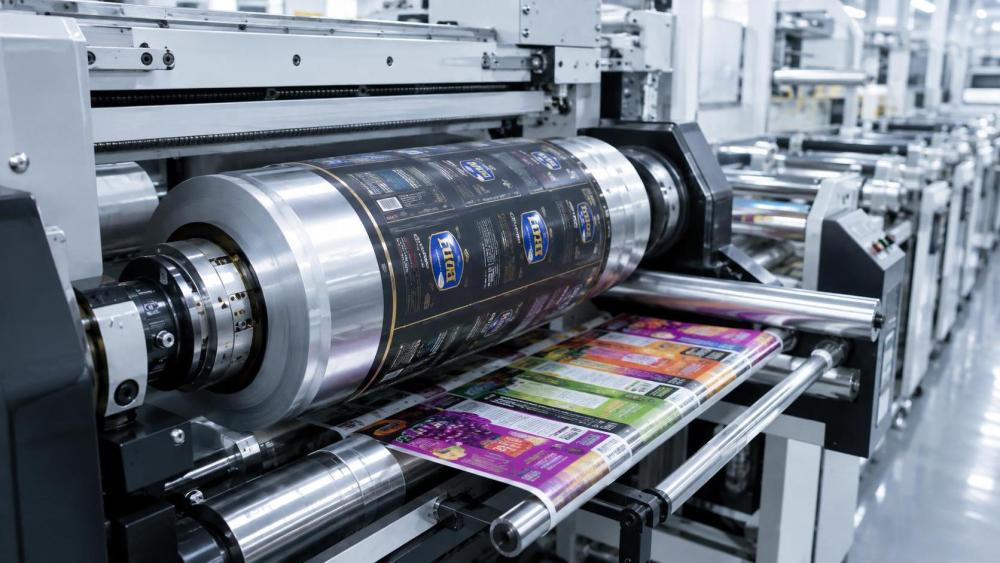
Printing sleeves are cylindrical carriers mounted onto flexographic press cylinders or mandrels. They support printing plates and help maintain accurate positioning during production.
Their main value comes from repeatability. A well-designed sleeve allows operators to mount plates consistently, reducing variation between jobs, shifts, and production batches.
When sleeve runout, distortion, or surface damage is controlled, the press can maintain more stable registration, cleaner detail, and smoother color reproduction.
This matters especially for corrugated packaging, labels, flexible packaging, and folding cartons, where brand graphics must remain consistent across large production volumes.
Printing sleeves can also shorten setup time. Operators can prepare plates away from the press, then install completed sleeve assemblies during a scheduled job change.
For plants handling short runs, frequent artwork changes, or many substrate specifications, faster preparation can improve press utilization more effectively than speed alone.
How Printing Sleeves Work on a Flexographic Press
A typical sleeve system includes an inner structure, an outer surface, and a mounting interface designed to fit the press cylinder or air mandrel.
During installation, compressed air may expand the sleeve slightly, allowing it to slide over the mandrel. Once the air stops, the sleeve contracts around the support.
The printing plate is then mounted around the sleeve using approved adhesive tape or another plate-mounting system suitable for the press application.
The sleeve must remain concentric while rotating. Even small dimensional errors can create impression variation, registration movement, vibration, or uneven ink transfer.
Some sleeves are designed for direct plate mounting, while others work with adapters, bridge sleeves, or specialized plate cylinders for different repeat lengths.
The correct configuration depends on press architecture, cylinder range, plate thickness, substrate behavior, and the number of repeat sizes used by the factory.
What Printing Sleeves Improve in Print Quality
The first major benefit is registration stability. Accurate sleeve dimensions help keep multiple colors aligned as the web or sheet moves through the press.
Better registration reduces halos, blurred edges, barcode problems, and visible color shifts. These defects can create customer complaints or expensive batch-level rework.
Printing sleeves also influence print sharpness. A stable mounting surface helps plates maintain predictable contact with the substrate during impression and ink transfer.
If a sleeve flexes excessively or contains uneven areas, fine text, reverse type, and small graphic details may appear inconsistent across the printed repeat.
Surface hardness is another important factor. A sleeve that is too soft may increase dot gain, while excessive hardness can reduce impression tolerance.
Neither extreme is suitable for every application. The best specification balances plate design, ink system, substrate roughness, press speed, and required visual quality.
In corrugated printing, sleeve selection must also consider linerboard characteristics. Rough or absorbent surfaces require reliable impression control without crushing the board.
Printing Sleeves and Faster Job Changeovers
Changeover efficiency is one of the strongest commercial reasons to evaluate printing sleeves. Setup labor and press downtime directly reduce available production capacity.
With sleeve-based preparation, plates can be mounted, inspected, and stored before the press becomes available for the next order.
Operators can remove the completed sleeve assembly and install another prepared assembly with fewer mounting steps during the production changeover.
This process is particularly useful when packaging plants produce many short orders, customized designs, seasonal graphics, or versioned product labels.
However, sleeves do not automatically guarantee faster changeovers. Benefits depend on plate preparation accuracy, storage organization, mandrel access, and operator discipline.
A factory should measure actual changeover time before and after implementation, including plate removal, cleaning, registration checks, and first-approved-sheet production.
Management should also calculate how many sleeve sets are needed. Too few sets may create preparation bottlenecks, while excessive inventory increases capital and storage costs.
Key Sleeve Types and Their Applications
Standard printing sleeves are commonly used for regular flexographic work where repeat lengths and plate requirements remain within a predictable range.
Bridge sleeves provide flexibility when a press uses a limited number of cylinders but must support many printing repeat sizes.
They can help reduce the number of expensive base cylinders required, although the combined sleeve system must remain dimensionally accurate and easy to handle.
Thin sleeves are useful when minimizing total cylinder diameter or supporting specific repeat requirements. Their stiffness and durability must match the application.
Plate-mounting sleeves may use different outer constructions for compatibility with foam tapes, cushion tapes, photopolymer plates, or specialized plate technologies.
Some systems are optimized for narrow-web label presses, while others are built for wide-web flexible packaging or corrugated post-print applications.
Buyers should avoid comparing sleeve types only by price. Compatibility, service life, cleaning requirements, repair options, and production impact are equally important.
How to Select the Right Printing Sleeves
Begin with the press manufacturer’s dimensional requirements. Confirm mandrel diameter, sleeve length, repeat range, air-hole arrangement, weight limits, and mounting tolerances.
Next, identify the dominant production mix. A label printer may prioritize fine detail and fast repeat changes, while a corrugated plant may emphasize durability and board handling.
Review plate specifications carefully. Plate thickness, relief height, mounting tape, plate width, and seam design all influence the sleeve’s working performance.
Ink and substrate conditions also matter. Water-based inks, solvent-based inks, UV systems, coated films, paper, and corrugated liners can impose different technical requirements.
Ask suppliers how the sleeve material responds to cleaning chemicals, moisture, temperature changes, impact, and repeated mounting cycles.
Dimensional inspection should be discussed before purchase. Suppliers should explain how they control concentricity, roundness, wall thickness, surface finish, and balance.
For automated or high-speed presses, check whether the sleeve can be integrated with presetting, plate-mounting equipment, barcode identification, or production management systems.
A technically compatible sleeve may still be operationally unsuitable if operators cannot handle it safely or if its preparation process creates new delays.
Evaluating Total Cost Instead of Purchase Price
The purchase price of printing sleeves represents only one part of their financial impact. Total cost should include labor, downtime, waste, cleaning, repairs, and replacement.
A sleeve that costs more initially may deliver better value if it lasts longer, reduces mounting errors, and supports faster approved production.
Waste reduction is especially important. Registration errors, damaged plates, incorrect mounting, and repeated setup sheets can quickly exceed the original equipment difference.
Factories should estimate annual savings using real production data rather than supplier claims. Useful measurements include changeover minutes, waste sheets, rejected rolls, and repair frequency.
Press utilization should be included in the calculation. Recovering even a small amount of productive time can create meaningful capacity when several presses operate continuously.
Labor availability is another factor. Consistent sleeve preparation can reduce dependence on highly experienced operators, but training and quality checks remain necessary.
Purchasers should also examine service coverage, lead times, warranty conditions, technical support, and the supplier’s ability to maintain replacement availability.
Common Printing Sleeve Problems and Their Causes
Registration drift may result from sleeve dimensional variation, improper seating, damaged mandrels, plate movement, substrate tension changes, or press calibration issues.
Operators should not assume every registration problem comes from the sleeve. A structured diagnosis should inspect the complete plate, cylinder, tension, and impression system.
Uneven print density can be related to sleeve runout, plate thickness variation, insufficient support, incorrect pressure, anilox condition, or inconsistent ink viscosity.
Air-mounting difficulties may indicate blocked air holes, contamination, damaged interfaces, inadequate air pressure, or incorrect sleeve specifications.
Surface swelling can occur when unsuitable cleaning agents penetrate the sleeve structure. Chemical compatibility must therefore be confirmed before routine maintenance begins.
Cracks, dents, or edge damage often result from poor handling, unsupported storage, impacts, or stacking sleeves in ways that create concentrated pressure.
Each sleeve should be identified, inspected, and stored according to supplier guidance. Basic discipline can prevent avoidable dimensional and alignment problems.
Maintenance, Storage, and Operator Practices
Clean sleeves promptly after use with approved materials. Dried ink, adhesive residue, and debris can interfere with plate mounting and accurate seating.
Avoid metal tools that may scratch mounting surfaces or damage air channels. Cleaning procedures should protect both the sleeve and the press mandrel.
Store sleeves horizontally or vertically according to their design, using supports that prevent bending, rolling, and contact damage.
Temperature and humidity should remain reasonably stable, especially where sleeves use composite materials or operate with moisture-sensitive adhesives.
Operators should never force a sleeve onto a mandrel. Resistance may indicate contamination, dimensional damage, blocked air flow, or an incorrect component.
Before production, verify sleeve identification, plate orientation, repeat length, artwork version, mounting condition, and job documentation.
Plants with high production volumes should maintain inspection records. Tracking service history helps identify recurring problems and supports replacement planning.
Printing Sleeves in Automated Packaging Production
Modern packaging plants increasingly connect printing equipment with job management, inspection, coding, and production reporting systems.
Printing sleeves can support this direction when they are identified clearly and managed as traceable production assets.
Barcode or radio-frequency identification may help link a sleeve to a plate version, repeat length, customer order, maintenance record, and approved setup data.
That information can reduce selection mistakes, particularly in factories holding many similar sleeves for different presses and product families.
Automation also benefits from consistent sleeve dimensions. Robotic handling, automatic mounting, and presetting systems require predictable weight, balance, and interface behavior.
However, automation should follow process stabilization. If sleeve storage, plate mounting, and inspection remain inconsistent, automated equipment may simply reproduce errors faster.
Decision-makers should evaluate the entire workflow, including prepress preparation, sleeve staging, press installation, quality approval, cleaning, and return to storage.
Questions Buyers Should Ask Suppliers
Ask which press models and mandrel systems the supplier supports, and request dimensional documentation rather than relying on general product descriptions.
Confirm the expected service life under your actual speed, substrate, ink, cleaning, and mounting conditions.
Request information about concentricity tolerance, balance testing, surface construction, repairability, and inspection procedures before shipment.
Clarify whether the supplier provides installation guidance, operator training, troubleshooting support, and replacement parts in your market.
Discuss lead times for standard and customized sleeves. Long delays can affect production planning when a sleeve is damaged unexpectedly.
Ask for references from plants with similar press formats and product requirements. Comparable applications provide more useful evidence than generic performance claims.
Finally, request a business case based on changeover reduction, waste improvement, expected life, and maintenance requirements rather than unit price alone.
Final Takeaway for Flexographic Print Quality
Printing sleeves are important production tools that influence registration, print clarity, changeover speed, waste, and press reliability.
The strongest results come from matching sleeve construction to press design, plate technology, substrate, ink system, production volume, and operator workflow.
For information researchers and equipment decision-makers, the right evaluation starts with measurable production problems rather than a general desire for newer components.
Compare suppliers using dimensional accuracy, compatibility, service life, maintenance needs, and total operating cost. These factors reveal practical value more clearly.
When correctly specified and managed, printing sleeves can help packaging plants produce more consistent graphics, reduce setup interruptions, and improve the return on flexographic press investment.
Related News
 How Quick Change Unwind Stands Reduce Downtime on Flexo PressesDiscover how quick change unwind stands reduce flexo press downtime, streamline reel changes, and improve productivity—plus key tips to assess integration and ROI.Print Fluidics Scientist
 How an Impression Roller for Flexo Printing Affects Print QualityDiscover how an impression roller for flexo printing influences ink transfer, dot gain, alignment, and print consistency. Learn practical setup and troubleshooting tips.Print Fluidics Scientist
 Why Color Measurement Systems Matter for Consistent Flexo PrintingColor Measurement Systems help flexo printers achieve consistent brand colors, reduce waste, improve traceability, and protect packaging quality across every production run.Print Fluidics Scientist
 What to Check Before Choosing a Print Dryers Supplier for Your PressPrint dryers supplier selection guide: compare drying methods, press integration, energy use, maintenance, safety, and support to improve print quality and uptime.Print Fluidics Scientist
 How to Compare Web Tension Controller Manufacturers for Flexo PressesWeb tension controller manufacturer comparison guide for flexo presses: assess stability, sensing, integration, service, and real-world substrate performance.Print Fluidics Scientist
 How Hot Air Print Dryers Improve Ink Drying on Flexo LinesHot air print dryers improve flexo ink drying with balanced airflow, controlled heat, and reliable results for faster packaging production.Print Fluidics Scientist