Printing Sleeves Explained: Materials, Fit, and Press Applications
A printing sleeve is easy to mistake for a secondary press accessory. In flexographic production, it is part of the print geometry: it carries the plate or forms the printing surface, determines the effective repeat length, and must run concentrically with the press cylinder. A sleeve that is poorly specified or poorly fitted can show up as registration drift, uneven impression, plate-edge lifting, excessive vibration, or slow changeovers long before it is identified as the root cause.
For a converter evaluating a flexo press, sleeves deserve attention when repeat work changes frequently, several print stations must stay in register, or the press runs at speeds where small dimensional errors become visible. The practical question is not simply which sleeve material is “best.” It is which sleeve construction, tolerance level, mounting method, and handling routine suit the press, the print job, and the factory's operating discipline.
What a sleeve does in a flexographic press
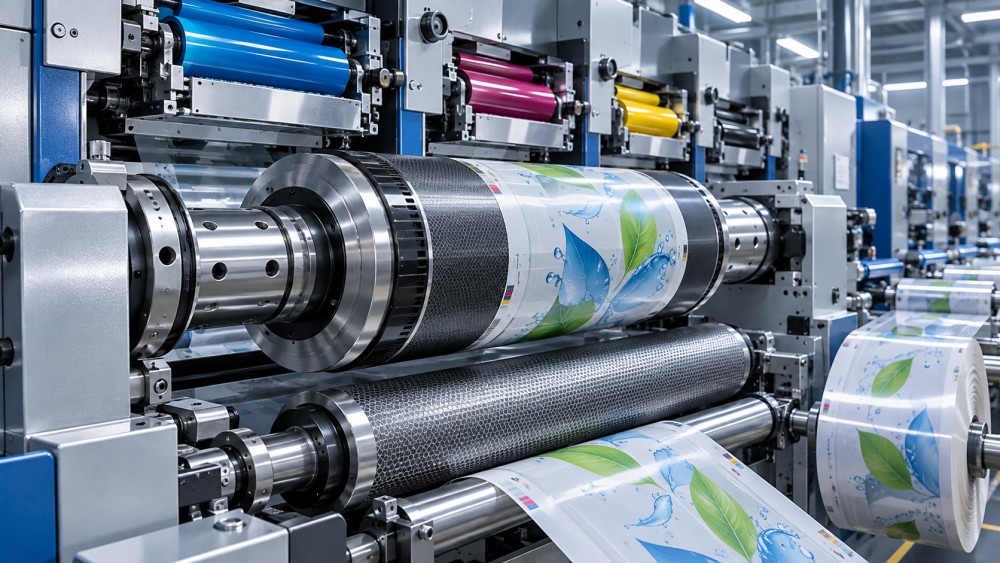
A printing sleeve is a cylindrical component mounted over an air mandrel or adapter. Depending on the application, it may be a plate sleeve that receives a photopolymer plate, an elastomer sleeve with the image already engraved into its surface, or a bridge sleeve used to adapt one diameter to another. The press uses compressed air through holes in the mandrel to expand the sleeve slightly during mounting and release it after positioning.
This arrangement replaces, or reduces reliance on, conventional plate cylinders. The production benefit is straightforward: operators can change a complete print sleeve without mounting individual plates onto a cylinder during the job change. That can reduce setup activity and improve repeatability, particularly when the same jobs recur. It also changes the equipment dependency. The sleeve, plate mounting system, air mandrel, adapters, storage racks, and cleaning process need to function as one controlled system.
In a multi-color press, every printing unit must work from the correct repeat relationship. Sleeve diameter affects the print repeat, while concentricity and dimensional stability affect whether that repeat stays consistent around the cylinder. Registration controls can correct certain press-running variations, but they cannot fully compensate for a sleeve that is damaged, incorrectly specified, or unstable under operating conditions.
Material choice changes both print behavior and operating cost
Most printing sleeves combine a rigid base with one or more functional layers. The base must be light enough for safe handling and practical changeovers, while remaining stiff and stable enough to hold its geometry. Surface layers are selected according to whether the sleeve carries a plate, serves as an adapter, or is directly engraved for printing.
Composite sleeves
Composite constructions, commonly based on fiber-reinforced materials, are widely used where low weight, stiffness, and dimensional consistency are important. Their relatively low mass helps operators handle larger sleeves and can reduce inertia during acceleration and deceleration. For high-quality packaging work, the ability to maintain a round, concentric running surface is often more valuable than a small saving in sleeve purchase cost.
Composite sleeves still need careful treatment. Impact at the edge, crushing during storage, aggressive cleaning chemistry, and incorrect air pressure can damage the structure or compromise the inner surface. A sleeve may look acceptable externally while no longer mounting evenly on the mandrel. Inspection should therefore include the bore, edges, and any recurring registration or impression symptoms, not just the visible print surface.
Polymeric and elastomeric constructions
Some sleeves use polymeric materials or elastomer layers to provide specific surface properties, cushioning, or compatibility with particular plate systems. Elastomer sleeves may be directly engraved with the image, eliminating the separate mounting plate. This can be attractive for repeat production because it removes plate mounting variability and may shorten preparation time for a recurring design.
The trade-off is that direct-engraved sleeves are less flexible when artwork changes. Replacing one element in the design can require a new engraved sleeve rather than a replacement plate. They also require appropriate cleaning and storage conditions, since the surface must retain its print form and release characteristics over repeated runs.
Expandable or compressible layers
A sleeve can include a compressible layer to manage impression and support the plate. This is often discussed in terms of print quality, but its effect is job-specific. Too little compliance can make a press more sensitive to substrate variation and impression settings. Too much compression can reduce edge definition, alter dot reproduction, or make solid areas harder to control. The suitable configuration depends on the plate, anilox selection, ink system, substrate, and the press's mechanical condition.
A material decision should therefore be made with the complete print deck in view. Selecting a sleeve independently from the plate supplier, mounting tape or cushion system, and press manufacturer can produce a technically compatible combination that is still difficult to run consistently.
Fit is a dimensional system, not a single diameter
“Correct size” is often interpreted as matching the sleeve diameter to the desired print repeat. That is only the starting point. A usable sleeve must fit the mandrel accurately, expand and release predictably with the press air system, maintain its roundness under running load, and present the intended outside diameter after the plate and any mounting layer are applied.
The repeat calculation is tied to the finished printing circumference. For plate-mounted work, the effective diameter includes the sleeve body, adhesive or mounting tape, plate thickness, and any compressible layer. A change in any of these components can alter the repeat or the impression behavior. A plate specification that works on one sleeve setup should not automatically be transferred to another with a different tape thickness or sleeve construction.
Fit also has a practical handling dimension. The internal diameter must match the air mandrel specification, but reliable mounting depends on more than nominal dimensions. Operators need enough air pressure and airflow to float the sleeve onto the mandrel without forcing it. The sleeve should slide into its correct position without striking the locating surfaces. Once air is removed, it should seat firmly and evenly. A sleeve that repeatedly requires excessive force is a warning sign, not a normal part of the procedure.
For procurement, the relevant tolerance is not merely a supplier's catalogue figure. It should be related to the press speed, repeat length, artwork requirements, substrate variation, and the correction range of the registration system. Fine type, narrow barcodes, close register graphics, and demanding tonal work place a different burden on the sleeve system than simple shipping-case graphics.
Where sleeves are most useful
Sleeve-based flexographic systems are common across flexible packaging, labels, paper packaging, corrugated pre-print, and selected post-print applications. Their value varies by production pattern rather than by market segment alone.
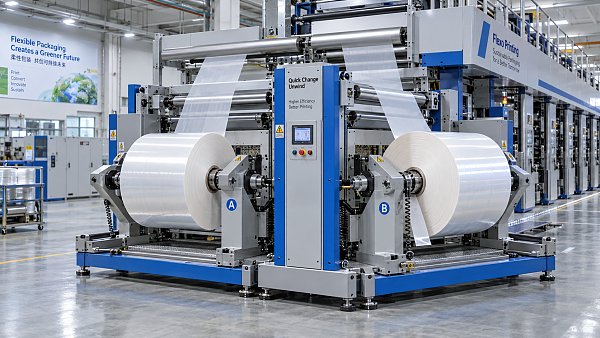
In flexible packaging, sleeves support the repeat lengths and multi-color registration required for films, laminates, and other web substrates. Lightweight sleeve handling and repeatable mounting can be important where several jobs are changed in a shift. The press setup must also account for web tension, ink transfer, drying, plate design, and substrate stretch. A high-quality sleeve cannot compensate for unstable web handling, but it prevents the sleeve itself from becoming another source of variation.
Label production can benefit when many designs repeat over time and operators need predictable changeovers. Here, repeat accuracy and image consistency often matter more than maximum sleeve life in isolation. A sleeve system may also improve organization when jobs are stored as prepared sleeve-and-plate assemblies, provided storage space and identification practices are adequate.
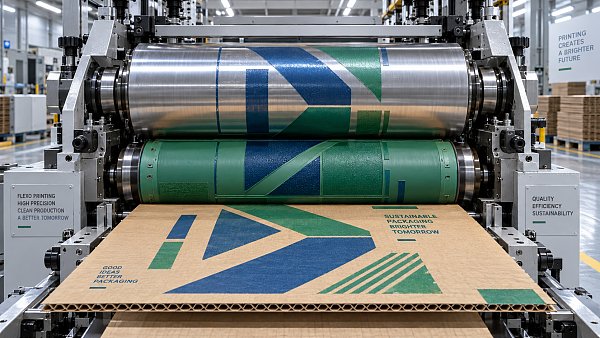
For corrugated packaging, the application needs a more careful distinction. Post-print flexo on corrugated board deals with a compressible, variable substrate and often emphasizes solid coverage, legibility, and registration appropriate to transport packaging. Sleeve selection must work with the printing unit's impression control and the board's flute profile. Fine graphics can be achieved in suitable configurations, but board quality, sheet flatness, plate resilience, and print unit condition remain decisive.
Pre-print on linerboard presents a different operating environment. High-volume web printing can place greater emphasis on stable repeat, consistent color transfer, and dependable running behavior over long production periods. In that setting, sleeve durability, cleaning compatibility, and the ability to maintain geometry through repeated use become operational concerns, not simply maintenance details.
Common assumptions that cause avoidable problems
One common assumption is that a sleeve system automatically makes every job change faster. It can reduce mounting work, especially for repeat jobs, but the actual changeover includes sleeve retrieval, verification, mandrel cleaning, plate inspection, ink preparation, anilox selection, register setup, wash-up, and quality approval. A factory with poor sleeve storage or inconsistent job documentation may see little benefit from a technically capable system.
Another assumption is that a larger number of sleeve sizes will create more flexibility. In practice, an uncontrolled sleeve inventory can add complexity. Each diameter may require dedicated plates, tapes, adapters, storage locations, and job records. A rational sleeve program usually standardizes the repeat range where possible, while retaining exceptions only where the commercial value of the job justifies them.
It is also risky to treat sleeves as maintenance-free. They need controlled storage that protects them from impact, dust, heat exposure, and deformation. Plate removal must avoid cutting into the sleeve surface. Cleaning agents must suit the sleeve, adhesive residues, plate materials, and ink system. For air-mounted sleeves, mandrel air holes and seals should be kept clean because uneven air delivery can turn a routine mounting task into a damage event.
A practical evaluation sequence
When reviewing a flexo press configuration or expanding an existing sleeve program, start with the jobs rather than the sleeve catalogue. Map the required repeat lengths, substrate types, color count, artwork sensitivity, run lengths, and job recurrence. Then assess which jobs justify prepared sleeve assemblies or direct-engraved sleeves, and which are better served by conventional plate mounting arrangements.
- Confirm the press mandrel diameter, usable face width, air supply requirements, and approved sleeve construction.
- Calculate the finished print diameter with the specified plate and mounting layers, not with sleeve dimensions alone.
- Review handling limits: sleeve weight, lifting aids, operator access, storage capacity, and protection during transport.
- Define inspection criteria for bore condition, edge damage, runout, surface wear, and plate mounting quality.
- Establish job records that identify the exact sleeve, plate, tape, anilox, ink, and impression settings used for a successful run.
The last point often determines whether sleeves deliver repeatability over time. A sleeve is only one physical reference in a larger process. When its dimensions, associated components, and proven settings are documented together, it can support faster restart and more stable quality. When those relationships are left to memory, the same job can behave like a new setup every time it returns.
Printing sleeves matter because they sit at the intersection of print quality and factory workflow. The appropriate choice is usually the one that preserves accurate geometry, fits the press without force or uncertainty, and can be maintained within the converter's actual operating routines. Material sophistication has value, but disciplined fit, handling, and process control are what turn that value into reliable production.
Related News
 How Quick Change Unwind Stands Reduce Downtime on Flexo PressesDiscover how quick change unwind stands reduce flexo press downtime, streamline reel changes, and improve productivity—plus key tips to assess integration and ROI.Print Fluidics Scientist
 How an Impression Roller for Flexo Printing Affects Print QualityDiscover how an impression roller for flexo printing influences ink transfer, dot gain, alignment, and print consistency. Learn practical setup and troubleshooting tips.Print Fluidics Scientist
 Why Color Measurement Systems Matter for Consistent Flexo PrintingColor Measurement Systems help flexo printers achieve consistent brand colors, reduce waste, improve traceability, and protect packaging quality across every production run.Print Fluidics Scientist
 What to Check Before Choosing a Print Dryers Supplier for Your PressPrint dryers supplier selection guide: compare drying methods, press integration, energy use, maintenance, safety, and support to improve print quality and uptime.Print Fluidics Scientist
 How to Compare Web Tension Controller Manufacturers for Flexo PressesWeb tension controller manufacturer comparison guide for flexo presses: assess stability, sensing, integration, service, and real-world substrate performance.Print Fluidics Scientist
 How Hot Air Print Dryers Improve Ink Drying on Flexo LinesHot air print dryers improve flexo ink drying with balanced airflow, controlled heat, and reliable results for faster packaging production.Print Fluidics Scientist