How Heavy Duty Unwind Stands Improve Web Handling on High-Speed Lines
On high-speed corrugated, printing, and converting lines, stable web handling is essential for productivity, quality, and waste control. Heavy duty unwind stands provide the controlled tension, roll support, and braking performance needed to keep paper, film, and other substrates running smoothly at demanding production speeds. For project managers and engineering leaders, understanding their role is critical when designing reliable, scalable packaging operations.
The unwind station is often treated as a simple roll-holding device during early project discussions. That is a costly simplification. A corrugator may have advanced preheaters, precise glue application, automated splicing, and a modern control platform, yet it can still lose output because the paper entering the line is unstable. The same applies to flexographic pre-printing, laminating, coating, and film converting. If the web reaches the next process zone with fluctuating tension, lateral drift, or uneven roll rotation, downstream controls are forced to compensate for a problem that began at the start of the line.
Heavy duty unwind stands are designed to address that upstream instability. Their value is not simply that they can carry larger rolls. Properly specified systems help manage roll inertia, deceleration, braking response, web alignment, splice transitions, and operator safety. On a high-speed line, those factors directly influence paper breaks, registration consistency, flute formation, moisture-related distortion, trim waste, and the practical speed at which operators are willing to run production.
Why the unwind becomes a production bottleneck
A paper roll is not a passive component. Its diameter changes continuously during production, and so does its rotational behavior. A full roll has substantial inertia. As it unwinds, the brake or drive system must respond differently to maintain the same web tension. If the response is slow, the web may go slack after a speed reduction or become excessively tight during acceleration. Neither condition is harmless.
In corrugated board production, tension variation can affect how liner and medium papers travel through preheating and into the single facer. A loose web may wander or wrinkle. Excessive tension can contribute to web breaks, particularly when recycled grades, lightweight papers, humidity-sensitive stock, or variable roll quality are involved. The visible defect may appear later as warp, poor bonding, uneven flute geometry, or an unstable sheet at the cut-off section, but the origin may be much earlier in the web path.
Printing and converting operations face a different version of the same problem. In flexographic printing, inconsistent tension can undermine print registration and affect the ability of web guides to hold a stable position. In coating, laminating, or film applications, tension disturbances may create wrinkles, trapped air, curl, or inconsistent coating behavior. Operators sometimes compensate by lowering line speed. That may keep the line running, but it reduces the real capacity achieved from expensive downstream equipment.
This is why a project team should not judge an unwind stand only by maximum roll weight. The relevant question is whether the system can maintain controlled, repeatable behavior across the full roll diameter range and across the operating conditions expected on the line.
What heavy duty unwind stands actually improve
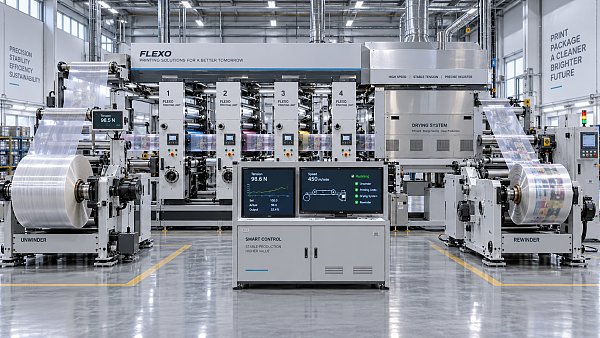
The strongest contribution of heavy duty unwind stands is controlled web tension. Depending on the machine architecture, this may be achieved through pneumatic braking, electric braking, regenerative drive systems, closed-loop tension control, load cells, dancer rollers, or a combination of these elements. The control method matters, but the mechanical foundation matters just as much. A rigid frame, suitable shaft or shaftless chuck design, stable bearings, and correctly sized braking capacity determine whether the control system has a predictable machine to control.
Roll loading is another practical consideration. Large paper rolls reduce the frequency of roll changes, which can support continuous production. But a larger roll also places more demand on lifting equipment, floor loading, arm rigidity, chuck engagement, and deceleration control. A stand that is nominally rated for the roll weight may still be a poor fit if it has excessive deflection, difficult loading access, or insufficient braking stability at the highest planned line speed.
For operations with frequent order changes, the unwind section must also support practical changeover. The time lost in locating the roll core, securing chucks, threading the web, setting tension, and confirming alignment adds up quickly. In a plant producing many short runs, an operator-friendly unwind design can be more valuable than a marginal increase in theoretical maximum speed. The best equipment decision is usually the one that supports the actual production mix, not the most impressive specification on a brochure.
Matching the unwind configuration to the line
There is no universal unwind arrangement for paper-based packaging production. A corrugated line handling multiple liner and medium grades has different needs from a narrow-web label press or a wide-web flexographic pre-printing line. Project teams should begin with the material and process, then work backwards to the unwind design.
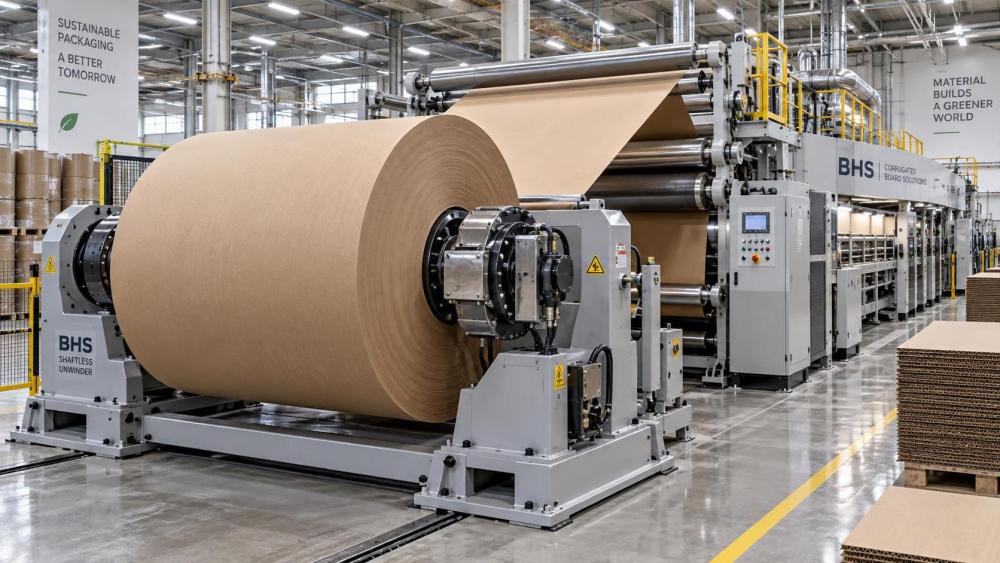
For many packaging projects, shaftless unwind systems deserve early consideration. They can simplify handling of large rolls and reduce the need for operators to manage heavy shafts. Yet shaftless is not automatically better in every situation. Core condition, roll width variation, chuck design, maintenance access, and local operator familiarity all need to be reviewed. A technically advanced design that is difficult to maintain during a night shift is not a robust production solution.
Tension control is a system, not an isolated feature
One common purchasing mistake is to specify a high-grade brake or tension controller without mapping the complete web path. The unwind stand, dancer or load-cell arrangement, idler rollers, web guide, splice unit, infeed nip, and machine PLC all influence actual tension performance. Poor roller geometry, contaminated idlers, worn bearings, or an unsuitable control tuning strategy can undermine an otherwise capable unwind unit.
Engineering teams should be especially cautious when the line must run a wide range of substrates. A tension setting that works for a strong linerboard grade may be inappropriate for lighter paper, coated stock, or a substrate with variable moisture content. The control system should allow practical recipes and controlled adjustment, but it should not encourage arbitrary operator changes without clear process limits. In real production, repeatability matters more than the ability to adjust every setting manually.
Acceleration and deceleration deserve equal attention. Many web handling problems do not occur at steady-state speed; they appear when the line stops for a downstream issue, restarts after a splice, or changes speed during a job transition. A heavy roll continues to rotate unless braking force is controlled correctly. Abrupt braking can create tension spikes, while delayed braking can create slack loops. Reviewing dynamic behavior during factory acceptance and commissioning is more useful than simply checking that the stand rotates under no-load conditions.
Integration points that are easy to overlook
An unwind stand should be reviewed as part of the whole material flow, including logistics around it. Forklift approach routes, roll storage orientation, lifting method, safety guarding, emergency access, and waste removal can affect both uptime and safety. In a constrained plant layout, the best mechanical specification may not be the best installation choice if roll loading blocks aisles or requires awkward handling.
Automation interfaces also need to be defined early. If the line includes automatic splicing, roll diameter sensing, production data capture, or maintenance alerts, the scope of signals between the unwind section and the main control platform should be agreed before installation. Late-stage integration often leads to workarounds: operators entering roll information manually, alarms that do not reach the line control system, or production records that cannot distinguish between a paper-quality issue and a web-handling issue.
For plants moving toward connected production management, the unwind station can provide useful operational context. Roll identity, remaining diameter, splice events, brake status, and tension alarms may help maintenance and production teams investigate recurring losses. The data is only useful when it is interpreted alongside speed, paper grade, order information, and downstream quality events. Collecting signals without assigning ownership for review tends to create dashboards rather than improvements.
Questions to settle before equipment approval
A sound specification review should force the project team to make a few decisions that are often left vague:
- What are the minimum and maximum roll widths, diameters, core formats, and weights expected over the equipment life?
- Which paper grades, films, or coated materials are likely to create the most demanding tension conditions?
- Is the line expected to operate continuously with automatic splicing, or will manual roll changes remain part of the process?
- How should the unwind react during emergency stops, normal stops, acceleration, and downstream speed changes?
- Can operators load rolls safely and consistently using the lifting equipment available in the plant?
- Which wear parts, sensors, brakes, chucks, and bearings require routine inspection, and are they accessible without lengthy shutdowns?
- What control signals must be exchanged with web guides, splice systems, press controls, or plant data systems?
These are not paperwork questions. They determine whether heavy duty unwind stands will remove a constraint or simply relocate it. A supplier may be able to provide a mechanically suitable frame, but the end user and engineering contractor still need to define the operating envelope clearly. If future roll formats or speed targets are uncertain, it is often wiser to identify the expansion path at the design stage rather than assume upgrades will be simple later.
Avoiding the “bigger is better” trap
Oversizing is not always a safe decision. An excessively large unwind assembly may require more floor space, more expensive handling equipment, and more complex maintenance without solving the real issue. Conversely, undersizing can create chronic operational limits that are difficult to correct after commissioning. The right design balances maximum roll capacity with the most frequent operating condition, available utilities, operator workflow, and the line’s true production schedule.
It is also worth separating “line maximum speed” from “sustainable production speed.” A line may be capable of reaching a certain speed under ideal material conditions, but the unwind must perform reliably through roll changes, paper variation, and normal stop-start events. The engineering target should be stable, repeatable output rather than a short demonstration at peak speed.
This broader view is central to system-based equipment evaluation in commercial printing and corrugated packaging. CPCS examines equipment not only through isolated machine specifications, but through the practical relationship between tension control, paper utilization, changeover time, maintenance access, quality stability, and long-term operating cost. For project leaders, that is the more useful lens: the unwind is not a peripheral accessory, but part of the line’s ability to run predictably.
A practical commissioning approach
During commissioning, test the unwind with representative materials rather than only one favorable roll. Observe behavior from a full roll through to low diameter. Review starts, stops, speed ramps, splice events, and web-guide corrections. Ask operators to perform loading and threading under normal working conditions. This usually reveals issues that are invisible in a clean acceptance test: inconvenient access points, unclear control screens, brake tuning that is too aggressive, or an alarm logic that does not help the person standing at the machine.
The most reliable high-speed lines are rarely the ones with the longest feature lists. They are the lines where mechanical design, controls, material behavior, and operator workflow have been considered together. When heavy duty unwind stands are selected on that basis, they can reduce instability at the point where it begins—before a small tension fluctuation turns into waste, downtime, or a quality complaint further down the line.
Related News
 How an Impression Roller for Flexo Printing Affects Print QualityDiscover how an impression roller for flexo printing influences ink transfer, dot gain, alignment, and print consistency. Learn practical setup and troubleshooting tips.Print Fluidics Scientist
 Why Color Measurement Systems Matter for Consistent Flexo PrintingColor Measurement Systems help flexo printers achieve consistent brand colors, reduce waste, improve traceability, and protect packaging quality across every production run.Print Fluidics Scientist
 What to Check Before Choosing a Print Dryers Supplier for Your PressPrint dryers supplier selection guide: compare drying methods, press integration, energy use, maintenance, safety, and support to improve print quality and uptime.Print Fluidics Scientist
 How to Compare Web Tension Controller Manufacturers for Flexo PressesWeb tension controller manufacturer comparison guide for flexo presses: assess stability, sensing, integration, service, and real-world substrate performance.Print Fluidics Scientist
 How Hot Air Print Dryers Improve Ink Drying on Flexo LinesHot air print dryers improve flexo ink drying with balanced airflow, controlled heat, and reliable results for faster packaging production.Print Fluidics Scientist
 How to Choose a Plate Cylinder Manufacturer for Reliable Print QualityChoose a reliable plate cylinder manufacturer with proven precision, balance control, material expertise, and press compatibility for consistent print quality.Print Fluidics Scientist