What to Evaluate When Choosing a Doctor Blade Holder Manufacturer
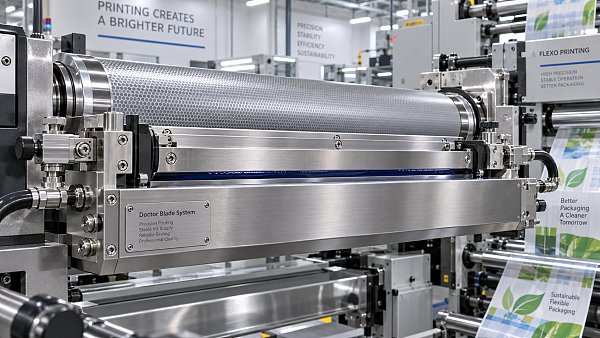
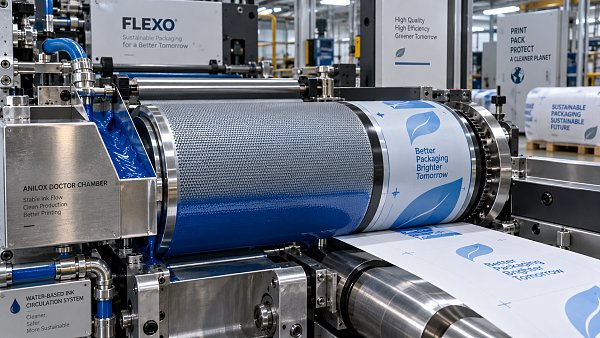
Choosing a doctor blade holder manufacturer is a critical purchasing decision for printing and packaging operations where ink control, print consistency, and uptime directly affect profitability. In flexographic printing, coating, gravure-related applications, and other high-speed processes, the holder is not merely a support for a consumable blade. It is part of the ink metering system that influences density stability, anilox cleanliness, leakage risk, changeover time, and the amount of operator attention a press requires.
For a procurement team, the lowest quotation can be tempting—especially when holders appear similar in a catalog. Yet a poorly matched holder may create costs that do not appear on the purchase order: recurring ink leaks, uneven blade pressure, excess ink consumption, premature anilox wear, difficult cleaning, and production interruptions during urgent jobs. The better question is not “Which supplier sells the cheapest holder?” but “Which holder design will remain stable in our actual press, ink, substrate, and operating routine?”
Start with the Press Application, Not the Supplier List
Before comparing manufacturers, define the operating conditions clearly. A doctor blade holder for a narrow-web label press may face very different demands from one used on a wide-web corrugated pre-print flexo press. Press speed, anilox roll diameter, chamber width, ink chemistry, wash-up process, expected job-change frequency, and available operator skill all affect what a suitable system looks like.
Buyers should prepare an application brief that includes the press make and model, printing unit configuration, existing chamber or holder dimensions, anilox specifications, typical line speed, ink type, cleaning chemicals, and known operating problems. If leakage occurs mainly at the end seals, that points to one area of evaluation. If the concern is unstable solid density at higher speeds, blade loading, holder rigidity, and chamber geometry may matter more.
A manufacturer that asks precise questions before offering a model is often easier to work with than one that immediately promises a universal replacement. “Universal” can be useful in some retrofit situations, but it should not become a shortcut around engineering review.
Evaluate the Holder as a Complete Metering Assembly
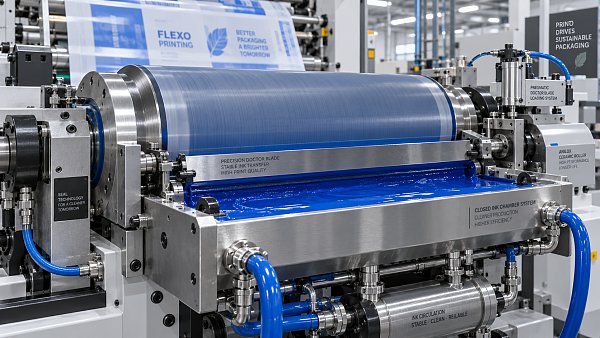
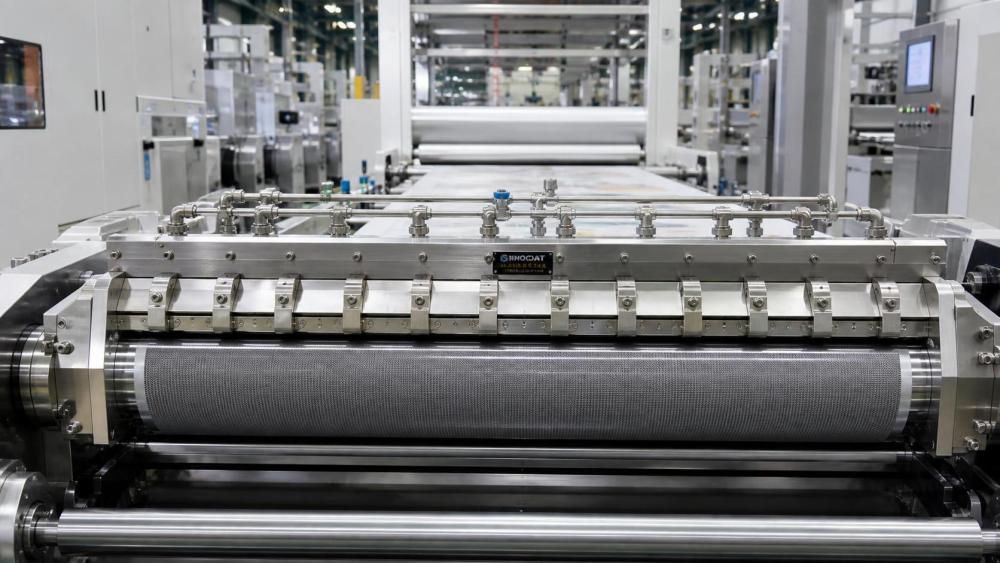
Procurement discussions sometimes focus only on the blade clamp. In practice, print performance depends on the relationship among the holder body, blade support, clamping mechanism, pressure adjustment, chamber sealing arrangement, end seals, ink inlet and return flow, and the anilox roll interface. A strong doctor blade holder manufacturer should be able to explain how these elements work together rather than describe them as unrelated parts.
Pay particular attention to holder rigidity. At production speed, a holder that flexes or responds unevenly to pressure can lead to inconsistent blade contact across the web width. The visual consequence may be streaking, density variation, haze in solids, or a gradual loss of control that operators attempt to correct by increasing pressure. That correction may temporarily hide the issue while increasing blade and anilox wear.
The clamping design also deserves close inspection. It should hold the blade securely and evenly without making blade replacement unnecessarily slow. In packaging plants with frequent order changes, a few extra minutes spent on every wash-up and blade change can become a meaningful labor and availability cost over a year.
Material Choice Is About Chemical Resistance and Long-Term Stability
Materials should be assessed according to the working environment, not simply by appearance. Aluminum, stainless steel, engineered polymers, elastomers, and specialized coatings may all have a place in doctor blade holder construction. The important questions are whether the materials resist the inks, solvents, cleaning agents, humidity, temperature changes, and mechanical loading present in the plant.
Water-based ink systems common in corrugated and paper packaging printing can create different corrosion and residue-management concerns than solvent-based systems. UV inks and aggressive wash-up chemicals may place further demands on seals, gaskets, hoses, and coated surfaces. A supplier should be able to identify which components are exposed to which chemicals and provide practical guidance on compatibility.
Surface finish matters as well. Ink buildup in difficult-to-clean corners can lengthen wash-up time and raise the risk of dried contamination entering the next job. Smooth, accessible surfaces and a design that allows effective cleaning are not cosmetic advantages; they support color consistency and reduce avoidable operator frustration.
Blade Compatibility Should Be Confirmed in Writing
Not every holder is equally suited to every blade type. Steel, coated steel, stainless steel, polymer, lamella, bevel, and specialty blade formats may differ in thickness, stiffness, edge profile, and intended use. A holder that accepts a blade physically may still fail to support it properly at the contact point.
Ask the manufacturer to specify compatible blade widths, thickness ranges, recommended bevel orientations, and any limits on blade projection. The blade projection from the clamp can affect stiffness and metering behavior. Excessive projection may make the blade more prone to vibration, while insufficient projection can limit effective contact geometry or complicate installation.
For plants sourcing blades from more than one vendor, compatibility becomes a commercial issue as well as a technical one. Confirm whether the holder requires proprietary blade dimensions, special clamps, or dedicated consumables. Proprietary systems are not automatically a poor choice, but buyers should understand the supply implications, lead times, and alternative sourcing options before committing.
Sealing Performance Is Often Where Operating Cost Becomes Visible
Ink leakage is one of the most immediate and costly symptoms of a poorly performing chamber system. It wastes ink, increases cleaning labor, creates safety and housekeeping issues, and can force the press crew to slow down or stop. On high-volume packaging work, even small but repeated leaks can undermine the economics of an otherwise capable printing line.
When assessing a doctor blade holder manufacturer, ask how its sealing system handles anilox roll runout, roll surface condition, pressure changes, and varying ink viscosities. End seals are especially important. Their material, profile, contact area, and retention method should be appropriate for the application. An end seal that is difficult to position consistently may generate variable results between operators and shifts.
It is also useful to ask whether the supplier offers different sealing options for different ink systems and press conditions. A credible answer recognizes that no single seal material is ideal for every chemical environment. The supplier should also provide installation guidance, replacement intervals based on observed wear, and troubleshooting steps for common leakage patterns.
Do Not Confuse More Pressure with Better Metering
Many printing problems invite a simple response: tighten the holder or increase blade pressure. That approach can become expensive. Excess pressure may accelerate blade wear, damage the anilox surface over time, increase heat and friction, and make it harder to achieve stable ink metering. The best systems aim for controlled, repeatable contact rather than brute force.
Review how adjustment is made and whether it is repeatable. Pneumatic loading, mechanical adjustment, or other pressure-control arrangements each have operating implications. Buyers should ask whether the system supports even loading along the full width, whether settings can be documented, and how easily operators can return to a known condition after maintenance or a job change.
For plants managing demanding brand colors, barcode readability, fine type, or high-coverage graphics, consistent metering is especially valuable. A holder cannot solve every print-quality issue—anilox condition, ink formulation, plate quality, drying, and registration all matter—but it should not become a source of unnecessary variation.
Compare Total Cost of Ownership, Not Just Unit Price
A purchase comparison should include more than the holder price. Consider the expected life of wear components, blade consumption, seal usage, wash-up labor, spare-part availability, maintenance time, and the financial impact of unplanned downtime. The lowest-cost assembly may become the most expensive option if it requires frequent adjustments or causes recurring leaks on production shifts.
Build a simple ownership-cost review around realistic plant conditions. How many printing units will require holders? How often are blades changed? What does a typical wash-up take? What is the cost of an hour of press downtime during a busy period? How much scrap or rework is associated with color instability? Even without assigning perfect numbers to every item, this exercise helps procurement and production teams see where the risk lies.
It is equally important to assess spare-part economics. Ask for a recommended list of critical spare components, expected lead times, and part identification documents. A holder system should not become unusable because a small clamp, seal retainer, fitting, or adjustment component cannot be sourced quickly.
Look for Engineering Support That Continues After Delivery
Doctor blade holders are frequently purchased as replacements, retrofits, or upgrades on existing presses. In these cases, dimensional accuracy and installation support are as important as the product itself. A manufacturer should be prepared to review drawings, confirm mounting interfaces, clarify roll dimensions, and identify any modifications required before shipment.
Technical support is particularly valuable when a plant is trying to resolve a persistent issue rather than simply replace worn equipment. The supplier should be willing to discuss symptoms in practical terms: where leakage begins, whether it occurs at startup or after speed increases, how the blade wears, what ink is used, and whether the issue is isolated to one color deck or appears across the press.
Ask what documentation comes with the system. Useful materials include installation instructions, exploded parts views, blade-loading procedures, pressure-setting guidance, cleaning recommendations, and troubleshooting notes. Clear documentation reduces dependence on one experienced operator and makes maintenance practices easier to standardize across shifts.
Assess Manufacturing Consistency and Quality Control
For a single urgent replacement, buyers may accept a narrow evaluation process. For multiple presses, long-term supply, or an OEM relationship, manufacturing consistency becomes a larger concern. The holder should arrive with stable dimensions, clean machining, reliable fasteners, properly finished sealing surfaces, and repeatable assembly quality.
Rather than relying only on broad claims about quality, request evidence relevant to the product: inspection methods, material traceability practices where applicable, dimensional tolerances, pressure or leak testing procedures, and final assembly checks. A manufacturer does not need to disclose every internal process, but it should be able to explain how it prevents variation from unit to unit.
For international purchasing, clarify packaging standards, export documentation, labeling, and how replacement parts are identified. Confusion at this stage can delay installation and turn a straightforward maintenance purchase into a costly production problem.
A Practical Supplier Evaluation Checklist
Before issuing a purchase order, procurement teams can use the following questions to compare shortlisted suppliers:
- Does the holder fit the press and anilox configuration without uncertain field modifications?
- Which blade types, thicknesses, and profiles are approved for the design?
- How does the holder maintain even blade contact across the working width?
- What end-seal and gasket materials are recommended for the plant’s ink and cleaning chemistry?
- How quickly can operators change blades, clean the chamber, and replace seals?
- What components are considered wear parts, and what are their typical supply lead times?
- Can the manufacturer provide drawings, installation instructions, and responsive troubleshooting support?
- What is included in the quoted scope: holder body, blades, seals, fittings, hoses, mounting hardware, or spare kits?
- Has the supplier worked with similar flexographic, corrugated pre-print, coating, or packaging-printing conditions?
Use Trials and Acceptance Criteria When the Risk Is Meaningful
For a new press configuration, a wide-web line, or a recurring quality problem, a sample evaluation or controlled trial can be more valuable than a lengthy quotation comparison. Define acceptance criteria before the trial begins. These may include leakage behavior at target speed, ease of installation, blade-change time, operator feedback, visible print stability, cleaning effort, and condition of the blade and seal after a planned run.
The trial should reflect real production where possible. A short test using one ink and a clean anilox may not reveal the issues that occur after several job changes, extended running, or a difficult coating. Involve press operators, maintenance personnel, quality staff, and purchasing in the review. Each group sees a different part of the ownership cost.
Making the Final Decision
The right doctor blade holder manufacturer is not necessarily the largest supplier, the nearest supplier, or the company with the lowest initial quote. The strongest choice is the one that can match a robust, maintainable holder system to the realities of the plant and support that system with clear technical information and dependable parts access.
For commercial printing and corrugated packaging producers, ink metering is closely tied to waste control, color stability, and production reliability. A carefully evaluated holder can reduce the small daily disruptions that quietly consume time and margin. When procurement treats the holder as a production-critical assembly rather than a simple accessory, the final decision is more likely to support consistent print quality and lower operating risk over the long term.
Related News
 How to Choose an Anilox Sleeve Supplier for Consistent Print QualityChoose an anilox sleeve supplier with proven engraving control, reliable sleeve construction, and expert support to achieve consistent print quality and lower waste.Print Fluidics Scientist
 How to Choose an Ink Viscosity Sensors Supplier for Flexo PrintingChoose an ink viscosity sensors supplier for flexo printing with confidence. Compare ink compatibility, installation, calibration, controls, and service support to improve color consistency and reduce waste.Print Fluidics Scientist
 How Ink Metering System Manufacturers Improve Anilox Ink ControlInk metering system manufacturer insights: improve anilox ink control with stable blade loading, reliable seals, and efficient circulation for cleaner flexo printing.Print Fluidics Scientist
 Is Ceramic Anilox Roller Damage Repairable Without Affecting Print Quality?Is ceramic anilox roller damage repairable? Learn when cleaning, restoration, re-engraving, or replacement can protect consistent print quality.Print Fluidics Scientist
 How to Evaluate a Doctor Blade Holder Manufacturer for Flexo PressesDoctor blade holder manufacturer evaluation guide for flexo presses: compare design, sealing, materials, service, and lifecycle cost to improve uptime and print quality.Print Fluidics Scientist
 How Ceramic Rollers for Flexo Presses Reduce Wear and Ink VariationCeramic rollers for flexo press applications reduce wear and ink variation. Explore practical cleaning, inspection, and maintenance tips for stable print quality.Print Fluidics Scientist