What Determines Ceramic Roller Price for Flexographic Printing
The quoted ceramic roller price for a flexographic press has little meaning without the specification behind it. Two rollers with the same face width can differ substantially in cost because the quoted item may have a different base body, ceramic coating system, engraving method, cell volume, journal arrangement, balancing requirement, or inspection scope. A lower quotation may describe a usable roller for a narrow range of work; a higher quotation may reflect the accuracy and durability required for consistent ink transfer over a long production cycle.
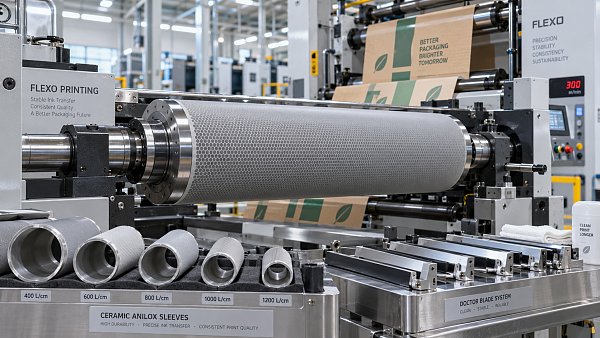
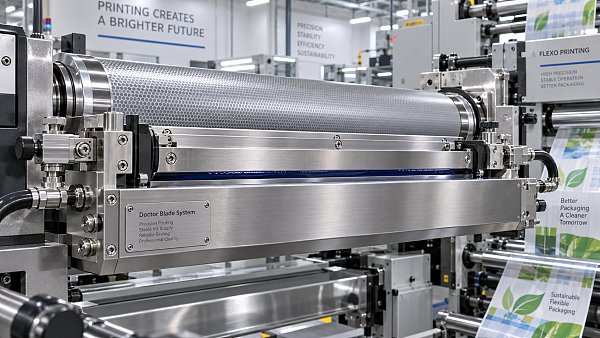
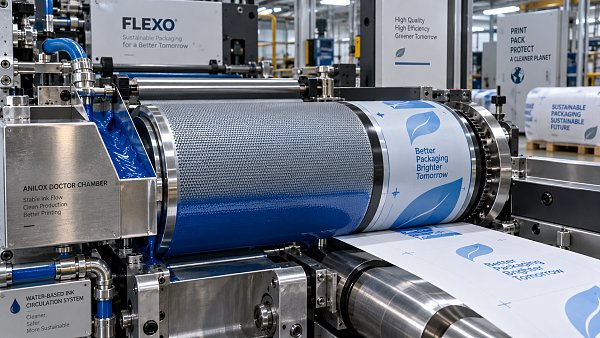
For flexographic printing, the ceramic roller is normally an anilox roller. Its engraved cells meter a controlled ink volume to the plate. Price therefore follows the amount of engineering required to make that metering repeatable across the roller surface and stable through cleaning, doctor blade contact, ink chemistry, and press speed. Comparing unit prices without matching the functional specification often creates false savings.
Start with the roller body, not the engraving label
The substrate establishes the roller's structural cost and its suitability for the press. Steel bodies are common, but their wall thickness, internal construction, corrosion protection, and machining tolerance vary. A long, wide roller operating at high speed needs sufficient stiffness to limit deflection. If the body bends under load, the contact pattern with the doctor blade and rubber roll changes across the web, causing uneven ink delivery even when the engraving is correct.
Dimensions influence price in more ways than material volume. Face length, overall length, outside diameter, shaft geometry, bearing-seat dimensions, drive-end features, and lifting arrangements all add machining time. A replacement roller also has to match the existing press exactly. A dimensionally similar body that has the wrong journal length, keyway, gear fit, or bearing tolerance may require rework before it can be installed. That cost is often omitted from an initial comparison.
For wider corrugated or paper packaging presses, dynamic behavior deserves attention. A roller can appear sound at low speed yet develop vibration when the press accelerates. Balancing requirements, concentricity, runout control, and the relationship between the engraved surface and journals are part of the manufacturing cost. They should be stated in the request rather than assumed from the roller diameter alone.
Ceramic coating quality changes both price and usable life
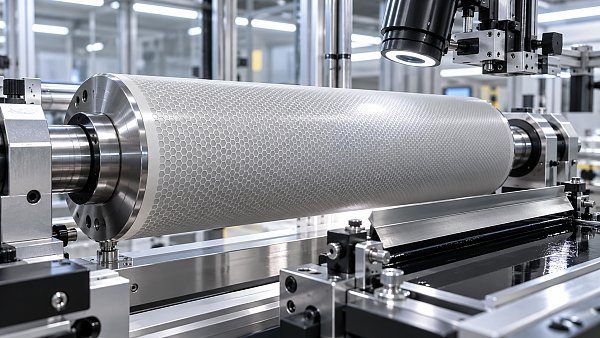
The ceramic layer must resist wear while remaining suitable for fine laser engraving. Coating composition, spraying method, bond quality, thickness, density, and finishing all influence the price. A coating with excessive porosity can retain ink and cleaning residues. One with poor adhesion may crack or separate after impact, thermal stress, or prolonged doctor blade contact. Neither issue is visible from a broad description such as “ceramic anilox.”
Surface preparation before coating matters because the ceramic layer depends on a reliable bond to the body. Grinding and polishing after coating also affect the final roundness and surface condition. These steps take time, especially on large rollers or when a tight tolerance is required. A quotation that lists the coating but says little about inspection leaves an important gap: the ceramic is the functional surface, but its performance depends on the whole body-and-coating system.
Hardness alone should not decide the comparison. A very hard surface is not automatically the better choice if the coating structure, engraving quality, or working environment are unsuitable. Abrasive inks, aggressive wash chemicals, frequent blade changes, and damage from handling place different demands on the roller. The cost of a more robust coating can be justified where the roller sees continuous production or difficult cleaning conditions, while the same construction may add expense without material benefit in a limited-duty application.
Cell geometry is a production specification, not a decorative detail
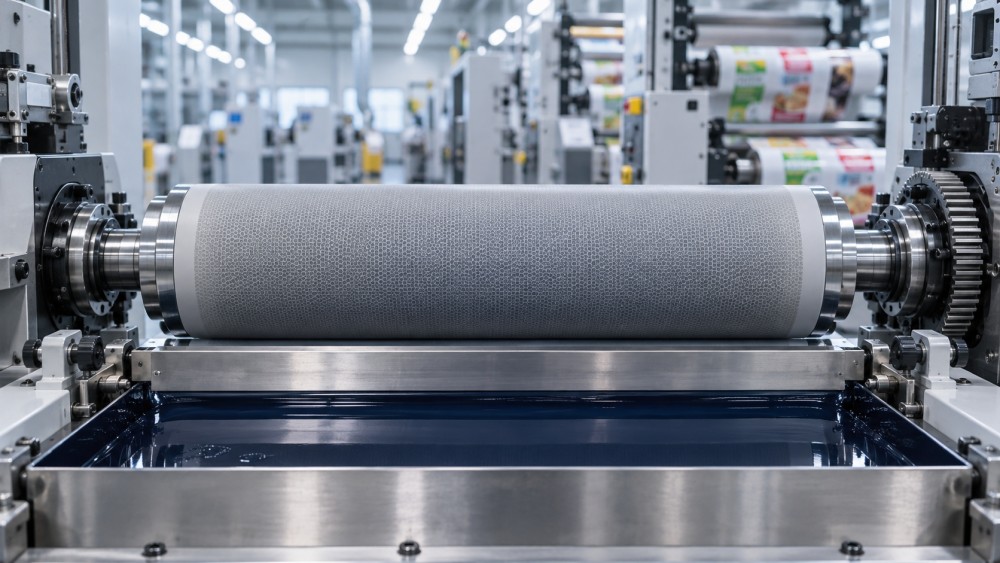
Cell count and volume are often treated as the main price indicators, but the relationship is more specific. Fine engravings require tighter process control because small variations in cell opening, depth, or wall shape change the delivered ink film. Coarser engravings may involve fewer cells, yet they can require substantial cell volume and durable geometry for heavy ink laydown. The right specification follows the ink system, plate, substrate, print design, and target density.
Line screen by itself does not define ink capacity. Two rollers can have the same screen count but different cell volumes because their cell depth and opening geometry differ. They may print very differently. A quotation should identify the engraving pattern and nominal volume in the unit used by the press operation, along with the measurement basis. Where historical records use a different volume unit, conversion should be verified carefully rather than copied into an order form.
Cell angle is also relevant. The selected angle affects the interaction between the engraved pattern, plate screening, and printed image. In some jobs, an unsuitable relationship can contribute to moire or unstable tonal areas. This is not a reason to specify the most complex engraving for every roller. It is a reason to define the intended print work before selecting an engraving. The cost of a specialist screen is best evaluated against the actual job mix, not against a generic “higher resolution” description.
Why volume verification matters
Nominal volume is a manufacturing target, while usable ink transfer is influenced by cell condition, doctor blade setting, ink rheology, cleaning quality, and plate contact. A new roller should be accompanied by enough information to confirm that the delivered engraving corresponds to the ordered specification. This may include a surface scan, cell-volume report, engraving description, face dimensions, and identification marking. Without a documented baseline, it is difficult to distinguish normal production variation from a roller that has been supplied incorrectly.
Volume selection also changes with the printing process. Water-based ink on absorbent corrugated linerboard does not behave like UV ink on film or coated paper. High solids, white ink, varnish, metallic effects, and heavy coverage areas may need a different metering approach from fine process graphics. Using an existing roller specification from an unrelated press or substrate is a common source of excessive ink consumption, weak density, dirty type, or poor highlight reproduction.
Engraving technology and finish create meaningful price differences
Laser engraving is central to the value of a ceramic anilox roller. The process determines the consistency of cell shape and the cleanliness of cell openings. Fine screens and controlled volumes demand more exact setup and verification than a general-purpose coarse engraving. Price changes when the order requires a particular cell form, unusually tight volume tolerance, a complex pattern, or full traceability of the engraved result.
The engraved surface also needs careful finishing. Burrs, irregular cell walls, blocked cells, or damaged lands affect wiping and transfer. A roller may meet an overall dimensional drawing while still creating print problems if its surface finish is poorly controlled. This explains why a technically detailed offer can cost more than a quotation that lists only roller size and line screen.
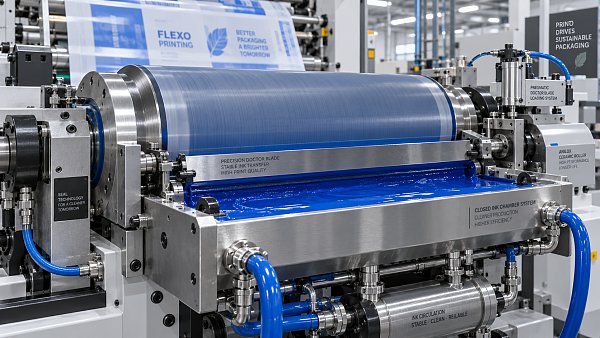
Engraving decisions should remain linked to the doctor blade chamber. Blade material, tip geometry, blade pressure, chamber alignment, and seal condition influence how the cells are wiped. A fine engraving that performs well with a stable chamber may be more vulnerable to contamination or blade-setting variation in another unit. The roller should not be ordered as an isolated component when its contact system is known to be worn, misaligned, or unsuitable for the selected screen.
Ink and cleaning chemistry affect the real cost of ownership
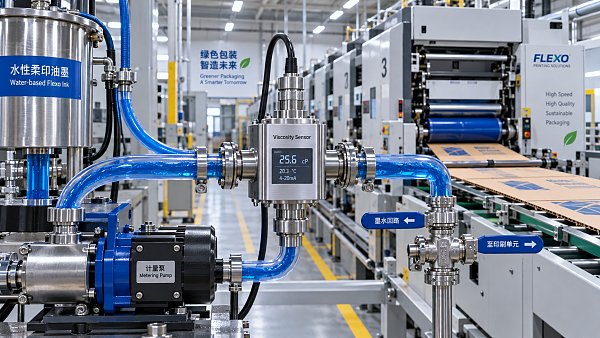
Ink compatibility extends beyond whether an ink is water-based, solvent-based, or UV-curable. Pigment type, particle size, resin system, additives, viscosity control, and drying behavior influence cell filling and release. Some ink systems make incomplete cleaning more likely, particularly when dried residues accumulate in narrow cells. The resulting loss of effective volume can be mistaken for a printing-pressure issue or a plate problem.
Cleaning methods should be considered before selecting a roller construction and engraving. Chemical washing, ultrasonic systems, media blasting, and manual cleaning do not apply the same mechanical or chemical stress. A method that restores volume on one roller may shorten the service life of another if it attacks the coating, rounds cell edges, or leaves residues. The purchase specification should state the normal cleaning approach and any chemicals already used in the pressroom.
Downtime is part of the ceramic roller price even though it does not appear on the supplier invoice. A roller that requires frequent deep cleaning, produces inconsistent density, or becomes difficult to doctor cleanly can consume press time and ink. Conversely, a costly engraving is not automatically economical when the job mix changes frequently and a broader, more versatile roller would reduce changeover complexity. The useful comparison is between a defined set of printing duties, not between price tags.
Replacement, refurbishment, and new manufacture are different quotations
A lower figure may refer to re-engraving or recoating an existing roller body rather than supplying a new roller. Refurbishment can be practical when the core, journals, and bearing locations remain within acceptable condition. The old coating is removed, the body is assessed, a new ceramic layer is applied, and the roller is engraved again. Its cost and lead time depend on the condition of the returned body and the repair work required after stripping.
A refurbishment quote should identify what happens if hidden corrosion, journal damage, cracking, or excessive runout is found. Otherwise, the stated price may be only a starting point. The condition of the core should be reviewed before committing production schedules to a return-and-recoat plan. A new roller may be the more predictable option when the existing body has an uncertain repair history or when press modifications require a changed geometry.
Transport is not trivial for a precision roller. Improper packing can damage journals, bearings, or the engraved surface before installation. The quote should clarify whether it includes end protection, a support cradle, return packaging for a refurbishable core, and insurance responsibility during shipment. A roller should never rest directly on its ceramic face during storage or handling.
Details that make quotations comparable
A short but complete technical request prevents suppliers from pricing different assumptions. It should include the press make and station position, face width, overall length, diameter, journal drawing or sample dimensions, required engraving, target volume, cell angle where relevant, ink type, substrate range, doctor blade arrangement, and expected operating conditions. Existing roller identification and inspection records are useful when the order is a like-for-like replacement.
- Define the supplied scope. State whether the price includes a new body, bearings, gears, sleeves, end seals, balancing, inspection documents, and packaging.
- Separate dimensional tolerances from engraving tolerances. A roller can be mechanically compatible while having a cell volume that does not support the required color target.
- Ask how acceptance will be handled. The relevant question is whether dimensions, runout, engraving, and volume are checked before dispatch and how discrepancies are documented.
- Include installation constraints. Limited lifting clearance, difficult access at a print unit, or special locking hardware can affect the roller design and the risk of damage during changeover.
Lead time should be linked to the completeness of this information. A fast quotation based on incomplete dimensions can become slow once drawings are corrected, engraving is revised, or the press-side hardware is found to differ from the record. Clarifying these points early is usually more valuable than reducing the unit price by selecting an uncertain specification.
Reading a price difference without oversimplifying it
When two ceramic roller prices differ, first compare the supplied scope and functional requirements. A difference may come from larger dimensions, a heavier or more precise body, a different ceramic coating, finer engraving, tighter volume control, added balancing, or a new core instead of refurbishment. It may also come from exclusions that will appear later as separate charges.
The strongest basis for selection is a roller specification tied to the actual press, ink, plate, substrate, and print objective. That approach avoids two expensive outcomes: paying for precision that the work does not use, or accepting an inexpensive roller whose metering behavior creates ongoing color, waste, cleaning, and uptime problems. A ceramic anilox roller is a consumable production asset with precision characteristics, so its value is determined by how reliably those characteristics are maintained in the intended flexographic process.
Related News
 How to Choose an Anilox Sleeve Supplier for Consistent Print QualityChoose an anilox sleeve supplier with proven engraving control, reliable sleeve construction, and expert support to achieve consistent print quality and lower waste.Print Fluidics Scientist
 How to Choose an Ink Viscosity Sensors Supplier for Flexo PrintingChoose an ink viscosity sensors supplier for flexo printing with confidence. Compare ink compatibility, installation, calibration, controls, and service support to improve color consistency and reduce waste.Print Fluidics Scientist
 How Ink Metering System Manufacturers Improve Anilox Ink ControlInk metering system manufacturer insights: improve anilox ink control with stable blade loading, reliable seals, and efficient circulation for cleaner flexo printing.Print Fluidics Scientist
 Is Ceramic Anilox Roller Damage Repairable Without Affecting Print Quality?Is ceramic anilox roller damage repairable? Learn when cleaning, restoration, re-engraving, or replacement can protect consistent print quality.Print Fluidics Scientist
 How to Evaluate a Doctor Blade Holder Manufacturer for Flexo PressesDoctor blade holder manufacturer evaluation guide for flexo presses: compare design, sealing, materials, service, and lifecycle cost to improve uptime and print quality.Print Fluidics Scientist
 How Ceramic Rollers for Flexo Presses Reduce Wear and Ink VariationCeramic rollers for flexo press applications reduce wear and ink variation. Explore practical cleaning, inspection, and maintenance tips for stable print quality.Print Fluidics Scientist