How to Choose an Ink Viscosity Sensors Supplier for Flexo Printing
How to Choose an Ink Viscosity Sensors Supplier for Flexo Printing
Choosing the right ink viscosity sensors supplier is a practical production decision, not a minor instrumentation purchase. In flexographic printing, viscosity sits close to the center of ink transfer, color repeatability, drying behavior, dot reproduction, and press cleanliness. When viscosity control becomes unreliable, operators often compensate manually: adding water, solvent, or ink concentrate based on appearance and experience. That may keep a job running for the moment, but it can also create avoidable color drift, waste during setup, inconsistent print density, and difficult root-cause analysis later.
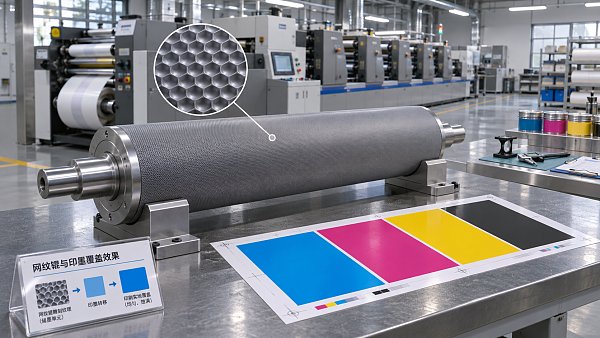
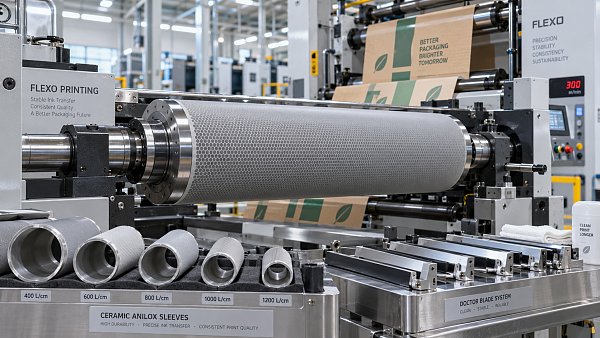
This is particularly relevant for corrugated box plants and commercial packaging printers using water-based inks on high-speed flexo presses. A press may be equipped with good anilox rollers, doctor blade systems, registration controls, and drying sections, yet still lose stability because the ink kitchen or circulation loop is not being measured consistently. The supplier therefore needs to understand more than the sensor itself. They should understand how ink behaves in a working flexo system.
For buyers reviewing automation investments, the strongest choice is rarely the supplier offering the lowest unit price. It is usually the supplier that can show how its measurement method, installation arrangement, control logic, calibration process, and service model fit the actual press environment.
Start with the production problem, not the sensor catalogue
Before comparing suppliers, define what the plant is trying to correct. “We need viscosity sensors” is too broad for a meaningful technical evaluation. A narrow-web label press, a wide-web flexible packaging press, and a post-print corrugated flexo line may all use flexographic printing, but their ink delivery systems, press speeds, cleaning routines, ink volumes, and tolerance for variation can be very different.
In a corrugated post-print operation, common concerns include color variation across long runs, frequent changes between board grades, ink foaming, inconsistent transfer to absorbent linerboard, and operator dependence during shift changes. In a commercial flexo environment, the priority may be tighter color control, repeat-job consistency, reduced startup material, or better documentation for brand-sensitive packaging. Some plants simply need a dependable alert when viscosity moves outside the approved working range; others need a closed-loop system that automatically doses water, solvent, or ink under controlled conditions.
A capable ink viscosity sensors supplier should ask these questions early. If the first conversation is limited to sensor model, price, and delivery time, that is not necessarily a disqualifier, but it is not enough for a production-critical application.
Check whether the measurement principle suits the ink and circulation system
Viscosity can be monitored using different approaches, including flow-cup style measurement, vibrating systems, rotational methods, and other inline sensing designs. The correct method depends on the ink chemistry, required response time, contamination risk, process temperature, and how the ink is circulated. A measurement principle that works adequately in a controlled laboratory environment may be less dependable beside a production press exposed to vibration, dried ink, air entrainment, and wash-up chemicals.
Water-based inks deserve particular attention. Their viscosity can be affected by evaporation, temperature, pH management, pigment loading, foam, and the addition of different press-side components. A supplier should be able to explain how the sensor handles bubbles, suspended pigment, residue buildup, and changes in ink temperature. If temperature compensation is part of the proposed solution, ask how it is applied and what operating assumptions it relies on. “Temperature compensated” is useful wording, but buyers should understand whether it reflects the actual ink condition in the loop.
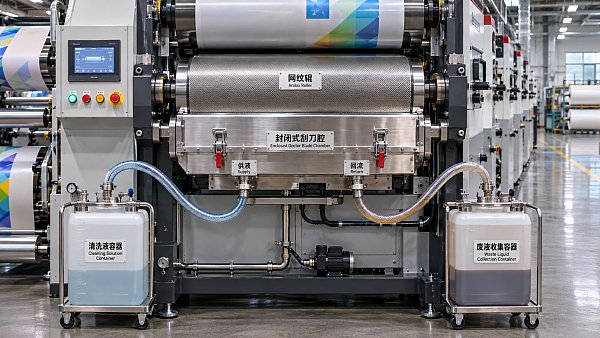
The location of the sensor also matters. A device installed where ink flow is unstable or where air is drawn into the return line can generate readings that look precise but do not represent the ink being delivered to the chamber or fountain. The supplier should review the circulation route, pump type, hose diameter, return flow, agitation method, and likely dead zones before recommending an installation point.

Do not separate viscosity control from the rest of the flexo process
Viscosity is one process variable among several, and a supplier who treats it as the only answer to print consistency is oversimplifying the job. On a flexo press, color and transfer are also influenced by anilox condition, cell volume, doctor blade performance, ink temperature, pH where applicable, substrate absorption, plate condition, impression settings, drying capacity, and press speed.
That does not reduce the value of viscosity measurement. It clarifies its role. Good viscosity control gives the plant a stable reference point. It makes press adjustments more visible and repeatable, especially when the production team is trying to identify whether a color issue comes from ink behavior, anilox wear, board variation, or mechanical settings.
For this reason, ask potential suppliers whether their system can communicate with existing press controls, ink management equipment, or plant data platforms. Integration does not always need to be complex. Even a reliable trend record, alarm output, or batch-level process history can help maintenance and quality teams investigate recurring problems. In more automated packaging plants, viscosity data may be more valuable when reviewed alongside job information, press speed, wash-up activity, and quality inspection findings.
Evaluate calibration and cleaning as operating realities
Many sensor projects look convincing during a demonstration and become frustrating after several months because calibration and cleaning were not considered seriously. Flexo inks can dry quickly in poorly flushed sections. Pigment deposits can affect wetted surfaces. Operators under production pressure may bypass a device if its daily care routine is unclear or time-consuming.
A supplier should provide a practical answer to several questions: How is the instrument verified? What reference method is used at the plant? How often should the measurement be checked? What warning signs indicate fouling or drift? Can the sensor remain in place during normal wash-up, or does it need removal? Are seals, fittings, or wetted components consumable items? These details have more commercial value than a generic claim of “low maintenance.”
It is also wise to distinguish calibration from correlation. A device may be calibrated correctly but still show a value that does not align with the plant’s historical cup-based working targets. Where a pressroom uses established viscosity ranges tied to specific inks and jobs, the supplier should help define how the new inline reading will be correlated, documented, and accepted by operators. Otherwise, the system can create confusion rather than control.
Compare suppliers on application support, not only equipment specifications
An ink viscosity sensors supplier may have a technically capable product but limited experience in corrugated or packaging printing. That gap often appears during commissioning. The issue may not be electrical installation; it may be a return line that retains old ink, an unsuitable dosing point, a pump that introduces excessive air, or a wash-up procedure that leaves residue inside the sensing area.
Ask for a clear description of the supplier’s commissioning scope. Will they review the ink circulation layout? Will they assist with baseline settings for each ink family? Can they train press operators, ink technicians, maintenance staff, and quality personnel differently? Each group uses the system in a different way. Operators need simple status signals and sensible responses. Maintenance teams need fault diagnosis and cleaning procedures. Quality teams need confidence that recorded values have meaning.
Service response deserves equal attention. A packaging plant may run short lead-time orders, multiple shifts, and frequent changeovers. If a sensor failure requires a specialist visit or a long lead time for a small replacement component, the theoretical benefit of automation can disappear quickly. Buyers should ask about local technical coverage, remote troubleshooting, spare parts availability, documentation quality, and responsibility for software updates where controls are networked.
Use a supplier comparison that reflects real operating risk
Look beyond purchase price when calculating value
The price comparison should include more than sensor hardware. Consider installation modifications, control cabinet work, pumps or dosing equipment, commissioning, operator training, validation time, replacement parts, and ongoing cleaning requirements. A low-cost device that needs frequent manual attention may be a poor fit for a plant with limited technical labor. Conversely, a highly automated system may be difficult to justify on a low-volume press with simple one-color work and stable ink handling.
A sensible business case normally links the system to specific operating questions: Can it reduce setup adjustment? Can it make color more repeatable across shifts? Can it reduce unnecessary ink additions? Can it make pressroom decisions less dependent on one experienced operator? Can it provide a usable record when a customer questions print consistency? The answers should be tested during technical discussions, rather than assumed from a brochure.
For organizations evaluating broader packaging factory automation, viscosity monitoring also belongs in a larger process picture. Corrugator performance, board moisture, print registration, inspection results, coding accuracy, die-cut quality, and end-of-line handling each affect finished-packaging yield. CPCS approaches equipment assessment from this system perspective: the question is not simply whether one device works, but whether it improves the reliability of the production flow around it.
A practical final step before placing the order
Before selecting a supplier, arrange a structured review using one representative press, one or two regularly used ink families, and the plant’s normal circulation arrangement. Document current operator checks, typical adjustment points, cleaning procedures, and the information that quality staff actually need. Then ask each supplier to respond to that same operating brief.
The best proposal will not necessarily be the one with the most features. It will be the one that explains where the sensor goes, what can affect the reading, how operators will act on it, how the device will be kept clean and verified, and who takes responsibility when the press does not behave as expected. That is the standard an ink viscosity sensors supplier should meet for serious flexo printing operations.
Related News
 How Do I Choose Anilox Roller Volume for Solid Coverage?How do I choose anilox roller volume for solid coverage? Discover practical testing tips to achieve even ink coverage, reliable color and efficient production.Print Fluidics Scientist
 How to Choose Anilox Sleeves for Flexo PrintingChoose anilox sleeves for flexo printing with confidence. Compare cell volume, screen count, press fit and trial results to improve print consistency.Print Fluidics Scientist
 How Does a Chamber Wash-Up System Clean a Flexo Press?Discover how a chamber wash up system for flexo press cleans ink paths and anilox surfaces, improves color changeovers, and helps prevent contamination.Print Fluidics Scientist
 What Determines the Cost of an Enclosed Doctor Blade System?Enclosed doctor blade system cost depends on equipment, installation and upkeep. Compare lifetime costs and build a stronger business case.Print Fluidics Scientist
 How Often Should Doctor Blades Be Replaced on a Flexo Press?How often should doctor blades be replaced on a flexo press? Discover key wear signs and scheduling tips to reduce waste, protect your anilox, and maintain consistent print quality.Print Fluidics Scientist
 How to Choose an Anilox Sleeve Supplier for Consistent Print QualityChoose an anilox sleeve supplier with proven engraving control, reliable sleeve construction, and expert support to achieve consistent print quality and lower waste.Print Fluidics Scientist