How to Choose an Anilox Sleeve Supplier for Consistent Print Quality
A print defect rarely begins at the moment it becomes visible. A weak solid, uneven tone, shifting density, or inconsistent barcode contrast may have started earlier—with an anilox sleeve that does not transfer ink predictably, does not match the press configuration, or cannot be maintained in stable condition.
For procurement teams, choosing an anilox sleeve supplier is therefore not a minor consumables decision. It is a production-risk decision. The sleeve influences ink volume, color repeatability, cleaning workload, setup time, waste levels, and the ability of a flexographic press to deliver the same result across runs, shifts, and packaging substrates.
The lowest quotation can look attractive on a purchasing comparison sheet. Yet if sleeves wear prematurely, arrive with inconsistent engraving specifications, or come without useful technical support, the cost appears later in press downtime, color corrections, rejected board, and difficult customer conversations. A more reliable supplier relationship begins with a clearer understanding of what the plant actually needs from its anilox program.
Start with the print application, not the sleeve catalogue
Anilox sleeves are not interchangeable simply because they fit the same mandrel. The right specification depends on how the press runs, what inks are used, which substrates are printed, and what the final package must achieve. A corrugated post-print line producing transport cartons has different requirements from a narrow-web label press, a flexible packaging converter, or a pre-print operation serving high-graphic retail packaging.
Before contacting suppliers, procurement should collect a practical operating profile from production, prepress, quality, and maintenance teams. This avoids a common problem: buying sleeves based on a broad line-screen recommendation while overlooking the factors that determine real ink transfer on press.
- Press type, sleeve diameter range, mandrel system, and operating speed
- Water-based, solvent-based, UV, or other ink systems
- Typical substrates, including kraft liner, coated board, paper, film, or laminated materials
- Artwork mix: solids, screens, fine text, barcodes, process color, or specialty coatings
- Current line count, cell volume, engraving geometry, and target density values
- Cleaning method, storage conditions, and the plant’s maintenance discipline
- Frequent quality issues, such as dirty print, plugging, mottling, pinholing, or color drift
This information changes the supplier conversation. Rather than asking, “What sleeve do you recommend?” the buyer can ask whether a proposed engraving and sleeve construction will support a defined ink, plate, substrate, and production target.
Evaluate engraving quality as a repeatability issue
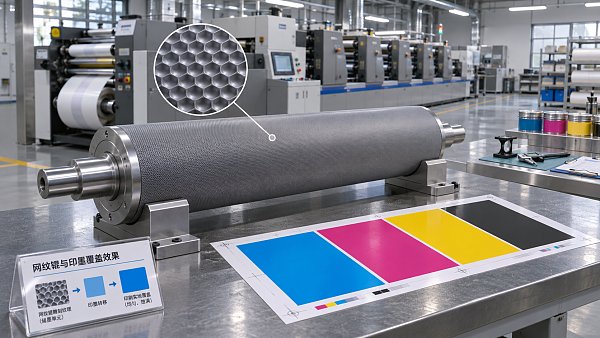
The engraving is where the anilox sleeve earns its place in the process. Cell geometry, volume consistency, screen count, wall structure, and surface condition all affect how ink is picked up, metered, released, and reproduced on the substrate. For purchasing teams, the central question is not whether a supplier offers laser engraving. Most established suppliers do. The question is whether their engraving process is controlled well enough to produce sleeves that behave consistently from one order to the next.
Ask suppliers how they define and verify cell volume. A stated volume without a clear measurement and reporting method gives limited confidence. It is also worth discussing whether the supplier can provide inspection documentation showing relevant sleeve specifications, and whether those values are traceable to the individual sleeve.
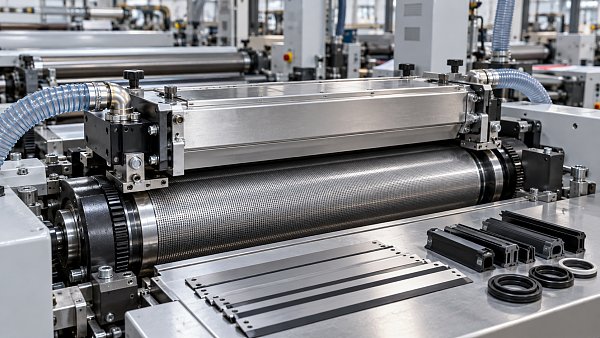
In practical terms, a sleeve set for a process-color job should not create unexplained density differences simply because one replacement was sourced months later. Likewise, a sleeve used for heavy solids or coatings needs enough usable volume and an engraving geometry that releases ink consistently rather than leaving operators to compensate through pressure, viscosity, or doctor blade adjustments.
Procurement should involve the pressroom when reviewing engraving recommendations. Operators often know which current sleeves clean poorly, which cell volumes are difficult to control, and where a nominally correct specification has repeatedly caused problems. Their experience is valuable evidence, not anecdote.
Material construction matters long after installation
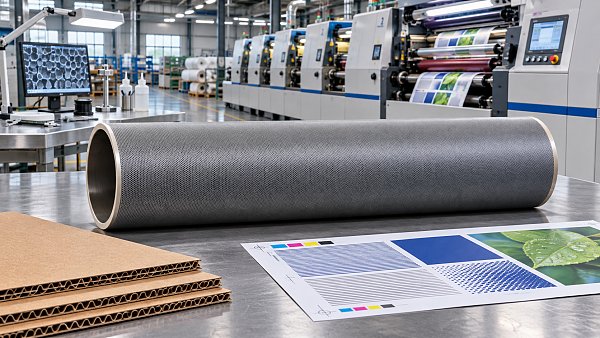
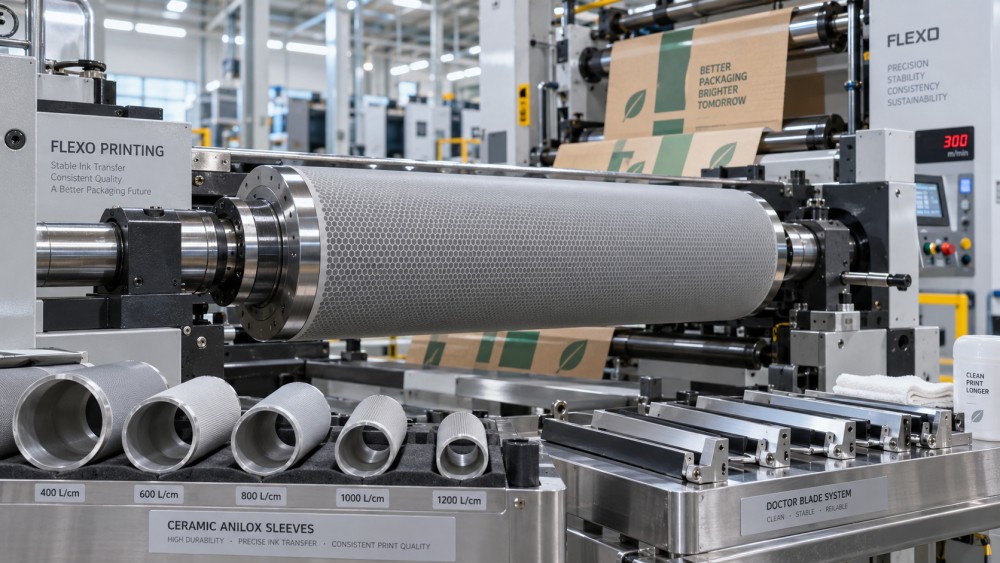
Anilox sleeve performance is shaped by more than the ceramic surface. The base construction, dimensional stability, balance, compressibility, edge treatment, and fit on the mandrel all influence how reliably the sleeve runs at speed. A sleeve that is difficult to mount, prone to damage at the ends, or unstable under production conditions can quickly turn a routine job change into a maintenance event.
When comparing an anilox sleeve supplier, buyers should ask about the sleeve body materials and manufacturing controls used to maintain concentricity and dimensional accuracy. This is especially relevant in high-speed flexographic printing, where vibration, doctor blade contact, and registration stability can expose weaknesses that may not be obvious during initial inspection.
Compatibility also deserves close attention. The supplier should understand the press manufacturer’s sleeve and mandrel requirements, including air-assisted mounting systems where applicable. A technically capable supplier will not treat compatibility as a simple diameter check. They will ask about operating conditions, loading practices, storage, and whether the customer has experienced mounting damage or sleeve slippage in the past.
Cleaning performance should be part of the buying decision
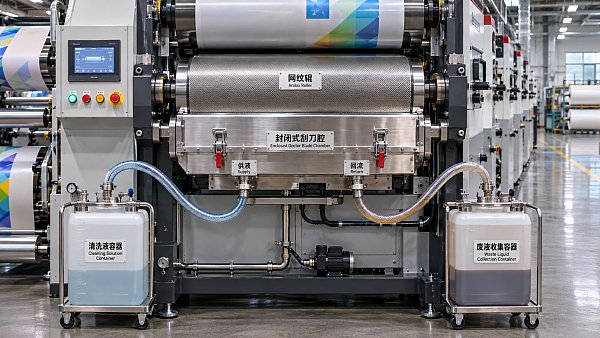
A sleeve can meet the correct volume specification on day one and still become a source of unstable print if its cells are difficult to clean. Dried ink, coating residues, paper dust, and poorly matched cleaning chemistry reduce effective cell volume. The result may be lighter colors, uneven solids, more frequent wash-ups, and growing pressure on operators to “make it work” through process adjustments.
For this reason, do not evaluate a supplier only on initial print trials. Discuss how the proposed engraving geometry interacts with the plant’s inks and cleaning process. A packaging converter using water-based inks on corrugated board may face different plugging risks from a plant printing UV inks on coated substrates. The supplier should be able to advise on suitable maintenance practices without making unrealistic claims that any sleeve will remain clean regardless of how it is handled.
Useful questions include:
- Which cleaning methods are compatible with the sleeve surface and construction?
- Are there restrictions on chemical cleaners, ultrasonic cleaning, soda blasting, laser cleaning, or other recovery methods?
- What handling practices reduce edge damage and contamination during storage?
- Can the supplier help diagnose whether declining print density is caused by plugging, wear, doctor blade condition, ink formulation, or another process variable?
A supplier that understands cleaning as part of ink-transfer control is usually more valuable than one that only ships engraved sleeves.
Do not compare prices without comparing service scope
Unit price is easy to compare. The cost of a missed delivery, an incorrect specification, or a delayed response during a production problem is much harder to place in a spreadsheet. For plants serving brand owners, retailers, food packaging customers, or e-commerce logistics programs, a print-quality interruption can affect delivery schedules and customer confidence as well as material waste.
Lead time should be reviewed by sleeve type and engraving complexity, not as a single general statement. Ask what is normally stocked, what requires new manufacturing, how urgent replacements are handled, and whether the supplier has a clear process for confirming artwork and technical data before release. If the factory runs a broad range of jobs, a planned spare strategy may be more sensible than relying on emergency shipments.
Technical support should also be defined in operational terms. Can the supplier review anilox specifications for a new job? Will they help interpret a print-density problem? Can they work with the ink supplier, plate supplier, and press team when the issue crosses several process areas? Procurement does not need to demand unlimited onsite support, but it should understand what assistance is realistically available after purchase.
Build a supplier scorecard that production can trust
A structured scorecard prevents the decision from being driven by a single persuasive sales meeting or the lowest initial quote. It also creates a common language between purchasing and the people who must run the sleeves every day.
Use trials carefully: one successful job is not enough
A press trial is valuable, but it should be designed to reveal repeatability rather than only demonstrate that a sleeve can print acceptably once. Whenever possible, test the sleeve under normal production conditions: typical press speed, standard ink preparation, usual doctor blade settings, production substrate, and actual operator practices.
Record the operating conditions and agree in advance on what will be assessed. This may include solid density, tonal consistency, barcode readability, dot reproduction, cleanliness after a defined run, setup behavior, and ease of washing. If the sleeve is intended for a demanding application, assess it across more than one job or repeat the evaluation after cleaning.
There is also value in comparing trial outcomes with the current baseline. If the plant’s existing sleeves are already performing well, a new supplier should offer a clear operational reason to change: improved consistency, better cleaning behavior, more dependable support, or reduced supply risk. A change made solely to save a modest amount per sleeve can be difficult to justify if it introduces variation into established production.
Watch for warning signs during supplier selection
Some warning signs are commercial, while others are technical. Be cautious if a supplier recommends specifications without asking about ink, substrate, plates, or press conditions. Treat vague answers about volume measurement, cleaning limits, or sleeve construction as a reason for further review. A supplier who promises that one engraving can solve every print challenge may be simplifying a process that requires more careful control.
Another concern is poor documentation discipline. Ambiguous part numbers, incomplete technical confirmations, or inconsistent terminology can lead to expensive ordering mistakes—particularly when a plant manages multiple presses, sleeve sizes, and color sets. The best suppliers make the purchasing process easier to audit, not harder.
A better purchasing decision protects print consistency
The right anilox sleeve supplier does more than provide a component for the press. They contribute to a controlled printing process in which ink transfer, color appearance, maintenance routines, and replacement planning are connected.
For procurement teams, the most dependable path is to combine technical specification with commercial discipline. Define the application clearly, involve the pressroom early, verify engraving and construction controls, assess cleaning and service capability, and compare total operating value rather than purchase price alone. That approach supports what every packaging printer ultimately needs: repeatable print quality, fewer surprises on press, and a production system that remains dependable as jobs, substrates, and customer expectations continue to change.
Related News
 How Do I Choose Anilox Roller Volume for Solid Coverage?How do I choose anilox roller volume for solid coverage? Discover practical testing tips to achieve even ink coverage, reliable color and efficient production.Print Fluidics Scientist
 How to Choose Anilox Sleeves for Flexo PrintingChoose anilox sleeves for flexo printing with confidence. Compare cell volume, screen count, press fit and trial results to improve print consistency.Print Fluidics Scientist
 How Does a Chamber Wash-Up System Clean a Flexo Press?Discover how a chamber wash up system for flexo press cleans ink paths and anilox surfaces, improves color changeovers, and helps prevent contamination.Print Fluidics Scientist
 What Determines the Cost of an Enclosed Doctor Blade System?Enclosed doctor blade system cost depends on equipment, installation and upkeep. Compare lifetime costs and build a stronger business case.Print Fluidics Scientist
 How Often Should Doctor Blades Be Replaced on a Flexo Press?How often should doctor blades be replaced on a flexo press? Discover key wear signs and scheduling tips to reduce waste, protect your anilox, and maintain consistent print quality.Print Fluidics Scientist
 How to Choose an Anilox Sleeve Supplier for Consistent Print QualityChoose an anilox sleeve supplier with proven engraving control, reliable sleeve construction, and expert support to achieve consistent print quality and lower waste.Print Fluidics Scientist