How Enclosed Doctor Blade Systems Improve Ink Control and Reduce Waste
How Enclosed Doctor Blade Systems Improve Ink Control and Reduce Waste
For technical evaluators in flexographic printing, Enclosed Doctor Blade Systems offer a practical path to tighter ink control, cleaner anilox performance, and lower material waste. By maintaining a controlled ink chamber and reducing contamination, splashing, and inconsistent metering, these systems can support stable color density, faster cleanup, and more reliable production at high speeds. Understanding their design, operating conditions, and maintenance requirements is essential when assessing long-term print quality and operating efficiency.
The value is especially clear in corrugated post-printing, wide-web packaging, label work, and other flexographic applications where long runs, water-based inks, frequent colour changes, and demanding brand graphics coexist. A conventional open tray can still be suitable for some operations, particularly where simplicity and low initial cost matter most. But its exposure to air, dust, foam, evaporation, and operator variation creates process risk that becomes harder to accept as press speed and print-quality expectations rise.
An enclosed system is not a shortcut around basic ink management. It is a more controlled platform for it. The best results still depend on ink formulation, anilox specification, pump selection, chamber setup, cleaning discipline, and the condition of the press itself.
What Changes When the Ink Chamber Is Enclosed
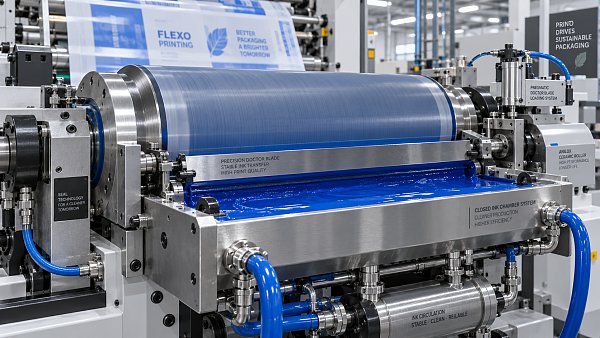
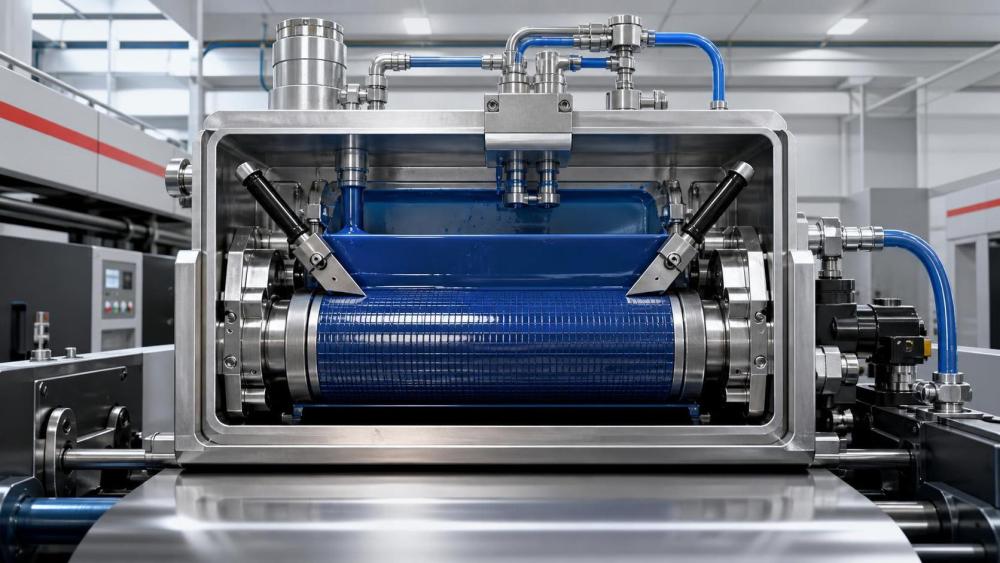
In a typical enclosed doctor blade arrangement, a chamber body seals against the anilox roller with two doctor blades. Ink enters through a controlled circulation loop, fills the chamber, and is metered across the engraved cells of the rotating anilox. One blade meters the ink film; the other helps retain ink inside the chamber. End seals close the chamber at both sides of the roller.
The operating principle is straightforward, but the practical improvement is substantial: the ink transfer system becomes less exposed to the surrounding environment. Instead of relying on an open fountain and a relatively uncontrolled ink return path, the press uses a contained circuit with more predictable flow, pressure, and ink volume.
That containment matters because flexographic printing is sensitive to small disturbances. A change in viscosity, trapped air, dried particles, poor blade contact, or contamination in anilox cells may first appear as a slight density shift. On a demanding carton job, the same issue can develop into dirty print, uneven solids, pinholing, excessive dot gain, barcode inconsistency, or avoidable setup waste.
Ink Metering Is the Core Benefit, Not the Chamber Alone
The main technical function of an enclosed doctor blade system is accurate metering. The anilox roller should deliver a repeatable ink volume to the plate, rather than carrying a random surface film into the printing nip. When blade contact is even and the chamber remains stable, excess ink is removed more consistently from the anilox surface while ink inside the cells remains available for transfer.
This gives operators a more stable starting point for controlling colour. It does not mean density can be managed through the chamber alone. Ink viscosity, pH where relevant, temperature, plate condition, impression settings, substrate absorbency, and drying performance all influence the final result. Yet stable anilox metering removes one major source of variation and makes those other variables easier to diagnose.
For corrugated board printing, this is particularly useful because board surface variation already challenges print consistency. On coated liners, recycled liners, or changing board grades, a poorly controlled ink film can amplify visible differences. A stable chamber cannot make an unsuitable board print like a premium coated substrate, but it can reduce variability introduced by the inking system itself.
Why cleaner anilox cells improve repeatability
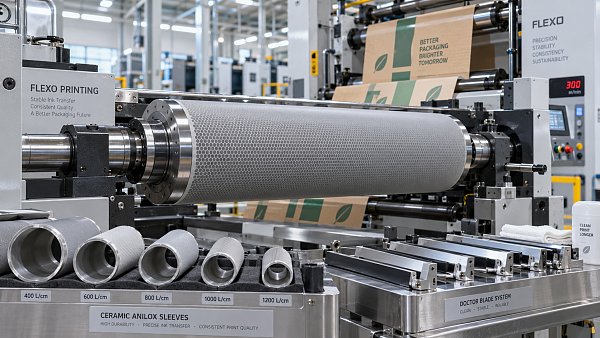
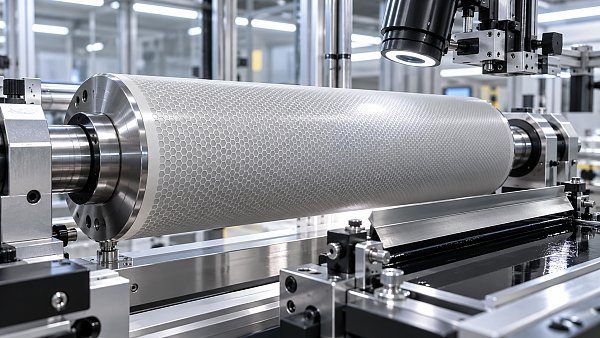
Anilox cells are designed to carry a defined volume. When dried ink, coating residues, paper dust, or debris reduce usable cell volume, colour strength and coverage can drift even when the press settings appear unchanged. Open systems tend to expose ink more directly to contamination and evaporation. Enclosed chambers reduce that exposure and can limit the amount of airborne material entering the circuit.
This is a preventive advantage, not a replacement for anilox cleaning. Daily wash-up, scheduled deep cleaning, inspection of cell condition, and appropriate handling remain necessary. Technical teams should be cautious of any proposal that presents a chamber system as a cure for damaged, plugged, incorrectly specified, or worn anilox rollers.
Where Waste Is Actually Reduced
Waste reduction is often discussed too broadly. An enclosed chamber does not eliminate ink consumption, and it may not reduce waste equally on every job. Its contribution usually comes from several smaller process improvements that accumulate over time: lower open-surface evaporation, fewer splashes, less ink exposed during production, more controlled wash-up, reduced contamination, and potentially fewer sheets or metres lost while colour is being stabilised.
Short-run packaging work may benefit most from faster and cleaner changeovers, provided the chamber can be removed, washed, and reinstalled without excessive adjustment. Long runs may benefit more from stable colour and reduced intervention during production. In both cases, the relevant measurement is not simply ink remaining in the system. Evaluators should consider rejected output, cleaning solvent or wash water, downtime, labour time, and the frequency of colour corrections.
Critical Design Details During Technical Evaluation
Not all Enclosed Doctor Blade Systems behave the same way. A purchase specification should look beyond the chamber body and ask how the entire inking loop functions at the intended press speed, ink chemistry, and web or board width.
Blade material and geometry affect metering performance, wear, and anilox protection. Steel blades are widely used, while polymer or composite alternatives may be selected for specific operating needs. The correct choice depends on ink type, roller surface, engraving, desired print quality, and the supplier’s technical recommendations. An inappropriate blade can wear too quickly, score an anilox, or produce unstable wiping.
End seals deserve equal attention. They are consumable items, but their performance strongly affects leakage, chamber pressure behaviour, and anilox wear at the roller edges. Their material must be compatible with the ink and cleaning chemistry. Seal pressure should be controlled rather than treated as a crude remedy for leakage; excessive pressure may accelerate wear, while insufficient pressure can allow ink loss and air entry.
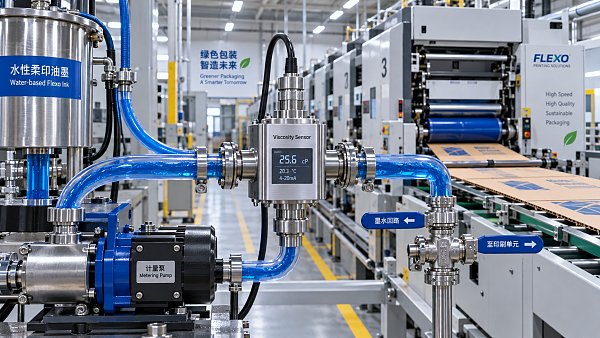
The ink delivery system is another frequent blind spot. Pump type, hose routing, filtration, return flow, deaeration, and cleaning provisions should be assessed as one system. Excessive pump pulsation, poor return-line design, or entrained air can undermine the chamber’s advantages. For water-based inks, controls for viscosity and pH may be particularly relevant, but the correct control strategy must reflect the ink supplier’s specification and the plant’s actual operating environment.
Access and repeatability matter during changeover
A chamber that performs well in a demonstration can become a production burden if blade replacement is awkward, cleaning leaves residual ink in hidden zones, or reinstallation requires extensive manual alignment. Technical teams should observe a complete changeover where possible: stop the press, drain the ink, remove the chamber, replace or inspect blades and seals, clean the assembly, reinstall it, restart circulation, and return to acceptable print quality.
This practical review often reveals more than a specification sheet. It also helps define spare-parts needs, operator training requirements, safe handling procedures, and the level of maintenance support expected from the equipment supplier.
Standards, Quality Targets, and What a Chamber Cannot Guarantee
An enclosed chamber is a component of print-process control, not a standalone compliance solution. Where flexographic process control is specified, ISO 12647-6 may be relevant to the agreed printing conditions and colour-management approach. However, the applicable targets should be established between printer, customer, and other parties in the supply chain. The system itself does not certify colour conformity.
For packaging carrying barcodes, variable data, regulated claims, or product-identification marks, print quality must also be evaluated at the finished-pack level. Registration, contrast, edge definition, drying, inspection capability, and substrate behaviour remain material factors. Food-contact or pharmaceutical packaging introduces further requirements that depend on the ink system, substrate, product application, customer specification, and applicable local rules. These requirements should not be inferred from the presence of a closed ink chamber.
The same restraint applies to sustainability claims. Reduced splashing and more controlled ink handling may support lower process waste, but the overall environmental outcome depends on actual ink usage, wash-up media, waste segregation, recovery arrangements, energy use, and production yield. A meaningful assessment needs plant-level data rather than a generic equipment claim.
Maintenance Is Where Performance Is Preserved
The most common causes of disappointing chamber performance are usually operational: worn blades, damaged seals, dried ink at contact points, poor cleaning, incorrect installation, or a circulation loop that is not properly maintained. These are manageable issues, but only when ownership is clear.
A useful maintenance routine should include inspection of blade edges and seals, confirmation of chamber alignment, checks for leaks and unusual wear patterns, cleaning of ink pathways, and periodic review of anilox condition. Operators also need a defined response when streaks, leakage, foaming, or unstable density appears. Repeatedly increasing chamber pressure or blade load without identifying the cause can create a more expensive problem at the anilox surface.
Digital production records can make this work more useful. Linking blade and seal replacement intervals, wash-up events, ink batches, print defects, and anilox cleaning history to job data allows a factory to distinguish isolated incidents from recurring process loss. This is increasingly relevant in packaging plants handling frequent order changes and traceability demands.
A Better Basis for Investment Decisions
For a technical evaluator, the question is not simply whether enclosed chambers are “better” than open systems. The more useful question is whether their level of control matches the press, job mix, ink system, quality expectations, and maintenance capability of the plant. A high-speed flexographic press producing brand-sensitive corrugated packaging may justify a more sophisticated chamber and automated ink-management arrangement than a low-volume operation with limited colour complexity.
CPCS examines this type of decision in the broader context of commercial printing and corrugated packaging production: press performance, anilox selection, ink compatibility, inspection requirements, changeover practices, automation, and long-term operating cost. The chamber is a small physical assembly within the press, yet it influences material use, colour consistency, cleanup discipline, and the reliability of the downstream packaging process.
Before specifying a system, confirm the working width, anilox dimensions and engraving, ink chemistry, target speeds, pump and filtration arrangement, expected job-change frequency, cleaning method, consumable availability, and applicable customer quality requirements. That review will produce a far more reliable decision than comparing chamber designs on purchase price alone.
Related News
 How to Choose an Anilox Sleeve Supplier for Consistent Print QualityChoose an anilox sleeve supplier with proven engraving control, reliable sleeve construction, and expert support to achieve consistent print quality and lower waste.Print Fluidics Scientist
 How to Choose an Ink Viscosity Sensors Supplier for Flexo PrintingChoose an ink viscosity sensors supplier for flexo printing with confidence. Compare ink compatibility, installation, calibration, controls, and service support to improve color consistency and reduce waste.Print Fluidics Scientist
 How Ink Metering System Manufacturers Improve Anilox Ink ControlInk metering system manufacturer insights: improve anilox ink control with stable blade loading, reliable seals, and efficient circulation for cleaner flexo printing.Print Fluidics Scientist
 Is Ceramic Anilox Roller Damage Repairable Without Affecting Print Quality?Is ceramic anilox roller damage repairable? Learn when cleaning, restoration, re-engraving, or replacement can protect consistent print quality.Print Fluidics Scientist
 How to Evaluate a Doctor Blade Holder Manufacturer for Flexo PressesDoctor blade holder manufacturer evaluation guide for flexo presses: compare design, sealing, materials, service, and lifecycle cost to improve uptime and print quality.Print Fluidics Scientist
 How Ceramic Rollers for Flexo Presses Reduce Wear and Ink VariationCeramic rollers for flexo press applications reduce wear and ink variation. Explore practical cleaning, inspection, and maintenance tips for stable print quality.Print Fluidics Scientist