How Do You Choose Anilox Roller Volume for Solid Coverage?
How Do You Choose Anilox Roller Volume for Solid Coverage?
How do I choose anilox roller volume for solid coverage? Start with the ink film your solid requires, then validate it against plates, substrate, press conditions, and measurement results.
The correct volume is rarely the highest available volume. Excess ink can create mottling, dirty reverses, poor trapping, slow drying, and unstable color during long flexographic production runs.
For packaging converters, the objective is controlled ink transfer. A solid should look dense and even while barcodes, small type, screens, and unprinted areas remain clean.
Volume selection therefore affects more than print appearance. It influences ink consumption, drying capacity, press speed, wash-up frequency, waste levels, and the repeatability of branded packaging colors.
A practical decision combines supplier guidance with press trials. Treat anilox volume as a process setting that must match a defined job condition, not as a universal number.
Start With the Required Ink Film, Not the Darkest Possible Solid
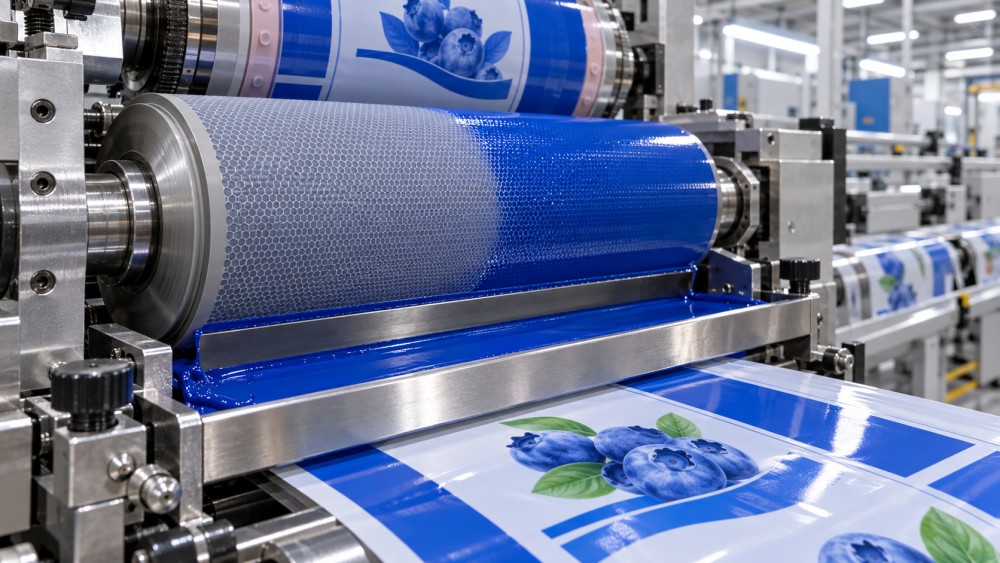
Solid coverage needs enough delivered ink to cover the substrate uniformly after plate transfer, impression, spreading, absorption, and drying. The required film varies substantially by application.
Absorbent uncoated papers usually need a different approach from coated linerboard, films, labels, or metallized substrates. Surface roughness and porosity change apparent density and coverage.
Water-based inks on corrugated linerboard often require more robust ink delivery than smooth film printing. However, rough board can still show uneven coverage when plate contact is poor.
Begin with the target color standard, desired visual strength, substrate specification, and ink supplier recommendation. These establish whether the solid issue is volume-related or caused elsewhere.
Measure the printed result using density, spectral data, delta E, or approved drawdowns. Visual inspection remains important, but it should not be the only acceptance method.
If higher volume improves density only slightly, the process may already be limited by ink strength, plate surface, absorbency, or drying. Increasing volume further may worsen production stability.
For this reason, choose the lowest anilox roller volume that reliably meets coverage and color targets. This creates operating margin without continuously over-inking the job.
Understand What Anilox Volume Actually Controls
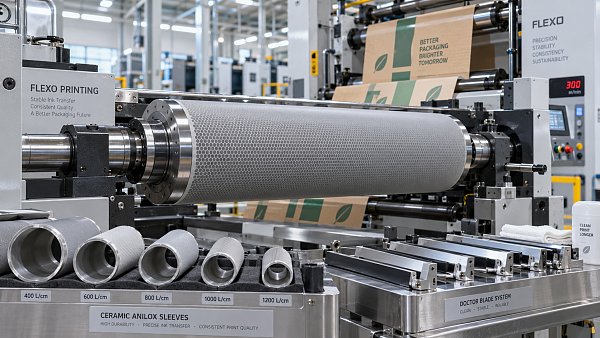
Anilox volume describes the nominal capacity of engraved cells to carry ink. It is commonly expressed in BCM, billion cubic microns per square inch, or cubic centimeters per square meter.
Volume is a useful purchasing and setup parameter, but it does not equal the exact ink film printed on the substrate. Transfer efficiency changes throughout the press.
Cell geometry matters alongside volume. Channel engravings, hexagonal cells, elongated cells, and laser engraving profiles can release ink differently despite similar nominal volume ratings.
Line screen also matters because it affects cell count, cell opening, cleaning behavior, and detail support. Higher line screens generally use smaller cells and lower volumes.
A low line-screen anilox with high volume can support bold solids, but it may flood fine halftones or small reverse type. Job artwork determines acceptable limits.
Conversely, a very high line-screen roller may preserve detail yet starve large solids. The result can be weak density, pinholing, mottling, or visible substrate show-through.
When comparing rollers, confirm the supplier's certified volume, engraving specification, measurement method, and wear history. Nominal labels alone are insufficient for process-critical decisions.
Match Volume to Ink Type and Viscosity Control
Ink chemistry changes the volume requirement because pigments, resins, solvents, water content, surface tension, and viscosity affect wetting, release, leveling, and final optical density.
Water-based flexographic inks are commonly used for corrugated packaging and paper applications. Their performance depends heavily on pH, viscosity, temperature, and controlled drying conditions.
Solvent-based inks for films can provide strong color at lower delivered films, depending on pigment concentration and substrate treatment. Excess volume may increase drying and solvent-management pressure.
UV flexographic inks demand especially careful control because they do not evaporate like conventional systems. Too much deposited ink can reduce cure reliability and impair fine detail.
Do not compensate for weak ink strength by automatically specifying a larger anilox. First confirm viscosity, pH where applicable, pigment condition, mixing accuracy, and ink supplier formulation.
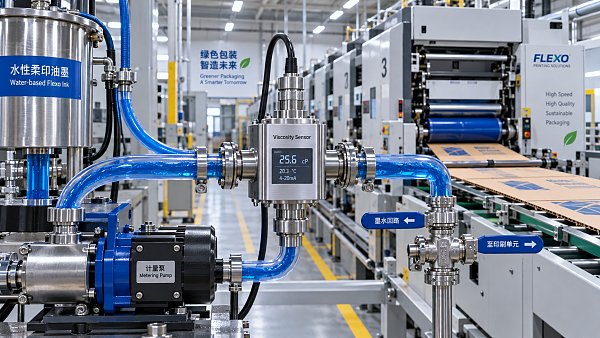
A stable viscosity control system helps determine whether a chosen volume is genuinely correct. Without stable ink conditions, press trials produce misleading recommendations and inconsistent production data.
Record ink batch, viscosity, temperature, pH, dilution method, and measured color during trials. These records let operators reproduce acceptable solid coverage on future repeat orders.
Use Plate Design to Set the Upper Limit
Plate design often determines the maximum usable volume. A job with broad solids, bold graphics, and limited detail can tolerate more ink than a complex retail carton.
Fine positive type, narrow reverse lines, delicate screens, QR codes, and barcode elements are vulnerable to excessive ink film. Filling and bridging can create costly compliance failures.
Modern plate technologies can improve ink transfer through engineered surface patterns and controlled relief structures. Their benefits should be evaluated with the actual ink and substrate combination.
A plate designed for improved solids may allow a lower-volume anilox to achieve comparable coverage. This can protect details while reducing drying demand and ink consumption.
Consider the smallest critical printed feature, not only the largest solid. The anilox selection must satisfy the whole artwork, including graphics that seem visually secondary.
For mixed artwork, separate screening and solid requirements during prepress review. In some cases, specialized plates, screening strategies, or additional print units are better than excessive volume.
Document the approved plate, tape, mounting condition, and anilox pairing as a job recipe. Consistency depends on controlling the complete print deck, not one component.
Account for Substrate Absorbency and Surface Condition
Substrate variation is one of the most common reasons solid coverage changes between orders. Paper grades, coating weights, recycled content, moisture, and surface sizing all influence ink behavior.
Corrugated linerboard can vary across suppliers and production batches. A volume that performs well on one liner may appear weak or uneven on another nominally similar grade.
Highly absorbent papers can draw vehicle into the sheet, reducing surface color strength. More volume may help, but an ink formulated for the substrate can be better.
Smooth coated papers and films generally show ink more efficiently. They may achieve strong density with lower volume, while excessive ink creates smear, setoff, blocking, or poor trapping.
For films, verify corona treatment, surface energy, contamination, and coating compatibility before changing anilox volume. Adhesion or wetting problems cannot be solved through ink quantity alone.
Evaluate production substrates rather than only laboratory samples. Storage conditions, board moisture, flute profile, and sheet handling can affect contact quality and the appearance of large solids.
When a plant uses multiple substrate grades, maintain separate approved anilox recommendations. A single standard roller may simplify inventory but can create avoidable quality compromises.
Consider Press Speed, Drying Capacity, and Doctor Blade Performance
Press speed affects how an ink film behaves after transfer. A volume that is acceptable at moderate speed can produce drying, misting, or contamination issues at maximum production speed.
Assess whether dryers can remove the required water or solvent without damaging the substrate, creating curl, or limiting throughput. Solid coverage must be feasible at commercial speed.
Higher deposited ink films may also increase energy use. For packaging plants, this can reduce the financial value of a visually attractive but unnecessarily heavy anilox specification.
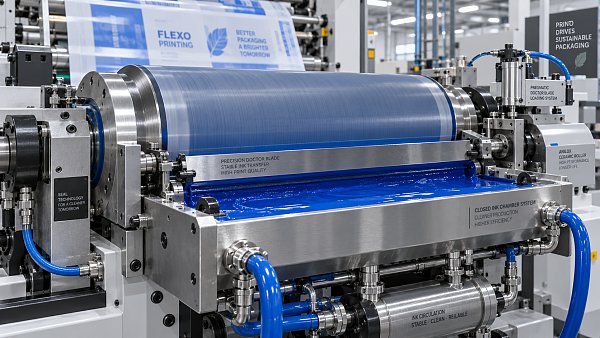
Doctor blade condition determines how consistently cells are metered. Worn blades, incorrect pressure, damaged chambers, or poor seals can create density variation that resembles volume failure.
Check blade material, angle, contact condition, chamber pressure, and end-seal performance before approving a larger roller. Mechanical instability often produces inconsistent solids across the web.
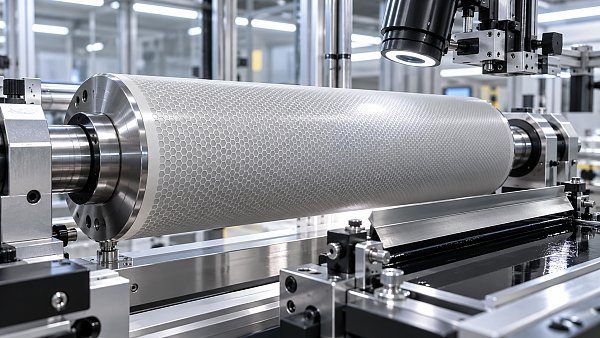
Dirty or partially plugged cells reduce effective volume. A roller may be correctly specified but unable to deliver its certified capacity after inadequate cleaning or prolonged use.
Use regular anilox inspection and cleaning verification. Microscopic imaging, volume measurement, and documented maintenance help distinguish true process needs from degradation-related performance losses.
Build a Controlled Trial Instead of Guessing
The most reliable answer to how do I choose anilox roller volume for solid coverage comes from a planned comparative trial. Test only a limited number of meaningful variables.
Select two or three volumes around the expected operating range. Keep ink formulation, plate, mounting tape, substrate batch, impression, viscosity, and press speed as constant as possible.
Run enough material to reach stable press conditions. Initial start-up sheets can distort the comparison because ink temperature, viscosity, web tension, and registration may still be changing.
Measure solid density or spectral values at several locations across the sheet or web. Compare uniformity, not merely the darkest single measurement from each test condition.
Inspect reverse type, barcodes, screens, fine lines, trapping, mottling, pinholing, gloss, rub resistance, and drying. An acceptable solid cannot be judged independently from these outcomes.
Include operating data such as speed, dryer settings, ink additions, cleaning frequency, waste, and operator interventions. These reveal the total production cost of each anilox option.
Approve the volume that meets specification with the best overall stability. The winning setting should give operators a workable window rather than require constant adjustment.
Use a Decision Framework for Common Packaging Jobs
For broad solid areas on absorbent corrugated linerboard, begin by evaluating moderate-to-higher volume options compatible with the plate's smallest critical features and drying capability.
For retail cartons with fine text, vignettes, and color-critical logos, prioritize controlled transfer and clean detail. Plate technology and ink strength may matter more than added volume.
For flexible packaging films, start with the ink supplier's recommended anilox range, then validate density, adhesion, cure or drying, and trapping at normal production speed.
For flood coats, heavy opaque whites, or specialty coatings, dedicated anilox rolls are often justified. Sharing a general-purpose roller may compromise both coating weight and printing quality.
For process-color work with large solid graphics, evaluate whether separate anilox assignments for solids and screens improve performance. The answer depends on press configuration and job mix.
For frequent short runs, repeatability may be more valuable than a marginal density gain. Standardized roller families and documented recipes reduce setup time and operator-dependent variation.
For brands with strict color targets, define measurement tolerances before trials. This prevents subjective approval of a darker solid that later creates avoidable variation between production sites.
Calculate the Business Impact Before Buying Additional Rollers
Anilox inventory should be evaluated as a production investment. Additional rollers can reduce waste, stabilize color, improve uptime, and support higher-value packaging work when specified correctly.
Calculate the cost of rejected sheets, customer claims, ink use, drying energy, cleaning labor, and lost production time. These costs often exceed the purchase price difference.
A dedicated roller is especially valuable when a recurring job repeatedly needs compromise settings. It can shorten make-ready while protecting both solid coverage and critical graphic detail.
However, too many narrowly specified rollers can increase storage, handling, tracking, cleaning, and maintenance burdens. Build an inventory around recurring job families and measurable demand.
Work with anilox suppliers that provide certified engraving data and technical support. Their recommendation should include application assumptions, not simply a generic volume chart.
Production managers should involve prepress, ink technicians, press operators, quality teams, and maintenance staff. Each group sees different risks that influence the practical choice.
Review results after live production, not only during initial trials. Changes in substrates, inks, plates, and customer specifications may require revised anilox standards over time.
Conclusion: Choose the Lowest Stable Volume That Meets the Job
The best anilox roller volume for solid coverage is the lowest volume that consistently delivers approved density, even laydown, clean details, reliable drying, and acceptable production economics.
Start with the required color result, then assess ink chemistry, plate design, substrate absorbency, line screen, press speed, and drying capacity. No single volume fits every job.
Controlled trials and documented job recipes replace guesswork with repeatable process knowledge. They help packaging printers protect brand quality while reducing waste, downtime, and unnecessary ink consumption.
For corrugated, carton, label, and flexible packaging operations, anilox selection should be managed as part of the complete flexographic system. That approach produces stronger solids and more dependable output.
Related News
 How to Choose an Anilox Sleeve Supplier for Consistent Print QualityChoose an anilox sleeve supplier with proven engraving control, reliable sleeve construction, and expert support to achieve consistent print quality and lower waste.Print Fluidics Scientist
 How to Choose an Ink Viscosity Sensors Supplier for Flexo PrintingChoose an ink viscosity sensors supplier for flexo printing with confidence. Compare ink compatibility, installation, calibration, controls, and service support to improve color consistency and reduce waste.Print Fluidics Scientist
 How Ink Metering System Manufacturers Improve Anilox Ink ControlInk metering system manufacturer insights: improve anilox ink control with stable blade loading, reliable seals, and efficient circulation for cleaner flexo printing.Print Fluidics Scientist
 Is Ceramic Anilox Roller Damage Repairable Without Affecting Print Quality?Is ceramic anilox roller damage repairable? Learn when cleaning, restoration, re-engraving, or replacement can protect consistent print quality.Print Fluidics Scientist
 How to Evaluate a Doctor Blade Holder Manufacturer for Flexo PressesDoctor blade holder manufacturer evaluation guide for flexo presses: compare design, sealing, materials, service, and lifecycle cost to improve uptime and print quality.Print Fluidics Scientist
 How Ceramic Rollers for Flexo Presses Reduce Wear and Ink VariationCeramic rollers for flexo press applications reduce wear and ink variation. Explore practical cleaning, inspection, and maintenance tips for stable print quality.Print Fluidics Scientist