Can Damaged Ceramic Anilox Rollers Be Repaired?
A damaged ceramic anilox roller can sometimes be repaired, but repair is not automatically the right response. The practical decision depends on whether the problem is contamination, localized coating damage, cell wear, surface cracking, or damage to the roller body itself. A roller may still look acceptable to the eye while transferring too little ink, too much ink, or ink unevenly across the web. Conversely, a visible chip near the edge may be repairable without materially affecting the printed image.
For flexographic printers, especially those producing corrugated packaging, the question is less about restoring a roller's appearance than restoring predictable ink metering. Any repair decision should therefore start with measurement: where is the damage, how deep is it, does it sit inside the usable print width, and has the roller's cell volume or surface geometry changed?
First, identify what has actually failed
"Damaged anilox" covers several different conditions, and they do not carry the same production risk. Plugged cells, for example, are often mistaken for wear because both reduce ink release and can make a solid print look weak or mottled. A thorough cleaning may recover much of the original transfer performance. That is maintenance, not ceramic repair.
Mechanical damage is different. A doctor blade accident, impact during handling, incorrect end-of-job cleaning, or contact with a hard foreign object can chip or score the ceramic coating. In severe cases, the coating may crack or separate from the base roll. Laser engraving also has limits: once ceramic cells have worn down, it is not generally possible to recreate the original cell geometry by simply cleaning or polishing the surface.
Before deciding on repair, the maintenance team should distinguish among the following conditions:
- Cell plugging: ink, coating, adhesive, varnish, dried residue, or cleaning chemistry reduces usable cell volume.
- Surface polishing or cell wear: the roller remains physically intact, but its engraved structure has lost volume or its cell walls have become worn.
- Localized chips: small areas of ceramic are missing, often near an edge or after an impact.
- Scratches and scoring: linear damage that may interfere with doctor blade contact and produce print streaks.
- Cracking, delamination, or corrosion beneath the coating: damage that can spread and affect the structural integrity of the roller.
- Journal, bearing-seat, or runout problems: mechanical defects that may persist even if the ceramic surface is restored.
The distinction matters because a cleaning process may solve a plugged-cell issue, while a chipped engraved area may need a localized repair or full recoating. A roller with serious runout or a damaged core needs a broader engineering assessment. Treating every print defect as a ceramic problem can lead to unnecessary roller work while leaving the real cause in the chamber, doctor blade, ink condition, plate, mounting system, or press settings.
When localized repair is a reasonable option
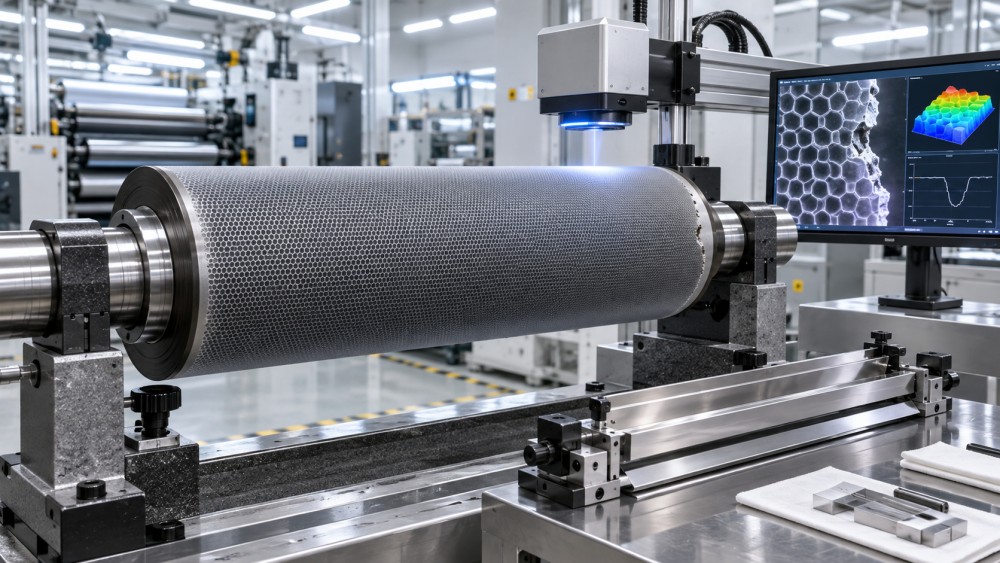
Small, isolated defects may be repairable when they are outside the effective print area or when the affected area is too limited to disturb ink transfer, doctor blade sealing, or web contact. A specialist may fill, blend, polish, or otherwise stabilize a small damaged area. This can be commercially sensible when the roller has useful remaining life and the repair does not compromise the engraved surface used in production.
Edge damage is often evaluated differently from damage in the image area. A chip at the end of a roller may be less consequential if it sits beyond the doctor blade contact zone and outside the coated or printed width. Even then, it should not be dismissed casually. A sharp ceramic edge can damage a blade, encourage leakage, or become the starting point for further cracking. The repair objective may be containment and safe operation rather than perfect reconstruction.
Localized repair is more credible when all of the following are true:
- The defect is confined to a small area.
- The affected area does not influence critical ink transfer or a high-coverage print zone.
- The roller remains dimensionally stable, with acceptable runout and undamaged journals.
- There is no evidence that the ceramic coating is lifting, spreading cracks are present, or corrosion is developing below the coating.
- The repair provider can assess the roller against its operating conditions, including blade system, ink chemistry, cleaning method, line screen, and usable face width.
A repaired local defect should be evaluated in press conditions, not only on a bench. Solid coverage, fine text, barcodes, reverse type, and high-density graphics can reveal transfer inconsistency that a visual inspection misses. For corrugated post-print, where board surface variation already challenges print uniformity, a marginal roller can make diagnosis of print defects much harder.
When cleaning is the answer, not repair
Many apparent anilox failures begin with plugged cells. The symptoms may include reduced density, unstable color, poor solid coverage, frequent attempts to increase viscosity or impression, and a growing gap between the target ink film and the printed result. Those adjustments can mask the problem temporarily but may create new issues such as dirty type, dot gain, excessive ink consumption, or poor drying.
In this situation, start with a controlled inspection and cleaning strategy. The appropriate method depends on the contaminant, roller construction, engraving, and the cleaning system available. Chemical, ultrasonic, media-based, and laser cleaning methods each have operating limits. The aim is to remove contamination without damaging cell walls or changing the roller surface. A process suitable for a coarse corrugated-printing roller may not be suitable for a fine-line-screen roller used for process work or coatings.
Cleaning should also be connected to the source of contamination. If rollers repeatedly plug, the maintenance issue may be upstream: ink left in the chamber too long, insufficient wash-up, incompatible cleaning fluid, dried residue from extended stops, poor filtration, or inconsistent handling between jobs. Restoring one roller without correcting that condition only restarts the same cycle.
Why worn ceramic usually leads to recoating or replacement
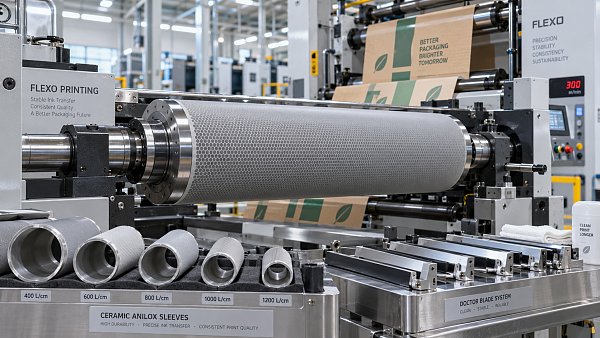
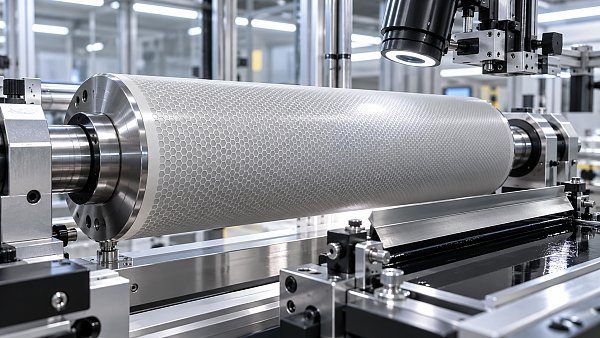
Ceramic anilox rollers are engineered around a specified cell configuration and volume. That structure controls the amount of ink or coating delivered to the plate. When the engraved cells are worn, broken down, or altered across a significant portion of the face, the original metering behavior cannot usually be restored with a minor surface repair.
A common misconception is that a worn roller can simply be re-engraved. In practice, a durable restoration normally requires the existing ceramic layer to be removed, the roll prepared and recoated, and a new engraving created. This is a remanufacturing process, not a quick corrective action. It may return the roller to a useful specification, but it also requires verification of the core, journals, balance, dimensions, and engraving requirements.
Full recoating is often worth considering when the core and mechanical components remain sound, the roller is a non-standard size or otherwise expensive to replace, and the press needs a specific specification that cannot be substituted easily. Replacement may be more attractive when the roller has accumulated multiple repairs, has core corrosion or journal damage, no longer suits the current printing program, or would involve an extended and uncertain restoration process.
The decision should include more than the quoted repair price. A lower-cost repair that produces inconsistent transfer can consume its apparent savings through setup time, rejected board, repeated color adjustments, blade wear, customer complaints, and unplanned downtime. For plants running repeat brand work, barcode-heavy packaging, or long production runs, predictability can have more operational value than the lowest immediate restoration cost.
Damage location changes the risk
The same size chip can have very different consequences depending on its location. Damage outside the working width may be manageable. Damage under the doctor blade can cause leakage, blade scoring, and irregular chamber pressure. Damage in a solid or critical graphic area can create visible streaks, light bands, voids, or color variation. A defect near a recurring image position may become especially noticeable on repeat jobs.
Linear scratches deserve close attention because they often interact with the doctor blade over the full press run. A scratch can disturb the blade contact line and create a persistent streak that operators may attempt to correct through pressure or ink adjustments. Excessive blade pressure may then accelerate blade wear and further stress the roller surface. The right response is to inspect the damage profile and determine whether the roller, blade, holder alignment, or handling procedure initiated the issue.
For anilox rollers used in coatings, whites, heavy solids, or high-opacity inks, small changes in transfer volume may be more visible than in a low-coverage design. For fine graphics, process work, and barcode applications, consistency across the face is often as important as nominal volume. The operating application should guide the acceptance standard for any repaired roller.
How to make the repair-versus-replace decision
A useful assessment follows a simple sequence. First, verify that the observed defect is truly linked to the anilox roller. Compare print symptoms with the roller's position, inspect the doctor blade and chamber, review ink condition, and check whether the defect repeats across jobs or appears only with a particular plate or color.
Next, document the roller before it leaves the plant. Record its identification, face length, diameter, engraving specification, cell volume where available, ink or coating application, press position, photographs of the damaged area, and the nature of the print defect. This information gives a repair provider a workable basis for evaluation and helps avoid returning a roller with a specification unsuitable for its assigned job.
Then ask for an assessment that separates four questions:
- Can the ceramic defect be stabilized or repaired locally?
- Will the repaired area remain outside the critical metering and blade-contact zones?
- Has the roller lost usable transfer performance because of contamination or broad surface wear?
- Are the core, journals, balance, and runout suitable for continued service or recoating?
The final decision should be tied to the roller's production role. A spare used for low-risk spot work may justify a limited repair. A primary roller supporting a demanding brand color, pharmaceutical carton code, high-coverage corrugated job, or tightly controlled repeat order deserves a higher threshold. In those applications, a roller that is technically usable but operationally unpredictable is often the more expensive choice.
Preventing repeat damage matters as much as the repair
Ceramic is highly wear-resistant, but it is not immune to impact. Many severe defects arise during removal, storage, cleaning, transport, or installation rather than while the roller is running. Proper lifting equipment, protected storage racks, clean end caps, controlled handling, and clear identification reduce the chance of accidental contact between ceramic surfaces and hard objects.
Doctor blade practices also deserve attention. Blade selection, holder alignment, chamber condition, pressure, and cleaning procedures all influence roller life. When a roller fails repeatedly in one station, investigate the station rather than assuming each roller is defective. A damaged seal, misaligned chamber, contaminated ink system, or unsuitable wash-up process can turn an expensive roller into a recurring maintenance item.
Damaged ceramic anilox rollers are therefore repairable in some cases, especially when defects are localized and the roller's metering surface remains reliable. Plugged cells may need cleaning; broad wear often calls for recoating or replacement; cracks, delamination, and mechanical core damage require a more cautious decision. The most useful question is not simply whether a repair can be performed, but whether the restored roller can deliver stable ink transfer at the quality and uptime level the press must achieve.
Related News
 How to Choose an Anilox Sleeve Supplier for Consistent Print QualityChoose an anilox sleeve supplier with proven engraving control, reliable sleeve construction, and expert support to achieve consistent print quality and lower waste.Print Fluidics Scientist
 How to Choose an Ink Viscosity Sensors Supplier for Flexo PrintingChoose an ink viscosity sensors supplier for flexo printing with confidence. Compare ink compatibility, installation, calibration, controls, and service support to improve color consistency and reduce waste.Print Fluidics Scientist
 How Ink Metering System Manufacturers Improve Anilox Ink ControlInk metering system manufacturer insights: improve anilox ink control with stable blade loading, reliable seals, and efficient circulation for cleaner flexo printing.Print Fluidics Scientist
 Is Ceramic Anilox Roller Damage Repairable Without Affecting Print Quality?Is ceramic anilox roller damage repairable? Learn when cleaning, restoration, re-engraving, or replacement can protect consistent print quality.Print Fluidics Scientist
 How to Evaluate a Doctor Blade Holder Manufacturer for Flexo PressesDoctor blade holder manufacturer evaluation guide for flexo presses: compare design, sealing, materials, service, and lifecycle cost to improve uptime and print quality.Print Fluidics Scientist
 How Ceramic Rollers for Flexo Presses Reduce Wear and Ink VariationCeramic rollers for flexo press applications reduce wear and ink variation. Explore practical cleaning, inspection, and maintenance tips for stable print quality.Print Fluidics Scientist