When a Custom Embossing Die Delivers Better Packaging Detail
A packaging sample can look nearly complete on screen and still feel ordinary in the hand. That difference often becomes visible at the point of sale, during an unboxing moment, or when a buyer compares several cartons side by side. Fine lettering may lack depth, a logo may flatten into the board, or a decorative pattern may lose its intended rhythm after folding and handling.
When packaging detail becomes a meaningful part of brand perception, a custom embossing die can provide a more controlled route to definition, tactile contrast, and repeatable production quality than generic or adapted tooling. For business evaluators, however, the question is not simply whether embossing looks better. The practical question is whether a tailored die will improve the carton’s market impact without creating unacceptable pressure on make-ready time, board performance, line speed, waste, or maintenance cost.
The answer depends on the application. Custom embossing is most valuable when the raised or recessed feature is integral to the pack’s design rather than an optional decorative addition. It becomes especially relevant for premium folding cartons, cosmetics packaging, specialty food sleeves, gift boxes, branded inserts, book-style packs, pharmaceutical presentation cartons, and limited-edition retail packaging where visual identity must survive real production conditions.
Embossing Detail Is a Production Decision, Not Just a Design Decision
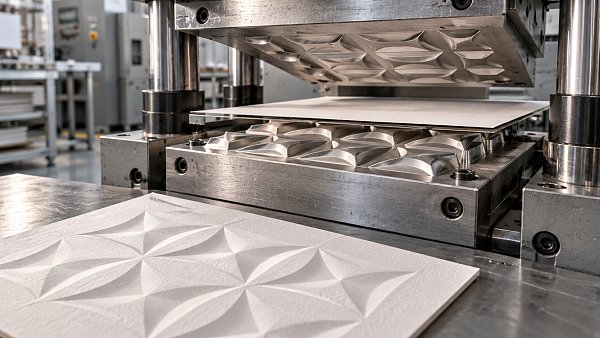
Embossing creates a shaped impression by pressing a substrate between matched or opposing tooling under controlled pressure. Depending on the desired effect, the process may create a raised image, a recessed image, a sculpted multi-level form, or a textured surface. On a presentation board, the result can add a quiet but persuasive signal of quality. On a corrugated or heavier paper-based structure, the same process requires more careful evaluation because flute structure, liner strength, and folding geometry can all influence the final appearance.
A standard die may be acceptable for simple, repeatable motifs. A basic border, broad logo field, or large geometric area does not always need highly specialized tooling. But packaging rarely remains that simple once the design includes small type, fine linework, graduated relief, tight registration with printed graphics, foil stamping, varnish layers, or a substrate with unusual stiffness and surface texture.
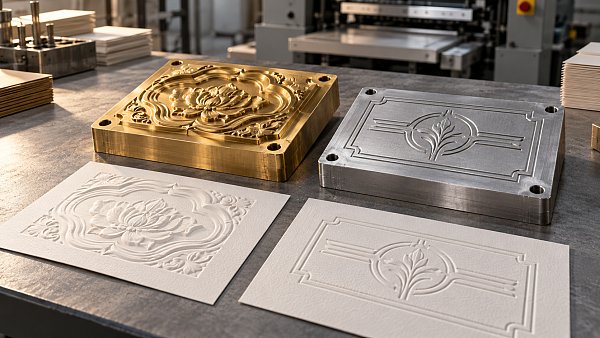
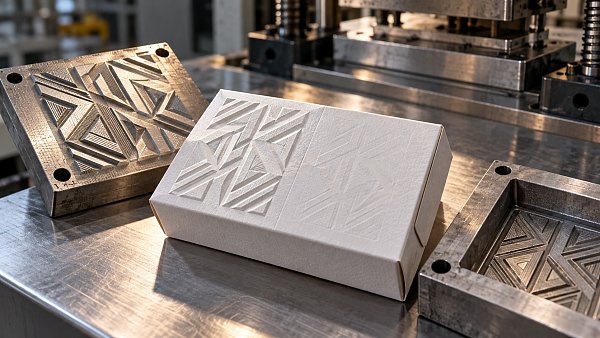
In these situations, adapting a stock die often leads to compromise. The emboss may be too shallow to register visually, too aggressive for the board, uneven across the sheet, or poorly aligned with surrounding printed elements. A custom embossing die is developed around the artwork, the intended relief, the press format, and the behavior of the chosen material. That makes it a manufacturing tool built for a specific packaging outcome, rather than a broadly usable tool forced into a specific job.
Where a Custom Embossing Die Makes the Difference Visible
The strongest commercial case usually appears when the packaging relies on detail that customers can see before they consciously analyze it. A finely embossed brand mark can make a carton feel more deliberate. A recessed pattern behind metallic foil can give a surface depth that flat printing cannot create. An embossed seal, crest, botanical illustration, or texture can separate a premium product range from an otherwise similar shelf competitor.
Several packaging conditions tend to favor custom die development:
- Small or intricate artwork: Detailed logos, fine serif type, narrow line elements, and delicate illustrations require tooling that preserves edge clarity without crushing surrounding fibers.
- Multi-level relief: Sculpted embossing with more than one height requires carefully planned transitions, pressure distribution, and counterforce geometry.
- Close print-to-emboss registration: When embossing must align with offset, flexographic, digital, or foil-stamped graphics, even small positional variation becomes noticeable.
- Premium substrates: Coated board, uncoated textured stock, metallized paper, laminated sheet, and specialty paper each respond differently under pressure and heat.
- Repeat programs: A seasonal collection, stable brand range, or recurring carton format can justify a dedicated die because visual consistency matters across multiple production runs.
- High scrutiny at retail: Beauty, spirits, confectionery, personal care, and luxury gift packaging are often handled closely by consumers, making tactile detail commercially relevant.
Conversely, custom tooling may offer limited value where the emboss is large, low-detail, rarely repeated, or applied to a carton that will be immediately hidden inside a shipping case. The right decision is not “custom is always better.” It is “custom is better when the packaging feature must perform consistently enough to justify controlled tooling.”
The Die Must Be Designed Around the Substrate, Not Only the Artwork
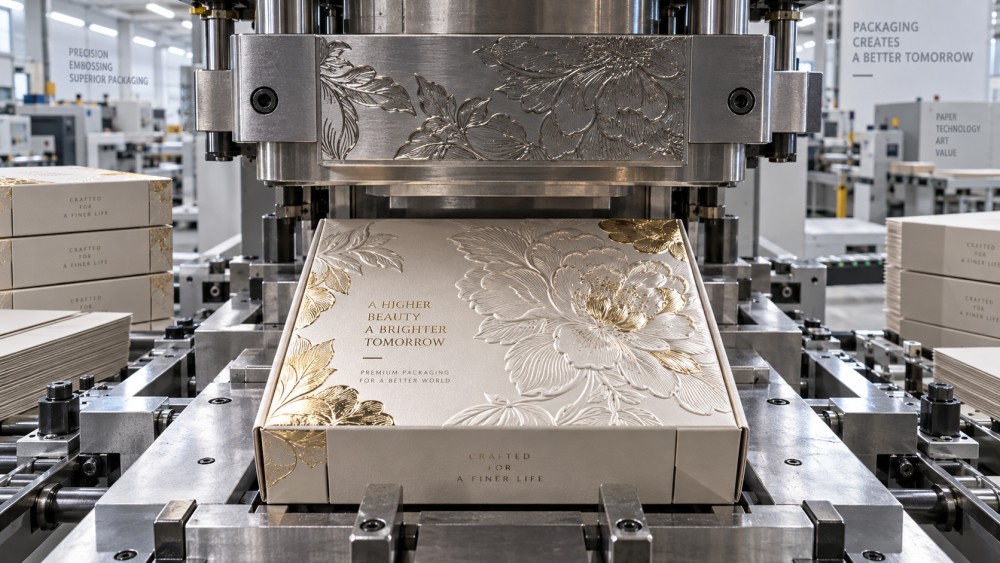
Business reviews sometimes focus heavily on the visual proof while overlooking the physical limits of the board. That is where expensive surprises can begin. A deep emboss may look compelling on a rigid, soft-fiber paperboard but cause cracking, whitening, or distortion on another stock. A coated surface may show a clean relief in one direction and expose stress marks in another. Laminations, aqueous coatings, UV varnishes, and foil layers add further variables.
For folding cartons, the die design should account for board caliper, grain direction, moisture condition, coating structure, and the location of scores and folds. Embossing too close to a crease may weaken the visual effect after folding or create a panel that does not sit flat. If the carton is glued at high speed, the embossed area should also be reviewed against folding rails, compression zones, glue paths, and delivery handling.
For corrugated packaging, the assessment becomes more structural. An embossing feature on a litho-laminated corrugated display may be feasible, but the design team needs to consider flute profile, liner quality, lamination bond, and the risk of crushing. In some cases, a targeted deboss, a printed texture, or a separate premium label provides a more reliable result than attempting deep relief directly on the corrugated structure.
This is why early communication between the brand team, carton converter, print provider, and tooling supplier matters. The best artwork cannot overcome a mismatch between die geometry and material behavior. A short pre-production review can identify whether the intended effect calls for a male/female matched set, a counter die, a combination foil-and-emboss tool, or a revised graphic treatment.
Choosing the Right Embossing Configuration
“Embossing die” can describe several different tooling arrangements. The correct configuration depends on the aesthetic target, production method, expected volume, and substrate tolerance.
Single-level embossing
This is often used for a clear raised or recessed logo, border, pattern, or icon. It can be an effective choice for cartons that need a visible tactile cue without highly sculpted detail. A custom die provides better control when the feature includes tight corners, thin strokes, or alignment with printed imagery.
Multi-level or sculpted embossing
For dimensional illustrations, seals, product silhouettes, and decorative surfaces, multiple levels can create a more expressive result. The die geometry must transition smoothly between heights so the board is shaped rather than abruptly damaged. This approach generally requires more development attention, but it can make a hero panel feel distinctly different from a flat carton.
Combination foil stamping and embossing
Foil and embossing often work together because reflected metallic areas gain visual depth when they are not completely flat. The challenge is registration. The tooling, sheet positioning, temperature, dwell time, foil selection, and pressure settings all need to work as one system. If a metallic logo sits over a fine emboss, weak registration can make the premium effect look less precise than an unembossed alternative.
Blind embossing and debossing
A blind effect uses shape without ink or foil, relying on light and shadow. It is subtle, but subtle does not mean simple. The feature must remain legible across different viewing angles and under retail lighting. A custom embossing die is particularly useful here because the die’s edge treatment and depth determine whether the design appears intentional or merely pressed into the board.
What Evaluators Should Ask Before Approving Tooling
Tooling decisions are easier when the evaluation moves beyond an attractive prototype. Procurement, packaging engineering, marketing, and operations teams do not need to agree on every design preference, but they should agree on the performance criteria that matter.
Start with the desired visual outcome. Is the emboss intended to be noticed from a distance, felt when held, or discovered only on close inspection? These are different objectives. A deep tactile mark may be appropriate for a gift carton, while a shallow, precise deboss may better suit a clinical or minimalist premium brand.
Then examine the production environment. Which press or finishing machine will run the work? Is the job performed on a platen die-cutter, dedicated embossing unit, foil stamper, or a combined converting line? Maximum sheet size, pressure capacity, registration system, heating capability, feeder reliability, and delivery handling all influence whether the designed effect can be maintained at commercial speed.
The next question concerns volume and changeovers. A dedicated die is more defensible when a design is expected to recur, when a product family shares a platform, or when the visual feature has direct brand value. For short runs or frequent artwork changes, teams should compare tooling cost against expected run frequency, storage requirements, setup time, and the risk of version obsolescence.
Finally, request realistic samples rather than relying only on digital renderings. Samples should include the actual board, printing method, coating or foil, folding sequence, and, where relevant, packing and transport conditions. A beautiful flat sheet can reveal cracking or registration drift once converted into a finished carton.
Common Failure Modes—and How to Prevent Them
Embossing problems are not always caused by poor tooling. Often, they result from a feature being designed without enough allowance for the realities of converting.
Loss of definition can occur when fine detail is too close together, pressure is insufficient, or the substrate resists forming. Simplifying artwork slightly, adjusting the relief depth, or selecting a more suitable board can preserve the intended character.
Cracked coatings and fiber stress often appear around sharp transitions or deep impressions. This calls for review of coating flexibility, grain direction, conditioning, and die profile—not simply more pressure.
Registration inconsistency becomes critical when embossing intersects printed outlines or foil. Better sheet control, registration marks, die positioning, and press setup procedures may be needed. Inline vision inspection can be valuable for high-volume work where small drift creates substantial rework risk.
Slow make-ready is another concern, particularly in plants handling short runs and frequent job changes. Well-documented die settings, repeatable mounting methods, tooling identification, and digital job records reduce the time spent rediscovering a successful setup.
Damage during downstream handling is sometimes overlooked. Raised features can be flattened by excessive stacking pressure, tight packing, or aggressive conveyor contact. The emboss should be reviewed as part of the whole packaging route, including folder gluing, case packing, palletizing, and distribution.
Building the Business Case Beyond Unit Cost
A custom embossing die should not be assessed only as an added tooling line item. The appropriate evaluation considers its effect on total packaging performance. Does the feature support a premium price position? Does it help distinguish product variants? Can it replace a separate label, sleeve, or decorative component? Will a more controlled process reduce rejected sheets compared with repeated attempts to make generic tooling work?
At the same time, the case should remain grounded. Custom tooling creates value when it improves a specific packaging objective, not when it is added merely because premium packaging is expected to look elaborate. A restrained embossed logo on well-chosen paperboard may carry more credibility than a heavily decorated carton with inconsistent finishing.
For packaging plants, the commercial value also includes operational predictability. Stable die performance can support cleaner make-ready, fewer quality discussions, clearer inspection criteria, and more reliable repeat orders. In a production environment shaped by labor constraints, changing order mixes, and pressure to reduce waste, predictability is often as valuable as visual impact.
Use Custom Tooling When the Detail Carries the Brand
A custom embossing die delivers its best return when packaging detail has a job to do: communicate quality, reinforce recognition, guide the hand, highlight a signature feature, or make a carton feel considered rather than generic. The die is not simply an accessory to the artwork. It is part of the production system that turns a brand idea into a repeatable physical experience.
For business evaluators, the most useful approach is to assess design ambition and manufacturing reality together. Review the artwork at actual size, test it on the final substrate, involve the converter early, and define acceptable standards for depth, alignment, surface condition, and repeatability. When those elements are aligned, custom embossing can move from a decorative expense to a practical packaging solution—one that adds detail customers notice and production teams can consistently deliver.
Related News
 How to Compare Laminating Machines for Packaging ApplicationsCompare Laminating Machines for packaging by material compatibility, bond quality, production speed, and operating cost. Find the right fit for your application.Post-Press Kinematics Expert
 What to Consider When Buying a Film Window Patching MachineBuying a film window patching machine? Compare material compatibility, usable output, changeovers and total costs to make a confident investment.Post-Press Kinematics Expert
 How Brass and Magnesium Embossing Dies Compare for PackagingCompare brass and magnesium Embossing Dies for packaging. Discover how detail, durability, and total tooling costs affect your choice—and find the right fit for your next project.Post-Press Kinematics Expert
 What to Check Before Buying a Steel Chase Frame for Foil StampingBuying a steel chase frame? Discover key checks for press fit, precision, heat stability, and supplier quality to avoid costly downtime and buy with confidence.Post-Press Kinematics Expert
 How Male Female Dies Create Clean Embossed Details on PaperboardMale Female Dies create crisp embossed paperboard details. Discover how die clearance, board selection, and press alignment reduce defects and deliver consistent packaging quality.Post-Press Kinematics Expert
 Why Does a Precision Embossing Die Produce Uneven Relief on Cartons?Is your precision embossing die producing uneven carton relief? Discover how to fix alignment, pressure, and board issues to reduce waste and achieve consistent results.Post-Press Kinematics Expert