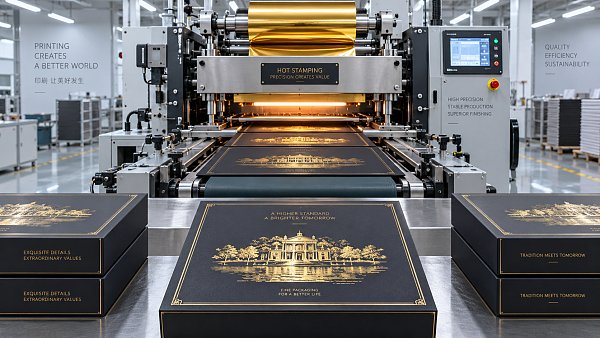
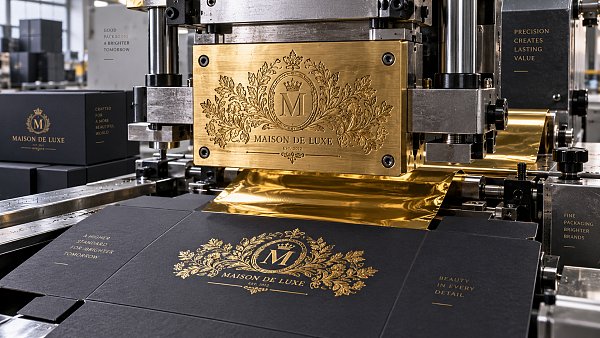
What to Compare Before Buying Hot Foil Stamping Machines
A foil-stamped carton can look acceptable during a supplier demonstration and still become a costly production problem once it reaches mixed stock, short runs, tight registration tolerances, and frequent job changes. Typical warning signs include incomplete transfer on textured boards, foil cracking across a crease, weak definition in fine type, excessive make-ready sheets, or slow recovery after a foil roll change. These issues affect more than appearance: they can delay delivery, consume premium substrates and foil, and turn an apparently fast machine into a capacity constraint.
Before buying Hot Foil Stamping Machines, compare the full production fit rather than headline speed or purchase price alone. The practical decision rests on whether the machine can achieve repeatable transfer quality on the work you actually produce, while maintaining registration, manageable changeovers, reasonable tooling cost, and serviceable uptime. A lower-priced press may be appropriate for stable, simple work; a more automated configuration may justify its cost where premium cartons, variable jobs, and reduced operator dependence matter more.
Start with the jobs that create the most risk
Machine comparisons are often distorted by evaluating a broad product category rather than the difficult work that drives rework and customer complaints. Gather a representative job set before requesting quotations or demonstrations. It should include the lightest and heaviest board grades, coated and uncoated stocks, dark printed sheets, large solid foil areas, fine text, halftone-like patterns, and designs with foil close to die-cut, crease, emboss, or printed registration marks.
Also separate current work from likely future work. A press selected only for a small decorative logo may not be suitable when the product mix expands into cosmetic cartons, luxury sleeves, promotional packaging, or short-run branded work with frequent design revisions. The key question is not simply whether a machine can stamp foil. It is whether it can run the intended jobs at an economically useful quality level without continual operator intervention.
- Sheet format and substrate range: Confirm minimum and maximum sheet size, practical gripper margin, board thickness range, and the stiffness limits of materials you routinely use.
- Foil coverage: Identify whether most work involves small marks or large panels. Large coverage places different demands on pressure uniformity, heat control, foil advance, and sheet hold-down.
- Registration sensitivity: Fine text, metallic borders, overprinted graphics, and foil near structural lines need more precise sheet positioning than broad decorative blocking.
- Job frequency: A machine that performs well on long repeat orders may lose its economic advantage when several short jobs must be set up in one shift.
A supplier should be able to discuss these factors in process terms, not merely state that the equipment handles “paper and board.” Material behavior changes with coating, fiber direction, moisture condition, print coverage, and flatness. Those variables should be part of the evaluation plan.
Compare the press architecture behind the speed claim
Rated speed is useful only when connected to the expected job. Ask what operating conditions support the stated rate: sheet size, foil coverage, dwell time, board type, feeding conditions, and whether the figure assumes continuous production after make-ready. The more relevant measure is stable output after allowing for setup, inspections, foil replacement, waste sheets, and stoppages caused by feeding or delivery.
For sheet-fed equipment, examine the feeder, front and side lay arrangement, sheet separation controls, transport grippers, and delivery system as closely as the stamping section. Inconsistent feeding quickly becomes a registration issue, while light or curled sheets can create interruptions that are not visible in a simplified speed specification. A robust delivery matters because freshly stamped sheets may be sensitive to scuffing, marking, or deformation before the foil has fully stabilized.
The stamping section should be reviewed as a linked system: platen pressure, heating zones, temperature recovery, foil pull control, and dwell. Uniform pressure across the usable sheet area is especially important for broad designs or work placed near the sheet edges. Adjustable heating zones can improve control when one job uses localized foil and another covers a larger area, but the value depends on how precisely settings can be repeated and how quickly they stabilize after a change.
Registration is a production capability, not a brochure feature
Registration accuracy should be assessed on the actual relationship between foil, printed image, and structural features. A nominal positioning tolerance does not by itself show how the press behaves when board dimensions vary slightly, when print registration moves within its own tolerance, or when sheets enter with minor curl. Review the full chain: feeder alignment, sheet transport, pull-side positioning, die mounting, foil advance, and the operator’s ability to make controlled corrections.
Ask how settings are stored and recalled. Recalling a prior job is useful only if the machine returns to a repeatable mechanical reference and if the stored settings correspond to real operating conditions. A digital job memory can shorten preparation, but it does not eliminate the need to verify tooling, material condition, foil batch, and print position. The better comparison is the number and type of adjustments required to return a repeat job to approved quality.
Fine-line foil designs expose weak points quickly. So do multi-pass effects where foil must align with embossing, die-cutting, or an earlier print stage. During evaluation, inspect samples under normal production lighting rather than only at a distance. Look for edge breakup, pinholes, loss of small counters in lettering, halos around outlines, and drift from one side of the sheet to the other.
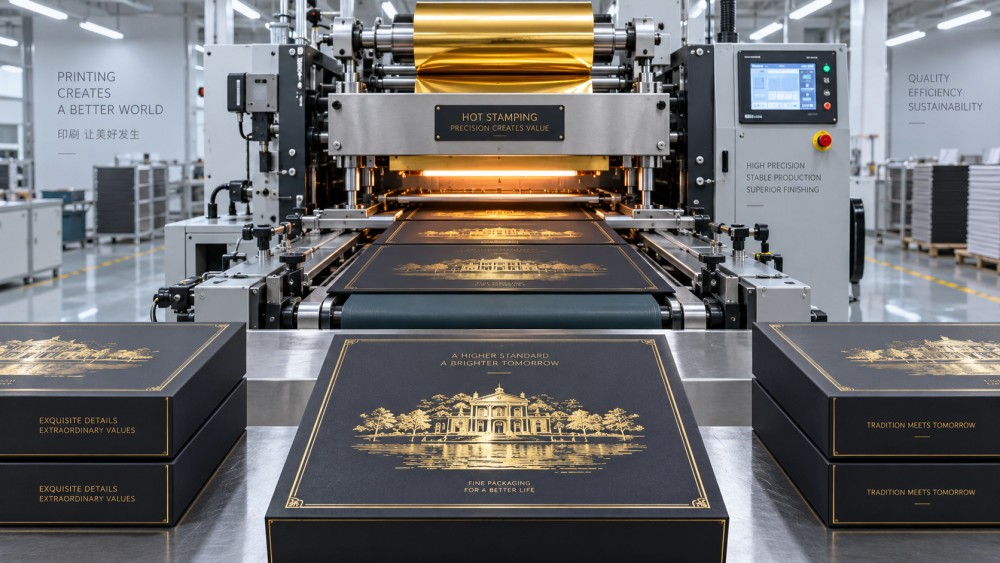
Foil compatibility should be tested as a system
Foil is not an interchangeable consumable. Its release layer, adhesive system, pigment or metallized layer, and carrier behavior interact with the substrate, printed surface, temperature, pressure, and dwell time. A machine may produce clean results with one foil on a coated cartonboard yet require different settings or a different grade of foil on uncoated stock, laminated surfaces, UV varnish, or heavily inked sheets.
Request a trial plan that uses the foils and materials relevant to planned production. If a production sample cannot be run, ask the supplier to explain the operating window: the temperature range, recommended die type, expected dwell conditions, limitations on surface finish, and how transfer settings are adjusted. A vague assurance that “most foils work” does not provide enough information for an investment decision.
Foil-saving functions deserve a separate review. Controls that limit the advance to the stamped image area can reduce material consumption on smaller motifs, but their practical benefit depends on artwork layout, job mix, and the reliability of setup. Evaluate both the achievable saving and the added complexity. A foil-saving arrangement that is difficult to thread, align, or maintain may not produce the expected benefit on short jobs.
Make-ready time often decides the real cost per job
Where premium packaging work includes many versions, seasonal designs, or customer-specific graphics, setup time can outweigh small differences in maximum speed. Compare the steps needed from one job to the next: die change, honeycomb or chase preparation, foil roll replacement, temperature adjustment, feeder setting, registration correction, pressure balancing, and approved-sheet confirmation.
Some machines provide faster locking systems, preset adjustments, motorized settings, or stored job parameters. These features should be assessed by asking which operations they genuinely remove and which still require skilled manual work. Automation is most valuable when it eliminates repeatable setup tasks or prevents an operator from setting a critical parameter incorrectly. It is less valuable when the underlying process still needs substantial trial-and-error adjustment.
Questions that expose hidden setup effort
- Which settings can be recalled automatically, and which must be reset at the machine?
- How is stamping pressure balanced across a new die, and what tools are required?
- How long does it take to change foil rolls, thread the path, and establish correct tension?
- Can operators access the heating, foil, and feeder areas safely without removing unrelated components?
- How are approved settings documented when the same artwork returns with a different board or print supplier?
These questions also reveal training requirements. A mechanically capable press may depend on an experienced operator to maintain yield, while a more guided control system may reduce variability across shifts. The appropriate choice depends on staffing stability and the amount of process knowledge already available in the finishing department.
Account for tooling, utilities, and maintenance before comparing quotes
The machine quotation is only one part of the investment. Budget for dies, make-ready materials, foil inventory, spare parts, extraction where applicable, electrical requirements, compressed air, installation work, operator training, and planned maintenance. The cost impact varies with job design. Fine artwork and large areas may require more demanding die preparation, while frequent design changes can increase tooling handling and storage needs.
Maintenance comparison should focus on access and predictability. Review lubrication points, heater replacement procedure, sensor access, gripper maintenance, foil transport components, and the availability of wear parts. Ask which components are considered consumable, what conditions typically accelerate wear, and whether routine inspection can be completed during normal planned downtime. A machine that is difficult to clean, inspect, or adjust can gradually lose consistency even when its original specification is strong.
Energy use should be viewed in relation to warm-up, idle periods, temperature holding, and realistic production scheduling. Heated systems may consume energy while waiting for sheets, approvals, or downstream capacity. Features such as zone control or standby settings can be useful, but their value depends on how the equipment is operated. The procurement review should include the workflow around the press, not just its connected electrical load.
Check the place of foil stamping in the converting line
A hot foil press rarely operates in isolation. Sheet condition from printing, coating, laminating, or drying affects the stamping result. Downstream die-cutting, embossing, stripping, folding, and gluing may expose foil cracking, scuffing, or placement issues that were not obvious at the press. Map the intended routing before selecting a configuration.
Decide whether foil stamping is best placed before or after other finishing stages for the specific products involved. The answer can change according to print process, coating chemistry, embossing requirement, carton structure, and the need to protect the finished surface. Where the machine must connect to existing material handling or inspection equipment, confirm sheet orientation, pile heights, handoff timing, footprint, operator access, and space for foil rolls and tooling.
Inspection should not be treated as an afterthought. High-value decorative work may need a defined approval process for transfer coverage, registration, scratches, and visible defects. Determine whether checks will be manual, sample-based, or integrated into the line. The selected press should support a workflow in which defective sheets are identified before they move into more expensive finishing steps.
Use demonstrations to compare repeatability, not just first-sheet quality
A useful acceptance trial should run beyond the first approved sample. Observe startup, adjustment, stable running, a foil change where relevant, and restart after a brief stop. Review sheets from the beginning, middle, and later part of the run. This reveals whether heat, pressure, tension, and registration remain controlled as conditions change.
Document the conditions used for each sample: substrate, print or coating status, foil grade, die construction, temperature setting, dwell or speed setting, pressure adjustments, and any special handling. Without this record, a visually attractive demonstration cannot be compared fairly with another machine or repeated later during installation.
The strongest purchase decision is based on a written requirement that links product quality, output expectations, setup burden, tooling needs, and line integration. It gives technical teams a common basis for evaluating suppliers and prevents a decision from being driven by the easiest sample to run. For hot foil stamping, dependable profitability usually comes from controlled repeatability across ordinary production conditions—not from one impressive sheet produced under ideal conditions.
Related News
 When a Custom Embossing Die Delivers Better Packaging DetailDiscover when a custom embossing die adds premium tactile detail, sharper branding, and repeatable packaging quality for cartons that stand out on shelf.Post-Press Kinematics Expert
 What to Compare Before Buying a Luxury Rigid Box Making MachineCompare a luxury rigid box making machine by usable throughput, automation, quality consistency, lifecycle cost, and supplier support to protect premium packaging margins.Post-Press Kinematics Expert
 What Determines Window Patching Machine Price for Packaging LinesWindow patching machine price depends on speed, accuracy, film compatibility, automation, and support. Compare total costs to choose the right packaging solution.Post-Press Kinematics Expert
 What Drives the Cost of a Custom Foil Stamping DieCustom foil stamping die costs explained: compare materials, artwork complexity, die size, run length, and press requirements to choose durable, cost-effective tooling.Post-Press Kinematics Expert
 What to Compare Before Buying Hot Foil Stamping MachinesHot Foil Stamping Machines: compare quality, registration, setup time, foil compatibility, and uptime to choose a press that delivers profitable, repeatable results.Post-Press Kinematics Expert
 How to Choose Foil Stamping Dies for Consistent Fine DetailFoil Stamping Dies: learn how to select the right material, relief, and press compatibility for crisp fine detail, reliable registration, lower waste, and consistent packaging quality.Post-Press Kinematics Expert