What Determines Window Patching Machine Price for Packaging Lines
What Determines Window Patching Machine Price for Packaging Lines
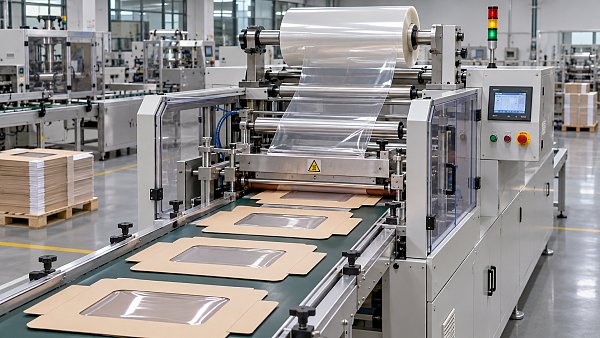
For procurement teams evaluating carton converting equipment, window patching machine price is only the starting point. Machine speed, film compatibility, accuracy, automation, and support determine total investment value.
Buyers searching for a window patching machine price usually need more than a quotation. They need a reliable way to compare suppliers, specifications, risks, and operating costs.
The right purchasing decision depends on matching equipment capability to actual carton formats, order volumes, film requirements, labor conditions, and quality expectations within the converting operation.
A lower purchase price can become expensive when setup takes too long, film waste is high, registration drifts, or local service support cannot resolve production interruptions.
Conversely, an advanced system may not justify its premium when a factory runs limited formats, stable volumes, simple window designs, and does not require extensive automation.
Why Window Patching Machine Price Varies So Widely
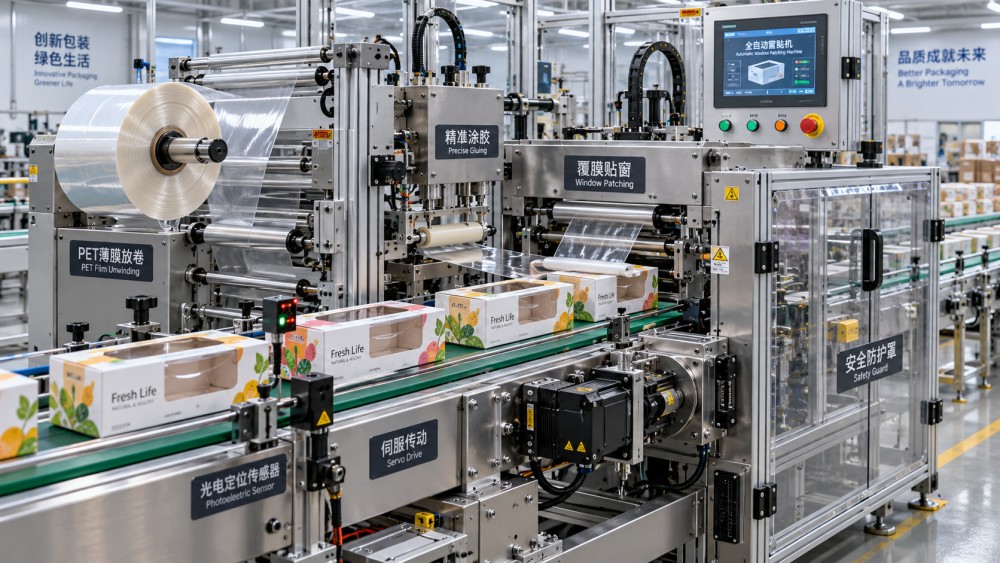
Window patching machines differ significantly in mechanical design, production capacity, automation level, and application range. These differences explain why quotations can vary substantially between suppliers and machine models.
Entry-level equipment generally targets standard carton windows, moderate speeds, and manual adjustment. Higher-priced models support continuous production, multiple film types, complex windows, and automated job changeovers.
Procurement teams should avoid comparing only the headline machine price. A meaningful comparison requires checking included modules, installation scope, tooling, software, commissioning, training, and spare-parts packages.
Some supplier quotations appear competitive because they exclude essential components. Film unwinding systems, glue units, feeders, conveyors, inspection devices, and safety protections may be quoted separately.
Currency, shipping distance, import duties, local compliance requirements, and payment terms also affect delivered cost. The lowest factory quotation may not produce the lowest installed project cost.
For this reason, buyers should evaluate window patching machine price as a configured project value. The relevant question is what production capability the quoted system delivers.
How Production Speed Affects Investment Cost
Rated speed is one of the most visible price drivers because faster equipment requires stronger mechanical structures, more precise feeding, better controls, and more stable material handling.
Suppliers may state maximum sheets per hour under ideal conditions. Procurement teams should request expected running speed for their own carton sizes, substrates, window shapes, and film materials.
A machine achieving high speed only on simple straight windows may not meet requirements for irregular shapes, large film areas, lightweight board, or jobs requiring frequent adjustments.
Ask suppliers to distinguish maximum mechanical speed from sustainable production speed. Sustainable speed reflects realistic output after accounting for setup, stoppages, film replacement, and quality checks.
Higher throughput can reduce unit labor cost and improve delivery capacity. However, it creates value only when upstream die-cutting, downstream folding, and material supply can support the pace.
Factories with short runs may benefit more from faster changeovers than maximum speed. A machine that starts stable production quickly can outperform a faster but difficult-to-adjust alternative.
When reviewing price, calculate required annual output and peak demand. This prevents paying for unused capacity or selecting equipment that restricts future customer growth.
Film Compatibility and Window Design Complexity
Film handling capability has a direct influence on window patching machine price. Different films behave differently during unwinding, tension control, cutting, transport, gluing, and final placement.
Common applications may use PET, PVC, BOPP, or specialty films. Each material can require different tension settings, static control measures, feeding arrangements, and adhesive compatibility.
Standard rectangular windows are generally simpler to produce than shaped windows, multiple windows, full-panel patching, or cartons requiring precise internal patch placement.
Complex window designs often need advanced registration systems, servo controls, specialized tooling, or additional patching stations. These features increase initial cost but can expand commercial capability.
Buyers should provide representative samples during quotation review. A supplier should demonstrate performance using actual cartonboard, window film, glue specifications, and finished-product tolerances whenever possible.
Film waste deserves attention because it affects recurring operating cost. Poor tension stability, inaccurate cutting, or inconsistent placement can turn a modest material loss into a substantial annual expense.
Evaluate whether the system supports practical roll sizes, quick roll changes, and reliable splicing. These details affect operator workload, downtime, and usable film yield.
Registration Accuracy Is a Quality and Cost Factor
Window placement accuracy matters because visible film defects can immediately reduce carton appearance. Misaligned windows may expose glue, cover printed graphics, or create unacceptable variation between cartons.
Registration performance depends on feeder stability, sheet positioning, sensor quality, servo response, mechanical precision, and the condition of die-cut blanks entering the machine.
A high-precision machine cannot fully compensate for poor die-cutting consistency. Procurement teams should assess the complete production chain before assigning all quality responsibility to window patching equipment.
Request documented tolerances for sheet registration and film placement. Suppliers should clarify whether stated accuracy applies at low speed, normal operating speed, or specific board and film conditions.
Vision inspection can raise the window patching machine price, but it may be justified for pharmaceutical cartons, premium cosmetics packaging, security packaging, or strict brand-control applications.
Inspection systems can detect misplaced film, missing windows, incorrect film orientation, adhesive problems, and damaged blanks before defective cartons reach folding or final packing stages.
For high-value packaging, preventing customer complaints and rework may justify a more capable registration and inspection package than basic production calculations initially suggest.
Automation Level Changes Both Price and Labor Exposure
Automation is a major cost driver because it reduces manual tasks, improves repeatability, and supports stable output. However, the appropriate level depends on plant volume and workforce conditions.
Manual or semi-automatic machines can suit smaller converters with stable operators and limited output. They usually require more hands-on adjustment during setup, film loading, and quality monitoring.
Automatic feeders, pre-register systems, servo adjustments, automatic glue control, and delivery conveyors increase capital cost while reducing dependence on individual operator skill and physical handling.
Factories facing labor shortages or frequent operator turnover should place greater value on automation. Simpler operation can protect output consistency when experienced personnel are unavailable.
Automatic job recall can be especially valuable for repeat orders. Stored settings reduce setup time, support faster restarts, and lower the risk of using incorrect parameters.
Still, automation should not be purchased as a vague upgrade. Each function should solve a documented bottleneck, quality risk, labor issue, or capacity constraint within the factory.
Ask suppliers to explain what remains manual after automation is installed. This reveals whether the claimed labor savings will actually occur in daily production.
Changeover Time Often Matters More Than Maximum Speed
Packaging converters increasingly handle shorter production runs and more frequent artwork changes. Under these conditions, changeover performance strongly affects the practical value of a window patching machine.
Changeovers may include adjusting feeder guides, film position, cutting dimensions, glue patterns, delivery settings, and registration parameters. Each manual adjustment creates potential downtime and error.
A lower-priced machine can be appropriate for long, repetitive orders. It becomes less attractive when the factory regularly processes varied carton sizes and window configurations.
Procurement teams should request a timed changeover demonstration between two representative jobs. The test should include cleaning, settings adjustment, first-sheet approval, and stable production startup.
It is useful to compare the total time from the final good sheet of one order to the first approved sheet of the next order.
Setup waste should be included in the evaluation. Board, film, glue, labor, and lost production time during adjustments all contribute to the actual cost of changeovers.
Machines with digital settings, servo positioning, and recipe storage may cost more initially, yet they can create a compelling return in mixed-order production environments.
Glue Systems, Consumables, and Energy Use Affect Total Cost
Glue application is central to window quality because insufficient adhesive causes film lifting, while excess glue can create visible marks, contamination, and unnecessary material consumption.
Different machines may use cold glue, hot-melt systems, or supplier-specific application arrangements. Procurement teams should confirm adhesive compatibility with film, board coating, operating temperature, and customer requirements.
Ask how glue volume is controlled and how easily operators can clean the system. Difficult cleaning increases downtime and can lead to inconsistent bonding quality.
Consumable costs should include film, adhesive, cutting tools, belts, rollers, sensors, filters, lubricants, and replacement wear parts. These costs are often overlooked during initial budget approval.
Energy consumption may be secondary for a single machine, but it remains relevant across multi-shift operations. Heating, vacuum systems, compressed air, and drives should be reviewed.
Request typical utility requirements at normal production conditions rather than only installed power figures. This supports more realistic operating-cost estimates and factory infrastructure planning.
A total-cost model should compare projected annual consumables, utilities, labor, maintenance, and waste. This approach makes window patching machine price more commercially meaningful.
Supplier Capability and After-Sales Support Protect the Investment
Machine capability is important, but supplier capability determines how quickly a factory can reach stable production. Installation quality, training, documentation, and response speed affect project outcomes.
Procurement teams should examine the supplier's installed base, relevant carton applications, export experience, and availability of service engineers or qualified local partners.
Ask whether remote diagnostics are available and what spare parts are stocked regionally. A low-cost machine loses value quickly when a minor failure stops production for weeks.
Training should cover operator use, setup procedures, maintenance routines, fault identification, safety requirements, and quality control. Training limited to machine startup rarely supports long-term performance.
Warranty terms should be reviewed carefully. Confirm the warranty period, excluded components, labor coverage, travel costs, response commitments, and process for obtaining replacement parts.
Acceptance criteria should be written into the purchase contract. They should define carton samples, production speeds, accuracy standards, waste expectations, safety functions, and testing conditions.
Clear acceptance testing reduces disputes and gives procurement teams an objective basis for determining whether the delivered machine meets the promised technical and commercial requirements.
A Practical Framework for Comparing Supplier Quotations
Start by creating a common technical specification for every supplier. Include carton dimensions, board range, window shapes, film types, annual volume, target speed, and required quality standards.
Then require suppliers to quote against the same scope. This prevents one vendor from appearing cheaper simply because essential modules, tooling, or service activities are omitted.
Build a comparison sheet covering machine configuration, output assumptions, automation functions, changeover time, utility needs, consumables, warranty, training, installation, and spare-parts recommendations.
Use representative samples to validate claimed performance. A factory acceptance test should replicate actual production conditions instead of relying only on supplier demonstrations with ideal materials.
Calculate unit cost under several scenarios, including long runs, short runs, high-quality work, and peak demand. This reveals which machine offers the best fit across realistic workloads.
Consider expansion plans over the next three to five years. A machine that supports additional formats or automation may protect future capacity without requiring another immediate investment.
Finally, assess supplier communication quality. Detailed, transparent answers about limitations, maintenance, and operating assumptions are often more valuable than optimistic claims about maximum performance.
Conclusion: Buy Production Capability, Not Only a Quotation
Window patching machine price should be evaluated as part of a broader production decision. Speed, accuracy, film handling, automation, setup efficiency, and service support determine long-term value.
For procurement teams, the strongest choice is rarely the cheapest machine or the most feature-rich model. It is the system aligned with actual carton work and factory economics.
A structured comparison of delivered scope, realistic output, operating cost, quality risk, and supplier support provides a stronger basis for approval than headline price alone.
By treating the purchase as a total-cost and production-capability decision, packaging producers can select window patching equipment that supports reliable quality, controlled costs, and sustainable growth.
Related News
 How to Compare Laminating Machines for Packaging ApplicationsCompare Laminating Machines for packaging by material compatibility, bond quality, production speed, and operating cost. Find the right fit for your application.Post-Press Kinematics Expert
 What to Consider When Buying a Film Window Patching MachineBuying a film window patching machine? Compare material compatibility, usable output, changeovers and total costs to make a confident investment.Post-Press Kinematics Expert
 How Brass and Magnesium Embossing Dies Compare for PackagingCompare brass and magnesium Embossing Dies for packaging. Discover how detail, durability, and total tooling costs affect your choice—and find the right fit for your next project.Post-Press Kinematics Expert
 What to Check Before Buying a Steel Chase Frame for Foil StampingBuying a steel chase frame? Discover key checks for press fit, precision, heat stability, and supplier quality to avoid costly downtime and buy with confidence.Post-Press Kinematics Expert
 How Male Female Dies Create Clean Embossed Details on PaperboardMale Female Dies create crisp embossed paperboard details. Discover how die clearance, board selection, and press alignment reduce defects and deliver consistent packaging quality.Post-Press Kinematics Expert
 Why Does a Precision Embossing Die Produce Uneven Relief on Cartons?Is your precision embossing die producing uneven carton relief? Discover how to fix alignment, pressure, and board issues to reduce waste and achieve consistent results.Post-Press Kinematics Expert