How to Evaluate Die Cutting Plates for Longer Tool Life and Lower Costs
For procurement teams, evaluating die cutting plates goes far beyond comparing initial purchase prices. Plate material, hardness, machining accuracy, wear resistance, and equipment compatibility directly affect tool life and carton quality.
A lower-priced plate can become expensive when it causes premature wear, unstable creasing, repeated adjustments, poor stripping, or unplanned press downtime. The most economical option is usually the plate delivering predictable output over its full service life.
Buyers should therefore assess die cutting plates as production assets rather than simple consumables. A structured evaluation connects technical specifications with operating conditions, maintenance requirements, waste risk, and measurable total cost of ownership.
This guide explains how procurement professionals can compare die cutting plates, question suppliers effectively, and select tooling that supports stable converting performance across commercial printing, carton, and corrugated packaging operations.
The goal is not to identify one universal plate type. It is to match plate construction and quality level to material grades, job mix, machine capability, expected volumes, and the factory’s tolerance for downtime.
Start with the Production Conditions the Plate Must Handle
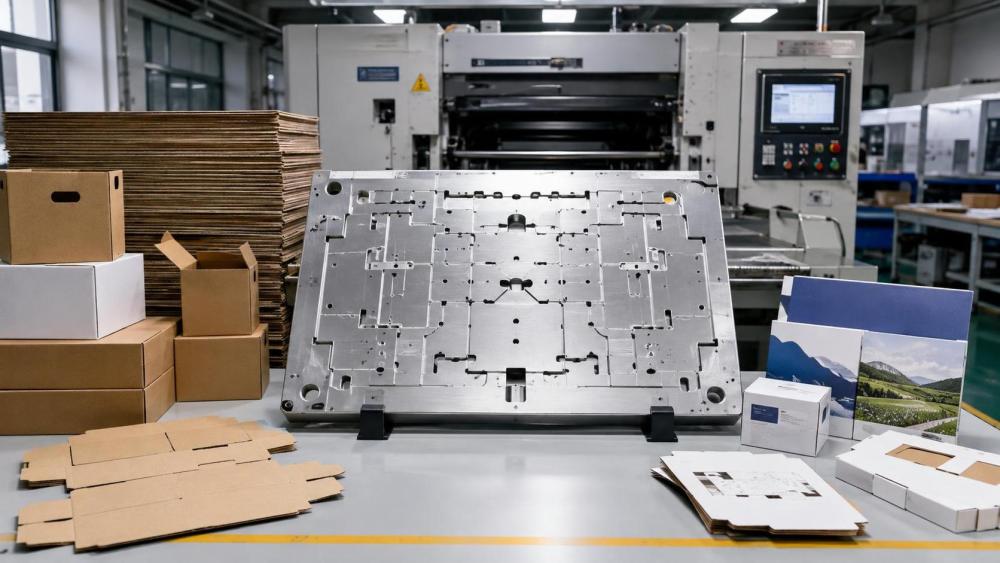
Before requesting quotations, procurement teams should define the real operating environment. Die cutting plates perform differently depending on substrate thickness, board construction, die design, press pressure, production speed, and job repetition.
A plate intended for lightweight folding cartons may not deliver acceptable life in a demanding corrugated converting line. Similarly, tooling for short-run specialty packaging may require different priorities than tooling for repeated high-volume orders.
Document the materials processed most often, including paperboard grades, coated stocks, microflute board, double-wall corrugated board, laminated sheets, and recycled-content substrates. Material variation changes cutting force, compression behavior, and abrasion levels.
Also review production speed and operating hours. A plate that appears adequate during a slow trial may lose flatness, surface integrity, or dimensional consistency when exposed to continuous high-speed operation and frequent make-ready cycles.
Die design complexity matters as well. Dense stripping patterns, narrow bridges, detailed windows, intricate creasing rules, and small waste areas can concentrate force and accelerate wear in specific plate zones.
Procurement should obtain historical evidence from production, maintenance, and quality teams. Recurring issues such as uneven cuts, cracked creases, incomplete stripping, or frequent pressure adjustments reveal the conditions a replacement plate must withstand.
Evaluate Plate Material for Wear Resistance and Application Fit
Material selection is the first major determinant of die cutting plate life. Common options include hardened steel, stainless steel, aluminum-based plates, composite constructions, and specialized coated surfaces for demanding converting applications.
Steel plates are often selected for strength, rigidity, and resistance to repeated impact. Their value is strongest in high-volume work where stable geometry and long service life outweigh a higher initial purchase price.
Hardened steel generally offers better resistance to indentation and abrasion than softer alternatives. However, excessive hardness without appropriate toughness can create brittleness concerns, particularly where impact loads or handling damage are likely.
Stainless steel can be useful where corrosion resistance is important. Plants operating in humid environments, processing water-based systems, or storing tools for extended periods should consider surface protection and rust prevention carefully.
Aluminum plates may reduce handling effort and support specific machine configurations, but buyers should verify their durability against board grades and pressure requirements. Lightweight construction does not automatically mean lower total cost.
Ask suppliers to explain material grade, heat treatment, coating, thickness tolerance, and recommended application range. Vague descriptions such as “premium steel” provide little basis for comparing tool life or operating risk.
Check Hardness Specifications, but Do Not Buy on Hardness Alone
Hardness affects a plate’s ability to resist wear, scoring, indentation, and deformation. It is an important specification, yet procurement decisions should not rely on a single hardness value without production context.
A harder die cutting plate may retain its surface longer under abrasive board conditions. However, performance also depends on material structure, uniform heat treatment, plate thickness, machining quality, and the distribution of working pressure.
Request the supplier’s hardness range and the method used to verify it. Consistent readings across the plate are more valuable than an isolated maximum figure that does not represent actual production performance.
Buyers should also determine whether the supplier controls hardness after machining. Improper processing can introduce local stress, distort geometry, or reduce performance around drilled holes, narrow sections, and critical contact areas.
When comparing quotations, connect hardness claims to documented service life. Ask how many impressions or operating hours comparable customers achieve when running similar board types, job designs, and press conditions.
The practical target is balanced durability. A plate should resist production wear while remaining reliable during installation, adjustment, cleaning, storage, and repeated handling by operators working under normal factory conditions.
Machining Accuracy Determines Whether Tool Life Translates into Quality
A durable plate still creates avoidable cost when its machining accuracy is poor. Flatness, thickness consistency, hole position, edge finish, and registration accuracy influence setup time and finished carton quality.
Even small dimensional deviations can complicate makeready. Operators may compensate through pressure adjustments, packing changes, or repeated registration corrections, increasing labor time and raising the chance of inconsistent cutting results.
For flatbed die-cutting applications, plate flatness is especially important. A warped or uneven plate can create localized pressure differences, causing incomplete cutting in one area and excessive rule penetration in another.
Buyers should request tolerances in measurable terms rather than accepting general assurances. Useful information includes flatness limits, thickness variation, hole-position accuracy, surface finish requirements, and inspection procedures before shipment.
Registration features must also match the specific die-cutting machine. Incorrect pin geometry, poorly positioned mounting holes, or inconsistent reference surfaces can delay installation and reduce the repeatability of future production runs.
Where cartons require tight graphic-to-die alignment, precision becomes even more important. Pharmaceutical cartons, cosmetics packaging, retail displays, and barcode-sensitive products leave little room for inconsistent positioning or rework.
Assess Compatibility with the Press, Dies, and Packaging Materials
Compatibility failures are a common source of hidden cost. The best die cutting plates are not merely well manufactured; they are designed to work correctly with a particular press, chase, die system, substrate range, and operating method.
Provide suppliers with the machine model, maximum sheet size, working pressure range, mounting arrangement, plate dimensions, and any existing tooling drawings. This reduces the risk of receiving plates requiring modification or adaptation.
Review compatibility with the cutting die, counterplate, stripping system, and creasing matrix. Each component affects the others, and a plate cannot be evaluated in isolation from the complete converting setup.
Different board grades generate different forces and wear patterns. Coated cartonboard, recycled linerboard, moisture-variable corrugated sheets, and laminated materials can each require changes in plate material, surface treatment, or thickness.
For corrugated packaging, flute direction and board compression behavior deserve particular attention. Plates must support clean cuts and stable creases without excessive crushing, which can weaken carton strength and reduce visual quality.
When a plant processes many job types, specify the expected operating envelope. A versatile plate may offer better purchasing efficiency than highly optimized tooling that performs well only on a narrow material range.
Calculate Total Cost of Ownership Instead of Comparing Unit Prices
Unit price is visible at the purchase stage, but total cost is created throughout the plate’s working life. Procurement teams should compare all cost drivers that influence output, maintenance effort, quality losses, and replacement frequency.
A higher-cost plate may be justified when it runs longer, reduces setup corrections, lowers waste, and avoids disruption during priority customer orders. These benefits are often larger than the original price difference.
Build a basic comparison model using purchase price, expected service life, replacement interval, setup labor, maintenance labor, scrap rate, downtime cost, and the value of delayed or rejected customer shipments.
For example, a plate costing 25 percent more may still be the lower-cost option if it lasts twice as long. The calculation becomes more compelling when reduced press downtime is included.
Do not overlook inventory costs. Inconsistent plate quality can force factories to hold more backup tools and emergency stock, tying up capital and increasing the chance that obsolete tooling remains unused.
Include supplier performance in the calculation. Reliable delivery, clear technical support, repeatable specifications, and traceable quality records can reduce expediting costs and protect production schedules when urgent orders arise.
Use Supplier Questions That Produce Comparable Answers
Strong purchasing decisions depend on comparable supplier information. Generic quotations rarely provide enough evidence, so procurement teams should use a standard technical questionnaire for all potential die cutting plate suppliers.
Ask for the exact material specification, thickness, hardness range, surface treatment, flatness tolerance, machining tolerance, quality-control method, and inspection records supplied with each production batch.
Request application references involving similar presses, materials, production volumes, and die designs. Supplier case studies are most useful when they include measurable outcomes such as impressions achieved, waste reduction, or setup-time improvement.
Clarify how the supplier handles nonconforming plates. Important questions include replacement terms, response time, root-cause analysis, drawing revision control, and responsibility when a tool does not match approved specifications.
Delivery capability also matters. Buyers should confirm standard lead times, emergency production options, packaging methods, export documentation, and whether the supplier can maintain consistent quality across repeat orders.
Where the order value is significant, request samples or a controlled production trial. A trial should use representative board, actual production speeds, and defined evaluation criteria rather than a brief low-load demonstration.
Measure Tool Life Through Production Data, Not Visual Impressions
Visual inspection is necessary, but it cannot fully determine remaining tool value. A plate may look acceptable while already contributing to unstable cutting pressure, rising waste, longer setup, or declining crease consistency.
Establish a simple plate performance record for each tool. Track installation date, job type, substrate, running hours, impressions, adjustments, defects, maintenance actions, and retirement reason.
Over time, these records reveal whether a plate wears evenly or fails unexpectedly. They also show which materials, machine settings, or die designs shorten life and require a different procurement specification.
Quality indicators should include cut completeness, edge cleanliness, crease quality, stripping performance, carton squareness, board crushing, and registration consistency. These measures connect tooling condition directly to customer-facing outcomes.
Maintenance teams can add useful observations on corrosion, surface marks, mounting damage, warpage, and cleaning difficulty. Their evidence helps distinguish normal wear from avoidable handling or storage problems.
Production data also improves supplier negotiations. Instead of stating that a plate “did not last,” buyers can demonstrate its actual service life and compare it against expected performance under defined operating conditions.
Reduce Premature Plate Failure Through Handling and Maintenance Controls
Procurement cannot secure long tool life through specification alone. Storage, transport, installation, cleaning, and operator practices can either protect the plate investment or shorten its useful service life significantly.
Plates should be stored in dry, clean areas with suitable support to prevent bending and surface damage. Stacking tools without protection can create scratches, dents, and local distortion before production begins.
During changeovers, operators should avoid dragging plates across machine surfaces or using unsuitable lifting methods. Large plates may require dedicated handling equipment to reduce safety risk and preserve flatness.
Cleaning procedures should remove adhesive residue, paper dust, ink contamination, and moisture without damaging protective finishes. Procurement specifications can include recommended cleaning agents and storage requirements from the supplier.
Train operators to report early warning signs rather than compensating indefinitely with higher pressure. Increasing pressure may temporarily maintain output, but it can accelerate wear and damage dies, matrices, or machine components.
A preventive inspection schedule helps factories replace plates before quality failure becomes expensive. Planned replacement is generally less disruptive than reacting to a breakdown during a time-sensitive customer production run.
Choose the Right Purchasing Strategy for Your Job Mix
Different factories need different sourcing strategies. High-volume plants with stable repeat work may benefit from standardized, long-life die cutting plates supported by framework agreements and defined quality controls.
Plants handling frequent short runs may place more value on fast delivery, accurate repeatability, flexible specifications, and supplier engineering support. In these environments, lead time can be as important as maximum plate life.
For premium folding cartons, prioritize dimensional precision, registration performance, and finish quality. For shipping cartons, durability, board-grade tolerance, and resistance to demanding corrugated production conditions may carry greater weight.
Consider qualifying more than one supplier for critical plate categories, especially when production schedules are tight. Dual sourcing can reduce supply risk, provided both suppliers work to the same drawings and acceptance criteria.
However, avoid fragmenting volume among suppliers without clear performance measurement. Consolidated purchasing can improve pricing and service, but only when the chosen supplier consistently meets technical and delivery expectations.
The most effective strategy combines approved specifications, documented supplier performance, production feedback, and periodic cost review. This creates a repeatable process instead of relying on isolated price negotiations for each order.
Conclusion: Buy Die Cutting Plates as a Long-Term Production Decision
Die cutting plates should be evaluated through their contribution to stable output, not simply their invoice value. Material quality, hardness balance, machining precision, compatibility, and supplier reliability all affect total operating cost.
Procurement teams gain better results when they define real production conditions, request measurable specifications, compare total cost of ownership, and verify performance through trials and ongoing factory data.
The right plate reduces unplanned changes, limits waste, protects carton quality, and supports predictable delivery. Those outcomes matter more than a small initial price saving that disappears after a few difficult production runs.
For commercial printers and packaging converters, a disciplined die cutting plate evaluation process turns tooling purchasing into a practical lever for longer tool life, lower maintenance expense, and stronger production reliability.
Related News
 How Blanking Machines Remove Carton Waste Without Damaging BlanksDiscover how Blanking Machines remove carton waste without damaging blanks. Learn tooling, alignment, and setup tips to reduce defects, protect print quality, and improve production.Post-Press Kinematics Expert
 When a Custom Embossing Die Delivers Better Packaging DetailDiscover when a custom embossing die adds premium tactile detail, sharper branding, and repeatable packaging quality for cartons that stand out on shelf.Post-Press Kinematics Expert
 What to Compare Before Buying a Luxury Rigid Box Making MachineCompare a luxury rigid box making machine by usable throughput, automation, quality consistency, lifecycle cost, and supplier support to protect premium packaging margins.Post-Press Kinematics Expert
 What Determines Window Patching Machine Price for Packaging LinesWindow patching machine price depends on speed, accuracy, film compatibility, automation, and support. Compare total costs to choose the right packaging solution.Post-Press Kinematics Expert
 What Drives the Cost of a Custom Foil Stamping DieCustom foil stamping die costs explained: compare materials, artwork complexity, die size, run length, and press requirements to choose durable, cost-effective tooling.Post-Press Kinematics Expert
 What to Compare Before Buying Hot Foil Stamping MachinesHot Foil Stamping Machines: compare quality, registration, setup time, foil compatibility, and uptime to choose a press that delivers profitable, repeatable results.Post-Press Kinematics Expert