How to Choose Carton Folder Gluers for Reliable High-Speed Production
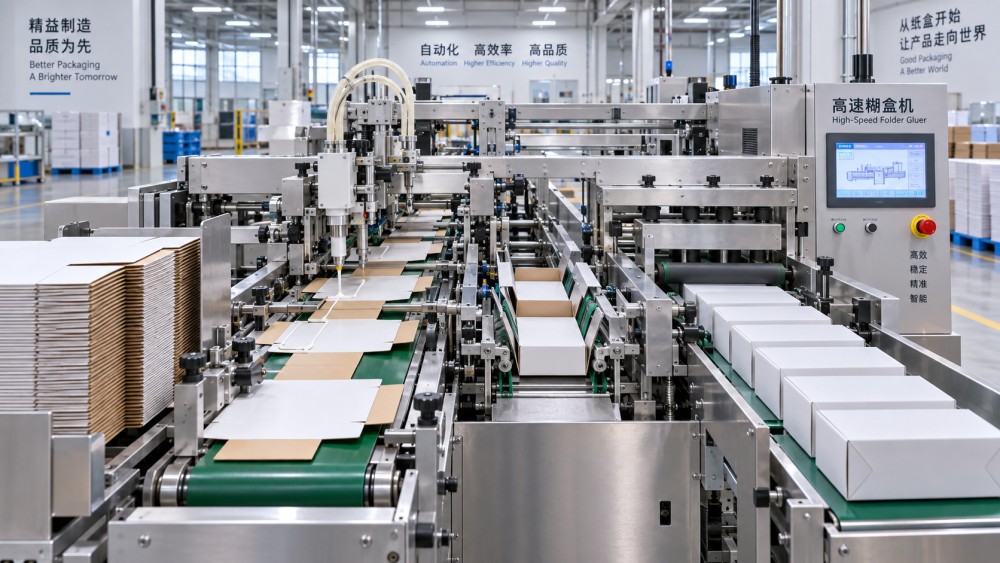
A carton folder gluer should be selected for the work it must repeat reliably, not for the highest speed shown in a brochure. A machine can be mechanically capable of running fast while still producing unstable folds, inconsistent glue bonds, scuffed printed surfaces, or frequent stoppages on the actual carton range. Reliable high-speed production comes from the interaction of feeder control, blank quality, folding geometry, glue application, compression, delivery stability, and operator access.
The most suitable Carton Folder Gluers match the plant’s normal production mix, including its difficult jobs, rather than its easiest and most frequent carton. Start with the cartons that create the most waste, longest setup time, or most customer complaints. Those formats reveal whether a proposed line has enough control, adjustment range, and supporting automation for the real operation.
Define the production envelope before comparing machines
“Carton” covers a wide range of structures. Straight-line folding cartons, crash-lock bottoms, four- and six-corner cartons, sleeves, double-wall packs, and display packaging each impose different demands on the folding section and delivery system. A machine that is efficient for standard pharmaceutical or cosmetic cartons may not be the right platform for heavier retail packs with multiple panels, long glue seams, or demanding pre-fold requirements.
Build a representative job list before asking suppliers for quotations. It should include blank dimensions, board grades, caliper range, coating or lamination, print coverage, crease layout, carton style, glue pattern, and the required output condition. Include the jobs that run regularly and the jobs that are operationally difficult. A folder gluer should be evaluated against this complete envelope, not against a single sample carton chosen for a demonstration.
Material behavior deserves particular attention. Lightweight cartonboard may need gentle transport and dependable blank separation. Heavier board can resist folding and expose weak crease lines. Laminated, varnished, metallized, or heavily printed sheets may affect friction, folding recovery, glue adhesion, and the risk of marking. If the factory handles corrugated micro-flute, paperboard, or mixed substrates, confirm the approved working range in practical terms: which carton constructions remain stable, at what production conditions, and with which accessories installed.
Do not treat maximum speed as usable output
Published machine speed is a useful capability indicator, but it is not a production promise. Usable output is the number of acceptable cartons delivered over a normal shift after allowing for setup, adjustment, material variation, glue checks, cleaning, stoppages, and rejected product. A slightly slower configuration with stable transport and quick recovery after a stop can produce more saleable cartons than a nominally faster line that requires continuous attention.
Ask suppliers to explain the conditions behind their speed claims. Which carton style was used? What board grade and blank size? Was the machine running a simple straight-line carton or a multi-panel construction? Was glue application, pre-folding, inspection, and final collection included? The answers help distinguish mechanical top speed from the sustainable operating range for the work under review.
Blank feeding is often where instability begins. At high speed, doubles, skewed blanks, poor separation, curled edges, static, and inconsistent friction can quickly become folding and glue defects downstream. Inspect the feeder design, pile loading arrangement, side guides, suction or belt systems, registration control, and the accessibility of wear parts. A stable feeder is especially valuable where blank quality varies between suppliers, shifts, or print processes.
Folding accuracy depends on carton design upstream
A folder gluer cannot fully correct weak die-cutting or creasing. Fold position is influenced by score depth, score consistency, grain direction, board stiffness, blank squareness, and the accuracy of the preceding die-cutting process. When a factory sees recurring open corners, spring-back, cracked folds, or inconsistent panel alignment, the root cause may sit upstream rather than in the gluer.
That does not reduce the importance of machine design. Evaluate how the folding carriers, belts, hooks, rails, pre-fold sections, and guides maintain control of the blank through each fold. The aim is not merely to make a carton close; it is to keep panels aligned while the blank is moving quickly and while material properties change across a production run.
For cartons with pre-folded side seams, lock-bottom sections, or multiple corner folds, look beyond the basic module list. The relevant question is whether the configuration gives enough adjustment and repeatability for that geometry. A complex carton may require dedicated accessories, extended carriers, special hooks, servo-assisted sections, or a different delivery arrangement. Buying a general-purpose machine and expecting optional tooling to solve every future format can lead to slow setups and unstable jobs.
Glue control is a quality system, not just an applicator
Glue failures are expensive because they can escape visual checks and appear later in filling, distribution, or retail handling. The selection process should cover adhesive compatibility, application method, glue pattern accuracy, access for cleaning, and the time available for bonding before compression and discharge.
Cold glue systems are widely used for many paperboard applications, while other materials or production requirements may call for different adhesive approaches. The important point is to match adhesive behavior to the substrate surface, line speed, carton construction, and required bond strength. Smooth coated surfaces, heavily varnished sheets, low-absorbency materials, and high-stress carton designs require more care than uncoated, simple side-seam cartons.
Check whether the machine provides controlled glue application for the required pattern and whether operators can inspect and adjust it without disrupting the line. Reliable gluing also depends on compression belt length, pressure consistency, and carton dwell time. A clean, accurate bead is of little value if the carton reaches the delivery section before the bond has been properly formed.
Where a failed seam has high commercial or safety consequences, consider how inline vision inspection, glue detection, code verification, and reject handling can be incorporated. Inspection should be selected around actual defect risks, not added as a generic automation feature. A system that detects a missing glue line but cannot reliably separate the defective carton from the good stream creates a different operational problem.
Choose automation according to order behavior
Automation is most valuable where it removes a repeated source of lost time or variation. For long, stable runs of a narrow carton range, a robust manually adjusted machine may provide an appropriate balance of cost and flexibility. For frequent job changes, many stored formats, and tight delivery windows, motorized adjustment, recipe storage, guided setup, and automated positioning can make a material difference to throughput.
The evaluation should focus on the entire changeover, not only the time spent moving rails or carriers. A practical changeover includes loading the new blank, setting feeder and side guides, adjusting folding sections, preparing glue, verifying compression, checking carton quality, and releasing the job for production. A machine with automated settings still needs a clear process for first-off approval and correction.
Ask what settings can be stored, what still requires manual intervention, and how repeatable a recalled job is after routine maintenance or belt replacement. Also ask whether an experienced operator must make each adjustment. Automation that reduces dependence on scarce specialist knowledge can be valuable, but only if the interface is understandable and the mechanical setup remains accessible.
Review the folder gluer as part of the whole line
A folder gluer rarely operates in isolation. Its effective output depends on the die-cutter or blank supply upstream, as well as collection, packing, conveying, case packing, palletizing, and production data systems downstream. If cartons accumulate at delivery because packing cannot keep pace, the gluer must slow down or stop. If blanks arrive with variable stripping quality or inconsistent creases, the feeder and folding sections must absorb that variation.
Map material flow from die-cut blank to packed finished carton. Identify manual handling points, accumulation capacity, quality checkpoints, and locations where cartons can be damaged or mixed. This review often changes the equipment specification. A high-capacity delivery section, batch separation, counting, automatic collection, or end-of-line integration may be more useful than additional headline speed.
Production connectivity also has a defined purpose. Job data, recipe management, maintenance alerts, production reporting, and defect records can support scheduling and traceability when they are linked to plant routines. They do not replace basic process control. The most useful system is one that gives supervisors actionable information about output, stoppage reasons, waste, and recurring faults.
Serviceability is part of the capacity calculation
High-speed machinery wears. Belts, carriers, bearings, glue components, sensors, and transport elements require inspection and replacement. The question is not whether maintenance will be needed, but whether it can be completed quickly and predictably without creating excessive downtime.
Examine physical access to adjustment points, cleaning areas, glue units, belts, electrical cabinets, and sensors. Ask how routine maintenance is performed, which components are consumable, how fault diagnostics are presented, and how spare parts are identified. A tightly enclosed design may look orderly but become costly if routine work requires long disassembly.
Supplier support should be assessed in operational terms: installation scope, commissioning support, operator and maintenance training, documentation quality, remote diagnostic capability, local service coverage, and parts availability. These factors matter more when the machine is expected to run complex formats or form a critical link in a continuous packaging line.
A practical selection sequence
- Classify the carton portfolio. Separate routine formats from technically difficult, high-risk, and expected future formats.
- Define the required output. Use acceptable delivered cartons and normal operating time, rather than maximum mechanical speed.
- Review upstream blank quality. Confirm whether creasing, die-cutting, print finish, and blank handling support the intended folding performance.
- Specify glue and quality controls. Match the application and inspection approach to the carton surface, seam design, and consequences of failure.
- Evaluate changeover in full. Include setup, first-off verification, cleaning, and job recall, not only automatic adjustment features.
- Test representative work. Use production-like blanks, including difficult materials and carton structures, and inspect results after normal handling.
- Calculate operating implications. Compare labor, waste, maintenance access, consumables, line integration, and support alongside acquisition cost.
For broader comparisons of converting equipment, inspection options, and automated packaging workflows, CPCS provides structured information across folder gluers, die-cutting, printing, and end-of-line systems. That wider view is useful because a machine choice is stronger when it is tested against the constraints of the full production process.
The final decision should favor the configuration that delivers repeatable cartons at a sustainable rate across the actual job mix. A reliable line does not depend on constant intervention to hold alignment, maintain glue quality, or recover after every format change. It gives the operation enough control to run ordinary work efficiently and enough margin to handle the cartons that usually expose weaknesses.
Related News
 How Blanking Machines Remove Carton Waste Without Damaging BlanksDiscover how Blanking Machines remove carton waste without damaging blanks. Learn tooling, alignment, and setup tips to reduce defects, protect print quality, and improve production.Post-Press Kinematics Expert
 When a Custom Embossing Die Delivers Better Packaging DetailDiscover when a custom embossing die adds premium tactile detail, sharper branding, and repeatable packaging quality for cartons that stand out on shelf.Post-Press Kinematics Expert
 What to Compare Before Buying a Luxury Rigid Box Making MachineCompare a luxury rigid box making machine by usable throughput, automation, quality consistency, lifecycle cost, and supplier support to protect premium packaging margins.Post-Press Kinematics Expert
 What Determines Window Patching Machine Price for Packaging LinesWindow patching machine price depends on speed, accuracy, film compatibility, automation, and support. Compare total costs to choose the right packaging solution.Post-Press Kinematics Expert
 What Drives the Cost of a Custom Foil Stamping DieCustom foil stamping die costs explained: compare materials, artwork complexity, die size, run length, and press requirements to choose durable, cost-effective tooling.Post-Press Kinematics Expert
 What to Compare Before Buying Hot Foil Stamping MachinesHot Foil Stamping Machines: compare quality, registration, setup time, foil compatibility, and uptime to choose a press that delivers profitable, repeatable results.Post-Press Kinematics Expert