How High Detail Foil Stamping Dies Improve Premium Package Quality
A premium carton can look acceptable at normal viewing distance and still fail the moment it reaches a close inspection point: a hairline in a logo fills in, fine type loses an edge, a metallic line breaks at a fold, or foil appears slightly displaced from the printed artwork. In pharmaceutical, cosmetic, beverage, and high-value retail packaging, these are not merely aesthetic issues. They can affect brand recognition, readable information, batch release decisions, and the amount of material held for rework or disposal.
The central judgment is straightforward: a high detail foil stamping die improves package quality only when its engraving geometry, material, mounting condition, and operating window are matched to the substrate and press. Fine-detail tooling gives the production process a more accurate transfer surface, but it cannot compensate for unstable sheet registration, unsuitable foil, poor board flatness, or excessive heat and pressure. Quality teams should therefore assess the die as part of a controlled stamping system rather than as an isolated component.
Why fine foil details fail even when the artwork is correct
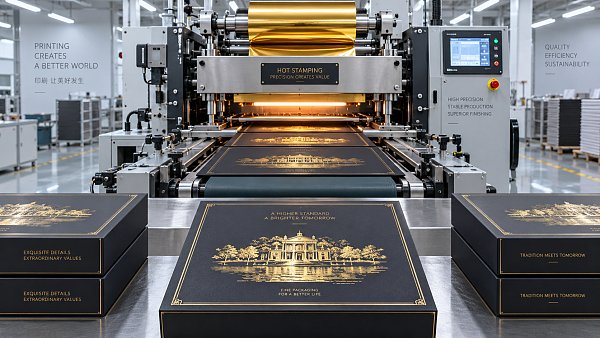
Foil stamping transfers a thin metallic or pigmented layer through controlled heat, dwell time, pressure, and contact. A die carries the image in relief; the raised areas activate and press the foil onto a coated or uncoated surface. With broad solid areas, a small variation in die height or pressure may be hard to see. With microtext, narrow line art, intricate borders, or small negative spaces, the same variation can produce visible defects quickly.
A detail-rich design creates competing process requirements. Narrow raised elements need sufficient pressure and heat to transfer cleanly, yet too much of either can spread the image, close counters in letters, crush paper fibers, distort coating, or leave a heavy edge around the foil. Deep recesses must remain clear so that unwanted foil does not bridge between adjacent design elements. The smaller the gap between lines, the more important the die profile becomes.
Problems often emerge during a routine production run rather than at initial setup. The first sheets may look sharp, then output begins to show incomplete transfer or loss of definition after the press reaches speed. This pattern can point to temperature variation, uneven make-ready, foil feeding tension, a contaminated die face, or substrate changes between stacks. Treating every defect as a die problem can lead to unnecessary tool replacement while the actual process instability remains unresolved.
The die features that protect fine artwork
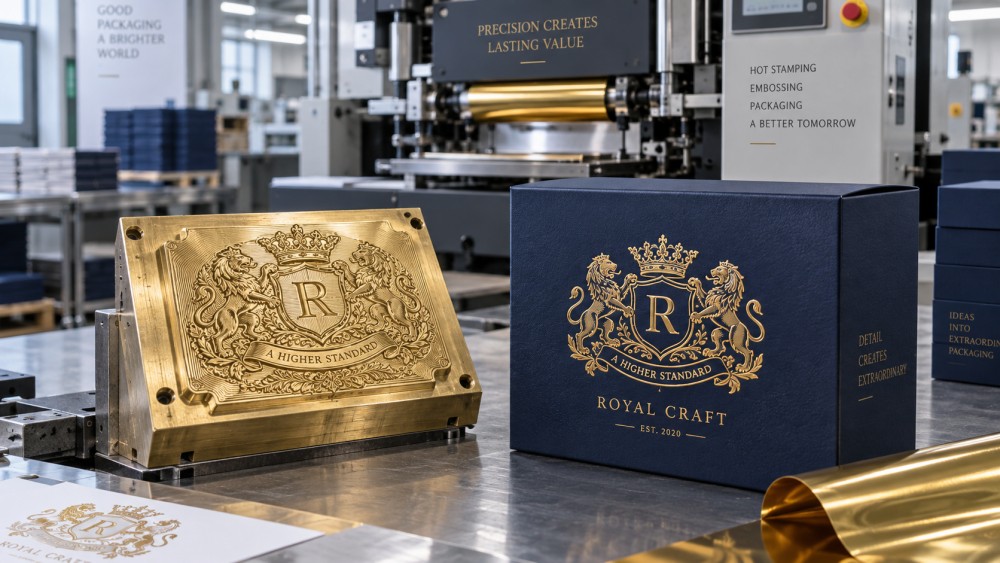
Die quality is not simply a question of whether the visible image resembles the approved file. The working face must reproduce the artwork with dimensions and edge characteristics suited to foil transfer. Artwork preparation, engraving method, metal selection, relief depth, bevel treatment, and die thickness all influence how the tool performs under repeated cycles.
Relief and separation need to match the design
Fine elements require enough relief separation from non-printing areas to prevent accidental contact and foil pickup. At the same time, excessive depth can make pressure distribution harder to control, especially where a design combines fine type with broad logo panels. A well-prepared die distinguishes between transfer surfaces and clearance areas without creating fragile features that wear, bend, or collect debris.
Very narrow reverse spaces deserve special attention. A decorative pattern may look open in digital artwork but become vulnerable once foil, adhesive release layers, coating texture, and press pressure are involved. Where the intended gap is close to the practical limit of the substrate and process, the die must preserve that gap consistently. It may also be necessary to revise the artwork before tooling rather than expect a press adjustment to maintain an impractically fine separation.
Edge geometry controls sharpness and durability
A crisp foil edge does not necessarily require a knife-sharp die edge. Extremely sharp profiles may wear more rapidly, damage coated surfaces, or create inconsistent transfer under high pressure. Conversely, an overly rounded edge can make small type appear heavier and reduce the definition of fine ornamentation. The appropriate edge profile depends on the board surface, coating, foil type, image scale, and press configuration.
Quality approval should include magnified examination of representative details: small characters, thin rules, corners, enclosed letter areas, intersections, and transitions between solid and fine elements. A broad logo area can transfer well while the smallest registration mark or legal text remains unacceptable. Approval based only on the most visually prominent section leaves the high-risk details unverified.
Material selection affects production stability
Brass, copper, and magnesium are commonly considered for foil stamping dies, but they do not serve every job equally. Material choice should reflect run length, image complexity, required durability, heat behavior, and the likelihood of repeated use. A softer material may suit certain short-run or less demanding applications, while a more durable material can be appropriate where stable reproduction of fine detail is required through longer production cycles.
The important quality question is not which metal is universally “best.” It is whether the selected material can retain the required relief and edge definition without premature wear, deformation, or unacceptable variation. This should be confirmed alongside the press temperature range and the intended foil system. A technically accurate engraving in an unsuitable material can still become a recurring source of defects.
What inspectors should look for before a run is released
A useful inspection sequence begins before foil reaches the sheet. First compare the die against the approved artwork, paying particular attention to reversed text, small symbols, line spacing, and isolated elements that may be damaged during handling. Then inspect the die face for dents, residue, oxidation, scratches, uneven polish, or evidence of previous cleaning methods that may have altered fine features.
Next, confirm that the die is mounted flat and securely. A die that is technically correct but not seated evenly can create localized weak transfer or excessive impression. Mounting distortion is especially difficult to diagnose on designs with mixed coverage because the operator may increase overall pressure to correct one light region, causing fine details elsewhere to spread or crush.
Before production approval, review the first acceptable sheets under the same lighting and viewing conditions used for quality decisions. Metallic surfaces can hide defects when inspected from only one angle. Tilting the sheet reveals edge lift, incomplete coverage, scuffing, pinholes, and uneven sheen. Where the stamped area interacts with printed registration, inspect both the foil image and its position relative to color boundaries, dielines, and any variable information.
- Confirm that small text is complete, legible, and free from bridged counters.
- Check narrow lines for breaks, excessive width, ragged edges, and uneven metallic density.
- Review solid areas for voids, mottling, trapped debris, or signs of overpressure at the perimeter.
- Inspect folds, scores, and glue zones where foil may crack, interfere with adhesion, or create handling issues.
- Compare samples from different sheet positions and from the beginning, middle, and later stages of the run.
This approach separates an isolated setup imperfection from a repeatable process issue. It also gives production personnel more useful feedback than a general instruction to “make the foil sharper.”
Defect patterns and the most likely direction of investigation
Registration is a package-quality issue, not just a visual preference
High-detail stamping increases the visibility of registration error. A foil frame that shifts slightly relative to print may be tolerated on a broad decorative panel but becomes conspicuous when it borders small typography, a color keyline, a security mark, or a barcode-adjacent element. In regulated packaging, confusion created by misaligned metallic text or symbols can complicate identification and inspection even when the printed information itself remains technically present.
Die precision supports registration because a faithful image boundary gives inspectors a clear reference. Still, positional accuracy depends on the complete sheet path: feeder consistency, side and front lays, gripper control, sheet dimensional stability, and press timing. When foil and print appear misregistered, verify whether the printed image is stable first. A variable print position cannot be solved by altering a fixed die image.
Substrate behavior must also be considered. Paperboard can respond to heat, moisture, coating, grain direction, and prior printing operations. Curl, uneven lay-flat condition, or dimensional movement may create a defect that resembles poor die manufacture. Retaining samples from multiple locations in a stack and checking both machine and cross-sheet direction can help reveal this pattern.
Managing heat, pressure, and dwell without damaging the board
Process settings should be treated as interacting controls. Raising temperature may improve release and coverage, but it can also alter coating appearance, increase edge spread, or affect nearby printed layers. Increasing pressure may correct a light area caused by uneven contact, yet it can emboss unintended texture into the sheet or deform fine features. Longer dwell can assist difficult transfer, but it may reduce throughput and intensify thermal effects.
A controlled adjustment changes one relevant factor at a time and evaluates the smallest critical feature as well as the overall image. Quality records should identify the approved substrate, foil specification, die identification, make-ready condition, and operating settings used for the accepted run. The purpose is not bureaucratic paperwork. It is to prevent future operators from rebuilding the process through trial and error when the same artwork returns.
Where a job includes both large solids and delicate elements, consider whether one setting can reasonably serve both. Some designs may need artwork changes, separate stamping operations, or a different decorative method if the acceptable window is too narrow. Repeatedly forcing a single setup to satisfy incompatible image areas increases waste and makes release decisions inconsistent.
Maintenance practices that preserve high-detail dies
Fine-detail dies should be handled as precision production tools. Contact surfaces need protection during storage and transport because a small impact can damage a narrow line or isolated character. Tools should be identified clearly so that the correct die, orientation, and revision are used. Mixing similar versions can create subtle but serious artwork discrepancies.
Cleaning should remove foil residue and debris without aggressive scraping that rounds edges or damages small relief features. The cleaning method must be compatible with the die material and any mounting components. Inspection after cleaning is useful because residue can conceal wear, while excessive cleaning can itself become the source of change.
Wear monitoring is most valuable when it focuses on the critical image elements rather than only the largest surfaces. Compare current output with a retained approved sample under consistent conditions. Loss of edge definition, increasing need for pressure, recurring fill-in of small counters, or foil pickup in protected areas may indicate that the die should be evaluated before defects escalate into a larger batch issue.
When the die is not the root cause
Replacing tooling is justified when inspection shows physical damage, wear, poor engraving definition, or geometry that cannot support the required artwork. It is not the first response when defects move across the sheet, vary with speed, appear only on one substrate lot, or worsen after a press setting change. Those patterns point more strongly toward process control, material condition, foil compatibility, or mechanical registration.
The most reliable premium-package result comes from defining acceptance criteria around the actual risk points: readable fine type, clean negative spaces, stable foil boundaries, intact board structure, correct placement, and consistency through the run. A high detail foil stamping die provides the precision foundation for those requirements, while disciplined setup, inspection, and maintenance keep that precision visible on finished packaging.
Related News
 How Blanking Machines Remove Carton Waste Without Damaging BlanksDiscover how Blanking Machines remove carton waste without damaging blanks. Learn tooling, alignment, and setup tips to reduce defects, protect print quality, and improve production.Post-Press Kinematics Expert
 When a Custom Embossing Die Delivers Better Packaging DetailDiscover when a custom embossing die adds premium tactile detail, sharper branding, and repeatable packaging quality for cartons that stand out on shelf.Post-Press Kinematics Expert
 What to Compare Before Buying a Luxury Rigid Box Making MachineCompare a luxury rigid box making machine by usable throughput, automation, quality consistency, lifecycle cost, and supplier support to protect premium packaging margins.Post-Press Kinematics Expert
 What Determines Window Patching Machine Price for Packaging LinesWindow patching machine price depends on speed, accuracy, film compatibility, automation, and support. Compare total costs to choose the right packaging solution.Post-Press Kinematics Expert
 What Drives the Cost of a Custom Foil Stamping DieCustom foil stamping die costs explained: compare materials, artwork complexity, die size, run length, and press requirements to choose durable, cost-effective tooling.Post-Press Kinematics Expert
 What to Compare Before Buying Hot Foil Stamping MachinesHot Foil Stamping Machines: compare quality, registration, setup time, foil compatibility, and uptime to choose a press that delivers profitable, repeatable results.Post-Press Kinematics Expert