Why Intermittent Motion Drive System Accuracy Matters in Die Cutting
Why Intermittent Motion Drive System Accuracy Matters in Die Cutting
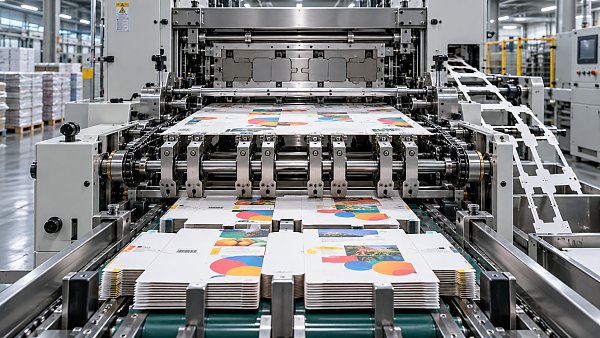
In die cutting, accuracy is not a detail hiding inside the machine frame. It shows up on the sheet, on the crease, in the stripping station, and later at the folder gluer. When a flatbed die-cutter runs with an intermittent motion drive system, the machine must repeatedly accelerate, stop, register, cut, strip, and transfer sheets without drifting from its intended position. If that motion is even slightly inconsistent, the result is usually visible: poor registration, unstable creasing, higher waste, slower speed, and more operator correction.
That is why technical evaluation teams tend to look beyond nominal speed. A machine may be rated for high throughput, but the practical question is whether its drive system can maintain repeatable positioning under real production conditions: board grade changes, short runs, frequent job changeovers, and long operating hours. In carton and corrugated converting, accuracy is not only about cut quality. It affects downstream folding behavior, glue line consistency, barcode panel alignment, and whether finished packs can run smoothly through filling or retail handling.
For platforms such as CPCS, which follow commercial print, corrugated packaging, converting machinery, and packaging plant automation, this point matters because buyers increasingly evaluate equipment as part of a production system rather than as an isolated asset. A die-cutter with unstable motion can compromise the value of upstream printing quality and create avoidable cost in downstream finishing.
What accuracy really means in an intermittent drive context
The term intermittent motion drive system is often discussed as if it only refers to a mechanical design choice. In practice, it is a performance question. The system has to move the sheet to a defined position, hold it with sufficient stability during cutting or creasing action, and repeat that cycle with minimal variation over time.
In flatbed die cutting, the intermittent cycle creates natural stress points. Every stop-and-go sequence introduces forces that must be absorbed and controlled. Backlash, cam wear, servo synchronization issues, gripper chain variation, frame vibration, or inconsistent sheet feeding can all translate into positional error. Even when the absolute deviation seems small, packaging converting is unforgiving. A slight shift at the cutting station can become a larger problem at folding, gluing, or carton erection.
Technical evaluators usually care about three related ideas:
- Positioning accuracy: whether the sheet reaches the intended location.
- Repeatability: whether it returns to that location cycle after cycle.
- Dynamic stability: whether accuracy holds when speed, substrate, and load change.
A machine can look precise during trial cuts on a stable substrate and still lose control when running warped corrugated sheets, heavier board, or jobs with tight print-to-cut registration requirements.
Where drive precision shows up on finished cartons
The most obvious effect is registration. Printed graphics, score lines, cut windows, tear lines, and embossing features all depend on the sheet arriving at the cutting section in the right position. In branded packaging, misregistration is not just cosmetic. It can affect code placement, legal text areas, pharmaceutical pack readability, or retail shelf appearance.
Crease consistency is just as important. If the intermittent drive does not hold the sheet steadily through the press cycle, crease depth and location can vary. That often leads to cracking on coated board, poor fold memory, asymmetrical carton panels, or glue flap issues. Converters sometimes blame tooling first, but drive instability and sheet control are common hidden causes.
Waste is the next consequence. When positional variation increases, operators compensate by lowering speed, widening tolerances where possible, or rejecting more sheets. None of those is a real fix. Over a long production schedule, the cost is not only waste paperboard. It also includes time lost to resets, inspection, and stop-start production.
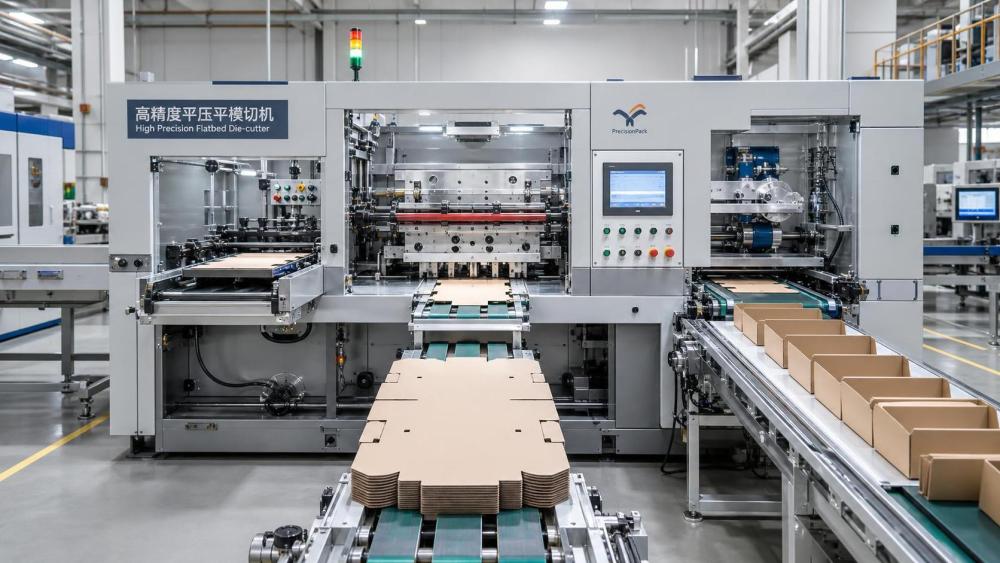
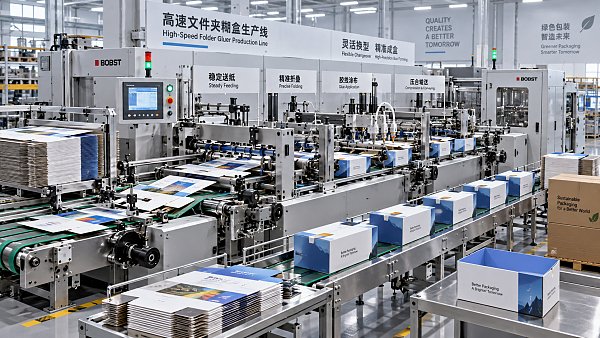
Then there is downstream performance. Folder gluers expose die-cutting errors very quickly. Minor inaccuracies in crease placement or blank geometry can lead to skewed folding paths, open seams, fish-tailing, glue misses, and unstable pack squareness. When the converting line includes vision inspection, coding, packing, or robotic end-of-line automation, dimensional inconsistency becomes even more expensive because the problem travels further through the plant.
Why machine speed alone can be misleading
Suppliers often present die-cutter performance through maximum sheets per hour. That number matters, but it does not answer the more useful question: at what speed does the machine maintain acceptable register and stable blank quality across a realistic mix of jobs?
Intermittent systems become harder to control as acceleration and deceleration forces rise. If the drive train, control loop, or sheet transport design is not sufficiently rigid and synchronized, a machine may achieve top speed only under favorable conditions. Technical teams should be careful with demonstrations that rely on a single board grade, a short running window, or generous quality tolerance.
In many factories, especially those handling e-commerce cartons, retail-ready packaging, and shorter order runs, useful productivity comes from stable operation through repeated changeovers. A slightly lower nominal speed with better motion accuracy can outperform a faster machine that demands constant adjustment.
The components behind accuracy
When assessing an intermittent motion drive system, it helps to separate marketing language from engineering realities. Accuracy is influenced by the interaction of several subsystems, not by one feature alone.
Drive train design
Whether the machine uses cam-based architecture, servo-driven motion, or a hybrid arrangement, the key issues are backlash control, torsional rigidity, synchronization, and wear behavior over time. A system can be accurate when new but lose consistency if mechanical play develops quickly.
Feeding and sheet transfer
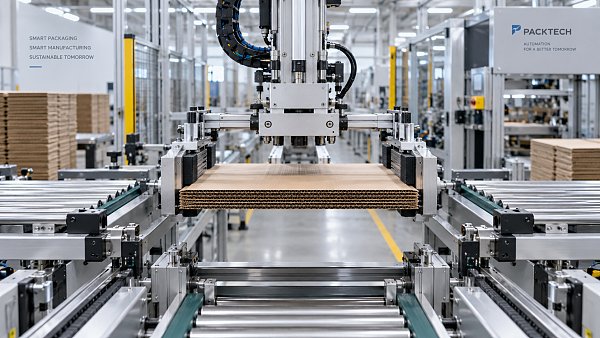
Drive precision cannot rescue poor sheet presentation. Feeder stability, side lay control, front lay timing, suction performance, and gripper accuracy all affect the position of the sheet before and during the cutting cycle. This is especially relevant for corrugated and paper-based packaging where warp, flute direction, and board stiffness variation can challenge transport stability.
Frame rigidity and vibration behavior
A rigid frame supports repeatability under load. If the machine structure allows excessive deflection or vibration, the benefits of precise control logic may not fully reach the cutting point. This is one reason technical reviews should include operating observation, not only control system specifications.
Control and feedback systems
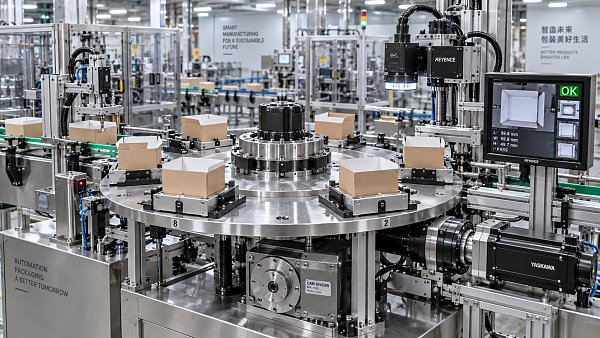
Modern die-cutters increasingly depend on sensors, motion controllers, and diagnostic functions to maintain accuracy and detect drift early. The question is not whether digital controls exist, but how they are used: registration correction, fault history, servo synchronization monitoring, maintenance alerts, and operator guidance. This is where broader packaging plant intelligence, an area closely tracked by CPCS, becomes relevant. Motion accuracy is easier to protect when the machine can expose trend data instead of leaving operators to react after defects appear.
What technical evaluators should ask suppliers
Not every supplier presents accuracy in the same way, and not every factory needs the same tolerance level. Still, some questions are hard to avoid if long-term performance matters.
It is also worth asking whether the supplier’s acceptance criteria match your end-use requirements. Folding carton work with tight print alignment is not judged the same way as some transport packaging applications. The right standard is usually project-specific.
Common evaluation mistakes
One common mistake is focusing only on die-cutting station precision while ignoring the feeder and delivery path. Another is assuming that servo control automatically means better results. In reality, software sophistication cannot fully compensate for mechanical looseness, poor board handling, or unstable tooling conditions.
A third mistake is treating accuracy as a quality issue only. It is also an operating cost issue. A machine that needs experienced operators to constantly correct register may still produce saleable cartons, but the labor burden, setup time, and hidden waste can be substantial. As factories move toward more automated scheduling, inline inspection, traceability, and connected finishing lines, unstable motion becomes harder to hide.
Why this matters more now than it did a few years ago
The packaging industry is dealing with shorter runs, more SKUs, faster delivery expectations, and tighter pressure on paper utilization. Those changes make intermittent motion accuracy more valuable, not less. When jobs change frequently, there is less room to recover from setup drift or inconsistent first-run quality. When labor is tight, machines need to hold settings reliably. When customers expect traceable and visually consistent packs, converting errors become more visible across the chain.
This is also why information platforms like CPCS have become useful in equipment evaluation. Buyers are no longer comparing die-cutters on speed and price alone. They are looking at how motion control, maintenance behavior, inspection integration, and downstream compatibility affect the total production system.
If a die-cutter will be part of a broader packaging line that includes printing, stripping, folding, gluing, coding, and end-of-line automation, then the accuracy of the intermittent motion drive system is not a narrow technical specification. It is one of the foundations of process stability.
Before making a final comparison, it is usually worth reviewing not just quoted tolerance values but also test conditions, board range, long-run behavior, maintenance access, and how the machine reports performance drift. Those details often tell more about future output quality than the headline speed figure on a brochure.
Related News
 How to Compare Folder Gluer Systems for High-Mix Carton ProductionCompare Folder Gluer Systems for high-mix carton production with practical insights on changeovers, accuracy, glue control, integration, and lifecycle support.Post-Press Kinematics Expert
 How Mechanical Gripper Systems Improve Repeatable Material HandlingMechanical gripper system solutions improve repeatable material handling, reduce waste and downtime, and protect products across fast-paced packaging and printing lines.Post-Press Kinematics Expert
 How a Die Cutter Gripper System Improves Sheet Control and AccuracyDiscover how a die cutter gripper system improves sheet control, registration accuracy, stripping consistency, and packaging production efficiency.Post-Press Kinematics Expert
 How to Select a Precision Cam Indexer for High-Speed AutomationSelect a precision cam indexer for high-speed automation with confidence. Learn how to evaluate inertia, dwell time, accuracy, loads, and maintenance needs.Post-Press Kinematics Expert
 Why Intermittent Motion Drive System Accuracy Matters in Die CuttingIntermittent motion drive system accuracy is critical in die cutting. Learn how it improves registration, reduces waste, and boosts carton quality and line efficiency.Post-Press Kinematics Expert
 What Shapes Intermittent Motion Drive Price in Modern Carton LinesIntermittent motion drive price depends on accuracy, durability, controls, and supplier scope. Discover how carton plants compare cost, uptime, and lifecycle value before buying.Post-Press Kinematics Expert