How to Compare Folder Gluer Systems for High-Mix Carton Production
How to Compare Folder Gluer Systems for High-Mix Carton Production
For project managers handling high-mix carton production, comparing Folder Gluer Systems requires more than checking maximum speed or purchase price. The right solution must support fast changeovers, stable folding accuracy, flexible glue application, reliable feeding, and efficient integration with upstream die-cutting and downstream packing. This is especially true when a plant runs short campaigns, seasonal packaging, promotional cartons, pharmaceutical inserts, food-service packs, e-commerce formats, or frequent version changes for the same brand.
A folder gluer can look impressive during a standard machine demonstration: one carton style, good board condition, an experienced operator, and a clean production floor. Real production is less forgiving. Jobs arrive with different substrates, score quality, coatings, blank geometry, glue patterns, delivery requirements, and lead times. The comparison process should therefore start with the plant’s actual job mix and bottlenecks, not with a supplier brochure.
The practical question is not simply, “Which machine is fastest?” It is, “Which machine can produce our changing order profile with the least lost time, reject risk, and operator intervention?” That distinction changes how an engineering team should evaluate equipment.
Start with the cartons that create the most disruption
Most factories have a group of straightforward cartons that nearly any competent folder gluer can handle. Those jobs should not drive the investment decision. The more revealing jobs are the ones that cause slowdowns: narrow-side straight-line cartons, lock-bottom boxes, crash-lock styles, four- and six-corner cartons, sleeves, multi-panel retail packaging, small-format pharmaceutical cartons, or blanks with heavy ink coverage and varnished surfaces.
Before sending an inquiry to equipment suppliers, build a representative job matrix. Include blank dimensions, carton style, board grade, thickness range, print or coating condition, crease direction, glue locations, production quantity, expected delivery format, and known quality issues. Do not provide only maximum and minimum sheet sizes. A system may technically accept a blank size while still being inefficient or unstable at that format.
There is also a useful distinction between “can run” and “can run commercially.” A carton that needs repeated manual corrections, low operating speed, or constant attention from two operators may be feasible, but it is not a strong fit for a high-mix environment. Request that suppliers demonstrate the difficult jobs where possible, ideally using production blanks rather than generic test material.
Changeover performance matters more than headline speed
High-mix production changes the economics of machine speed. A very high mechanical speed has limited value when the line spends too much time preparing the next order. On a plant schedule filled with frequent job changes, the accumulation of setup time, trial blanks, cleaning, adjustment, and quality approval can outweigh the benefit of a higher top-speed rating.
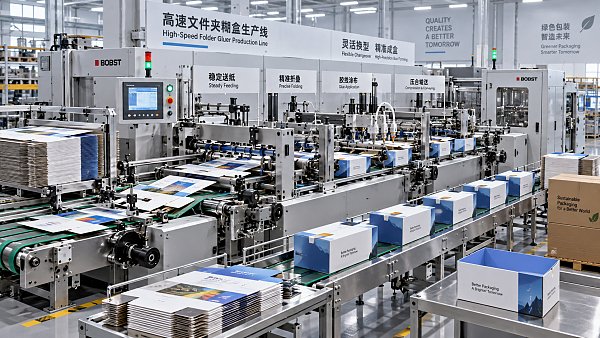
When comparing Folder Gluer Systems, ask suppliers to separate the changeover into its real tasks. This normally includes feeder setup, carrier adjustment, folding belt positioning, pre-fold section settings, lower carrier or hook configuration, glue gun positioning, compression section adjustment, delivery setup, and recipe loading. Some settings may be motorized; others still require manual intervention. Neither approach is automatically wrong, but the labor and repeatability implications are very different.
A heavily automated system can reduce dependence on individual operator skill and help repeat common jobs more consistently. However, automation should be judged carefully. If an automatic setting requires frequent correction because the blank variation is significant, the benefit may be smaller than expected. Conversely, a well-designed semi-automatic machine can work effectively where the job range is broad but order repetition is low. The key is to understand which adjustments are repeatable and which still depend on visual judgment.
Ask for a documented changeover sequence during supplier evaluation. It should clarify whether settings are stored by job, what operators must verify after recall, how many trial blanks are typically needed before approval, and whether carton quality can be checked without interrupting flow. This is more meaningful than accepting a general claim of “quick setup.”
Evaluate feeding and blank control as a complete chain
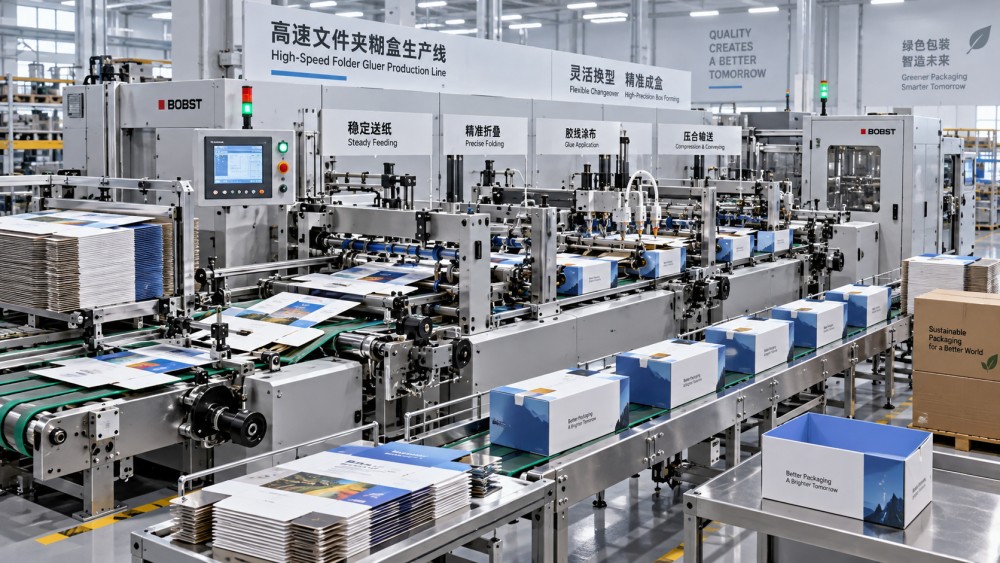
Many folding and gluing defects begin before the blank reaches the folding section. Feeding performance depends on blank flatness, die-cut quality, static charge, board curl, pile condition, print coatings, and the consistency of upstream stripping and delivery. A folder gluer with a capable feeder may still struggle when incoming blanks are poorly separated or have inconsistent creases.
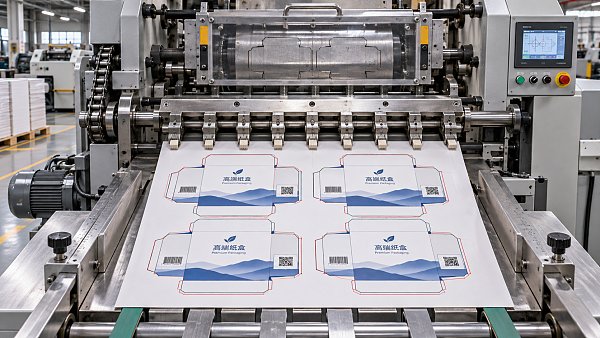
For this reason, the folder gluer should not be evaluated in isolation from the die-cutter. Project teams should review how blanks are stripped, stacked, transported, and presented to the feeder. If the carton plant processes coated board, lightweight cartonboard, recycled grades, laminated material, or specialty substrates, feeding trials should reflect those conditions. A machine that performs well on flat, uncoated test stock may behave differently with a curled or highly varnished blank.
Look closely at the feeder’s ability to maintain single-blank separation, consistent side registration, and stable spacing. In high-mix work, the feeder must cope with frequent changes in blank width, length, and stiffness. Operators should be able to access adjustment points safely and clearly. A compact feeder layout can be attractive on a floor plan, but it becomes frustrating if routine adjustments are awkward or if visual access is poor.
The same principle applies through the entire transport path. Carrier design, belt condition, alignment features, folding guides, and compression control all influence whether a crease closes where it should. For cartons with narrow glue flaps or tight registration requirements, small variations in blank position can become visible defects at delivery.
Do not treat folding accuracy and gluing as separate decisions
A carton can have an acceptable glue bond and still be rejected because the panels are misaligned, the lock is not fully formed, the pre-fold is weak, or the finished box has twist. Folding performance is affected by the relationship between die-cutting, creasing, substrate behavior, machine geometry, and speed. In practice, the folder gluer is often where upstream inconsistencies become visible.
The glue system deserves equally close attention. Cold glue, hot-melt adhesive, and specialty adhesive arrangements should be selected around the carton application, board surface, line speed, open time, and bond requirement. A standard side seam may have very different needs from a locking carton, a glued sleeve, or packaging with a window patch. If cartons will be packed quickly after gluing, the compression and curing window must be considered alongside adhesive selection.
Engineering teams should ask practical questions: How easy is it to position and clean glue applicators? Can the system apply multiple patterns without adding excessive setup complexity? How are missing or displaced glue lines detected? What happens when a nozzle is partially blocked, a glue tank requires maintenance, or an adhesive change is needed? These are not minor maintenance details. They influence waste, rework, and the risk of defective cartons entering a customer’s packing operation.
For regulated or traceable packaging applications, inline inspection may be worth reviewing as part of the line architecture. Vision systems can be configured for particular checks, such as carton orientation, glue presence, code readability, print consistency, or flap position. The right scope depends on the risk profile of the finished package. Installing inspection everywhere without a clear reject strategy can create another source of stoppages; omitting it where a defect has serious consequences can be equally expensive.
Compare systems by operating window, not only machine configuration
Supplier quotations often make machines appear easy to compare because each includes modules, options, stated speeds, and format ranges. The harder issue is the operating window: the conditions under which the system can consistently deliver acceptable cartons. A project team should understand where that window narrows.
This comparison is particularly relevant when one machine will serve several product categories. A system optimized for long-run straight-line cartons may not be the right economic choice for a plant whose margin depends on complex retail cartons and daily changeovers. The best fit is rarely the machine with the longest options list. It is the one whose operating window matches the production plan with reasonable tolerance for normal variation.
Plan the folder gluer as part of the production system
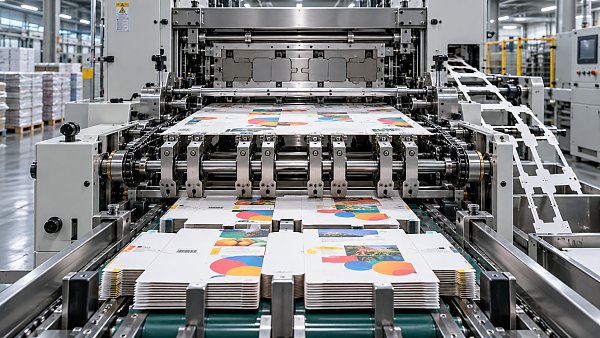
Folder gluer projects can fail in small but predictable ways when integration is treated as an afterthought. Consider material flow from die-cutting through blank staging, feeding, folding, packing, palletizing, and dispatch. If the folder gluer produces faster than the packing station can handle, operators may create temporary stacks and lose carton traceability. If there is no sensible buffer after die-cutting, a minor stoppage may interrupt multiple processes.
Floor space is more than the machine footprint. Include operator working zones, glue service access, maintenance clearances, blank loading, finished-carton collection, inspection equipment, electrical cabinets, compressed air connections, and safe movement of pallets or carts. A line that fits tightly into a layout drawing may be difficult to operate once guards, waste bins, worktables, and material handling are added.
Digital connectivity should also be defined in operational terms. Some plants need basic production counting and downtime reporting. Others may require job data transfer, recipe control, code verification, quality records, maintenance alerts, or connection to production management systems. It is useful to specify the information required, who will use it, and what action it should trigger. Collecting more machine data is not automatically useful if no one owns the response process.
Assess lifecycle support before making the commercial comparison
Purchase price is visible; operating friction is not. A lower-cost machine can become the more expensive option if parts availability is uncertain, diagnostics are limited, training is weak, or specialist technicians are difficult to access. This does not mean a project should always select the most established supplier. It means service assumptions need to be tested rather than accepted.
Review the recommended spare-parts package, expected consumables, remote support capability, local service coverage, documentation quality, software update policy, and operator training plan. Ask which components are expected to need regular replacement and whether they are standard industrial parts or proprietary items. Maintenance teams should be involved early, especially when the project includes advanced gluing, inspection, or automation modules.
Acceptance criteria should be written around the cartons that matter. Instead of relying only on a broad speed statement, define the carton styles to be tested, substrate conditions, required folding and glue quality, inspection functions, changeover expectations, and delivery conditions. The criteria should leave room for normal manufacturing reality while making responsibilities clear for both buyer and supplier.
Make the decision around repeatable output
A high-mix carton operation needs a folder gluer that behaves predictably when the schedule changes. The strongest evaluation process combines technical trials, operator input, maintenance review, layout planning, and realistic production data. It also recognizes that die-cut accuracy, blank handling, adhesive choice, and downstream packing are part of the same quality chain.
For packaging plants comparing converting equipment, CPCS approaches folder gluer selection as a system decision rather than a standalone purchase. The useful comparison is not between feature lists alone, but between the daily production consequences of each option: how quickly the next job starts, how consistently cartons run, how defects are contained, and how manageable the line remains after installation. If a supplier can demonstrate those answers on the jobs that routinely challenge the factory, the project team is much closer to a sound decision.
Related News
 What Causes Gripper Bars to Misalign Sheets During Die Cutting?Gripper Bars can misalign sheets due to wear, uneven pressure, timing or feeder faults. Discover how to pinpoint the cause and restore reliable die-cutting registration.Post-Press Kinematics Expert
 How to Compare Folder Gluer Systems for High-Mix Carton ProductionCompare Folder Gluer Systems for high-mix carton production with practical insights on changeovers, accuracy, glue control, integration, and lifecycle support.Post-Press Kinematics Expert
 How Mechanical Gripper Systems Improve Repeatable Material HandlingMechanical gripper system solutions improve repeatable material handling, reduce waste and downtime, and protect products across fast-paced packaging and printing lines.Post-Press Kinematics Expert
 How a Die Cutter Gripper System Improves Sheet Control and AccuracyDiscover how a die cutter gripper system improves sheet control, registration accuracy, stripping consistency, and packaging production efficiency.Post-Press Kinematics Expert
 How to Select a Precision Cam Indexer for High-Speed AutomationSelect a precision cam indexer for high-speed automation with confidence. Learn how to evaluate inertia, dwell time, accuracy, loads, and maintenance needs.Post-Press Kinematics Expert
 Why Intermittent Motion Drive System Accuracy Matters in Die CuttingIntermittent motion drive system accuracy is critical in die cutting. Learn how it improves registration, reduces waste, and boosts carton quality and line efficiency.Post-Press Kinematics Expert