How to Choose a Barrel Cam Indexer for Precision Motion Systems
It usually starts with a machine that looks acceptable on paper but behaves badly once the motion sequence gets faster. Positioning drifts slightly. A stop-and-go transfer feels harsher than expected. A downstream station misses timing even though the servo, sensor, and controller settings all seem reasonable. In packaging, printing, and converting equipment, these problems are frustrating because they rarely come from one dramatic failure. More often, they come from a motion indexing choice that was treated as a small component decision instead of a system decision.
That is why choosing a barrel cam indexer can become a bigger discussion than many teams expect. In a precision motion system, the indexer is not just responsible for moving a load from one position to another. It influences dwell stability, shock transmission, mechanical wear, synchronization with feeders or sealing heads, and the way operators experience the machine day after day. If you are comparing options for a new machine or reviewing an unstable existing layout, it helps to step back and evaluate the indexer in the same way you would evaluate any other critical motion element.
Where selection mistakes usually begin
A common situation is to start with indexing count and table size, then move directly to catalog comparisons. That seems logical, but it can hide the real application demands. Two indexers with similar index counts may behave very differently once the load inertia changes, the cycle rate increases, or the dwell period becomes functionally important for printing, gluing, inspection, filling, or part transfer.
Another frequent mistake is assuming that indexing accuracy alone defines suitability. Accuracy matters, but in many production systems the bigger issue is repeatability under real operating conditions. A mechanism that positions well during low-speed testing may lose practical stability when the machine runs continuously, especially if there is varying product load, intermittent shock, or misalignment elsewhere in the drive train.
This becomes especially relevant in automated packaging and converting lines, where upstream and downstream equipment must stay synchronized. Short-run production, frequent recipe changes, and higher expectations for uptime have made motion consistency more valuable than a simple “can it index” decision.
Start with the motion sequence, not the catalog page
Before comparing suppliers or models, write down the actual motion task in plain terms. How far does the station move per index? How much usable dwell time is needed for the work to happen? Does the load remain constant, or does it change as blanks, cartons, tooling, or product accumulate? Is the motion mostly horizontal, vertical, or mixed through linkages? These details affect whether a given barrel cam profile will support the process smoothly or create stress points.
It also helps to map the full cycle around the indexer rather than isolating the indexer itself. In practice, the motion system has to work with feeders, vacuum transfer, print registration, coding heads, die-cut positioning, glipper timing, or robotic pick points. If the dwell looks adequate only in theory, but a vision inspection trigger or pneumatic action needs extra settling time, the selected mechanism may force compromises everywhere else.
When teams skip this step, they often overvalue nominal speed and undervalue motion quality. That is where avoidable vibration, wear, and synchronization complaints start to appear.
The comparison points that matter most
When choosing a barrel cam indexer, several evaluation factors tend to separate a merely compatible unit from one that fits the machine well over time.
Load and inertia behavior
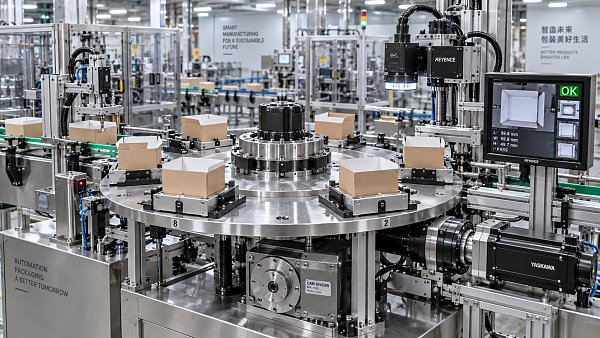
Do not only ask for allowable load. Ask how the system behaves with your load distribution. An off-center or fluctuating load can matter more than a simple mass figure. In rotating dial applications, the tooling plate, fixtures, product carriers, and mounted devices may create inertia conditions that are very different from a bare table. If the load changes during operation, evaluate the worst practical condition, not the ideal one.
Index speed versus usable dwell
Fast indexing can look attractive, but the real question is whether the dwell phase remains stable enough for the process. A sealing, printing, labeling, coding, folding, or inspection operation often depends on more than position arrival. It needs a repeatable pause with limited residual vibration. If the machine has narrow process windows, dwell quality should be treated as a priority.
Cam profile and motion smoothness
Not all motion profiles impose the same acceleration characteristics. A more aggressive profile may shorten index time but introduce shock into the mechanism and surrounding structure. In systems where product handling is delicate or registration is critical, a smoother motion curve may create better real-world productivity by reducing disturbance and adjustment frequency.
Drive matching and transmission path
The indexer does not operate in isolation. Motor selection, gearbox ratio, coupling type, shaft alignment, and frame rigidity all influence performance. Sometimes the indexer is blamed for problems caused by compliance or backlash elsewhere. During evaluation, look at the complete transmission path, especially if the machine frame is compact or supports multiple motion functions.
Wear resistance and maintenance access
Selection should also consider practical service conditions. If the machine runs multiple shifts, maintenance intervals and accessibility matter. Lubrication method, sealing, service points, and installation clearance can affect downtime more than teams expect during the design phase. A compact layout that saves space but complicates inspection may not be the best choice in a production environment.
When one option looks stronger on paper but weaker in the machine
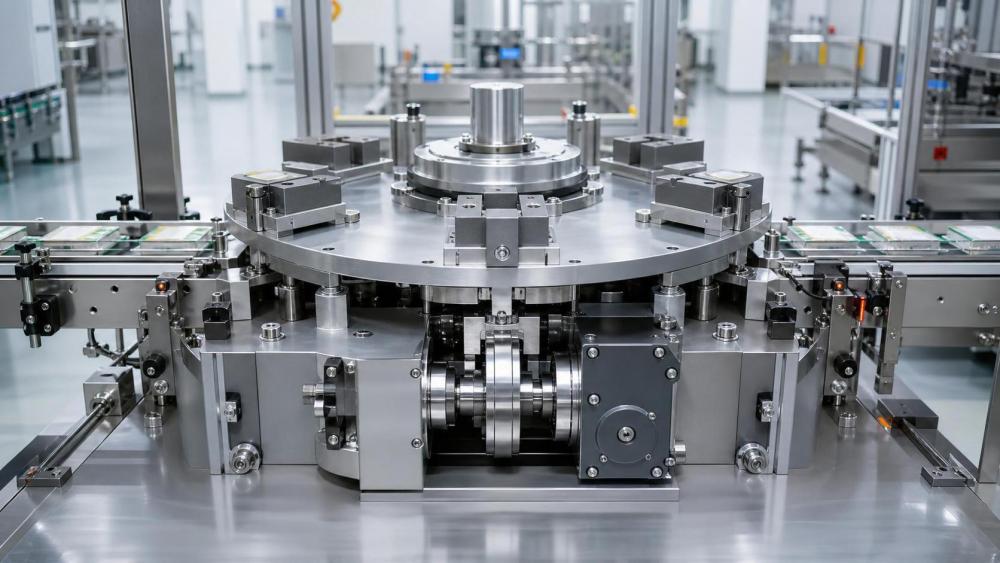
Many selection discussions get stuck between “higher capacity” and “better fit.” A larger unit may seem safer, but oversizing is not always harmless. It can increase inertia in the drive system, complicate mounting, and make the overall machine heavier or less responsive. On the other hand, selecting too close to the theoretical limit may leave little room for order variation, tooling changes, or future speed increases.
A better approach is to think in terms of operating margin under realistic production conditions. If the machine may later handle heavier substrates, added tooling, or faster cycle expectations, leave room for that. But keep the mechanism proportionate to the actual motion task. The right choice is often the one that maintains stable indexing, acceptable mechanical stress, and serviceability without forcing the rest of the machine into unnecessary complexity.
Questions worth asking during technical review
Useful evaluation conversations are rarely centered on brochure language. They tend to revolve around practical constraints. For example:
- Will the indexer still behave consistently when the load is not perfectly balanced?
- How sensitive is the mechanism to repeated start-stop cycles at the planned production rhythm?
- Is the dwell phase suitable for process actions that require settling, registration, or tool contact?
- How much of the stated performance depends on ideal mounting and ideal lubrication?
- Can the machine structure actually support the stiffness needed to get the expected result?
- How difficult will routine inspection or replacement be once guarding, conveyors, and utilities are installed?
These are not abstract engineering questions. They often determine whether the machine remains stable after handover, especially in environments where uptime, changeover pace, and operator intervention all affect production cost.
Matching the indexer to typical industrial use cases
Different applications place different demands on the same basic mechanism. In dial assembly or part transfer, repeatable indexing under moderate load may be the central issue. In cartoning or paper-based packaging machinery, the motion may need to stay coordinated with feeders, gluing points, print marks, or ejection timing. In inspection stations, the ability to hold position with minimal disturbance can be more important than maximum cycle speed.
That is why a barrel cam indexer should be reviewed in context of the process, not treated as a generic indexing device. A converting line handling frequent job changes may value stable repeatability and easier adjustment more than aggressive throughput claims. A packaging cell integrating coding, vision inspection, and robotic pick-off may care more about timing confidence across stations than about raw indexing speed.
In broader factory automation, especially where end-of-line equipment, traceability devices, or inline inspection are added to existing machines, integration matters even more. The indexer has to support the workflow around it rather than forcing software and operator workarounds to compensate for mechanical limitations.
A practical way to narrow the choice
If several models remain under consideration, reduce the decision to a few weighted priorities from your machine requirements. Not a generic checklist copied from a catalog, but a short set of application-specific judgments: motion smoothness under real load, dwell quality, integration with drive and frame, maintenance practicality, and headroom for expected production variation.
It is also sensible to review failure modes early. Ask what happens if lubrication quality drops, if mounted tooling becomes slightly unbalanced, or if the machine sees more frequent stop-start operation than originally assumed. Components in precision motion systems are often selected under clean assumptions and then used in far messier production realities. The more honestly those realities are considered, the better the selection outcome tends to be.
For teams working around packaging production systems, this matters because machine investment is increasingly judged by stable running, lower waste, easier order handling, and maintenance predictability rather than by purchase price alone. Motion indexing choices affect all of those areas indirectly.
Signs that you may need to revisit the original choice
If an installed machine shows recurring position inconsistency, excessive vibration at index completion, unusual wear in couplings or drive elements, or repeated timing adjustments in connected stations, the issue may not be limited to controls tuning. It may indicate that the indexer selection did not fully match the application. The same applies when operators need to reduce speed to maintain quality, or when maintenance teams find that nominally minor alignment shifts create disproportionate performance loss.
Revisiting the original assumptions can be more useful than repeatedly compensating elsewhere. In many cases, the root problem is not one defective part but a mismatch between motion profile, load behavior, and the broader machine architecture.
Final selection guidance
The most reliable way to choose a barrel cam indexer is to treat it as part of the machine’s process logic, not just its mechanical bill of materials. Start from the real motion sequence, evaluate load and inertia honestly, pay close attention to dwell behavior, and confirm that the surrounding drive and structure can support the expected performance. If two options seem close, favor the one that preserves stability and serviceability under realistic operating conditions.
In precision motion systems, good indexing is rarely about the highest nominal specification. It is about repeatable movement that supports the process, the maintenance routine, and the pace of production without constant correction. That is usually the difference between an indexer that simply fits the drawing and one that fits the machine.
Related News
 How to Compare Folder Gluer Systems for High-Mix Carton ProductionCompare Folder Gluer Systems for high-mix carton production with practical insights on changeovers, accuracy, glue control, integration, and lifecycle support.Post-Press Kinematics Expert
 How Mechanical Gripper Systems Improve Repeatable Material HandlingMechanical gripper system solutions improve repeatable material handling, reduce waste and downtime, and protect products across fast-paced packaging and printing lines.Post-Press Kinematics Expert
 How a Die Cutter Gripper System Improves Sheet Control and AccuracyDiscover how a die cutter gripper system improves sheet control, registration accuracy, stripping consistency, and packaging production efficiency.Post-Press Kinematics Expert
 How to Select a Precision Cam Indexer for High-Speed AutomationSelect a precision cam indexer for high-speed automation with confidence. Learn how to evaluate inertia, dwell time, accuracy, loads, and maintenance needs.Post-Press Kinematics Expert
 Why Intermittent Motion Drive System Accuracy Matters in Die CuttingIntermittent motion drive system accuracy is critical in die cutting. Learn how it improves registration, reduces waste, and boosts carton quality and line efficiency.Post-Press Kinematics Expert
 What Shapes Intermittent Motion Drive Price in Modern Carton LinesIntermittent motion drive price depends on accuracy, durability, controls, and supplier scope. Discover how carton plants compare cost, uptime, and lifecycle value before buying.Post-Press Kinematics Expert