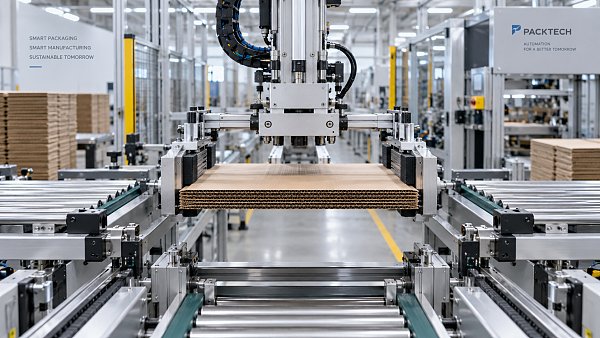
How a Die Cutter Gripper System Improves Sheet Control and Accuracy
In high-speed carton and packaging converting, a sheet can look perfectly acceptable at the feeder and still become the source of a costly quality problem a few seconds later. A slight skew, a momentary loss of grip, or inconsistent handoff into the die-cutting station may produce poor registration, uneven creases, incomplete stripping, or cartons that fail during folding and gluing.
That is why the die cutter gripper system deserves closer attention during equipment evaluation. It is not merely a transport component. It is the mechanical link between sheet feeding, registration, die-cutting pressure, stripping, and delivery. When it performs consistently, the entire converting line feels more predictable. When it does not, operators may compensate through repeated adjustments, reduced speed, or wider tolerances—often without solving the root cause.
For technical evaluators reviewing flatbed die-cutters, especially for folding cartons, litho-laminated board, microflute applications, and demanding printed packaging, the question is not simply whether a machine has a gripper system. The more useful question is: How reliably does the system control different sheets, across different job conditions, over time?
Why gripper control affects more than die-cut accuracy
A modern die-cutting cycle depends on synchronized movement. The sheet must be fed, aligned, gripped, accelerated, carried through the cutting and creasing section, transferred to stripping if required, and delivered without disturbing the finished blank. Each stage introduces forces that can challenge sheet stability: acceleration, deceleration, platen movement, board stiffness variation, static charge, warp, and changes in surface coating.
The die cutter gripper system holds the leading edge of the sheet and maintains its relationship to the machine’s reference position. This relationship is what allows the cutting tool, printed image, crease rules, stripping pins, and delivery mechanism to work as one coordinated process.
In practical terms, stable gripping supports:
- accurate print-to-cut registration for branded cartons and graphic packaging;
- repeatable crease placement, which matters for clean folding and carton geometry;
- consistent stripping of internal waste and external blanks;
- reduced risk of sheet movement during high-speed operation;
- more orderly delivery stacking and fewer downstream handling issues;
- lower setup waste when moving between board grades or job formats.
These outcomes are interdependent. A machine may achieve an acceptable cut on a simple unprinted carton, yet show its limitations on a heavily printed pharmaceutical carton, a metallized board, or a job with narrow registration tolerances. Evaluators should therefore avoid assessing sheet control only through a single sample run.
Reading the system as a chain, not an isolated mechanism
It is tempting to inspect the gripper bar, confirm that the grippers open and close, and move on to the next specification. That approach misses the real operating picture. Sheet control comes from the interaction of several mechanical and control elements.
1. Sheet arrival and front-edge condition
Before the grippers take hold, the sheet must arrive in a stable and repeatable position. Feeder accuracy, front and side lay adjustment, sheet separation, suction settings, and anti-static provisions all influence the quality of the handoff. If sheets arrive inconsistently, the most robust gripper mechanism will only be managing a problem created upstream.
Technical teams should ask whether the feeder and register system can accommodate the actual substrate range expected in production: lightweight cartonboard, coated stock, recycled board, solid bleached sulfate, corrugated sheets, laminated materials, and warped or curled substrates. A stated maximum sheet thickness is useful, but it does not explain how the machine behaves when the material is less than ideal.
2. Gripper geometry and clamping consistency
The gripper must hold the sheet securely without marking, crushing, or damaging the leading edge. Jaw geometry, clamping surface, spring force or mechanical actuation, gripper spacing, and adjustment access all affect this balance. Too little holding force can allow slippage. Excessive force may leave visible marks on sensitive printed surfaces or deform softer board.
Uniformity across the gripper bar is equally important. One poorly adjusted gripper can create a subtle pull on the sheet, particularly on wider formats. Over a production shift, contamination from paper dust, coating residue, adhesive traces, or worn contact surfaces can make that inconsistency more pronounced.
3. Timing through the die-cutting and stripping sections
Gripper timing is often discussed as a control setting, but it has a direct physical effect on quality. The sheet must remain correctly positioned as it enters and leaves the platen area, and it must maintain that position when stripping tools engage the waste. Poorly coordinated timing may cause edge damage, registration drift, unstable stripping, or intermittent stoppages.
For jobs with intricate internal cutouts, narrow bridges, or demanding blank separation, the gripper system should be evaluated alongside the stripping system rather than as a separate purchase criterion. A clean die-cut is not enough if the sheet loses stability before waste removal is complete.
4. Transfer and delivery behavior
Sheet control remains important after the final cutting action. Transfer points can create scuffing, loss of stack quality, or occasional sheet misplacement that becomes a hidden labor cost at the delivery end. If the machine will connect to blanking, automated collection, folder-gluer feeding, or robotic palletizing, the quality of delivery alignment should be considered part of the wider automation plan.
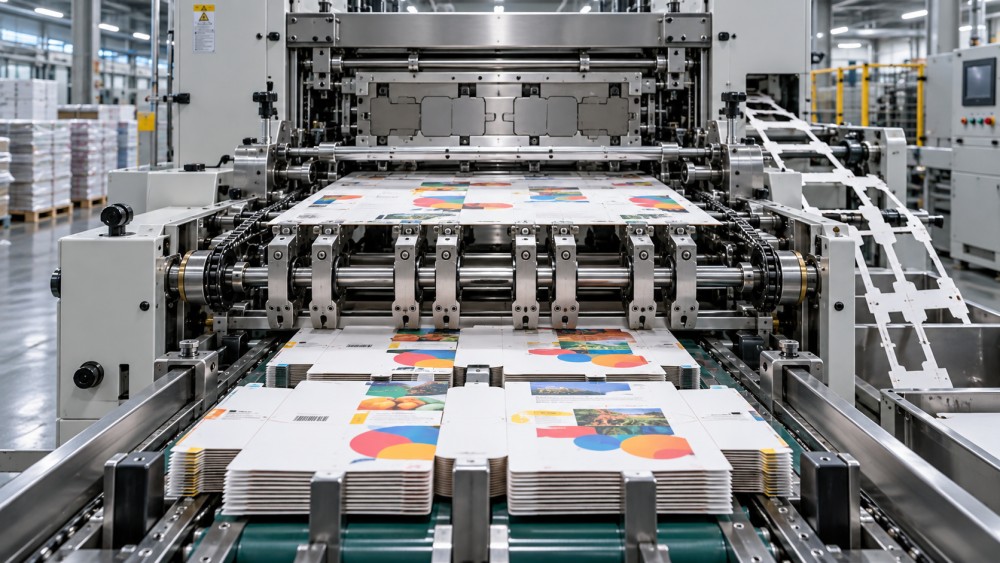
Where the die cutter gripper system is tested hardest
Not every production environment places the same demands on gripper performance. A technical evaluation should begin with the jobs that create operational risk, not the jobs that run easily.
For corrugated packaging converters, the evaluation may also need to account for flute direction, board flatness, liner characteristics, and whether the machine is processing post-printed sheets or litho-laminated material. Corrugated board behaves differently from cartonboard under acceleration and clamping force. A system suitable for one substrate family should not automatically be assumed suitable for another.
Accuracy is often lost before the operator notices it
One of the more difficult aspects of evaluating a die cutter gripper system is that deterioration can be gradual. A machine may continue producing saleable work while waste slowly increases, make-ready takes longer, or operators rely on experience to compensate for inconsistent behavior. These are not always recorded as “gripper problems,” yet they can be tied to declining sheet control.
Common warning signs include recurring leading-edge marks, intermittent registration variation, sheets that occasionally fail to strip cleanly, unexplained changes in delivery stack alignment, and frequent need to adjust feeder or register settings for jobs that previously ran without difficulty. A pattern of minor stoppages is worth investigating. It may point to gripper wear, inconsistent clamping, timing drift, or an upstream handoff issue.
Technical teams should ask suppliers how gripper-related faults are diagnosed. Is the system designed for straightforward visual inspection? Can worn parts be replaced without excessive downtime? Are timing and position settings accessible through the control interface, and can the machine retain repeatable job parameters? The answers affect maintenance planning as much as initial machine capability.
A practical evaluation routine for machine selection
When comparing flatbed die-cutters, a structured trial is more useful than a brochure-level specification review. The goal is to observe how the system responds to realistic production variation.
- Bring representative materials. Include the board grades, coatings, print coverage, and difficult formats that the plant actually processes. A smooth demonstration sheet rarely reveals the full picture.
- Review the whole transport path. Observe feeder separation, registration, gripper engagement, platen travel, stripping, and delivery. Watch for sheet flutter, skew, edge marking, or operator intervention.
- Request a repeatability check. Rather than judging one acceptable sample, inspect output across a sustained run and after a stop-and-restart condition.
- Test a changeover scenario. For short-run environments, assess how gripper settings, feeder adjustments, and registration parameters are changed between jobs. The best mechanical design can still consume time if setup depends on trial-and-error.
- Ask about service access. Look beyond the listed maintenance schedule. Confirm access to gripper bars, contact surfaces, actuating components, lubrication points, and replacement parts.
- Connect findings to downstream requirements. A carton that is technically cut but poorly creased, scuffed, or inconsistently delivered may create trouble in folder gluing, packing, or automated inspection.
Automation changes the value of stable gripping
As packaging factories introduce production data management, inline vision inspection, automatic blanking, and robotic end-of-line handling, stable sheet positioning becomes even more valuable. Automated systems are less forgiving of inconsistent output than a skilled operator who can manually correct a stack or remove questionable blanks.
A well-controlled die-cutting stage supports cleaner process data because defects are less likely to be confused with random machine variation. It also makes it easier to establish meaningful quality thresholds for registration inspection, code verification, and batch traceability. For operations pursuing higher automation, the gripper system should be considered a foundation for process stability, not a small mechanical detail.
Maintenance discipline protects the original accuracy
No gripper system remains precise simply because it was well designed at installation. Paper dust, board fibers, lubricants, wear, and repeated mechanical loading all influence long-term behavior. The maintenance approach should combine routine cleaning with condition-based inspection.
Useful checks include gripper jaw cleanliness, contact surface wear, clamping consistency across the bar, correct opening and closing action, fastener condition, lubrication quality, and confirmation that timing remains within the machine’s specified operating range. Any maintenance process should also consider the feeder and registration sections, since poor sheet presentation can resemble a gripper fault.
For plants with multiple shifts, documenting recurring sheet-control issues by job type, substrate, speed, and tool configuration can reveal patterns that are otherwise lost in shift handovers. This is where digital production records can support engineering judgment: not by replacing operator experience, but by making recurring variation visible.
Making the investment decision with the right questions
A die-cutter should be assessed as a system that converts printed or plain sheets into reliable packaging components. The die cutter gripper system sits at the center of that system because it determines whether the sheet remains under control when precision matters most.
During selection, technical evaluators should prioritize proven sheet stability over isolated speed claims. Ask how the machine handles the difficult substrates, how easily grippers can be inspected and adjusted, how timing interacts with stripping and delivery, and what happens after many hours of normal production rather than during a short demonstration.
For commercial printing and corrugated packaging operations, stronger sheet control can translate into more consistent registration, less avoidable waste, smoother downstream processing, and greater confidence when accepting complex work. In a market shaped by shorter runs, demanding brand standards, and pressure to use material efficiently, that confidence is a meaningful part of equipment value.
Related News
 How to Compare Folder Gluer Systems for High-Mix Carton ProductionCompare Folder Gluer Systems for high-mix carton production with practical insights on changeovers, accuracy, glue control, integration, and lifecycle support.Post-Press Kinematics Expert
 How Mechanical Gripper Systems Improve Repeatable Material HandlingMechanical gripper system solutions improve repeatable material handling, reduce waste and downtime, and protect products across fast-paced packaging and printing lines.Post-Press Kinematics Expert
 How a Die Cutter Gripper System Improves Sheet Control and AccuracyDiscover how a die cutter gripper system improves sheet control, registration accuracy, stripping consistency, and packaging production efficiency.Post-Press Kinematics Expert
 How to Select a Precision Cam Indexer for High-Speed AutomationSelect a precision cam indexer for high-speed automation with confidence. Learn how to evaluate inertia, dwell time, accuracy, loads, and maintenance needs.Post-Press Kinematics Expert
 Why Intermittent Motion Drive System Accuracy Matters in Die CuttingIntermittent motion drive system accuracy is critical in die cutting. Learn how it improves registration, reduces waste, and boosts carton quality and line efficiency.Post-Press Kinematics Expert
 What Shapes Intermittent Motion Drive Price in Modern Carton LinesIntermittent motion drive price depends on accuracy, durability, controls, and supplier scope. Discover how carton plants compare cost, uptime, and lifecycle value before buying.Post-Press Kinematics Expert