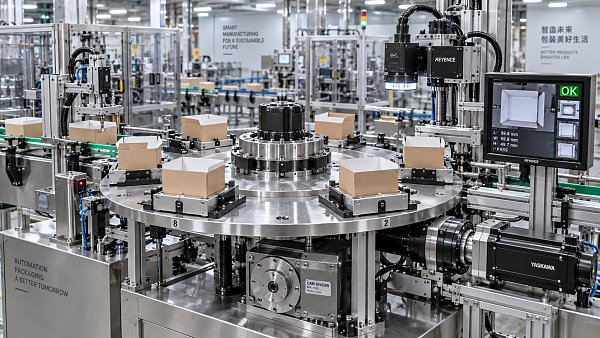
How Mechanical Gripper Systems Improve Repeatable Material Handling
How Mechanical Gripper Systems Improve Repeatable Material Handling
Introduction: For project managers responsible for packaging, printing, and automated production lines, a mechanical gripper system can be a critical factor in achieving repeatable material handling.
By maintaining controlled grip force, accurate positioning, and reliable transfer across high-speed workflows, these systems reduce misfeeds, product damage, downtime, and labor dependency.
The central project question is not whether automated gripping is useful. It is whether a selected system can consistently handle actual materials, speeds, tolerances, and changeover requirements.
For corrugated packaging, commercial printing, and converting projects, repeatability affects more than line speed. It influences yield, quality consistency, maintenance workload, operator confidence, and total operating cost.
A well-specified mechanical gripper system provides predictable material control between machines, stations, or conveyors. A poorly matched system can create bottlenecks that undermine an otherwise capable automation investment.
Project teams should therefore evaluate gripping technology as part of the complete material flow, rather than treating it as a minor end-effector decision made late in integration.
Why Repeatable Material Handling Matters in Packaging Production
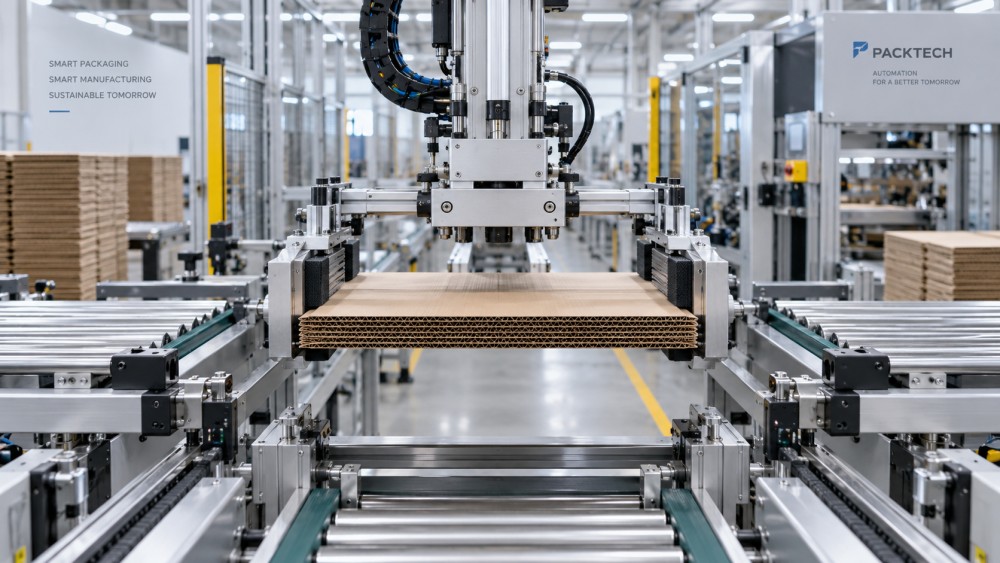
Packaging plants increasingly manage short runs, mixed substrate types, frequent job changes, and tighter delivery schedules. These operating conditions make reliable material transfer a direct production concern.
Every uncontrolled handoff can introduce skew, sheet damage, double feeds, dropped blanks, inconsistent stacking, or registration problems. At high speed, small handling errors quickly become measurable waste.
In corrugated converting, materials may vary by flute profile, board stiffness, moisture level, print coverage, and warp. These variables challenge systems designed around idealized material conditions.
Commercial printing environments present different but related risks. Sheets, cartons, labels, inserts, and finished products must remain aligned without scuffing printed surfaces or disturbing freshly applied coatings.
Mechanical gripping improves repeatability by applying a defined physical holding method at known locations. This reduces dependence on operator timing, variable vacuum performance, and inconsistent manual handling.
For project managers, repeatability means stable output across shifts, operators, material batches, and production periods. It is the foundation for planning capacity and protecting customer delivery commitments.
A transfer mechanism that succeeds during a demonstration but struggles with production variability creates hidden costs. Those costs often appear later as reduced speed, extra staffing, and frequent adjustments.
The best systems do not simply grip materials securely. They grip them consistently enough that downstream machines receive products in a predictable position and orientation.
How a Mechanical Gripper System Creates Consistent Transfers
A mechanical gripper system uses jaws, fingers, clamps, linkages, or purpose-built gripping surfaces to physically capture and move an item through a controlled sequence.
Unlike purely vacuum-based handling, mechanical gripping does not depend entirely on surface permeability, suction cup cleanliness, air pressure stability, or contact area across every product variation.
The gripper normally follows a repeatable motion path controlled by servo drives, pneumatic actuators, cams, robotics, or synchronized automation systems. This improves positioning discipline between stations.
Grip force is a key engineering variable. Too little force can allow movement or product release, while excessive force can crush corrugated edges, mark cartons, or deform delicate materials.
Well-designed gripper tooling distributes contact pressure over suitable areas. It may use compliant pads, coated fingers, adjustable jaw spacing, or shaped contact faces for particular product geometries.
Position sensing can confirm whether a gripper has opened, closed, picked, transferred, or released a product. These signals allow the machine control system to react before faults multiply.
Repeatable mechanical action is especially valuable where a product must enter a die-cutter, folder gluer, inspection station, palletizer, or conveyor with precise orientation.
The resulting benefit is not merely tighter handling accuracy. It is a more controlled process window, allowing downstream equipment to operate closer to its intended performance level.
Where Mechanical Grippers Deliver the Greatest Project Value
Mechanical grippers are particularly effective where materials have defined edges, stable pickup points, or structural features that can be engaged without compromising finished-product quality.
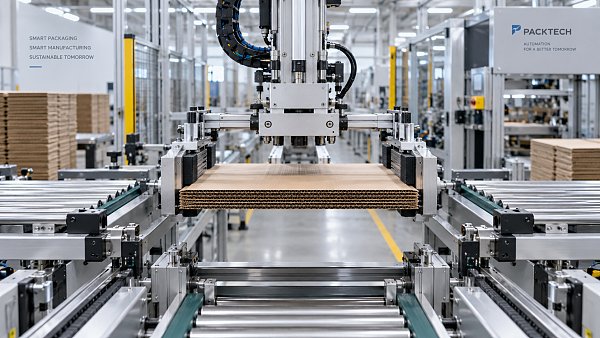
In corrugated box production, grippers can transfer blanks, bundles, die-cut sheets, partitions, and assembled cases where vacuum pickup may be unreliable because of porosity or board variation.
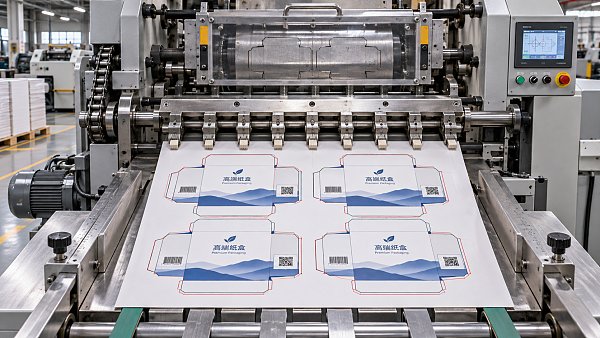
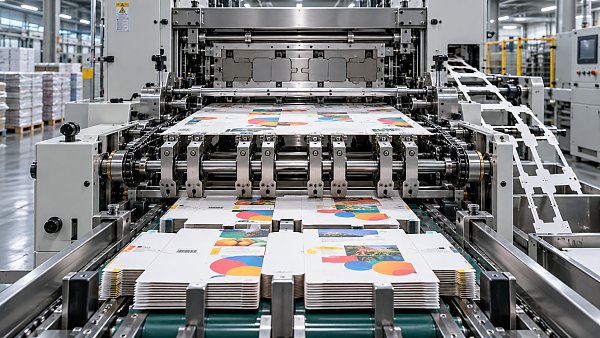
Flatbed die-cutting and stripping applications often benefit from controlled sheet movement. Consistent gripping helps maintain registration and reduces the risk of sheet skew before critical cutting operations.
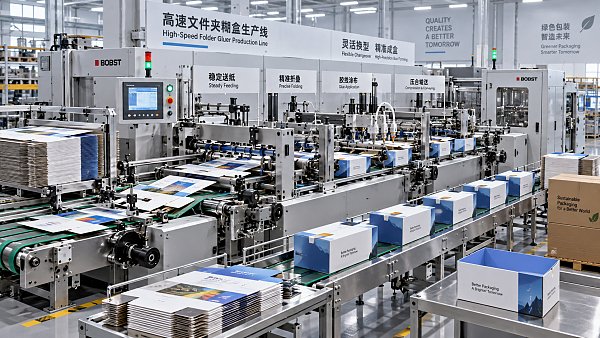
Folder gluer lines can use mechanical gripping where folded cartons require accurate handoff into counting, collection, inspection, or packing stages without damaging creases or glue areas.
In printing and post-press workflows, a gripper system may support sheet transport, product turning, stack handling, or transfer to inspection equipment where surface protection remains essential.
End-of-line automation is another common application. Robotic or gantry-mounted grippers can handle cartons, trays, bundles, and cases before palletizing, reducing manual lifting and stabilizing throughput.
Projects involving coding, serialization, or vision inspection also benefit when products arrive consistently. Stable position and orientation improve image capture, code verification, and rejection accuracy.
However, not every material requires a mechanical gripper. Highly flexible films, irregular products, fragile surfaces, and unstable piles may require vacuum, magnetic, adhesive, or hybrid handling methods.
What Project Managers Should Evaluate Before Selecting a System
The first selection step is to define the real product range, not only the standard product. Include minimum and maximum dimensions, weight, thickness, stiffness, coatings, moisture, and surface sensitivity.
Material variability should be documented with production samples whenever possible. Engineering decisions based only on drawings or nominal specifications often miss the conditions that cause field failures.
Next, define the required cycle time and expected line speed. A gripper that works at moderate speed may behave differently when acceleration, deceleration, vibration, and timing demands increase.
Project teams should identify allowable positional error at each transfer point. Die-cutting, printing registration, gluing, vision inspection, and robotic loading may each require different tolerances.
Consider how the system handles product changeovers. Adjustable grippers may reduce tooling expense, but dedicated tooling can provide better repeatability for high-volume, stable-format production.
Grip contact locations must also be reviewed with quality teams. Contact should avoid printed graphics, varnished areas, glue lines, windows, barcodes, embossed features, and customer-visible surfaces.
Maintenance accessibility deserves early attention. Operators and technicians need safe access to jaw pads, pivots, sensors, lubrication points, and adjustment mechanisms without excessive production interruption.
Finally, ask suppliers to demonstrate performance using representative materials and realistic operating speeds. Acceptance testing should simulate actual production conditions rather than a simplified showroom cycle.
Balancing Speed, Product Protection, and Operating Stability
Higher speed does not automatically produce better project economics. If acceleration causes board movement, jaw bounce, or product damage, nominal capacity may never translate into stable output.
The practical objective is sustainable throughput. This means achieving the planned rate while maintaining acceptable reject levels, predictable maintenance intervals, and manageable operator intervention.
Motion profiles have a major impact on handling quality. Smooth acceleration and deceleration can reduce inertia-related movement, while synchronized axes improve timing between pickup and release points.
Gripper mass also matters. Heavy tooling may limit robot payload, increase energy use, reduce acceleration capability, and place additional wear on moving components over time.
Lightweight designs can improve dynamics, but they must still provide sufficient stiffness. Excessive deflection can create positional variation that becomes significant at high production speeds.
Product protection should be evaluated during normal running, starts, stops, emergency stops, and recovery sequences. Some damage modes appear only when the line experiences abnormal conditions.
For printed or coated products, project specifications should define acceptable marking limits. A mechanically secure grip is not successful if it creates visible defects or downstream quality claims.
Teams should use trial data to establish a stable operating window. This includes grip force settings, speed limits, material parameters, and alarm thresholds for consistent production control.
Integration Risks That Can Undermine a Good Gripper Design
A capable mechanical gripper system can still underperform when surrounding conveyors, feeders, guides, sensors, and machine controls are not coordinated as one material-handling process.
Interface timing is a frequent problem. The gripper may release correctly, but the receiving conveyor or downstream machine may not be ready to accept the product consistently.
Mechanical tolerances across frames, rails, tooling plates, and product guides should be considered together. Small alignment errors can compound across multiple transfer stations.
Control integration is equally important. The automation system should exchange clear permissives, fault signals, product recipes, and recovery logic between the gripper and connected equipment.
Without robust fault handling, a single missed pickup can lead to collisions, double feeds, damaged tooling, or inaccurate production counts. Recovery sequences need explicit engineering attention.
Safety design must account for moving jaws, pinch points, manual adjustments, and access during clearing. Guarding and interlocks should support safe intervention without creating unnecessary delays.
Project managers should also confirm spare-parts strategy and service responsibilities. Wear components, sensors, pneumatic fittings, and gripping pads should be available within acceptable lead times.
Clear ownership during commissioning prevents integration gaps. The machine builder, automation provider, gripper supplier, and plant engineering team should agree on testing responsibilities before installation begins.
Measuring Return on Investment Beyond Labor Reduction
Labor reduction is often the most visible justification for automated gripping, but it rarely captures the complete value of a mechanical gripper system in packaging operations.
Reduced product damage can improve margin directly, especially for printed cartons, premium retail packaging, and high-value branded materials where rejects include both substrate and processing cost.
More reliable transfers also support higher effective equipment utilization. The important measure is not maximum rated speed, but productive output achieved over the full operating shift.
Project teams should track unplanned downtime related to misfeeds, jams, manual intervention, and product recovery. These events frequently reveal the economic impact of inconsistent handling.
Waste reduction should include damaged materials, spoiled printed sheets, glue-related rejects, incorrect codes, and products requiring rework. A stable transfer can improve several metrics simultaneously.
Repeatability can also reduce quality inspection burden. When products consistently arrive in the correct position, vision systems and operators spend less time investigating avoidable variation.
For growing plants, automated handling can improve scalability. Production volume may increase without a proportional increase in manual material movement, training requirements, or ergonomic risk.
A credible business case compares capital cost with labor, waste, uptime, quality, maintenance, and capacity effects. This broader view produces better investment decisions than a simple headcount calculation.
Building a Practical Specification and Acceptance Plan
A strong specification translates production needs into measurable requirements. It should define product range, cycle rate, positioning tolerance, allowable damage, changeover expectations, and environmental conditions.
It should also identify excluded conditions. For example, a gripper may be designed for dry corrugated blanks but not severely warped sheets, wet materials, or unstable mixed stacks.
Acceptance criteria should include representative substrates and worst-case formats. Testing only the easiest material can produce misleading confidence before the system reaches normal production.
Factory acceptance testing should verify repeatability, cycle time, grip reliability, release accuracy, sensor performance, safety functions, and recovery behavior across repeated operating cycles.
Site acceptance testing should confirm that the installed system performs within the actual line environment. This includes vibration, dust, temperature, utilities, operator workflow, and control interfaces.
Project documentation should record approved settings for each product family. Recipe management makes repeatable operation easier when plants manage frequent order changes or multiple operators.
Training should cover routine adjustment, fault recognition, safe clearing, inspection of wear components, and escalation procedures. Automation delivers more value when operators understand its operating limits.
After commissioning, teams should review production data during the first operating months. Early adjustments to tooling, settings, and maintenance intervals can protect long-term system performance.
Conclusion: Treat Gripping as a Production-Control Decision
A mechanical gripper system improves repeatable material handling when its gripping method, motion control, tooling, and integration design match the realities of the production process.
For packaging and printing projects, the value lies in more stable transfers, lower waste, improved product protection, fewer interruptions, and more predictable downstream machine performance.
Project managers should assess materials, tolerances, speed requirements, product variation, maintenance access, control interfaces, and quality risks before selecting a handling approach.
The right system is not necessarily the one with the strongest grip or highest rated speed. It is the one that delivers stable production across real materials and operating conditions.
By specifying measurable requirements and validating performance with representative products, project teams can turn mechanical gripping into a practical source of efficiency, quality control, and investment confidence.
Related News
 What Causes Gripper Bars to Misalign Sheets During Die Cutting?Gripper Bars can misalign sheets due to wear, uneven pressure, timing or feeder faults. Discover how to pinpoint the cause and restore reliable die-cutting registration.Post-Press Kinematics Expert
 How to Compare Folder Gluer Systems for High-Mix Carton ProductionCompare Folder Gluer Systems for high-mix carton production with practical insights on changeovers, accuracy, glue control, integration, and lifecycle support.Post-Press Kinematics Expert
 How Mechanical Gripper Systems Improve Repeatable Material HandlingMechanical gripper system solutions improve repeatable material handling, reduce waste and downtime, and protect products across fast-paced packaging and printing lines.Post-Press Kinematics Expert
 How a Die Cutter Gripper System Improves Sheet Control and AccuracyDiscover how a die cutter gripper system improves sheet control, registration accuracy, stripping consistency, and packaging production efficiency.Post-Press Kinematics Expert
 How to Select a Precision Cam Indexer for High-Speed AutomationSelect a precision cam indexer for high-speed automation with confidence. Learn how to evaluate inertia, dwell time, accuracy, loads, and maintenance needs.Post-Press Kinematics Expert
 Why Intermittent Motion Drive System Accuracy Matters in Die CuttingIntermittent motion drive system accuracy is critical in die cutting. Learn how it improves registration, reduces waste, and boosts carton quality and line efficiency.Post-Press Kinematics Expert