Why a Vacuum Sheet Feeder Helps Prevent Misfeeds in Die Cutting
A misfeed is rarely just a feeding problem. In die cutting, a late sheet, a doubled sheet, or a sheet entering at an angle can cause poor register, uneven creasing, damaged blanks, stripping faults, and avoidable stoppages. If the problem appears most often with lightweight stock, coated sheets, curled board, or short-run materials that change frequently, a vacuum sheet feeder can provide a more controlled way to separate and present each sheet to the die-cutter.
The main advantage is not simply that the feeder uses suction. It is that vacuum gives the machine a controlled grip on the top sheet while separation devices, timing, transport belts, and front or side lays guide that sheet into a repeatable position. This reduces reliance on friction alone, which becomes less predictable when material condition changes.
Why friction feeding becomes unreliable
Conventional feeders often depend heavily on friction between a feed wheel, belt, or mechanical pickup element and the top sheet. That approach can work well on clean, flat, consistent stock. Problems begin when the sheet surface or sheet stack no longer behaves consistently.
A glossy coating may reduce grip. Static electricity can make adjacent sheets cling together. A curled leading edge may allow a pickup point to miss the sheet or lift it unevenly. Corrugated sheets can vary in flatness because of moisture balance, flute direction, converting stress, or storage conditions. Printed cartons may also have varnish, ink coverage, embossing, or surface treatments that change friction across the sheet.
When the feeder cannot separate and advance only one sheet at the intended moment, the die-cutting section receives unstable input. The machine may run for several cycles before the issue becomes visible. By then, sheets may have been wasted, the stripping section may be affected, or the die-cutting tool may have encountered a poorly positioned board.
A vacuum-based feeding system addresses this weak point by using negative pressure to lift or hold the uppermost sheet. The sheet is then transferred into the feed path under more deliberate control. It does not remove every source of misfeed, but it makes sheet separation less dependent on surface friction and manual adjustment.
How a vacuum sheet feeder reduces common misfeeds
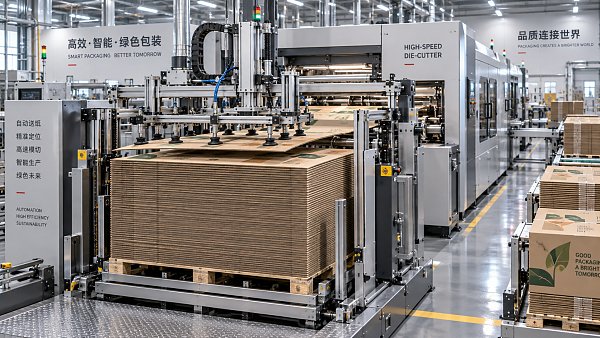
A vacuum sheet feeder normally combines several actions: it holds the top sheet, helps separate it from the stack, moves it forward at the correct time, and releases it into the transport system. The exact construction differs among flatbed die-cutters and feeder designs, but the operating principle remains similar.
The vacuum pickup point creates enough holding force to lift or pull one sheet without needing aggressive mechanical contact. Separation air, air knives, blowers, or sheet-separation fingers may support this process by loosening the top edge and preventing the second sheet from following. Once the sheet is under control, transport belts or feed rollers carry it toward the registration system.
This sequence helps prevent several recurring faults:
- Double feeds: air assistance and controlled pickup reduce the chance that two sheets leave the pile together.
- Missed feeds: vacuum can maintain grip where friction wheels slip on coated, smooth, dusty, or lightly warped substrates.
- Skewed entry: more stable pickup gives the registration system a better chance of receiving the sheet squarely.
- Inconsistent feed timing: predictable sheet transfer supports steadier machine rhythm at production speed.
- Sheet marking: a correctly adjusted vacuum system can reduce the need for excessive mechanical pressure on delicate printed surfaces.
The benefit is especially clear when a job contains a mix of materials. A feeder that works on one uncoated cartonboard sheet may behave differently on a heavily printed, UV-varnished, laminated, or recycled board sheet. Vacuum control gives the operator another adjustable variable besides mechanical pressure.

The feeder only works as well as the sheet stack allows
It is a mistake to treat vacuum as a universal cure for every feeding fault. The feeder can improve control, but it cannot fully compensate for a poorly prepared pile, extreme sheet distortion, or an incorrect machine setup.
Stack condition remains important. Sheets should be jogged and aligned before loading so the feeder sees a consistent leading edge. A stack with uneven side alignment can cause intermittent pickup because the suction point does not contact the sheet in the same location every cycle. Excessive pile height or an unstable lift setting can also change the distance between the sheet and the pickup mechanism, reducing repeatability.
Material condition matters just as much. Board that has absorbed uneven moisture may bow, curl, or develop edge lift. Static can be more noticeable on lightweight coated stock or in dry production environments. Dust, loose fibres, and powder contamination can block suction holes, reduce vacuum efficiency, or interfere with sheet separation. When a misfeed starts after a material change, the stock should be examined before assuming that a machine component has failed.
In practical troubleshooting, the first question is not “Does the feeder have enough suction?” It is “What is the exact failure mode?” A double feed, a no-feed, a skewed sheet, and a sheet that reaches the front lay too early can all look like feeder problems, but they require different adjustments.
Match the adjustment to the failure pattern
For double feeds, increasing suction is often the wrong first response. Too much pickup force can pull the second sheet upward with the first, particularly when static or surface adhesion is present. The better adjustment may be stronger separation air, improved stack jogging, or a revised separator setting. Vacuum must be balanced with the force used to keep the remaining sheets in the pile.
For missed feeds, the opposite may be true. Before increasing vacuum, inspect suction cups, ports, filters, hoses, and the sheet-contact area for contamination or wear. A leak or blocked port can create inconsistent pickup even when the vacuum source appears to be running normally. A curled sheet may also require changes to pile position, pickup location, or air delivery rather than a large increase in suction.
When the sheet arrives skewed, look beyond the suction head. Vacuum may lift the sheet successfully but cannot correct a pile that is loaded out of square or side guides that are too loose. Registration equipment works best when the feeder delivers each sheet in a consistent orientation. If the incoming angle changes from one cycle to the next, front lays and pull lays must correct too much variation, which can create register instability or sheet damage.
Material changes require a new feeding setup
Die-cutting departments often change from solid board to litho-laminated sheets, from coated cartons to uncoated stock, or from short-run printed work to heavier packaging components. Treating these materials as if they require the same feeder setting creates a common source of downtime.
Lightweight paperboard may need gentler suction and more carefully controlled air separation because it lifts easily and can flutter. Heavier board may need stronger, more stable pickup but can still misfeed if the top surface is uneven. Corrugated sheets present another challenge: their stiffness, warp, flute structure, and cut-edge quality can vary from lot to lot. A vacuum system is useful here because settings can be adapted to material behaviour, but the machine must still be set for the actual sheet rather than the job name on the ticket.
Coated or varnished sheets deserve particular attention. Their surfaces can be slippery, and freshly processed sheets may have conditions that affect separation. If visible marking is unacceptable, check not only suction level but also the cleanliness and condition of suction components. Contaminated or hardened contact points can leave marks, while excessive mechanical restraint can scuff the sheet after pickup.
What to check before blaming the die-cutter
Repeated misfeeds can tempt a team to focus immediately on the die-cutting section, registration sensors, or delivery. A short feeder inspection is usually more productive. Check whether the issue occurs on the first sheets after startup, after a pile change, only at high speed, or only with one material. That pattern often identifies the cause faster than changing several settings at once.
- Confirm that the stack is square, stable, and positioned correctly under the feeder.
- Inspect the top sheets for curl, static, sticking, dust, damaged corners, or inconsistent trim.
- Clean suction cups, pickup holes, filters, and accessible air paths according to the machine maintenance procedure.
- Set separation air and vacuum as a pair; do not increase one setting without observing its effect on the next several sheets.
- Run at a controlled speed after a material or setup change, then increase speed only after feed stability is established.
- Check side guides, feed belts, front lays, and sensor response if sheets are feeding but arriving inconsistently.
This process prevents a common troubleshooting error: changing vacuum, air, timing, and guide settings at the same time. When multiple variables move together, it becomes difficult to identify which change improved the result and which one created a new problem.
When a vacuum feeder is the right investment
A vacuum sheet feeder is particularly useful where feed reliability has a direct effect on quality and uptime: flatbed die cutting of folding cartons, display packaging, printed corrugated sheets, premium coated work, and jobs involving frequent substrate changes. It can also be valuable where operators spend too much time manually correcting doubles, rebuilding piles, or slowing the machine to keep sheets under control.
Its value should be judged as part of the whole converting line. Stable feeding supports accurate registration, cleaner die cutting, more predictable stripping, and smoother delivery. A machine with a capable feeder but poorly maintained air supply, worn belts, unstable material storage, or inconsistent pile preparation will still suffer avoidable stops.
For equipment evaluation, focus on the feeder’s adjustment range, accessibility for cleaning, response to different sheet sizes and grades, separation method, vacuum source maintenance, and how easily settings can be repeated after job changeover. The lowest purchase price is not necessarily the most useful comparison when feed instability is causing waste, tool risk, and lost productive time.
In packaging converting, sheet control begins before the die-cutting platen closes. A well-set vacuum feeding system gives the machine a consistent sheet to process, which is the foundation for repeatable register, clean creases, reliable stripping, and fewer interruptions during the run.
Related News
 How Flatbed Steel Rule Dies Improve Cut Accuracy and Changeover SpeedFlatbed steel rule dies improve cut accuracy, crease quality, waste release, and changeover speed. Discover practical tooling tips for reliable, efficient converting.Post-Press Kinematics Expert
 How Platen Presses Support Precise Foil Stamping and Die CuttingPlaten Presses deliver precise foil stamping, clean die cutting, and reliable creasing for premium packaging. Discover setup practices that improve quality and reduce waste.Post-Press Kinematics Expert
 How Pre-Breaking Units Reduce Cracking in Die-Cut Carton FoldsPre-Breaking Units help reduce cracking in die-cut carton folds by easing bend stress, improving fold accuracy, and supporting high-speed carton production.Post-Press Kinematics Expert
 How a High Pile Feeder Reduces Downtime in Die-CuttingHigh pile feeder solutions reduce die-cutting downtime, improve sheet supply stability, and help packaging plants increase throughput with fewer interruptions.Post-Press Kinematics Expert
 Carton Die Cutting for Folding Cartons That Reduces Setup WasteCarton die cutting for folding cartons reduces setup waste with stable registration, reliable creasing, smarter tooling, and repeatable production control.Post-Press Kinematics Expert
 How to Choose Hardened Die Cutting Knives for Longer Production RunsHardened die cutting knives for longer runs: learn how to balance hardness, edge profile, consistency, and total conversion cost for reliable results.Post-Press Kinematics Expert