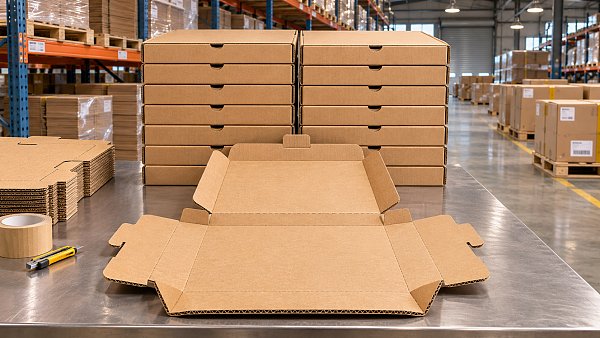
Die cutting knives with a smooth, accurately formed edge and a bevel matched to the board usually provide the best starting point for cleaner cuts.
For technical evaluators, however, no single knife specification guarantees clean separation. Board condition, rule height, ejection rubber, and machine setup can outweigh differences between premium edges.
Ragged edges, crushed flutes, and excessive paper dust become costly when operators compensate with additional pressure. That response can accelerate tooling wear and damage otherwise acceptable board.
The practical objective is to identify a knife that cuts consistently at the lowest effective pressure, maintains dimensional accuracy, and delivers acceptable life between tooling interventions.
This guide focuses on steel cutting rules used in corrugated converting dies. Creasing rules, perforating rules, and slitter knives require separate selection criteria and performance assessments.
Which Edge Geometry Is Most Likely to Improve Cut Quality?
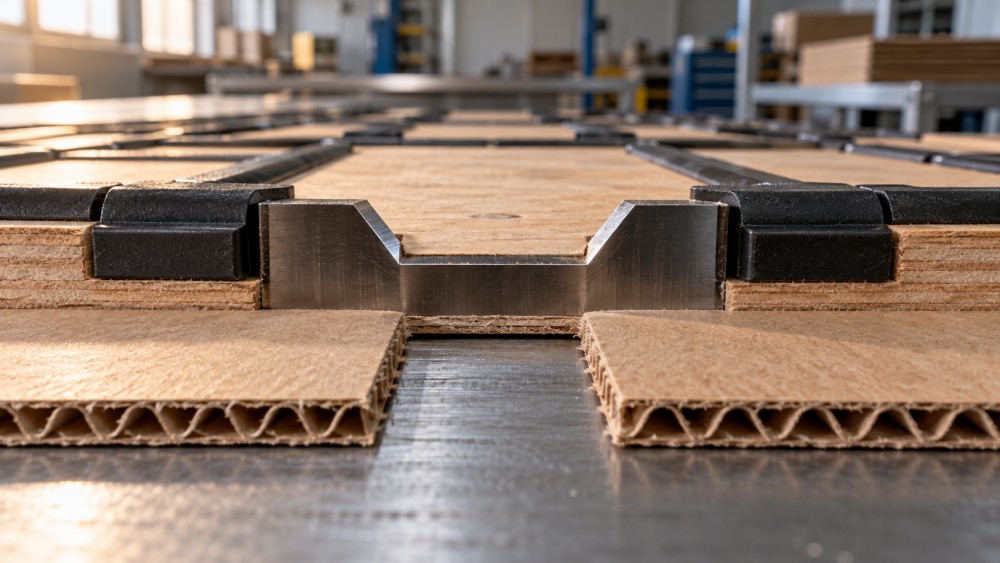
A smooth, sharp cutting edge generally initiates liner penetration more easily than a rounded or damaged edge. However, sharpness alone does not determine finished edge quality.
Bevel geometry controls how the rule enters the liners and displaces material through the board thickness. Its suitability depends on board construction and the cutting application.
A center bevel is a common starting point for general corrugated work because its symmetrical geometry tends to balance lateral forces during penetration through the board.
A side bevel can influence which side receives greater material displacement. It may help particular applications, but orientation and lateral loading require evaluation with the diemaker.
Longer, more acute bevels can reduce initial penetration resistance, yet their finer edges may be more vulnerable to damage. Edge support and material abrasiveness influence suitability.
A more supported edge can improve durability under demanding conditions, although increased wedging may affect local deformation. Compare actual cuts before accepting either geometry as superior.
Ground and shaved edges describe manufacturing approaches, not universal performance rankings. Ask suppliers about edge consistency, burr control, and the intended corrugated application behind each recommendation.
Serrated rules can assist penetration in some rotary applications, but their tooth pattern may affect edge appearance. Evaluate them against the customer's actual acceptance criteria.
How Should Hardness, Thickness, and Rule Height Be Specified?
Hardness involves a tradeoff between wear resistance and toughness. A harder cutting edge may retain sharpness longer, but excessive brittleness can increase chipping under unfavorable loading.
Some rules combine a hardened edge with a more ductile body. This supports edge retention while allowing bending, although achievable profiles depend on the specific product.
Request separate information about edge hardness and body hardness where applicable. A single hardness value may conceal differences that affect bending behavior and cutting durability.
Rule thickness influences stiffness, bending capability, and material displacement. Increasing thickness may improve stability, but it can also increase resistance and constrain small radii in designs.
Rule height must match the machine and die system. Height variation within a die can produce simultaneous overcutting and incomplete separation across different sheet locations.
Specify tolerances with the diemaker and machine supplier instead of copying another plant's dimensions. Cutting plates, dieboards, mounting systems, and rotary compensation change the requirements.
Match the Knife to the Board and the Cutting Process
Board grade names alone provide insufficient selection guidance. Record flute profile, wall construction, liner composition, caliper, moisture condition, and whether the sheets carry coatings or laminations.
Fine flute structures can be sensitive to localized compression and edge appearance. Heavy double-wall structures place different demands on penetration, rule stability, and ejection behavior.
Recycled fiber content, mineral fillers, and surface treatments can alter wear behavior. Their effects vary, so evaluate the actual substrate instead of assuming equivalent grades perform identically.
Moisture variation can change stiffness, fracture behavior, and dimensional stability. Record board condition during trials because changing moisture can make knife comparisons misleading between production shifts.
In flatbed die-cutting, platen condition, cutting plate flatness, and localized make-ready affect pressure distribution. A better knife cannot compensate reliably for an uneven cutting surface.
In rotary die-cutting, anvil condition, runout, operating gap, and speed influence penetration. Rule selection must account for the specific cylinder, die mounting, and anvil system.
Confirm whether the proposed rule is approved for the intended process. Substituting a flatbed recommendation into rotary production without validation can create avoidable performance problems.
Check Setup Before Blaming the Cutting Rule
Incomplete cutting often encourages operators to increase pressure immediately. First establish whether the defect comes from edge wear, uneven support, incorrect rule height, or board variation.
Excessive pressure can crush flutes near the cut and drive the edge unnecessarily into the cutting surface. It may temporarily conceal the underlying setup problem.
Ejection rubber must compress and recover appropriately for the board and die layout. Excessive resistance can increase load, while inadequate ejection can cause sheet lifting.
Rubber placement also matters around narrow slots and closely spaced rules. Restricted movement can damage waste pieces or distort features even when the cutting edge remains sharp.
Check whether nicks are deliberate retention features before classifying them as cutting defects. Poorly positioned or oversized nicks can create visible tears during stripping and separation.
Maintain controlled stripping conditions during comparison trials. A clean initial cut can still develop ragged edges if waste removal pulls fibers from the finished blank.
Use the Defect Pattern to Narrow the Cause
Defect location and timing provide useful diagnostic evidence. Record whether problems follow a specific rule, sheet position, flute direction, production speed, or accumulated running distance.
Fraying concentrated on the exit liner can indicate incomplete penetration, inadequate support, or a worn edge. Inspect the cutting surface before increasing load across the die.
Crushing beside an otherwise complete cut suggests investigating pressure, bevel displacement, and rubber compression. Inspect cross-sections because surface appearance alone can hide substantial flute damage.
Dust that rises gradually during a run can indicate edge deterioration, but substrate variation also matters. Compare retained samples and review recent board lot changes.
Repeated defects in one machine area point toward localized support, plate, or anvil problems. A defect following the same rule segment suggests tooling inspection first.
Sudden deterioration after a jam or foreign-object event warrants immediate edge inspection. Continuing production with a chipped rule can increase waste and compromise dimensional consistency.
Run a Controlled Trial That Reveals Useful Differences
Compare candidate die cutting knives using the same design, board lot, and machine wherever practical. Record flute direction and sample position to preserve meaningful comparisons.
Establish a stable baseline with the current rule, then change one specification at a time. Otherwise, improved results cannot confidently be attributed to the knife.
For each candidate, establish the lowest effective cutting setting within approved operating limits. Record that setting because force demand is part of the performance comparison.
Test at the intended production speed after setup stabilizes. A rule that performs well during slow adjustments may behave differently under normal dynamic operating conditions.
Inspect samples from startup, stable production, and later running intervals. Include positions across the sheet to expose localized defects and gradual changes in edge condition.
Use consistent lighting and magnification for edge photographs. Where practical, assess coded samples so expectations about supplier identity or price do not influence quality judgments.
Measure critical blank dimensions and inspect narrow slots, corners, and cuts across different flute orientations. Straight external edges alone may miss the most demanding features.
Quantify dust using a repeatable collection method over a fixed production quantity. Visual impressions are less useful when airflow, extraction settings, or housekeeping conditions change.
Record accepted sheets, rejects, interventions, and replacement timing throughout the run. Define the replacement criterion beforehand so service life comparisons reflect equivalent quality requirements consistently.
What Should Technical Evaluators Ask Suppliers to Provide?
Ask for a documented recommendation connecting board construction, die design, and machine conditions to the proposed rule. A premium designation alone provides little technical justification.
The specification should identify rule height, thickness, bevel arrangement, edge manufacturing method, and applicable tolerances. Include edge and body hardness information where the supplier distinguishes them.
For serrated products, request tooth geometry and orientation guidance. For coated or specially treated rules, ask what operating conditions support the claimed improvement in service life.
Confirm bendability and minimum practical radii with the diemaker, particularly around tight features. An edge specification has limited value if forming damages it before production.
Request traceability and guidance on storage, handling, and replacement. Edge damage during transport or die assembly can undermine otherwise suitable material and manufacturing quality before use.
Evaluate commercial value through cost per accepted sheet, including tooling, make-ready waste, downtime, and scrap. A lower purchase price can disappear quickly when intervention frequency increases.
Choose the Knife That Sustains Clean Cuts in Production
The strongest choice is the rule that repeatedly meets edge quality and dimensional requirements at a stable operating setting across the intended board and production conditions.
Start with suitable bevel geometry and consistent edge quality, then balance hardness and rule support against wear, chipping, and forming requirements for the actual die design.
Approve the final specification only after a controlled production trial confirms acceptable dust, flute protection, service life, and total converting cost. Those results justify the selection.