Replace die cutting knives for corrugated board when cut quality starts to drift in a repeatable way, not only when the rule looks obviously worn. In practice, the earliest warning is usually visible on the blank before it becomes a machine fault: feathered edges on liner paper, small uncut bridges where the profile should break cleanly, dust buildup around tight radii, and a growing difference between the lead edge and trailing edge of the same sheet. If those symptoms appear across multiple jobs and do not disappear after normal make-ready adjustment, the knife condition has likely moved beyond routine tuning.
A sharp rule separates fibers with controlled penetration. As the edge rounds off, it pushes and drags the board instead of slicing it. Corrugated structure makes this easier to spot than on many solid substrates. Outer liner tearing may show first on cross-flute cuts, while crushed flute tips and ragged internal edges may become more visible on machine-direction cuts. On heavy double wall board, a dull edge often creates more board movement before penetration, so dimensional stability at slots and hand holes can deteriorate even when the sheet still appears acceptable from a distance.
What usually changes before full replacement becomes unavoidable
The knife does not fail in one moment. It passes through a period where press settings compensate for edge wear. Cutting pressure may be increased, makeready packing may be altered, stripping may be tightened, or speed may be reduced to keep waste under control. Those corrections can hold output for a while, but they also hide the actual condition of the die. Once compensation becomes the normal operating state, the replacement point is already close.
Several shop-floor signals are more reliable than visual inspection alone:
- Cutting pressure creeps upward from one repeat order to the next, even though board grade and moisture are similar.
- Rubber ejectors begin to work harder to release blanks because the knife is dragging fibers and increasing contact.
- Nicks that were previously stable begin to tear unpredictably during stripping or downstream folding.
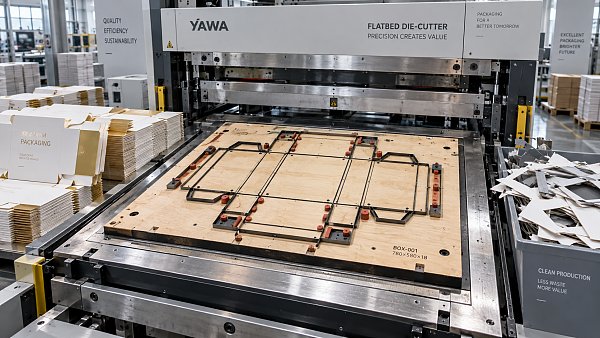
- Motor load, noise, or impact feel may rise during die engagement, especially on flatbed equipment handling thick corrugated sheets.
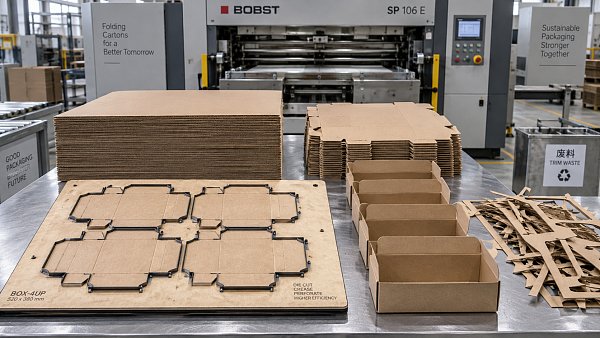
- Waste skeletons stop separating cleanly and require more intervention at delivery.
When several of these appear together, replacing the knife is often cheaper than continuing to chase the problem with pressure and setup changes. Extra force does not restore the original cutting geometry. It only transfers stress into the die board, matrix, sheet transport, and platen or anvil interface.
Visual wear matters, but pattern matters more
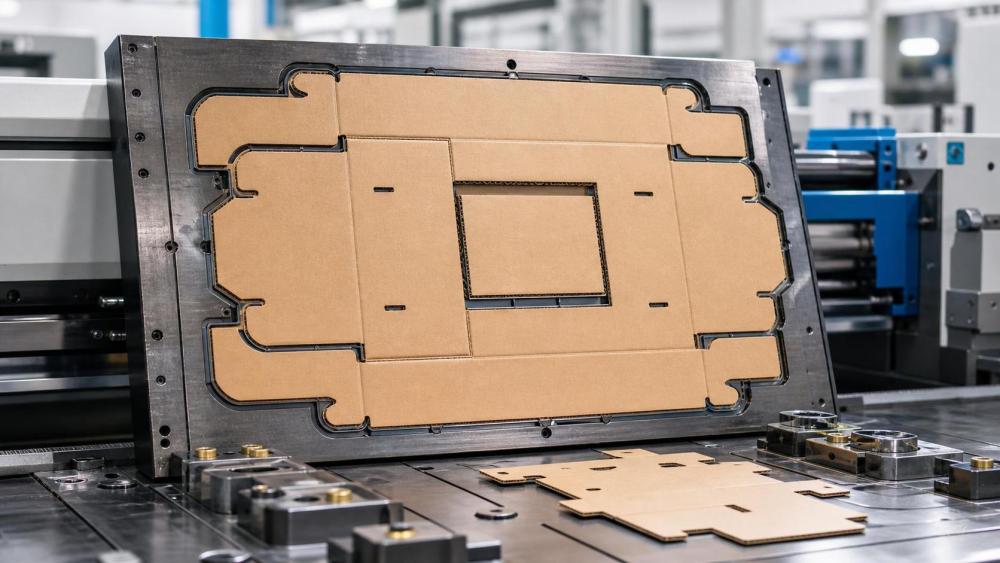
A maintenance team may pull a die and find that the rule still looks serviceable at first glance. That can be misleading. Wear on die cutting knives for corrugated board is rarely uniform. Localized damage is common at reverse bends, sharp corners, hand hole ends, perforation transitions, and locations where board enters the cut under slight skew. A short damaged section can create a high scrap rate even when most of the perimeter is still cutting well.
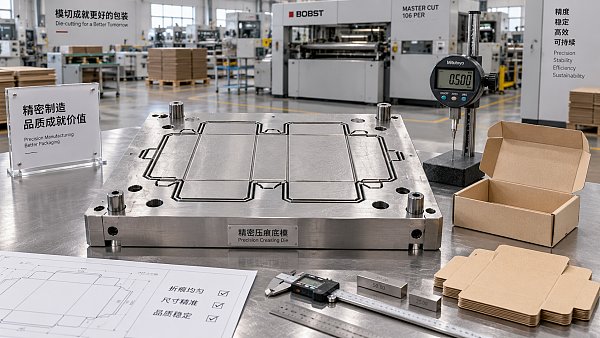
Look for polished flat spots on the bevel, micro-chipping along the edge, bent rule near impact zones, and adhesive or coating buildup that changes effective edge shape. Rust staining also matters if dies have been stored in humid conditions. Corrosion pits may not seem severe, but they interrupt the edge and can start tearing fibers instead of shearing them.
Inspection becomes more useful when it is tied to the defect map of the blank. If burrs always appear at one corner of a lock tab, check the matching area on the rule instead of assuming global wear. If the trouble follows a specific section of the die through different board grades, replacement of that section is usually the right move. If the defect appears only on one grade or flute profile, the replacement decision may need to consider board compressibility, moisture variation, and feeder alignment before the knife is blamed.
Board type changes the replacement interval
There is no useful universal lifespan for corrugated die-cutting knives. The board itself changes the wear rate. Recycled liners with higher contamination risk can be harder on the edge than cleaner virgin-based grades. Heavy starch application, variable moisture, and abrasive dust from prior converting stages can accelerate dulling. Double wall and triple wall structures usually demand closer attention because greater penetration resistance tends to magnify the effect of any edge rounding.
Print and surface treatment also influence wear behavior. Preprinted sheets, coated liners, or jobs with varnish residue may leave deposits on the rule. In those cases, the first response should be cleaning and inspection, not immediate replacement. A contaminated edge and a worn edge can look similar in production because both may cause dragging and rough cuts. If proper cleaning restores the cut, the rule may still have useful life. If the defect returns quickly under the same conditions, replacement becomes more likely.
When poor cuts are not caused by the knife
One common mistake is replacing the rule when the real issue is die-cutting environment or machine condition. Corrugated board is sensitive to moisture balance. A dry sheet can crack and feather even with a sharp knife. An over-moist sheet can deform under pressure and leave fuzzy cuts. Sheet warp, misregistration from feeder side lay issues, platen parallelism error, worn anvil covers in rotary systems, and damaged counter plates can all imitate knife wear.
That is why replacement decisions should follow a short elimination sequence. Confirm that the board grade matches the original setup. Verify cutting impression across the full sheet. Check whether the defect stays in the same physical location on the die or moves with sheet position. Review whether recent order changes introduced a new flute combination, coating, or storage condition. If the symptom moves, the cause is probably outside the knife. If it stays fixed to the die profile, knife condition moves to the top of the list.
Pressure increase is a warning, not a cure
Many dies stay in production too long because additional cutting force appears to solve the problem temporarily. This usually creates secondary damage. More pressure can crush flute structure around cut edges, weaken crease performance, enlarge slot width, and shorten the life of both rubber and matrix materials. On flatbed machines it may also increase shock load on the chase and surrounding components. On rotary die-cutters, excessive force can mark the anvil, distort cut depth consistency, and make later jobs harder to stabilize.
A practical rule is to treat repeated pressure escalation as a maintenance event. If acceptable cut quality now requires settings that were previously unnecessary for the same design and similar board, the die is no longer operating in its normal window. Even before total failure, that shift is often enough reason to replace the worn sections or remake the die.
Partial rule replacement versus full die rebuild
Not every worn knife requires a complete die replacement. If wear is isolated to a few high-stress geometries and the die board remains stable, sectional rule replacement may restore performance with lower downtime. This is often reasonable for repeat designs where damage is concentrated at stripping breaks, slot ends, or impact-heavy entry points.
Full rebuild becomes more sensible when several conditions appear together: the die has mixed-age repairs, multiple rule heights are drifting, ejection rubber has lost recovery, the board around rule channels has loosened, or repeated local repairs are starting to alter blank accuracy. A patched die may cut, but if it demands constant pressure balancing and repeated stoppages, the hidden cost is in instability rather than consumable spend.
Storage and handling can shorten knife life before production starts
Some replacement decisions are triggered by damage that happened off the machine. Dies stacked without proper separation can bend exposed rule. Rough transport between tool room, warehouse, and press can nick the edge. If the die is cleaned with aggressive tools, the bevel can be scratched or locally flattened. Long storage in uncontrolled humidity can corrode the knife and weaken adhesives holding rubber and accessories in place.
When a die returns from storage and suddenly produces poor cuts on the first repeat order, compare it with the last known production record before assuming process drift. If previous settings were stable and the defect appears immediately after storage or handling, the knife may have been damaged outside running conditions. That distinction matters because it changes the corrective action from interval-based replacement to handling control.
Set replacement timing from production evidence
Fixed calendar intervals are weak predictors for die cutting knives for corrugated board because usage intensity varies widely. A better method is to log replacement against repeatable production indicators: number of impressions by board class, pressure trend, defect location history, cleaning frequency, and whether the die has already had local repairs. This does not need a complex system. Even a disciplined maintenance record attached to each die can show when performance begins to decay earlier than expected.
Patterns are especially valuable in short-run environments with frequent job changes. A die may not accumulate high total impressions, yet repeated setup, transport, and storage cycles can still age it. Conversely, a die running one stable board grade on a well-maintained line may last longer than visual assumptions suggest. Replacement timing should therefore follow actual condition and production history rather than generic life estimates from unrelated jobs.
Before releasing the die back to production
After rule replacement, the first verification should be practical, not cosmetic. Confirm full cut separation across straight runs, corners, slots, and internal apertures. Compare leading and trailing sides of the sheet. Watch stripping behavior and blank release rather than judging only the cut line on a single sample. If the die now requires lower force and waste clears cleanly without edge tearing, the repair has addressed the real problem.
If clean cutting returns only at reduced speed or only on one board batch, keep investigating. Knife replacement may have corrected one issue while leaving feeder alignment, sheet condition, or counter-pressure inconsistency unresolved. The objective is not merely a fresh rule; it is a stable cutting window that holds through the run.
Replace the knife when the cut edge, pressure demand, and defect location all point in the same direction. Waiting for obvious failure usually costs more in scrap, stoppages, and die stress than replacing slightly early. Replacing too soon can waste tooling life, but replacing too late turns a consumable issue into a production problem.