What Steel Rule Dies for Corrugated Boxes Deliver the Cleanest Cuts
For quality-control and safety teams, choosing the right steel rule dies for corrugated boxes is not a minor tooling decision. A carton can print beautifully and still fail at the converting stage: rough cut edges may weaken flaps, crushed scores can make folding unpredictable, and incomplete cuts can force operators to separate blanks by hand. Those problems create waste, slow delivery, and introduce avoidable safety exposure around moving equipment.
The cleanest cut is rarely produced by “a sharper rule” alone. It comes from a matched system: corrugated board construction, cutting-rule profile, die-board accuracy, creasing layout, rubber ejection, press condition, stripping method, and production discipline must work together. For plants handling high-volume shipping cases, retail-ready cartons, or frequently changing e-commerce orders, the practical question is not simply which die to buy. It is which die specification will maintain acceptable quality through the full run, not only on the first few sheets.
What a clean cut actually means in corrugated converting
Different departments may define a clean cut differently. A production operator may focus on whether the blank releases smoothly. Quality control may be looking for uncut liners, torn flute tips, excessive edge crush, or inconsistent slot dimensions. A safety manager may be concerned when operators begin reaching into delivery areas to free hanging waste or manually break nicks.
A useful plant-level definition combines all of these concerns. A clean cut should leave the carton blank fully separated where required, retain intended nicks without tearing, preserve the strength of adjacent panels, and avoid loose debris that can interfere with downstream folding, gluing, packing, or inspection. The result should be repeatable at normal production speed.
That last condition matters. A die that performs well during a slow trial but starts leaving uncut fibers after speed increases is not a stable solution. The same applies to a die that cuts aggressively enough to separate every blank but creates crushed edges and dust. Quality teams should judge the balance, rather than rewarding only the deepest or most forceful cut.
Start with the board, not the die catalogue
Corrugated board is not a uniform substrate. Its liner grades, flute profile, combined thickness, moisture content, caliper variation, recycled-content level, and direction of travel all influence the force needed for cutting and creasing. A die specification that works well on a dry, single-wall B-flute board may perform poorly on a heavier double-wall material or on board that has absorbed moisture during storage.
Before approving steel rule dies for corrugated boxes, quality personnel should record the actual board conditions associated with each recurring defect. This helps distinguish a tooling problem from a material-control problem. For example, incomplete cut-through may be caused by worn cutting rule, but it can also be linked to variation in board thickness, an uneven cutting plate, insufficient press pressure, or a die-board area that has lost flatness.
Flute orientation deserves particular attention. Cuts running across flutes can behave differently from cuts running parallel to them. Long cuts parallel to the flute direction may be prone to irregular separation if the board structure is weak or if ejection is poorly balanced. Creases that cross the flute structure need enough support to form a controlled hinge without splitting the liner. Good die design anticipates these directional effects instead of applying one rule profile everywhere.
Rule height and profile: the geometry behind cut quality
Steel rule is commonly selected by height, thickness, edge bevel, hardness, and intended function. Cutting rules, creasing rules, perforating rules, and serrated rules may share the same die board, but they should not be chosen as though they perform the same job. The most suitable combination depends on carton design and converting process.
Rule height must suit the die-cutting equipment, counterplate arrangement, and board thickness. If the relationship between cutting rule and creasing rule is wrong, the press may achieve cut-through at the expense of damaged scores, or form a reasonable crease while leaving partial cuts. A properly specified height difference helps the cutting edge penetrate as intended while allowing the crease to compress the board in a controlled way.
Bevel selection is equally important. A center-bevel cutting rule is often preferred where a balanced, general-purpose cutting action is needed. Side-bevel rule can be useful when the design requires the cut to favor one side or when waste-release behavior needs to be managed in a specific direction. The choice should reflect the carton geometry and stripping arrangement, not habit.
A narrower bevel can reduce the initial cutting force, but it may be more vulnerable to damage in demanding corrugated applications. A more robust edge can tolerate heavier board and longer runs, though it may require more force. There is no universally “best” bevel. The cleanest results usually come from matching edge durability and penetration behavior to the board grade, run length, and machine condition.
Why creasing rule selection often determines whether a carton looks clean
Many visible “cutting defects” are actually crease-control defects. When a score is too deep, too narrow, or badly positioned, the liner can crack during folding and leave the carton looking torn even though the cut line itself is accurate. When the crease is too weak, the folding path becomes unstable, creating skewed panels at the folder gluer or inconsistent case erection later in the packing line.
The aim is to create a hinge, not a fracture. Creasing rule width and height should be coordinated with the counter, channel width, board thickness, flute profile, and folding direction. Channels that are too tight may over-compress the material. Channels that are too wide can produce a vague fold and reduce dimensional control.
For quality teams, a practical inspection should include folding representative blanks in both directions where applicable. Do not rely only on a flat-sheet visual check. Watch for liner cracking, flute collapse, score wandering, and a fold that springs back instead of settling into position. These signs often appear before a converting line begins producing obvious rejects.
Ejection rubber is not merely an accessory
Rubbering is frequently underestimated because it is not the cutting edge itself. Yet the wrong ejection material, placement, height, or hardness can make a well-built die behave badly. Ejection rubber pushes the sheet away from the rule after the cutting stroke, prevents board from clinging to the die, supports waste removal, and helps maintain stable running at speed.
Too much rubber pressure can distort lightweight corrugated board or interfere with the cutting action. Too little, or poorly positioned rubber, allows the sheet to remain on the die and increases the risk of jams, hanging scrap, and manual intervention. In a safety review, repeated requests for operators to clear material from guarded zones should be treated as a process signal, not simply as an operator-performance issue.
Rubber also changes over time. Compression set, wear, contamination, and heat exposure can reduce recovery. A die may therefore show declining release performance even when the cutting rule still appears acceptable. Including rubber condition in routine die inspection is a straightforward way to prevent unpredictable release failures.
A practical comparison of common die-cutting approaches
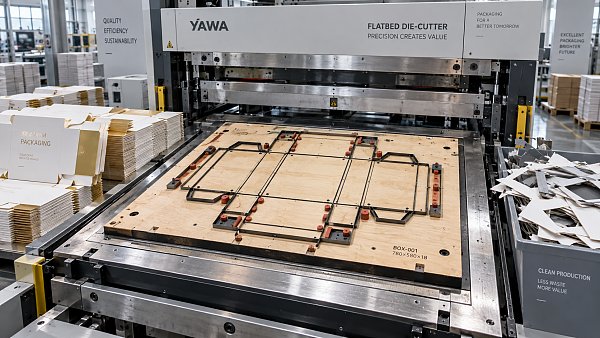
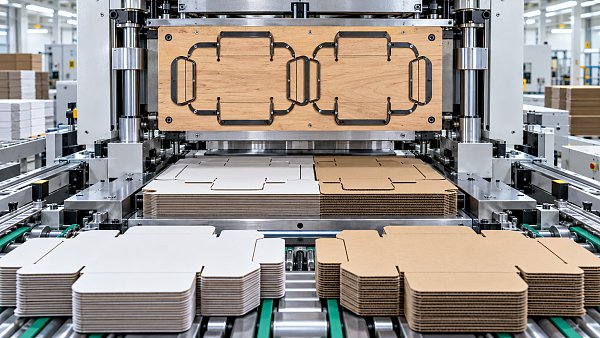
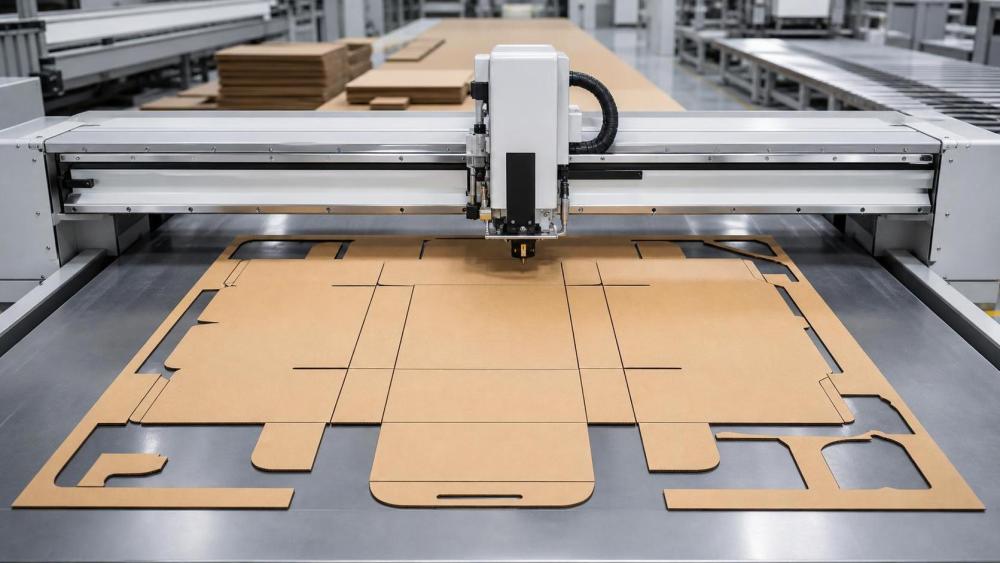
The converting method affects what “clean” looks like in practice. Flatbed systems may offer valuable flexibility for complex work, while rotary systems are often selected for sustained production. Neither approach removes the need to control board variation, rule wear, and make-ready quality. The die, machine, and material must be evaluated as one operating system.
Wear patterns reveal more than a pass/fail inspection
A dull rule does not always look visibly damaged. Its first signal may be increasing press pressure, a rise in board dust, fuzzy cut edges, or a gradual increase in partial cut-through defects. Operators may compensate by adding pressure, but this can mask the underlying issue while accelerating wear on the anvil, cutting plate, and other components.
Quality-control teams can gain useful insight by mapping where defects occur on the blank. If incomplete cuts repeatedly appear in the same area, investigate localized die-board deflection, uneven pressure, damaged rule sections, or counterplate wear. If defects appear across the whole sheet, broader causes such as board caliper variation, machine setting, or overall rule wear become more likely.
Inspection should cover more than the cutting edge. Look for loose or lifted rule, bent sections around tight radii, damaged bridges, uneven rubber height, blocked waste paths, contamination from adhesive or ink, and nick locations that no longer hold the blank correctly. A die can remain technically usable while no longer being suitable for critical packaging work.
Control points that prevent defects from reaching the packing line
For recurring carton formats, a documented first-off approval is more reliable than visual judgment alone. The approval can include cut-through verification, slot and panel dimensions, score alignment, fold test results, edge condition, waste-release behavior, and the condition of critical features such as hand holes, locking tabs, and glue flaps. Barcode or printed-code areas should also be reviewed if die-cut position could affect readability or placement.
During the run, sampling intervals should reflect order length, speed, board variability, and the criticality of the carton. High-risk work—such as cartons carrying heavy goods, products requiring traceability, or designs with tight locking features—benefits from closer monitoring. The inspection record should identify the die revision, board specification, machine, date, and relevant settings. When a defect returns, this traceability prevents teams from starting the investigation from zero.
Safety controls belong in the same conversation. Damaged rules are sharp, and dies can be heavy or awkward to handle. Use defined storage locations, protective covers where suitable, clear identification, and handling practices that prevent fingers from contacting exposed rule. Lockout procedures must be followed before cleaning jams, changing dies, or inspecting areas inside machine guarding. A “quick adjustment” made during production is often where a manageable defect becomes a serious incident.
Common assumptions that lead to poor decisions
One frequent mistake is specifying the hardest available rule for every job. Hardness can improve resistance to wear, but it does not automatically produce the best cut on every board or every machine. Another is treating extra pressure as a permanent fix. Higher pressure may recover cut-through temporarily, but it can increase crushing, dust, and equipment wear.
It is also risky to approve a die solely from a single trial sheet. Corrugated converting defects may emerge after the rule warms, rubber begins to compress, board conditions shift, or speed reaches the planned production rate. A meaningful trial includes normal operating speed, representative board, typical feeding conditions, and enough sheets to observe stability.
Finally, avoid separating die procurement from production knowledge. The die maker needs accurate information about board grade, flute type, equipment, carton function, expected run length, stripping needs, and known failure modes. In return, the plant should receive clear tooling identification and guidance for inspection, storage, and replacement criteria.
A better selection question for quality and safety teams
Instead of asking which steel rule dies for corrugated boxes are “best,” ask which die design will produce a repeatable cut and crease on this board, on this machine, at the required speed, with the least need for manual correction. That question brings quality, production, maintenance, and safety into the same decision.
For packaging operations investing in more automated corrugated converting, this systems view becomes even more valuable. Stable die-cutting supports smoother feeding, more reliable folding and gluing, cleaner palletizing, less unplanned downtime, and more useful production data. CPCS follows these links across corrugated board production, printing, die-cutting, inspection, and end-of-line automation because carton quality is rarely decided by one component alone. It is built through controlled interactions—starting with a die that cuts cleanly, releases reliably, and remains safe to use throughout its working life.
Related News
 How Flatbed Steel Rule Dies Improve Cut Accuracy and Changeover SpeedFlatbed steel rule dies improve cut accuracy, crease quality, waste release, and changeover speed. Discover practical tooling tips for reliable, efficient converting.Post-Press Kinematics Expert
 How Platen Presses Support Precise Foil Stamping and Die CuttingPlaten Presses deliver precise foil stamping, clean die cutting, and reliable creasing for premium packaging. Discover setup practices that improve quality and reduce waste.Post-Press Kinematics Expert
 How Pre-Breaking Units Reduce Cracking in Die-Cut Carton FoldsPre-Breaking Units help reduce cracking in die-cut carton folds by easing bend stress, improving fold accuracy, and supporting high-speed carton production.Post-Press Kinematics Expert
 How a High Pile Feeder Reduces Downtime in Die-CuttingHigh pile feeder solutions reduce die-cutting downtime, improve sheet supply stability, and help packaging plants increase throughput with fewer interruptions.Post-Press Kinematics Expert
 Carton Die Cutting for Folding Cartons That Reduces Setup WasteCarton die cutting for folding cartons reduces setup waste with stable registration, reliable creasing, smarter tooling, and repeatable production control.Post-Press Kinematics Expert
 How to Choose Hardened Die Cutting Knives for Longer Production RunsHardened die cutting knives for longer runs: learn how to balance hardness, edge profile, consistency, and total conversion cost for reliable results.Post-Press Kinematics Expert