What Determines the Price of an Automatic Die-Cutter Delivery System?
What Determines the Price of an Automatic Die-Cutter Delivery System?
An automatic die-cutter delivery system price reflects more than stacking speed or machine size. Sheet-handling requirements, automation level, controls, and compatibility with existing equipment all affect the quotation. The financial challenge is separating essential capabilities from expensive extras while accounting for installation, maintenance, and operating costs.
The useful comparison is not simply which supplier offers the lowest machine price. It is which configuration can handle the plant’s actual work, remove a documented production constraint, and deliver savings that survive a conservative investment review. That starts with defining exactly what the supplier is pricing.
Start with the delivery system’s boundaries
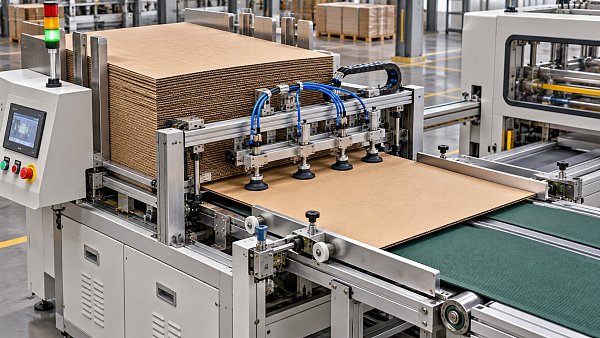
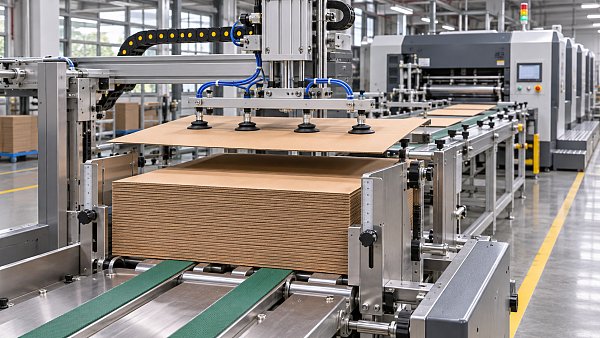
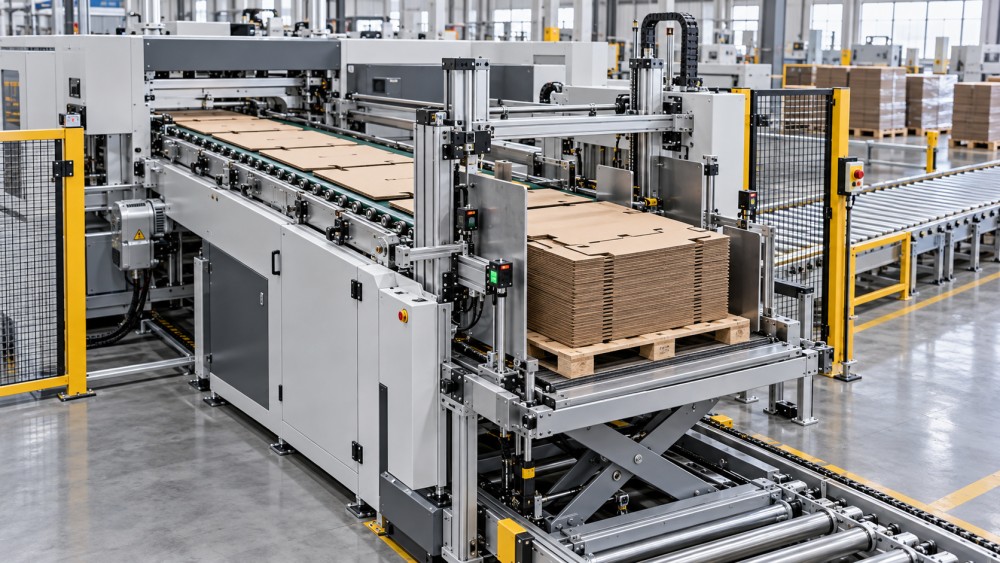
“Automatic delivery” can describe quite different arrangements. One quotation may cover an integrated pile-delivery section with automatic lowering and sheet alignment. Another may include nonstop pile changes, pallet conveying, counting, batch separation, and downstream handling. A robotic palletizing cell is a further scope expansion, not an interchangeable alternative to every delivery section.
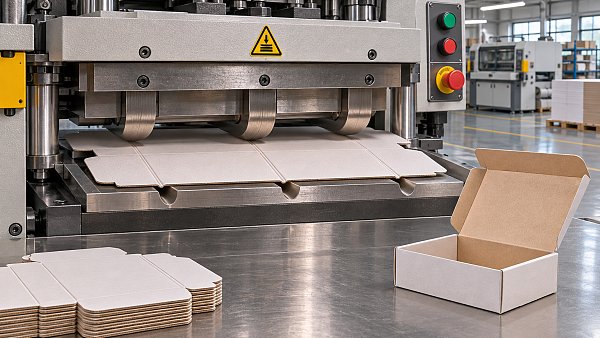
The condition of the material leaving the die-cutter matters just as much. Full die-cut sheets held together by nicks require different handling from separated blanks leaving a blanking section. Stripping removes waste; blanking separates products. A quotation that assumes one output condition may not suit the other.
Before comparing prices, require a scope drawing showing where the supplier’s responsibility begins and ends. Identify who supplies conveyors, pallet handling, guarding, electrical interfaces, and any modifications to the existing die-cutter. Otherwise, an apparently cheaper offer may simply transfer work to the buyer.
Sheet behavior often drives more cost than nominal size
Maximum sheet dimensions influence frame size, conveyor width, lifting capacity, and floor space. But a format specification alone does not establish whether a delivery system will perform reliably. Thin folding carton stock, stiff corrugated sheets, and heavily cut layouts behave differently during deceleration, alignment, and stacking.
Lightweight sheets may need carefully controlled airflow and support to prevent flutter. Warped corrugated board can complicate pile alignment. Printed or coated surfaces may require contact arrangements that avoid scuffing. Weak connections between blanks can break during handling, creating jams even when the sheet dimensions fall comfortably inside the stated range.
These conditions can justify additional sensors, adjustable guides, controlled transfer points, or more sophisticated motion control. The relevant question is whether those features address materials the plant actually processes—not whether they make the specification sheet look more complete.
A useful enquiry therefore includes representative sheet dimensions, board grades, thicknesses, layouts, surface finishes, and known handling difficulties. Include difficult repeat jobs, not only flat, stable samples that run well on almost any arrangement.
Buy sustained output, not an isolated speed figure
A delivery section must keep pace with the die-cutter under agreed production conditions. However, a maximum mechanical speed says little about output once pile changes, pallet removal, alignment adjustments, and stoppages are included.
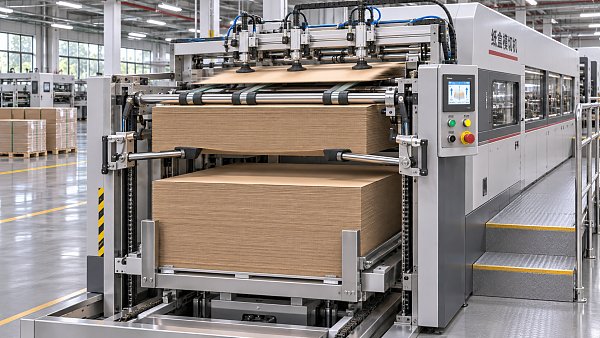
Nonstop delivery can carry a price premium because it requires temporary sheet support or another means of maintaining flow during pile exchange. That premium is easier to justify on long runs where pile changes repeatedly interrupt production. On short-run work, job preparation and changeover may consume more time than pile exchange, making recipe recall or accessible adjustments more valuable.
Follow the material beyond the delivery section as well. If finished piles wait for a forklift or congest the route to the folder gluer, faster stacking may only move the queue. A layout review should show how full pallets leave, how empty pallets arrive, and what happens when downstream transport is unavailable.
For acceptance, specify saleable output over an agreed test period, using defined materials and pile-change conditions. Record handling damage, operator interventions, and delivery-related stops. These measures reveal more about investment value than a brief demonstration at peak speed.
Automation and retrofit integration change the quotation
Automatic format adjustment, job memory, pile-height detection, and production reporting can reduce repetitive work. Their financial value depends on operating conditions. Frequent format changes may support investment in motorized adjustment; stable repeat production may need fewer automated settings.
It helps to distinguish operational automation from data connectivity. A system can stack reliably without a manufacturing execution system connection. Conversely, an Ethernet port does not establish that usable job data, fault histories, or production counts can be exchanged with existing software. Define required signals, data ownership, software licenses, and interface responsibilities before accepting a connectivity surcharge.
Retrofits introduce a separate cost layer. An older die-cutter may need revised controls, speed synchronization, mechanical adaptation, or changes to its safety circuit. Access to drawings and cooperation from the original equipment manufacturer can affect feasibility, schedule, and engineering effort.
Safety cannot be treated as a discretionary extra. Linked machinery requires coordinated stopping behavior, suitable guarding, and assessment against applicable local requirements. Ask who takes responsibility for the integrated installation and what documentation will be delivered. Component certificates alone do not establish that the complete line has been appropriately assessed.
Turn the quoted price into a comparable installed cost
Without a defined configuration and delivery location, a universal price range would be misleading. A more useful approach is to normalize supplier quotations against the same installed scope. The following items frequently determine whether two offers are genuinely comparable.
Currency exposure, quotation validity, and payment timing also belong in the review. Separately identify recoverable taxes and working-capital effects rather than mixing every cash movement into equipment cost. Finance and procurement should use one consistent accounting basis across all bids.
A technically acceptable machine can still create costly downtime if replacement drives, sensors, or proprietary controls are difficult to obtain. Request a recommended spare-parts list with prices and lead times, plus clear arrangements for restoring software and machine settings after a controls failure.
Build payback from benefits the plant can actually capture
The strongest business case starts with measured losses: delivery-related downtime, handling damage, overtime, manual pile handling, and changeover labor. Avoid assigning every existing die-cutter loss to the delivery section. Problems caused by feeding, tooling, stripping, or board quality may remain after the investment.
Simple payback = total installed investment ÷ annual net cash benefit.
Annual net benefit should deduct additional maintenance, utilities, consumables, and recurring software or support charges. For longer-lived projects, discounted cash-flow analysis can account for benefit timing, major repairs, and the company’s investment hurdle rate.
Labor is particularly easy to overstate. Reducing manual handling does not automatically remove a paid position. Savings become cash benefits when the plant can reduce overtime, avoid planned recruitment, or make a practical staffing change. Redeployed time can still have value, but it should be identified separately from payroll reduction.
Likewise, extra capacity is not extra revenue unless orders and downstream capacity exist. Value additional saleable production using incremental contribution, not gross sales. Do not count both avoided labor and the full value of recovered hours if they represent the same benefit.
Test a conservative case with lower utilization, slower ramp-up, and only clearly realizable savings. If approval depends on every shift reaching ideal output immediately, the proposal needs stronger evidence or a narrower scope.
Make acceptance conditions part of the commercial decision
Before placing an order, agree on representative jobs, test duration, output quality, permissible interventions, and the process for correcting failed tests. Distinguish factory acceptance from acceptance after installation: successful operation at the supplier’s premises does not verify the interfaces and material flow at the buyer’s plant.
Global Commercial Print & Corrugated Packaging Intelligence (CPCS) approaches converting equipment as part of a production system, connecting machinery selection with uptime, material utilization, labor requirements, and downstream automation. That perspective is useful here: a delivery upgrade should be evaluated alongside the die-cutter, stripping or blanking arrangement, and pallet logistics—not as an isolated accessory.
The next step is a common quotation brief supported by production records and a site layout. Ask each supplier to separate essential equipment, optional automation, integration work, and recurring costs. A defensible delivery system price is one whose scope is clear, performance is testable, and expected benefits can be traced to losses the plant actually experiences.
Related News
 How to Choose a Sheet Feeder for Paperboard ProductionChoose the right sheet feeder for paperboard with practical tips on material handling, line speed, integration, and trials to improve production reliability.Post-Press Kinematics Expert
 How Do Creasing Dies Prevent Cracks in Folded Cartons?Creasing Dies help prevent carton fold cracks through controlled deformation. Discover key tooling factors and practical production tips for cleaner, more consistent folds.Post-Press Kinematics Expert
 How to Prevent Sheet Misfeeds in an Automatic Feeder SystemPrevent automatic feeder system misfeeds with practical checks for sheet alignment, suction, air separation, timing, and double-sheet detection.Post-Press Kinematics Expert
 How Do Non Stop Feeder Piles Reduce Die-Cutter Downtime?Discover how non stop feeder piles reduce die-cutter downtime, improve pile-change efficiency, and keep sheet feeding reliable on long production runs.Post-Press Kinematics Expert
 USITC Advances Trade Probe Into Corrugated Die-Cut BoxesCorrugated die-cut boxes face a USITC trade probe. Explore what the investigations could mean for packaging costs and sourcing.Post-Press Kinematics Expert
 What to Consider When Choosing Heavy Duty Pile TurnersChoosing heavy duty pile turners? Discover how to assess load capacity, substrate handling, safety and operating costs to find the right fit for your production line.Post-Press Kinematics Expert