What Determines Carton Die Cutting Machine Price in 2026
A carton die cutting machine price in 2026 is determined less by the machine’s headline specification than by the production conditions it is designed to sustain. Two machines with similar sheet sizes can differ substantially in quoted cost because one is intended for occasional carton work while the other is built for continuous production, fast job changes, automatic stripping, inspection, and downstream handling.
The useful comparison is therefore not “which supplier offers the lowest machine price?” but “what production capability, operating exposure, and integration scope does each quotation include?” A low initial price can be commercially sound for stable, low-volume work. It becomes costly when the machine cannot handle the required board grades, changeovers, quality tolerances, or delivery schedule without excessive labour and waste.
Machine architecture sets the starting price level
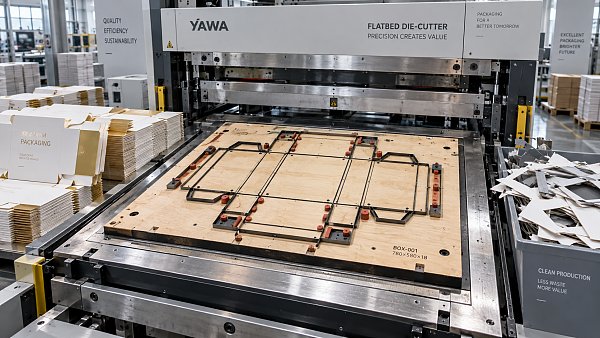
The first cost distinction is between the major die-cutting formats. Flatbed machines use a platen action to cut and crease sheets or blanks. They are widely used where carton geometry, creasing quality, detailed stripping, and finishing accuracy matter. Rotary die-cutters use cylindrical tooling and can support very high throughput in suitable corrugated applications, especially when integrated into converting lines. Their tooling, configuration, and application boundaries differ materially from those of flatbed equipment.
Within flatbed equipment, the price gap is also shaped by whether the machine is designed for folding cartons, corrugated board, or a wider material range. Folding-carton work may require precise registration, clean stripping of small waste pieces, stable handling of printed sheets, and compatibility with coated or laminated substrates. Corrugated carton work places different demands on feeding, board transport, creasing pressure, and resistance to crush damage. A machine specified to handle both applications will not automatically perform equally well in each; its feeding and delivery design must support the intended materials.
Format is another fundamental driver. A larger maximum sheet size requires a larger platen, frame, transmission system, feeder, stripping section, delivery section, and more substantial installation requirements. The commercial effect is not limited to the maximum sheet dimension. Large-format machines can enable layouts with more-up production or larger carton styles, but they also require dies, handling systems, storage space, and operator procedures sized for the format.
A quotation should state the usable production format, not only a nominal maximum sheet size. Gripper margin, substrate size restrictions, stripping configuration, and delivery limits can reduce the practical format available for a specific carton design.
Rated speed is not the same as usable output
Speed is frequently presented as a direct comparison point, yet it is one of the least useful numbers when removed from production conditions. A rated number of strokes per hour does not show how the machine performs with heavy board, warped sheets, complex stripping, difficult printed surfaces, or frequent order changes. Nor does it show the share of time spent preparing dies, adjusting feeder settings, clearing waste, or checking samples.
The higher carton die cutting machine price associated with a faster platform is usually linked to more than motor capacity. It may include a more rigid machine body, higher-capacity drive components, improved lubrication, more stable sheet control, reinforced stripping systems, and control logic designed to maintain repeatability at speed. These features matter only if the order mix can use them.
For work dominated by longer, repeatable runs, sustained output and uptime may justify a more robust platform. For frequent short orders, the more important cost driver may be preparation time: automated setting functions, job-memory capability, die registration aids, rapid stripping-frame change, and feeder adjustment repeatability. A machine that reaches production more quickly can create more available capacity even if its stated maximum speed is lower.
Automation changes both the quotation and the operating model
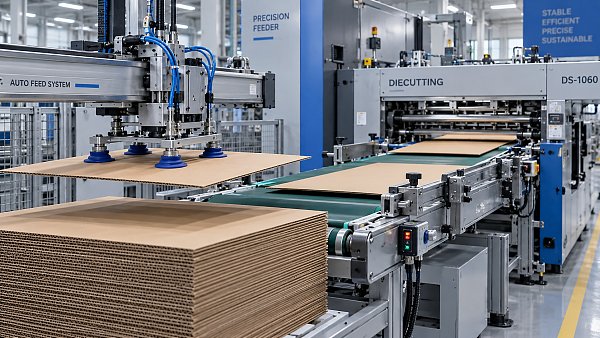
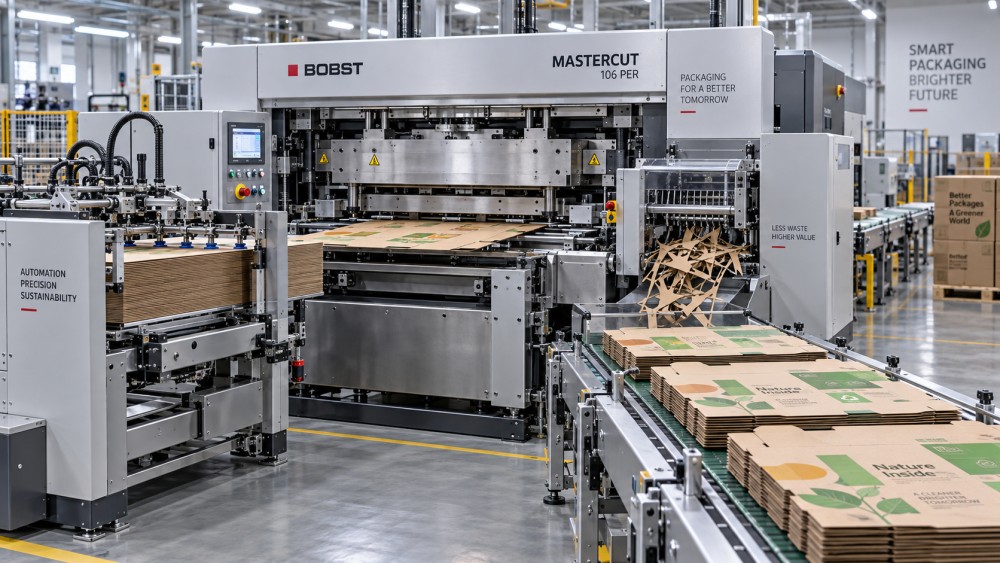
Automation is often described too broadly. An “automatic” die-cutter may refer only to automatic sheet feeding and delivery. It does not necessarily include automated platen adjustment, non-stop feeding, automatic pile logistics, preloading, blanking, waste removal, inspection, or connection to a folder gluer and palletizing system.
Each additional module adds cost, but the financial question is whether it removes a genuine production constraint. Non-stop feeder and delivery systems can be valuable where stopping for pile changes interrupts productive time. Automatic blanking may reduce manual separation work for designs that generate many finished blanks. Inspection can be justified where print defects, missing cut features, or code-related errors carry a high cost of rework or rejection. These are not universal requirements; on some carton types, they add complexity without solving the main bottleneck.
Automation should also be assessed as a system. A high-speed die-cutter feeding an understaffed manual collection area can simply move congestion downstream. Likewise, automatic delivery is of limited value if stacks must be manually moved before the next process and space is unavailable for orderly staging. The machinery price should be evaluated against the complete material flow: incoming sheets, die preparation, stripping waste, finished blank handling, inspection, bundling, and transfer to folding and gluing.
Tooling and process requirements are often underestimated
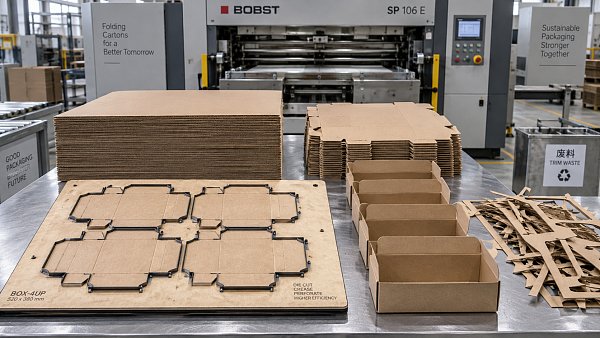
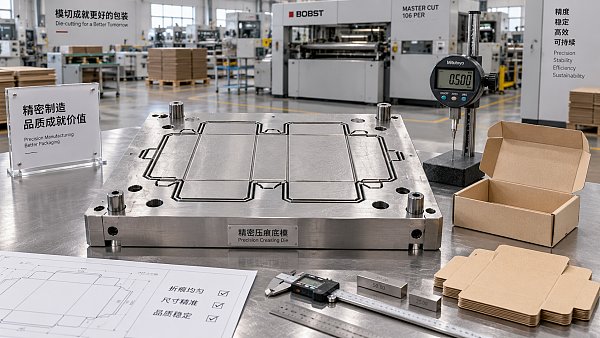
The machine is only one part of the die-cutting investment. Dies, stripping tools, blanking tools, chase systems, frames, make-ready materials, and storage arrangements can materially affect both capital outlay and ongoing cost. Complex carton designs with tight windows, small apertures, intricate internal cut-outs, or demanding crease patterns require more sophisticated tooling and longer preparation.
Tool compatibility is particularly important when replacing or adding equipment. A machine may be attractively priced but require a different die size, chase format, stripping frame, or locking arrangement from existing assets. The resulting conversion cost can outweigh an apparent difference in machine price. Before comparing suppliers, the quotation request should identify the formats and tooling systems currently in use, as well as any requirement to reuse existing dies.
Creasing performance deserves the same attention as cutting force. Carton quality depends on fold lines that are consistent enough for downstream folding and gluing. Board caliper, flute profile, paper composition, moisture condition, print coating, and grain direction can all affect the result. A quoted machine should be evaluated against representative material samples and actual carton structures, not only against generic substrate ranges in a brochure.
Accuracy has commercial value only when linked to the job mix
Higher die-cutting accuracy generally requires better sheet registration, controlled transport, stable platen movement, and more refined adjustment systems. This is essential for premium printed cartons, pharmaceutical packaging, cosmetic cartons, tightly registered embellishments, and designs where cut windows must align with graphics. It is less decisive for certain transport cartons where structural function and throughput are the primary concerns.
The critical issue is not whether one machine claims a better tolerance than another, but whether the stated tolerance applies to the actual production environment. Printed sheet variation, board distortion, die wear, humidity, pile condition, and operator setup all influence finished accuracy. A supplier’s declared machine tolerance should be separated from the achievable process tolerance on the relevant substrate.
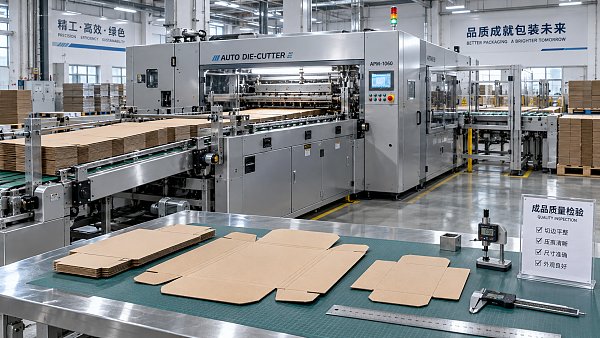
Where barcode placement, traceability codes, regulated information, or premium graphics are involved, inline or offline vision inspection may become part of the cost equation. Inspection equipment can identify certain print and structural defects, but it requires definition of the defect library, rejection process, data retention needs, and integration with the line. Buying inspection without a workable response process may produce data but not quality control.
Electrical, safety, and compliance scope can distort comparisons
Quotes from different regions are not comparable unless the supply scope is aligned. Electrical configuration, voltage and frequency requirements, control cabinet components, safety guarding, documentation language, and local conformity obligations can all change cost and lead time. A machine intended for one market may require redesign or additional components before it can be installed in another.
For machinery placed on the European market, relevant CE obligations and the applicable machinery safety framework need to be addressed by the responsible economic operator. In other markets, local electrical, workplace safety, and import requirements may apply. The practical procurement issue is to confirm exactly what documentation, declarations, drawings, manuals, guarding, emergency-stop circuits, and commissioning support are included—not simply whether a supplier states that the machine is “certified.”
Safety options also need technical definition. Interlocked guards, light curtains, access controls, lockout points, safe maintenance access, waste-handling protection, and emergency-stop architecture should correspond to the proposed workflow. Omitting them from an initial price may reduce the quote but create installation delays or later modification costs.
Installation conditions affect the real investment
A carton die cutting machine price rarely includes every cost required to reach stable production. Freight, insurance, import duty where applicable, unloading, foundation work, floor loading review, electrical connection, compressed air, extraction, site access, installation labour, commissioning materials, operator training, and production acceptance all need separate visibility.
Machine dimensions alone do not define the required floor area. Space is needed for sheet piles, die storage, stripping frames, waste removal, maintenance access, finished blank accumulation, and safe movement around the equipment. If the machine is intended to connect with a folder gluer, inspection unit, conveyor, or palletizing cell, the layout must account for buffer capacity and line access rather than treating each machine as an isolated footprint.
Acceptance criteria should be agreed before contract award. These may include approved substrate types, carton design samples, required output conditions, allowed defect categories, training scope, commissioning duration, and the point at which warranty begins. Without defined acceptance conditions, a disagreement can emerge between a machine that operates mechanically and a machine that delivers the required production result.
After-sales capability is part of the price, not an optional extra
Die-cutters contain wear components and systems that require regular attention: grippers, chains or transport elements, bearings, lubrication circuits, feeder parts, pneumatic components, sensors, electrical devices, and stripping assemblies. The relevant question is not whether maintenance will be needed, but how quickly the required parts, drawings, technical support, and qualified service can be obtained.
A lower quotation may carry greater exposure if critical components are proprietary, spare parts must travel internationally, or service support is limited to remote communication. Conversely, paying more for a machine with clear spare-parts documentation, standard industrial components where appropriate, remote diagnostics, training, and a defined service response structure can reduce unplanned downtime risk.
Request a recommended spare-parts list divided into commissioning spares, annual consumables, and critical downtime spares. This makes it possible to distinguish necessary stock from supplier-driven padding and to budget the first years of ownership more realistically.
A better way to compare quotations
Comparable quotations begin with a common technical and commercial requirement, not with supplier brochures. The requirement should define carton types, annual and peak volumes, sheet or blank dimensions, board grades and thicknesses, print registration needs, stripping and blanking needs, expected job-change frequency, available utilities, downstream connection points, destination country, and required documentation.
Then normalize each offer into four figures: equipment supply price, mandatory project cost, optional automation cost, and expected operating cost exposure. The equipment supply price is only the first figure. Mandatory project cost includes the items needed to install and accept the machine. Optional automation should be evaluated against a defined capacity, labour, quality, or handling constraint. Operating exposure includes tooling compatibility, energy use, maintenance parts, service access, consumables, and likely waste during setup.
The lowest carton die cutting machine price is not automatically the lowest investment, and the most automated configuration is not automatically the best value. The sound choice is the machine whose format, material capability, changeover method, uptime support, and line integration match the carton mix that will actually be produced. That alignment is what turns a quotation into a defensible capital decision.
Related News
 How to Calculate Short Run Die Cutting Costs Before Placing an OrderCalculate short run die cutting costs before you order. Learn how tooling, setup, material waste, and finishing affect your budget—and compare quotes to avoid hidden charges.Post-Press Kinematics Expert
 How a High Accuracy Sheet Feeder Reduces Misfeeds in Die CuttingDiscover how a high accuracy sheet feeder reduces die-cutting misfeeds, waste, and downtime. Learn how to choose the right system for more reliable production.Post-Press Kinematics Expert
 How to Choose a Platen Die Cutter Manufacturer for Reliable OutputChoose a platen die cutter manufacturer with proven output. Discover how material trials, service support, and clear acceptance criteria help reduce downtime and protect your investment.Post-Press Kinematics Expert
 How to Choose a Counterplate Manufacturer for Accurate CreasingChoose a counterplate manufacturer that delivers accurate creasing. Learn how to assess channel design, production trials, and repeatability to reduce setup waste and improve folding.Post-Press Kinematics Expert
 How Flatbed Steel Rule Dies Improve Cut Accuracy and Changeover SpeedFlatbed steel rule dies improve cut accuracy, crease quality, waste release, and changeover speed. Discover practical tooling tips for reliable, efficient converting.Post-Press Kinematics Expert
 How Platen Presses Support Precise Foil Stamping and Die CuttingPlaten Presses deliver precise foil stamping, clean die cutting, and reliable creasing for premium packaging. Discover setup practices that improve quality and reduce waste.Post-Press Kinematics Expert