Short-Run Die Cutting: Which Press Setup Minimizes Changeover Waste?
A short-run die-cutting schedule can lose its margin before the first sellable sheet reaches delivery. A job may require only a limited quantity, yet the press must still be stopped, stripped, cleaned, fitted with a new die, registered, pressure-balanced, and brought back to stable output. When this sequence relies on repeated trial sheets and operator adjustments, changeover waste can outweigh the productive run.
The press setup that usually minimizes changeover waste is not simply the fastest-rated machine. For frequent short runs, the best fit is a setup built around rapid die and stripping-tool change, repeatable feeder and side-lay positioning, stored job settings, and fast pressure readiness. A press with these features can reach acceptable die-cut and crease quality with fewer make-ready sheets. The practical choice is therefore a press configuration that reduces uncertainty at each setup stage rather than one that only offers high maximum running speed.
Start with the waste pattern, not the press brochure
Before comparing equipment, separate the waste created during changeover into its actual sources. Project teams often count only discarded sheets at the die-cutter. That is important, but it is not the whole loss. A difficult setup can also consume press time, delay downstream folding and gluing, tie up operators, and cause a new order to miss its planned production window.
In short run die cutting, waste tends to come from a small number of recurring events:
- Sheets used to establish front-lay, side-lay, and print-to-die registration.
- Board or paper damaged while cutting pressure and creasing rules are adjusted.
- Waste from stripping-tool fitting, blanking alignment, and delivery setup.
- Material lost because an old job remains in the feeder, transport section, or delivery area.
- Restart defects caused by incomplete cleaning, loose tooling, or unverified settings.
- Extra handling when operators must search for dies, counterplates, packing records, or prior job information.
This breakdown changes the purchasing question. A press may have an impressive nominal speed but still be a poor short-run asset if its tooling is slow to exchange, if repeat registration depends heavily on manual correction, or if its pressure setup has little repeatability from one order to the next. Conversely, a press with a moderate top speed can produce more usable output per shift when its make-ready is predictable.
The setup features that matter most
Tooling exchange with controlled positioning
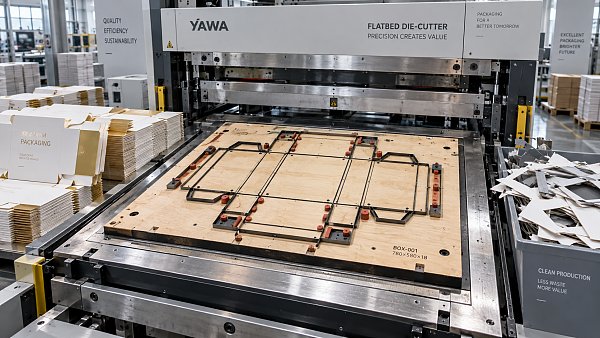
Die mounting is often the physical center of a changeover. Manual loading is not automatically unsuitable, especially where job volume is limited or dies are small. The issue is whether the die can be placed quickly and consistently without repeated alignment work. A guided quick-lock system, indexed mounting points, or a dedicated chase arrangement can reduce variation between operators and jobs.
For larger formats, frequent die changes, or heavier tooling, powered or semi-automatic die handling can reduce both setup time and the risk of damage to the die, chase, or operator. The most useful feature is not automation for its own sake; it is stable, repeatable placement. A tooling system that saves a few minutes but requires prolonged registration correction does not meaningfully reduce changeover waste.
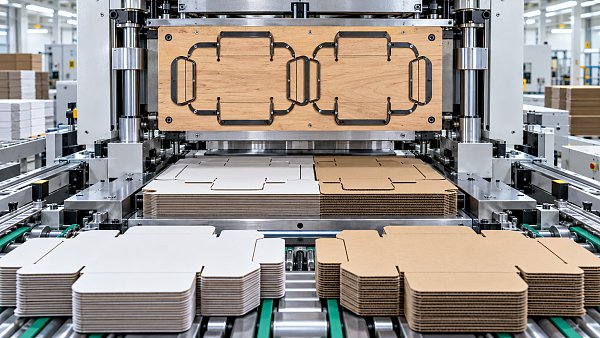
The same principle applies to stripping frames and blanking tools. Where a product requires stripping, a press should be evaluated as a complete converting setup. A fast die change paired with a slow, awkward stripping conversion leaves the main bottleneck untouched.
Job memory that stores usable settings
Job memory is valuable when it captures the settings that operators otherwise have to rediscover: feeder parameters, sheet format references, side-lay position, delivery settings, press speed limits, and, where available, pressure-related setup information. On repeat orders, stored settings can provide a controlled starting point rather than a guarantee that no adjustment will be needed.
Teams should ask which parameters are actually stored, how the operator retrieves them, and whether the saved record is linked to the correct die, substrate, print version, and stripping configuration. A vague job name is not enough. The record should allow the next crew to confirm that the selected setup belongs to the exact production specification.
Memory cannot compensate for changed board caliper, moisture variation, a worn die, altered printed-sheet dimensions, or a different make-ready packing condition. It reduces the number of unknowns; it does not remove the need for verification.
Registration controls that settle quickly
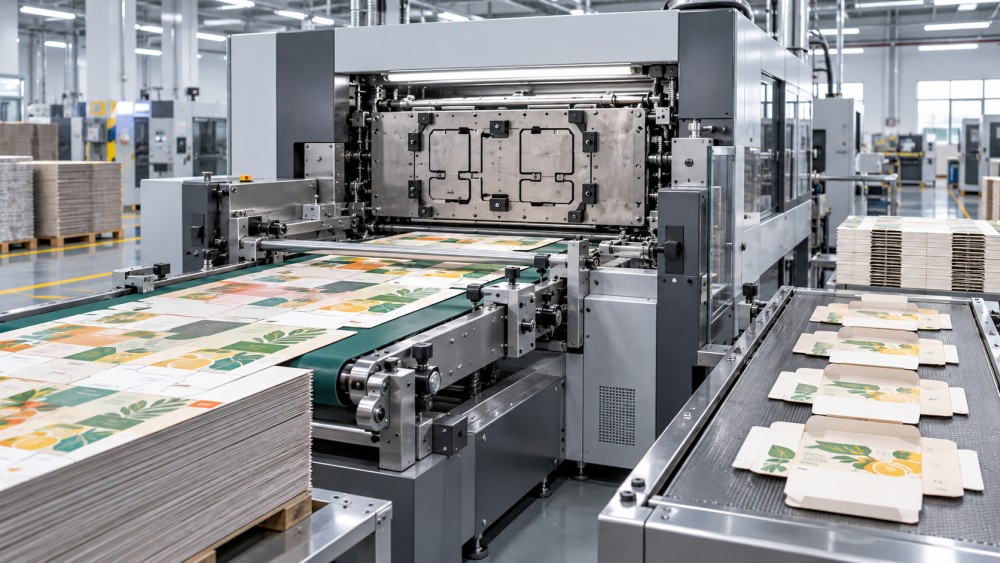
Registration waste is especially expensive on preprinted cartons, high-value sheets, and work with narrow visual tolerances. On short runs, a press needs a feeder and registration system capable of establishing a stable sheet position without a long sequence of incremental corrections. Reliable front lays, side lays, sheet separation, and transport control are the foundation. Automation added to an unstable mechanical path will not create consistent registration.
Electronic registration adjustment can be useful where operators need to make small corrections quickly. However, project managers should assess the full sequence: how the press detects the reference, whether the adjustment is repeatable, how long it takes for the correction to appear at the cutting station, and whether the delivery preserves the corrected sheet position. Registration should be judged from accepted finished blanks, not merely from the control interface.
Pressure readiness and creasing consistency
A die-cut press can be perfectly registered and still create unacceptable setup waste if cut and crease pressure are difficult to establish. Too little pressure leaves incomplete cuts or weak creases. Excess pressure can crush corrugated flute structure, crack printed surfaces, shorten tooling life, and create harder stripping. Frequent packing changes also consume time and introduce variability.
For short runs, look for a platen condition and pressure-adjustment arrangement that permits disciplined, repeatable make-ready. This includes a flat, well-maintained cutting surface, clear procedures for packing management, and an operator method for identifying whether the issue comes from die height, substrate variation, localized pressure, or worn rules. A press that requires broad pressure increases to solve a localized defect will generate waste quickly.
Compare press configurations by operating fit
The right setup depends on run length, carton geometry, substrate range, and how often artwork or dielines change. The following comparison is more useful than treating one press type as universally best.
For folding-carton work involving frequent design changes, a flatbed press with rapid-change die mounting, stored setup data, and well-integrated stripping is often the more flexible answer. Rotary systems can be effective for suitable repeat patterns and production flows, but they should not be selected solely on the assumption that continuous motion automatically reduces short-run losses. Tooling preparation, changeover mechanics, and the number of variants matter more than the motion principle alone.
Build the changeover around preparation outside the press
The lowest-waste press setup begins before the current job ends. Press-side activity should be reserved for work that can only happen on the machine. Die inspection, stripping-frame preparation, counterplate checks, job-ticket review, material verification, and retrieval of prior settings should be completed away from the press whenever possible.
A workable pre-change routine can follow this order:
- Confirm the next job’s revision, substrate, grain direction, sheet size, printed reference marks, and finishing requirements.
- Inspect the die for damaged cutting rules, loose ejection material, worn creasing rules, and debris from storage.
- Prepare the stripping and blanking tools as a matched set, rather than locating each component after the die is mounted.
- Retrieve the prior job record and compare it with the current production specification before applying saved settings.
- Stage only the verified material required for the next run, clearly separated from the outgoing job.
- Assign responsibility for first-sheet approval so that the press does not wait after mechanical setup is complete.
This process does not require a highly automated factory. It requires that information, materials, and tooling reach the press in a usable state. When a changeover appears long, the apparent machine problem is sometimes a preparation problem: an unlocated die, a missing stripping frame, an unclear revision, or a substrate that was never checked against the job record.
Do not use make-ready sheets as a diagnostic substitute
It is tempting to keep feeding sheets until the output looks acceptable. That approach hides the cause of waste and makes setup performance impossible to improve. Each rejected sheet should indicate a specific adjustment decision. Is the defect a feed issue, print-to-die registration issue, localized cutting-pressure issue, crease problem, stripping interference, or delivery damage?
Use a small number of purposeful test sheets and inspect them in sequence. First establish sheet transport and registration. Then check cutting and creasing across the sheet, including areas with fine detail and heavy coverage. Next verify stripping, blank separation, and delivery condition. Changing several variables at once makes it difficult to know which correction worked and often creates a new defect elsewhere.
For corrugated material, examine whether pressure correction is causing flute crush or score weakness. For printed folding cartons, check cracking at folds, nicks, edge quality, and whether registration remains stable after the press reaches production conditions. The first acceptable sheet is not always evidence of a stable setup; the press should demonstrate repeatability over enough production sheets to confirm that feeding, cutting, and delivery remain controlled.
Specify the press around the changeover profile
A useful equipment review starts with the order mix rather than a generic capacity target. Record the range of sheet sizes, die sizes, number of dies changed per shift, proportion of jobs needing stripping or blanking, repeat-order frequency, substrate variation, and time lost waiting for approval. These details reveal which setup function deserves investment.
Where dies change constantly but products are relatively simple, quick mounting and organized tooling logistics may have the greatest effect. Where jobs are printed and registration-sensitive, feeder stability and registration correction capability deserve more attention. Where complex waste removal is slowing production, evaluate stripping and blanking conversion as carefully as the cutting section. A project that buys only a faster press may preserve the same nonproductive work around it.
Require suppliers or internal engineering teams to demonstrate a realistic changeover sequence using representative tooling and substrates. The review should include removal of the prior job, loading of the next die, stripping setup where applicable, retrieval of stored settings, registration establishment, pressure adjustment, and delivery verification. Watching only a machine run a stable job does not show whether it is suitable for a short-run schedule.
Control the conditions that automation cannot fix
Even a well-configured press will create unnecessary waste when inputs are inconsistent. Dies should be stored to prevent rule damage and ejection-material distortion. Counterplates, packing materials, and make-ready records need version control. Printed sheets should arrive within agreed dimensional and moisture conditions. Operators need a clear escalation path when a defect suggests tooling wear or substrate variation rather than a routine setting change.
Short-run die cutting becomes more predictable when the press setup, tooling preparation, and job data are treated as one operating system. The preferred setup is the one that lets the team repeat a proven sequence with minimal correction: mount accurately, retrieve the right baseline, confirm registration, establish controlled pressure, verify stripping, and release only stable output. That is where changeover waste is reduced without trading away die-cut quality or schedule reliability.
Related News
 How Flatbed Steel Rule Dies Improve Cut Accuracy and Changeover SpeedFlatbed steel rule dies improve cut accuracy, crease quality, waste release, and changeover speed. Discover practical tooling tips for reliable, efficient converting.Post-Press Kinematics Expert
 How Platen Presses Support Precise Foil Stamping and Die CuttingPlaten Presses deliver precise foil stamping, clean die cutting, and reliable creasing for premium packaging. Discover setup practices that improve quality and reduce waste.Post-Press Kinematics Expert
 How Pre-Breaking Units Reduce Cracking in Die-Cut Carton FoldsPre-Breaking Units help reduce cracking in die-cut carton folds by easing bend stress, improving fold accuracy, and supporting high-speed carton production.Post-Press Kinematics Expert
 How a High Pile Feeder Reduces Downtime in Die-CuttingHigh pile feeder solutions reduce die-cutting downtime, improve sheet supply stability, and help packaging plants increase throughput with fewer interruptions.Post-Press Kinematics Expert
 Carton Die Cutting for Folding Cartons That Reduces Setup WasteCarton die cutting for folding cartons reduces setup waste with stable registration, reliable creasing, smarter tooling, and repeatable production control.Post-Press Kinematics Expert
 How to Choose Hardened Die Cutting Knives for Longer Production RunsHardened die cutting knives for longer runs: learn how to balance hardness, edge profile, consistency, and total conversion cost for reliable results.Post-Press Kinematics Expert