Precision Creasing Die Basics for Clean Folds and Reduced Cracking
Why Crease Quality Deserves Attention Before the Folder Gluer
A carton can print sharply, die-cut accurately, and still fail at the final fold. Surface cracking, whitening along the score, burst outer liners, distorted panels, and inconsistent opening force often begin with the crease made earlier in the converting process. A precision creasing die is therefore not a minor tooling detail. It establishes a controlled fold line so the board bends where intended, with less random fiber damage and less stress transferred into printed or coated surfaces.
For information researchers evaluating folding-carton or corrugated converting quality, the useful question is not simply whether a die includes a crease rule. It is whether the rule, counterforce, substrate, and press setup create enough controlled deformation for a clean fold without crushing the material. The right answer changes with board construction, caliper, grain direction, coating, moisture condition, print coverage, fold orientation, and the demands of downstream folding equipment.
A well-specified precision creasing die can improve visual quality and folding consistency, but it cannot compensate for unstable board, unsuitable artwork placement, or a poorly maintained press. Clean folds come from a system of matched decisions.
What a Precision Creasing Die Actually Controls
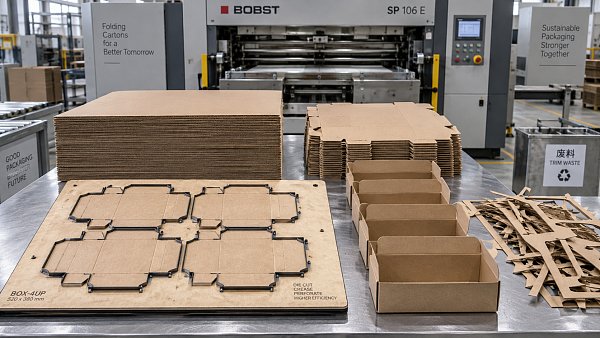
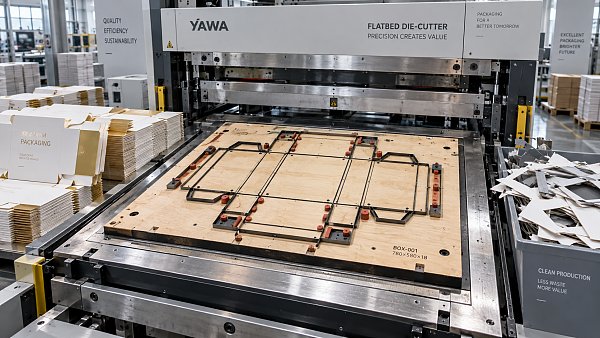
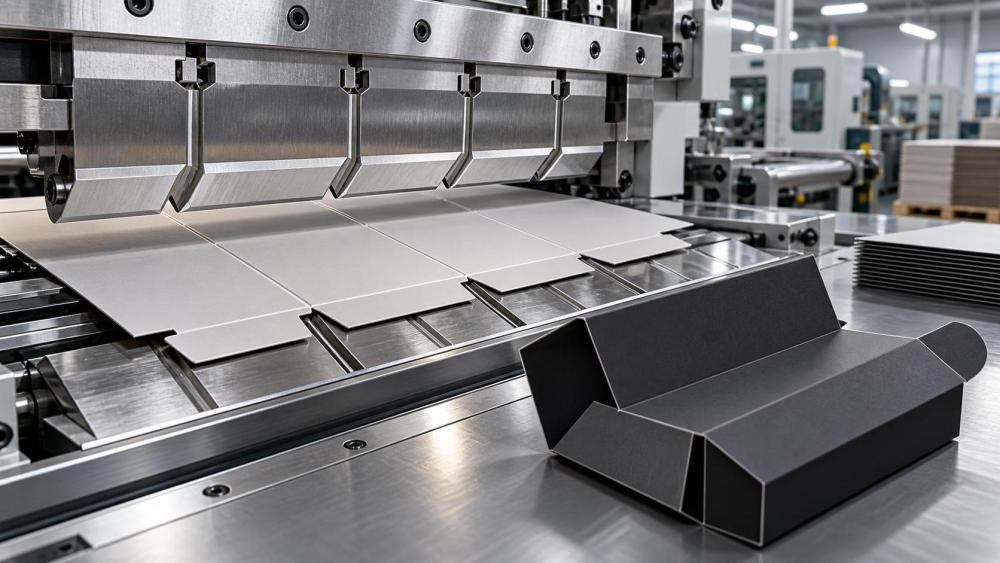
In a typical flatbed die-cutting process, a creasing rule presses the sheet into a corresponding channel or matrix. Instead of cutting through the board, it compresses and displaces material along a narrow line. This locally changes the board structure so it can fold predictably later. The die must produce enough deformation to guide the fold, while preserving enough fiber integrity to prevent the surface from splitting or the panel from becoming weak.
That balance is more delicate than it appears. A shallow score may leave a fold that wanders, springs open, or resists automated folding. An overly aggressive score can crush the board, break fibers, mark the printed face, and create a visible crack when the carton is folded. On corrugated material, excessive compression can damage flute structure and reduce stacking strength near the score. On coated folding board, it may expose a pale line or fracture a dark solid ink area.
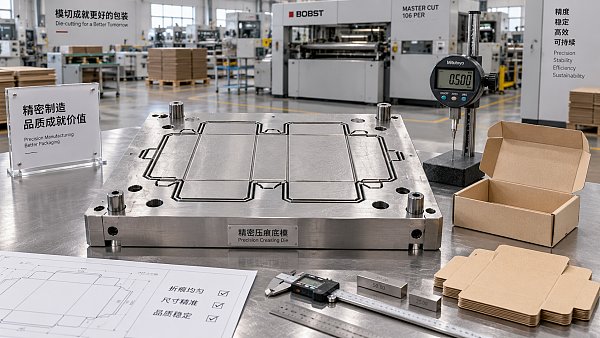
The term “precision” refers less to a single premium component than to repeatable geometry and controlled setup. Rule height, rule thickness, tip profile, channel width, channel depth, packing, platen pressure, and registration all need to work together. Small changes in any one of these can alter the fold result, especially on jobs with tight graphics, fine reverse creases, or several board grades running through the same converting department.
Crease Geometry Must Match the Material
The most common early mistake is choosing creasing geometry from the desired carton appearance alone. The material has to lead the decision. Board thickness is an obvious factor, but stiffness and structure matter just as much. Two sheets with similar caliper can respond very differently if one has a dense coated surface and the other has a bulkier, more open fiber structure.
For folding cartons, the crease should usually give the board a defined bending line without damaging the outer printable surface. Heavy ink coverage, UV coatings, metallized layers, laminated films, and rigid varnishes make the surface less tolerant of strain. A fold that looks acceptable on unprinted board may crack visibly after the same board receives dark ink and a hard coating. In these situations, die design must be reviewed alongside print and finishing decisions, rather than after cracking first appears on the folder gluer.
Corrugated packaging brings another set of conditions. Scoring must direct the fold while managing liner disruption and flute compression. A score intended for a light single-wall shipping case may be unsuitable for a heavier grade or for a design requiring repeated opening and closing. Fold performance also varies depending on whether the score runs with or across the flutes. The objective is not maximum compression. It is a score that produces the required fold angle and panel definition without unnecessary loss of material performance.
Grain Direction Changes the Result
Paperboard is easier to fold in one direction than the other because fibers tend to align during manufacture. A crease parallel to grain commonly behaves differently from one across grain. Across-grain folds can require a more considered combination of rule and channel geometry, particularly where the fold is short, the board is stiff, or the printed face must remain visually clean.
Design teams should identify grain direction before artwork, structural design, and tooling are locked. If a critical display panel, tuck flap, or high-coverage branded face must fold in the more demanding direction, the converting process may still succeed, but the acceptable process window can become narrower. Tooling then has less room to absorb normal variation in board and press conditions.
Cracking Is Usually a Process Interaction, Not a Single Tooling Defect
When cracks appear, the creasing die is often blamed first because the defect becomes visible at the fold. That diagnosis may be incomplete. Cracking occurs when the surface layer cannot stretch or accommodate the strain imposed during creasing and folding. The die can contribute to that strain, but so can substrate dryness, coating brittleness, ink build, laminate behavior, grain direction, and the fold radius created by the carton design.
Several practical patterns help narrow the cause:
- Cracking appears only on heavy printed areas: ink, varnish, coating flexibility, or print-to-crease placement may be part of the issue.
- Cracking occurs on one fold orientation but not another: grain direction or flute orientation deserves attention.
- Damage is present immediately after die-cutting: score pressure, channel dimensions, make-ready, or board condition may be too aggressive.
- The blank looks acceptable but splits on the folder gluer: the score may be insufficient, the fold path may be too abrupt, or the carton may be folding against the intended direction.
- Results drift during a run: material variation, moisture changes, matrix wear, pressure variation, or debris buildup can be more relevant than the original die specification.
This is why a “deeper crease” is not a universal fix. Increasing pressure may help a weak fold in the short term while worsening surface fracture or crushing. Reducing pressure may conceal a visual defect at die-cutting but create poor folding control later. The better approach is to assess the entire crease profile and confirm the result after the actual folding operation, not only at the delivery end of the die-cutter.
Die, Counterforce, and Make-Ready Work as One System
A precision creasing die is only one side of the score. The opposing channel or matrix determines how the board is supported and formed. If the channel is too narrow, the material can be pinched and overloaded. If it is too wide, the crease may lack definition and the eventual fold can become inconsistent. Channel depth and profile influence how much the board is displaced and where compression occurs.
Press make-ready then determines whether the planned geometry is achieved across the full sheet. Uneven pressure can create a clean crease in one area and a crushed or weak score in another. Wear in cutting and creasing rules, damaged matrix sections, poor stripping alignment, or debris in the channel can produce localized defects that are easily mistaken for material inconsistency.
For operations with repeat work, process documentation has real value. Recording substrate grade, caliper range, grain direction, rule and channel specification, packing arrangement, press settings, and folder-gluer observations creates a usable starting point for later orders. It does not eliminate trial runs, since lots and finishing treatments can vary, but it reduces the tendency to restart diagnosis from scratch.
Test the Fold, Not Only the Blank
A die-cut blank should be inspected for more than cut accuracy and visible score marks. Fold several samples through the intended sequence and examine both the outside and inside of the crease. Look for whitening, coating fracture, liner rupture, uneven hinge behavior, panel distortion, and resistance that could affect automated feeding or gluing.
Where cartons are machine-folded, the evaluation should reflect the actual production path. High-speed folding can expose defects that remain hidden in a hand-folded sample. Glue flap position, pre-break action, belt pressure, and carton geometry may interact with a marginal crease. A tooling decision that appears satisfactory at low speed can still lead to rejects, rework, or inconsistent carton shape downstream.
Questions to Ask Before Ordering or Revising Tooling
Tooling discussions are more productive when the converter can provide a clear description of the converting condition rather than only a sample with a defect. The following questions help define the job:
- What is the exact board construction, nominal caliper, and expected variation between supply lots?
- Which fold lines are visually critical, load-bearing, reverse, or repeatedly opened?
- Does the crease run with grain, across grain, or across corrugated flutes?
- What inks, coatings, laminations, foils, or other surface treatments cross the fold?
- Will the blank be hand-folded, formed on a folder gluer, or erected by packing equipment?
- Are existing defects present after die-cutting, only after folding, or only at production speed?
- Does the job require common tooling across multiple board grades, or can the die be optimized for one substrate?
These questions also expose a frequent commercial tradeoff. Standardizing tooling can simplify purchasing and storage, but a single crease setup may not provide the same result across different board suppliers, coating systems, or structural designs. For routine work with generous visual tolerances, that compromise may be reasonable. For premium retail cartons, dark printed folds, or demanding automated erection, tighter matching is often justified because the cost of visible defects can exceed the apparent saving in tooling simplification.
Where Precision Has the Greatest Operational Value
Precision creasing matters most where the fold itself carries quality risk. Typical examples include cartons with large dark solids across fold lines, coated pharmaceutical or cosmetic packaging, rigid paperboard structures, display cartons with sharp presentation edges, and corrugated formats that need reliable case forming. It also becomes more important when short runs and frequent changes leave little time to recover from setup errors, or when a downstream process depends on blanks feeding and folding consistently.
It is less useful to treat precision tooling as a guarantee of defect-free production. Board moisture, storage conditions, print build, and machine settings still shape the result. A carefully manufactured die can widen the usable process window, but it cannot make an unsuitable material-and-design combination risk-free.
The practical value lies in reducing avoidable uncertainty. When crease geometry is chosen for the actual substrate and verified through the final folding stage, converters gain more than a cleaner visual line. They reduce the chance that a problem discovered late in finishing becomes a larger issue in gluing, packing, delivery, or brand presentation. For anyone assessing a precision creasing die, that is the appropriate starting point: evaluate the fold as a controlled production outcome, not as an isolated mark made on a flat sheet.
Related News
 How to Calculate Short Run Die Cutting Costs Before Placing an OrderCalculate short run die cutting costs before you order. Learn how tooling, setup, material waste, and finishing affect your budget—and compare quotes to avoid hidden charges.Post-Press Kinematics Expert
 How a High Accuracy Sheet Feeder Reduces Misfeeds in Die CuttingDiscover how a high accuracy sheet feeder reduces die-cutting misfeeds, waste, and downtime. Learn how to choose the right system for more reliable production.Post-Press Kinematics Expert
 How to Choose a Platen Die Cutter Manufacturer for Reliable OutputChoose a platen die cutter manufacturer with proven output. Discover how material trials, service support, and clear acceptance criteria help reduce downtime and protect your investment.Post-Press Kinematics Expert
 How to Choose a Counterplate Manufacturer for Accurate CreasingChoose a counterplate manufacturer that delivers accurate creasing. Learn how to assess channel design, production trials, and repeatability to reduce setup waste and improve folding.Post-Press Kinematics Expert
 How Flatbed Steel Rule Dies Improve Cut Accuracy and Changeover SpeedFlatbed steel rule dies improve cut accuracy, crease quality, waste release, and changeover speed. Discover practical tooling tips for reliable, efficient converting.Post-Press Kinematics Expert
 How Platen Presses Support Precise Foil Stamping and Die CuttingPlaten Presses deliver precise foil stamping, clean die cutting, and reliable creasing for premium packaging. Discover setup practices that improve quality and reduce waste.Post-Press Kinematics Expert