How to Select Precision Die Cutting Tools for Cleaner Carton Converting
Cleaner carton converting begins with a tool decision that is often treated as a replacement purchase. It should be treated as a process decision. A die-cutting tool that performs well on one board grade, carton style, and machine condition can create excessive dust, rough cut edges, unstable creases, or stripping problems when those conditions change.
For a technical evaluator, the first selection question is therefore not which tool construction is “best.” It is whether the proposed tool is matched to the material stack, carton geometry, press or die-cutter behavior, and production profile. Precision die cutting tools earn their value when they hold cut and crease quality consistently through the intended run, not merely when they produce an acceptable first sheet.
A practical evaluation should focus on four connected areas: the board being converted, the accuracy demanded by the carton design, the dynamics of the converting equipment, and the total cost of maintaining stable output. Looking at these together prevents a common mistake: specifying a highly precise die while leaving the surrounding process unable to support its performance.
Start With the Failure You Need to Prevent
“Cleaner converting” can describe several different production problems. The distinction matters because each problem points to a different combination of cutting rule, creasing rule, ejection material, stripping design, and press setup.
Fuzzy or crushed cut edges may be linked to dull cutting rule, unsuitable bevel geometry, excessive cutting pressure, poor counter material condition, or board moisture variation. Fractured liner at a crease may indicate that the crease channel is too narrow, the rule relationship is wrong for the caliper, or the sheet is being over-compressed. Incomplete stripping can result from weak nicks, poorly placed stripping points, static, distortion in the blank, or insufficient separation between waste and product.
These issues are sometimes attributed to “tool quality” too quickly. A better approach is to define the defect in operational terms before requesting quotations or samples. Record where it occurs, whether it worsens with speed, whether it affects every carton location, and whether it changes between board lots or machine shifts. This separates a tool-design issue from a feeder, registration, pressure, material, or maintenance issue.
- Edge cleanliness: assess feathering, liner pull, fibre breakout, and compression at the cut line.
- Crease integrity: inspect outside cracking, inside bulging, fold recovery, and variation between fold directions.
- Dimensional control: check blank-to-blank repeatability, panel alignment, and the relationship between print and die-cut features.
- Waste removal: evaluate whether waste releases reliably at normal production speed without damaging retained blanks.
- Run stability: monitor whether quality remains stable after the tool has processed a meaningful portion of the scheduled volume.
A clear defect definition also improves supplier communication. “We need cleaner cuts” is too broad to guide tool design. “The coated outer liner tears at small-radius apertures after speed increases, while straight cuts remain acceptable” gives a tooling engineer something specific to solve.
Match the Tool to the Board, Not Just Its Nominal Thickness
Carton board and corrugated materials do not respond to cutting force in the same way. Even materials with similar stated caliper can differ substantially in density, coating, recycled fibre content, flute structure, moisture condition, surface treatment, and compression strength. A tool selected only from a thickness chart can be close enough for a basic blank but unreliable for a complex carton.
For folding cartons, the main concern is often balancing clean severance with crease quality. Coated stock, laminated structures, and fibre-sensitive grades may need close attention to cutting-edge condition and rule geometry. The cut must separate the sheet without pulling the surface or driving excessive compression into nearby crease lines. Where cartons include narrow locking tabs, internal cut-outs, or small-radius features, the design should also account for local stress concentration and waste retention.
For corrugated converting, flute direction and board construction influence both cut quality and score performance. A score that folds satisfactorily across the flute may behave differently along it. Heavy board can require a robust cutting and creasing arrangement, but simply increasing force can crush the flute structure and reduce box performance. Tool selection should therefore consider the required folding behavior after converting, rather than judging quality only from the die-cut delivery section.
Moisture and material variability deserve explicit attention where board supply changes frequently. A tool specification that has a narrow operating window may deliver excellent output on tightly controlled stock and become difficult to run when board condition moves within normal purchasing variation. Plants handling multiple suppliers, seasonal storage conditions, or mixed job profiles benefit from tools designed with enough process tolerance to remain stable across expected variation.
Ask for the material assumptions behind the proposed tool: board type, caliper range, coating or laminate, flute profile where applicable, grain or flute direction, and critical cut and crease features. If those assumptions are absent, the tool is being selected from incomplete process information.
Carton Geometry Determines Where Precision Pays Back
Not every carton needs the same tooling sophistication. Straightforward shipping cases with generous tolerances place different demands on a die than retail cartons with tight print-to-cut alignment, narrow glue flaps, windows, intricate apertures, or premium visible edges. Technical teams should identify the features that set the acceptable tolerance for the job rather than applying the strictest specification to the entire product range.
High-value precision is usually concentrated in a few areas: registration-critical panels, short lock tabs, fine perforations, narrow bridges, small internal waste pieces, and crease lines that must fold accurately into a gluing or erecting operation. These areas may justify more careful rule selection, tighter tool manufacturing control, or a revised structural design that makes the converting process less sensitive.
Small features require particular scrutiny. A tool can be dimensionally accurate yet still perform poorly when the surrounding board lacks enough support during cutting and stripping. Closely spaced cuts can weaken a panel, tiny waste pieces can remain trapped, and aggressive nicks can compromise appearance or tear-out strength. The best response may be a change in stripping layout or nick placement, not a more expensive cutting rule.
Creasing should be assessed as a functional requirement. The carton must survive folding, gluing, filling, packing, and transit. A sharp-looking crease at die-cutting delivery can still lead to cracking, poor squareness, or inconsistent glue-flap presentation downstream. When cartons run through folder gluers or automated packing systems, sample evaluation should include folded blanks, not only flat sheets.
Do Not Treat Tight Tolerances as a Tool-Only Requirement
Precision die cutting is constrained by the complete registration chain. Sheet variation, feeder stability, side lay condition, gripper control, machine wear, print distortion, and tool mounting all affect the final relationship between printed graphics, crease lines, and cut edges. Specifying a tighter tool tolerance cannot compensate for unstable sheet positioning or inconsistent incoming blanks.
This does not reduce the importance of tool accuracy. It changes how it should be evaluated. A supplier should be able to explain how the tool is manufactured, located, and checked, but the plant should validate it under representative running conditions. Bench measurements and first-off sheets are useful gates; they are not proof of sustained registration at production speed.
Choose a Construction That Fits the Equipment and Job Mix
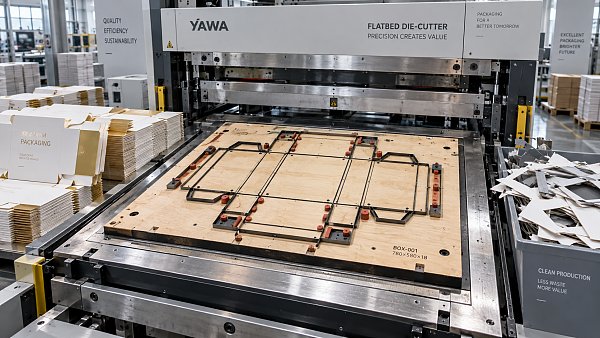
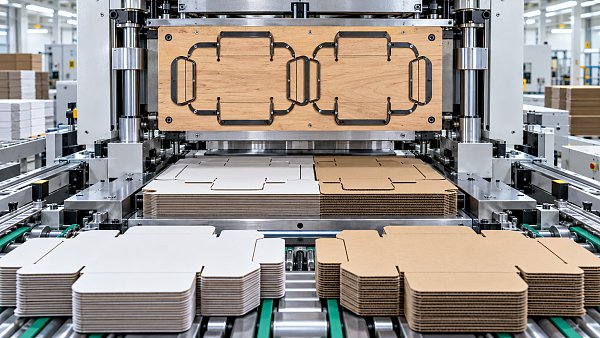
The choice between flatbed and rotary tooling follows the converting platform, but technical evaluation should go further than that basic distinction. The selected construction must fit the machine’s mounting system, cutting bed or anvil condition, pressure characteristics, stripping configuration, and changeover workflow.
Flatbed die-cutting tools offer flexibility for many carton formats and can handle complex layouts. Their performance depends heavily on accurate make-ready, pressure balance, counter preparation, and the condition of the cutting plate or jacket. A flatbed tool that requires extensive manual adjustment may still be appropriate for a complex, lower-volume job, but it becomes less attractive where frequent job changes and predictable setup time matter.
Rotary systems can support continuous, high-throughput converting, yet they place strong demands on cylinder condition, mounting accuracy, anvil management, and material control. For corrugated work, the interaction between the rotary die, anvil surface, board compression, and stripping process must be reviewed as a system. Poor anvil condition or uneven cylinder pressure can shorten tool life and create quality defects that look like a die problem.
Run length changes the decision. For short, variable jobs, faster preparation, repeatable setup, and ease of adjustment may outweigh the theoretical life of a more durable construction. For recurring, high-volume work, tool longevity, regrind strategy where applicable, replacement lead time, and consistent quality over long runs carry greater weight. The evaluator should separate occasional peak volume from the normal order pattern; selecting for an exceptional job can add cost and complexity to every routine job.
Assess Stripping and Ejection as Part of the Tool Package
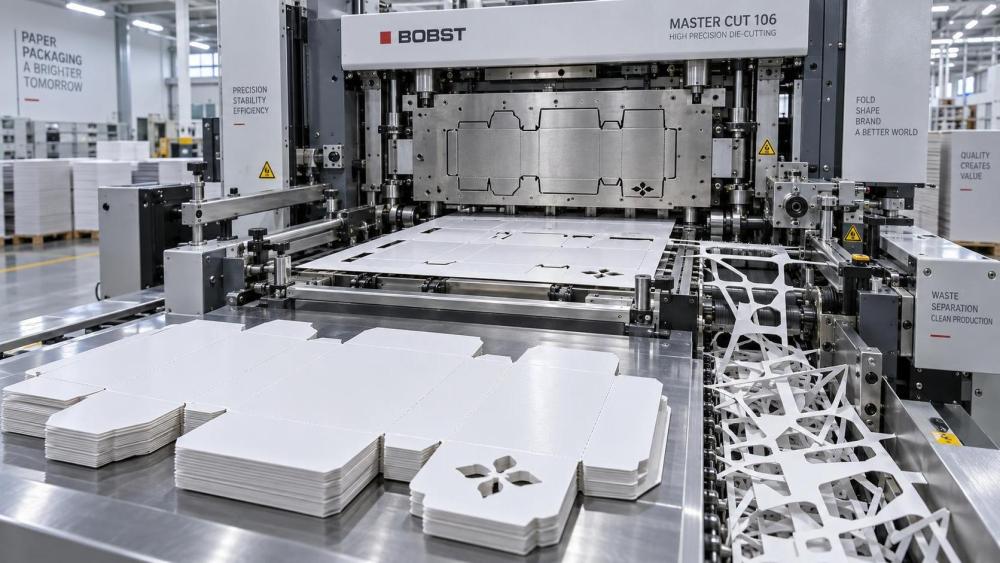
A clean cut is of limited value if waste cannot be removed consistently. Stripping and ejection are especially important for cartons with windows, internal holes, dense layouts, and narrow skeletal waste. They should be considered during tool design, not added after a trial reveals delivery problems.
The task is to ensure that the blank releases at the correct moment while waste is positively separated. Ejection material must support the sheet without marking it, interfering with crease lines, or causing unstable delivery. Stripping elements need enough engagement to remove waste, while avoiding damage to fragile panels or printed surfaces. The appropriate arrangement varies with board stiffness, coating, blank geometry, press speed, and the waste pattern.
There is a practical trade-off here. More aggressive stripping may improve removal on a difficult layout but increase sensitivity to board variation or raise the risk of tear-out. More conservative stripping can protect the blank while leaving occasional waste retention at higher speeds. Technical teams should specify the intended operating condition: acceptable output at a reduced trial speed is different from reliable separation at normal scheduled production speed.
For printed cartons, inspect the whole delivery process for scuffing, marking, and deformation. Tooling evaluation that focuses only on cut edges can miss defects introduced by ejectors, stripping pins, belts, or stack handling.
Compare Cost Through Yield, Intervention, and Usable Life
Purchase price is an incomplete measure of tooling cost. The more relevant comparison is the cost of producing acceptable cartons over the tool’s useful operating life. That includes setup time, make-ready materials, operator intervention, rejected sheets, unplanned stoppages, maintenance effort, storage requirements, and the consequence of quality drift near the end of a run.
A lower-cost tool can be the correct choice for simple, short-run work if it sets quickly and delivers the required finish. A higher-specification design can justify its cost where poor edges trigger customer rejection, where downstream automation is sensitive to crease variation, or where repeated stoppages consume scarce machine time. The decision should be made from the job’s quality and production economics, not from a general assumption that either premium or low-cost tooling is always preferable.
Request a comparison that makes its assumptions visible. It should state expected material range, anticipated run profile, critical quality features, recommended maintenance, and the conditions that may reduce life. A quotation that provides only a broad life claim without describing the operating conditions is difficult to compare meaningfully.
It is also useful to define the replacement trigger in advance. Replacement should not wait for obvious breakage if declining edge quality, rising pressure requirements, or more frequent stripping intervention begins to reduce yield. Monitoring these signals gives maintenance and production teams a shared basis for deciding when a tool has stopped being economical.
Use a Representative Production Trial Before Standardizing
For a new tool supplier, a complex carton design, or a move to a different board grade, trial work should resemble production as closely as possible. Use the intended printed or unprinted stock, representative sheet condition, normal operating speed, actual stripping setup, and downstream folding process. Evaluate samples from the beginning and later stages of the run, since a tool that starts cleanly may drift as pressure, heat, debris, or material behavior changes.
The review should involve the people who see different parts of the result: die-cutting operators, quality personnel, tooling specialists, and downstream production teams. Their observations answer different questions. Operators see setup burden and stoppages; quality teams see dimensional and visual consistency; folder-gluer or packing teams see whether the converted blank performs as intended.
Precision tooling selection becomes more reliable when the purchase specification is built from those production conditions. The objective is not to buy the most elaborate die. It is to establish a repeatable cutting, creasing, stripping, and delivery process that produces cartons cleanly at the speed, yield, and maintenance level the plant can sustain.
Related News
 How Flatbed Steel Rule Dies Improve Cut Accuracy and Changeover SpeedFlatbed steel rule dies improve cut accuracy, crease quality, waste release, and changeover speed. Discover practical tooling tips for reliable, efficient converting.Post-Press Kinematics Expert
 How Platen Presses Support Precise Foil Stamping and Die CuttingPlaten Presses deliver precise foil stamping, clean die cutting, and reliable creasing for premium packaging. Discover setup practices that improve quality and reduce waste.Post-Press Kinematics Expert
 How Pre-Breaking Units Reduce Cracking in Die-Cut Carton FoldsPre-Breaking Units help reduce cracking in die-cut carton folds by easing bend stress, improving fold accuracy, and supporting high-speed carton production.Post-Press Kinematics Expert
 How a High Pile Feeder Reduces Downtime in Die-CuttingHigh pile feeder solutions reduce die-cutting downtime, improve sheet supply stability, and help packaging plants increase throughput with fewer interruptions.Post-Press Kinematics Expert
 Carton Die Cutting for Folding Cartons That Reduces Setup WasteCarton die cutting for folding cartons reduces setup waste with stable registration, reliable creasing, smarter tooling, and repeatable production control.Post-Press Kinematics Expert
 How to Choose Hardened Die Cutting Knives for Longer Production RunsHardened die cutting knives for longer runs: learn how to balance hardness, edge profile, consistency, and total conversion cost for reliable results.Post-Press Kinematics Expert