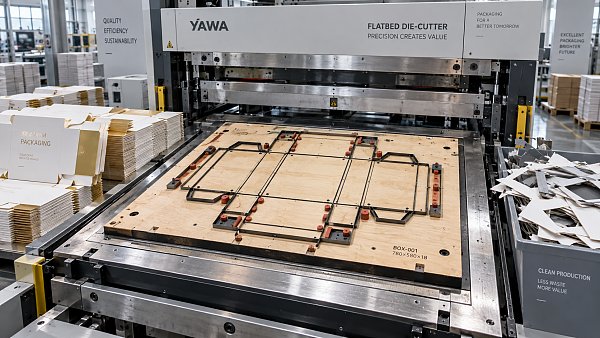
How to Compare a Corrugated Die Cutter Manufacturer Before Ordering
A corrugated die cutter can look comparable on a quotation while creating very different operating results after installation. The risk usually appears when a plant begins running mixed board grades, tighter delivery schedules, repeat orders with strict fit requirements, or frequent design changes. A machine that reaches an attractive stated speed but requires repeated stops for feeding, registration, stripping, or make-ready can weaken the economics of the purchase.
The practical way to compare a corrugated die cutter manufacturer is to assess the supplier against your actual production conditions, not against brochure specifications alone. Start with the board formats, flute profiles, job mix, tolerances, order frequencies, labor availability, and downstream requirements that the machine must handle. Then compare how each manufacturer proves accuracy, stability, changeover capability, service readiness, and total operating cost.
Begin with the jobs that create the most pressure
A general machine comparison often fails because the sample job is too easy. Standard RSC shipping cases on uniform board may not expose weaknesses in feeding, creasing, stripping, or registration. The more useful approach is to identify the jobs that consume the most setup time, generate the most waste, or cause the most customer complaints.
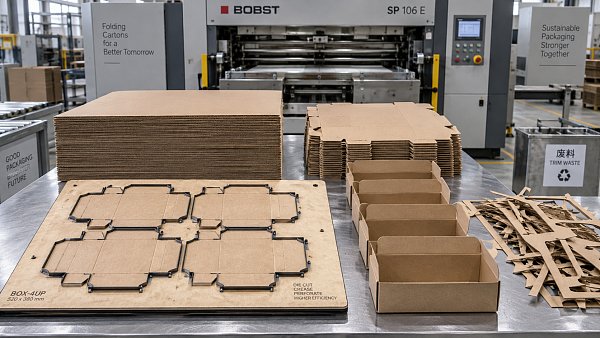
These may include small blanks that are difficult to transfer, warped sheets, high-graphics printed board, heavy double-wall material, intricate display packaging, cartons with narrow crease panels, or repeat designs that must match an existing die-cut profile. The selected manufacturer should explain how its machine handles these conditions rather than simply confirming that the format falls within a nominal size range.
Prepare a job profile before requesting proposals. It should include the minimum and maximum sheet size, board thickness range, flute types, paper quality variation, printed and unprinted work, typical batch size, required die-cut and crease quality, stripping needs, and target daily output. Also record whether blanks feed into a folder gluer, bundling line, robotic handling cell, or manual packing operation. A die cutter that performs well by itself may still create bottlenecks at delivery or downstream transfer.
Separate rated capacity from usable capacity
Rated strokes per hour are useful, but they are not production capacity by themselves. Usable capacity depends on the time required to prepare a job, load tools, set feeder conditions, establish registration, adjust stripping, remove waste, inspect output, and recover from interruptions. A manufacturer should be able to discuss these factors in operational terms.
Ask each supplier to clarify the conditions behind its stated speed. Is the speed achieved on a simple blank or on a representative carton design? Does it include stripping? Which board type was used? Were operators making continuous adjustments? Is the delivery configuration suitable for the stated output? Answers that remain limited to a maximum mechanical speed should be treated carefully.
Examine accuracy as a system, not a single specification
Die-cut accuracy is influenced by more than the platen or cutting station. Sheet feeding, side and front registration, gripper control, board flatness, die condition, stripping alignment, machine frame rigidity, and operator adjustment all affect the final blank. A supplier that quotes a tolerance without discussing these interacting conditions is providing only part of the picture.
Request a technical explanation of the registration path from feeder to delivery. For printed corrugated work, ask how the system maintains alignment between printed graphics, cut lines, creases, and waste removal. For unprinted transport packaging, focus on score consistency, slot location, fold behavior, and the ability to maintain blank geometry across board variation.
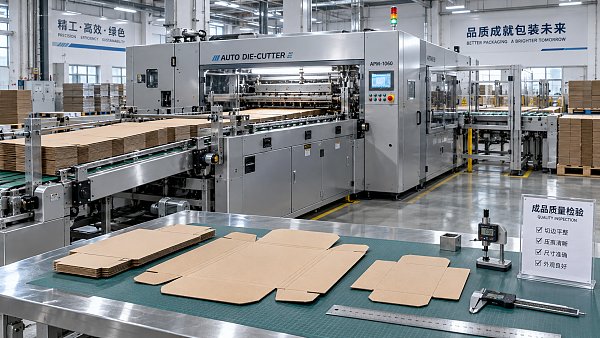
The cutting and creasing result should also be reviewed with downstream use in mind. A crease that appears acceptable at the delivery table may crack during folding, create uneven panels at gluing, or reduce case squareness after erection. When comparing manufacturers, provide samples or drawings that show critical fold lines, narrow panels, hand holes, locking tabs, and areas where board compression must be controlled.
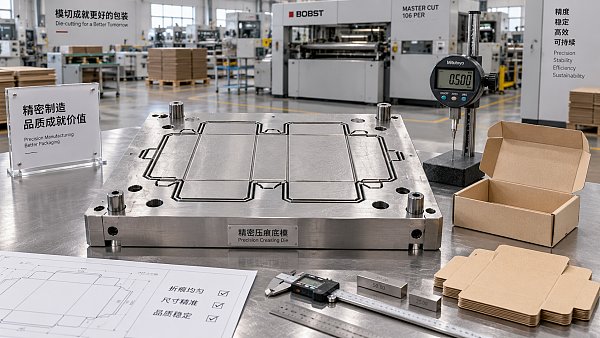
Ask whether the manufacturer can explain the relationship between die design, counterplate or make-ready preparation, pressure distribution, and board structure. This is especially relevant when processing double-wall or heavy board, where excessive pressure can damage the liner while insufficient pressure leaves incomplete cutting or poor creasing. The right response is not a generic promise of “high precision,” but a clear explanation of setup limits and adjustment methods.
Look closely at feeder behavior and sheet control
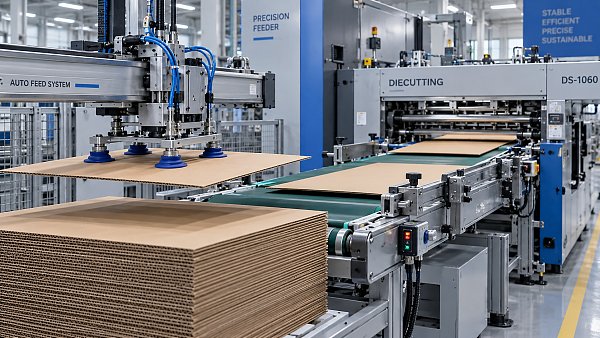
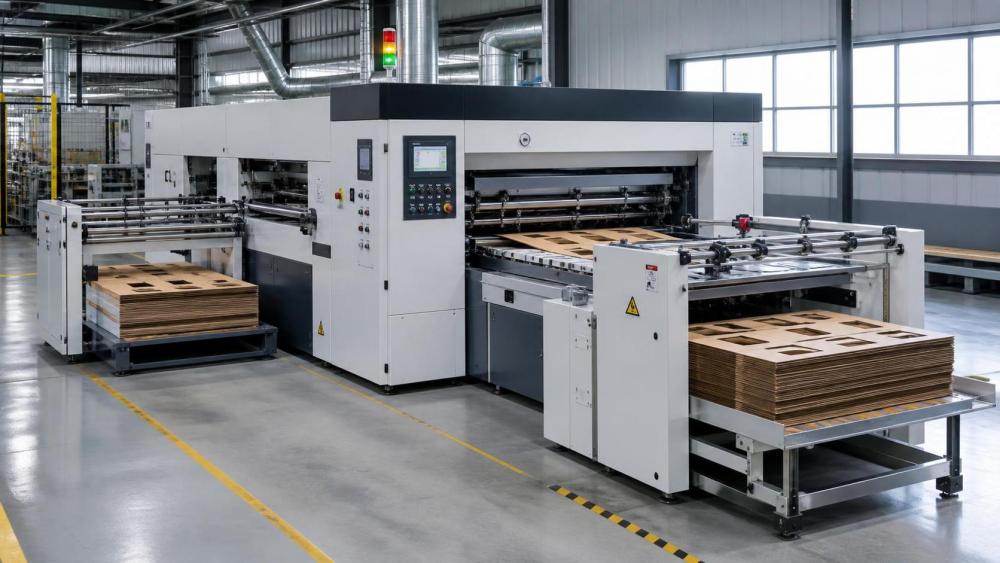
Feeding is frequently where theoretical output becomes inconsistent output. Corrugated sheets vary in flatness because of moisture balance, storage conditions, flute direction, print coverage, and prior converting operations. A feeder must handle the expected material range without creating double sheets, missed sheets, skew, crushed edges, or registration drift.
During a technical review, discuss the feeder type, separation method, vacuum or mechanical control, sheet transport surfaces, detection devices, and adjustment points. The manufacturer should state what happens when sheets are curled, bowed, dusty, or slightly warped. No machine can eliminate every material problem, but the supplier should define the workable boundary and identify what material preparation may be required.
Do not assume that a large maximum sheet format proves good performance on small blanks. Small sheets can be less stable during transfer, particularly where a complex die creates uneven resistance during cutting and stripping. Conversely, wide sheets may reveal insufficient rigidity, uneven pressure, or delivery problems. Compare performance across the actual range your plant expects to run.
Compare changeover design against the order mix
A plant running long, repeating orders may accept more manual preparation than one serving short-run retail displays or mixed SKU programs. The machine should match the order profile. Purchasing a highly automated configuration for mostly stable work can add cost without a proportional return, while choosing a basic configuration for frequent job changes can lock in avoidable labor and downtime.
Ask the manufacturer to distinguish between tasks performed during normal running and tasks required between orders. Important points include die mounting, stripping frame preparation, feeder adjustment, side guide setting, delivery setup, pressure preparation, registration adjustment, and parameter recall. Find out which job data can be stored, what still depends on operator judgement, and whether stored settings remain reliable when board grades change.
- Request a step-by-step changeover sequence for a typical repeat job and a new job.
- Identify which tools must be prepared off-machine and which adjustments stop production.
- Ask what operator skills are needed to achieve the intended changeover performance.
- Clarify whether stripping and blanking tools are included in the workflow or handled as separate preparation work.
- Check whether the control interface records alarms, production counts, and job settings in a way that supports production planning.
These questions are more revealing than asking for a single changeover time. A stated time may exclude die preparation, tool transport, first-sheet approval, or waste adjustment. The real concern is the repeatable elapsed time from the final good sheet of one order to the first approved sheet of the next.
Assess stripping, blanking, and delivery as production controls
For simple shipping cases, a basic waste removal arrangement may be sufficient. For display packs, retail-ready packaging, or layouts with multiple internal cutouts, stripping can become the limiting process. Loose waste can obstruct delivery, damage finished blanks, create safety issues during clearing, or force the operator to lower running speed.
Review the stripping configuration against your dies. Determine whether the system supports the level of internal waste removal required, how stripping components are aligned, and how easily pins, blocks, or frames can be changed. Where automatic blanking is relevant, evaluate the stack quality and separation of finished blanks rather than assuming automatic output is always beneficial. Poorly formed stacks can create labor later in packing or folding.
Delivery design deserves the same scrutiny. A stable pile, consistent counting, accessible sample inspection, and controlled transfer to the next process reduce handling disruption. Ask what type of delivery is standard, what options are available for difficult blanks, and how the system prevents edge damage or stack instability at higher speeds.
Test the manufacturer’s engineering depth before signing
Technical capability becomes visible in the quality of questions a supplier asks before proposing a machine. A serious manufacturer normally wants to understand the board, dies, artwork registration requirements, factory layout, utilities, safety interfaces, material flow, and operator practices. A proposal prepared without these details may contain hidden assumptions that only become apparent during commissioning.
Review the quotation line by line. Confirm the exact feeder, cutting format, stripping arrangement, delivery equipment, automation modules, safety guards, electrical standard, tooling scope, installation boundary, training scope, and commissioning responsibilities. “Included” should mean a defined component or service, not an expectation based on a sales discussion.
Pay particular attention to interfaces. If the die cutter receives sheets from a printer or laminator, determine how format changes and board orientation are controlled. If it sends blanks to a folder gluer or conveyor, confirm stack orientation, height, transfer method, buffer capacity, and communication signals. Integration problems are often not caused by the main machine alone; they arise between otherwise capable machines.
Evaluate service in terms of recovery time
Service is not only a warranty statement. When a feeder sensor fails, a drive alarm interrupts production, or a cutting issue cannot be resolved through normal adjustment, the business impact depends on how quickly the plant can diagnose and recover. Compare the manufacturer’s service structure in the regions where the equipment will operate, including remote support, field technician availability, documentation quality, spare-part identification, and escalation procedures.
Ask for a recommended spare-parts list divided into commissioning items, wear parts, and production-critical components. Understand which parts are standard industrial items and which are proprietary. It is reasonable to ask about expected lead-time procedures without demanding unsupported guarantees. The key is to establish whether the supplier has a practical plan for keeping the machine recoverable.
Training should cover more than startup operation. Operators and maintenance personnel need to recognize poor feed conditions, abnormal registration behavior, cutting-pressure issues, stripping faults, lubrication requirements, and alarm logic. Determine whether training includes the actual tools and board types planned for production, since generic training may not prepare a team for difficult work.
Use a weighted comparison instead of a lowest-price decision
A structured scorecard helps prevent a low purchase price from overshadowing recurring costs. Weight the factors according to operational risk. A plant with short runs may assign greater importance to setup and job recall. A converter serving high-graphic retail work may place more weight on registration control. A business with limited maintenance coverage may value service access and spare-parts strategy more heavily.
Useful comparison categories include technical fit for the job mix, demonstrated output on representative work, changeover workflow, die and stripping compatibility, feeder stability, installation requirements, integration capability, operator skill demand, maintenance accessibility, support response process, consumable needs, and total cost over the intended operating period.
Before placing the order, turn the final discussion into documented acceptance criteria. The criteria should describe the agreed machine configuration, board range, relevant job types, required functions, installation responsibilities, training, and the method for confirming performance during commissioning. This does not remove every production variable, but it reduces the chance that the buyer and manufacturer are working from different definitions of capability.
The strongest choice is rarely the supplier with the most impressive isolated specification. It is the manufacturer whose machine design, process knowledge, support model, and proposal assumptions align most clearly with the work your operation must run day after day.
Related News
 How to Calculate Short Run Die Cutting Costs Before Placing an OrderCalculate short run die cutting costs before you order. Learn how tooling, setup, material waste, and finishing affect your budget—and compare quotes to avoid hidden charges.Post-Press Kinematics Expert
 How a High Accuracy Sheet Feeder Reduces Misfeeds in Die CuttingDiscover how a high accuracy sheet feeder reduces die-cutting misfeeds, waste, and downtime. Learn how to choose the right system for more reliable production.Post-Press Kinematics Expert
 How to Choose a Platen Die Cutter Manufacturer for Reliable OutputChoose a platen die cutter manufacturer with proven output. Discover how material trials, service support, and clear acceptance criteria help reduce downtime and protect your investment.Post-Press Kinematics Expert
 How to Choose a Counterplate Manufacturer for Accurate CreasingChoose a counterplate manufacturer that delivers accurate creasing. Learn how to assess channel design, production trials, and repeatability to reduce setup waste and improve folding.Post-Press Kinematics Expert
 How Flatbed Steel Rule Dies Improve Cut Accuracy and Changeover SpeedFlatbed steel rule dies improve cut accuracy, crease quality, waste release, and changeover speed. Discover practical tooling tips for reliable, efficient converting.Post-Press Kinematics Expert
 How Platen Presses Support Precise Foil Stamping and Die CuttingPlaten Presses deliver precise foil stamping, clean die cutting, and reliable creasing for premium packaging. Discover setup practices that improve quality and reduce waste.Post-Press Kinematics Expert