How to Compare Platen Die Cutters for Corrugated Board Production
Choosing a platen die cutter for corrugated board is rarely a simple question of finding the fastest machine or the lowest quoted price. For a procurement team, the real decision is whether the machine will keep producing saleable blanks across the board grades, order patterns, die designs, and staffing conditions found in the plant. A machine that looks economical in a quotation can become expensive when it creates excessive make-ready waste, struggles with warped sheets, requires frequent manual adjustment, or cannot support the next stage of automation.
That is why a useful comparison starts with the converting job, not the brochure. A platen die cutter for corrugated board may be used for regular shipping cartons, shelf-ready packs, die-cut mailers, heavy-duty industrial packaging, display work, or mixed short-run production. Those applications place very different demands on feeding, cutting pressure, creasing consistency, stripping, delivery, and operator intervention.
For buyers reviewing flatbed die-cutting equipment, the practical question is: where will this machine sit in the factory flow, and what problems must it remove without creating new bottlenecks downstream?
Start with the board range, not the nominal machine format
Machine format is an obvious screening point, but it is not enough to compare maximum sheet dimensions. Procurement teams should map the actual production mix: minimum and maximum blank size, flute profiles, board thickness, liner quality, moisture variation, pre-printed versus post-printed sheets, and the proportion of warped or bowed material entering conversion.
Corrugated board is less forgiving than many paperboard substrates. A sheet may appear flat at the corrugator or flexographic press, then change shape after storage or as ambient conditions shift. On a platen die cutter, feeding stability and accurate sheet presentation often matter as much as the cutting station itself. If the supplier demonstrates the machine only with clean, uniform samples, ask to see how its feeder, front lays, side guides, and sheet separation behave with representative production board.
The press must also have a suitable pressure range and adjustment system for the intended board grades. Excess pressure may crush flutes, weaken compression performance, or create visibly harsh creases. Too little pressure produces incomplete cutting and inconsistent folding lines. The best setup is not necessarily the machine with the highest stated force; it is the one that can apply pressure repeatably and allow the operator to maintain a stable die-cutting window across normal material variation.
Separate rated speed from usable production speed
Catalog speed is useful as a technical reference, but it should not be treated as plant capacity. A platen machine may reach its published cycles per hour under favorable conditions: a stable sheet, a simple layout, a well-prepared die, limited stripping complexity, and few interruptions. Real output is determined by the entire operating cycle—loading, register correction, pressure adjustment, waste removal, delivery handling, and job changeover.
This distinction becomes especially important for plants handling e-commerce packaging or retail programs with many SKUs. A converting department can lose more time between jobs than during the actual cutting run. In that environment, a slightly lower nominal speed may be commercially preferable if the machine offers faster setup, accessible adjustment points, reliable preset functions, and simpler tool changes.
Ask suppliers to explain how they define production speed and what conditions apply. It is reasonable to request a demonstration plan based on several representative jobs rather than one ideal sample. Include at least one standard carton, one more demanding internal cut or perforation pattern, and one shorter order where make-ready time is visible. The purpose is not to trap the supplier. It is to understand the operating reality that the quotation alone cannot show.
Compare the cutting, creasing, and stripping system as one process
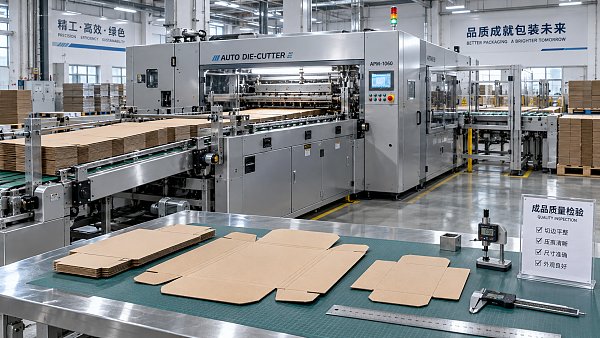
Die-cut quality is usually discussed in terms of accuracy, but corrugated converters need a wider view. The finished blank must cut cleanly, crease predictably, strip without tearing, and travel to the next operation without excessive manual sorting. A good-looking sample at the delivery end can still be a poor result if the blank cracks during folding or if operators must rework waste bridges by hand.
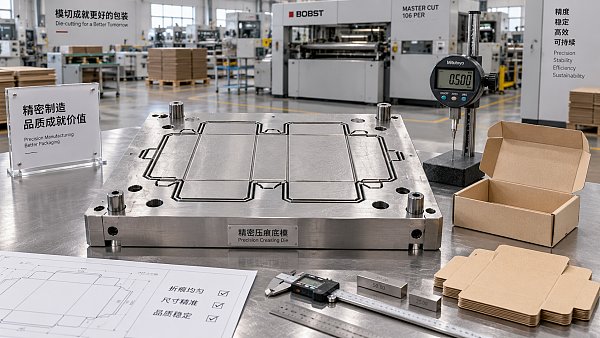
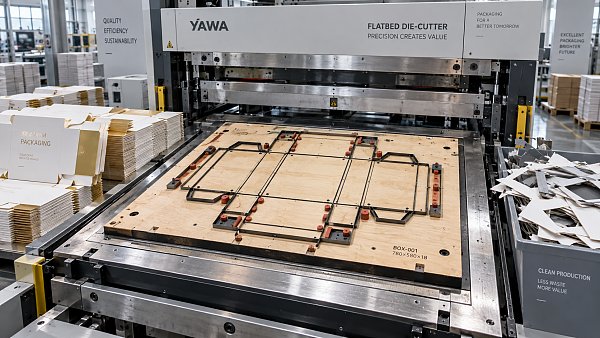
Inspect the platen structure, locking method, chase arrangement, and the practical accessibility of the cutting area. These details affect die mounting time, operator safety, and the consistency of pressure adjustment. For plants that use multiple die suppliers, it is also worth confirming tool compatibility and the process for setting up existing dies. A low machine price can be offset quickly if the plant must alter tooling practices or replace a large part of its die inventory.
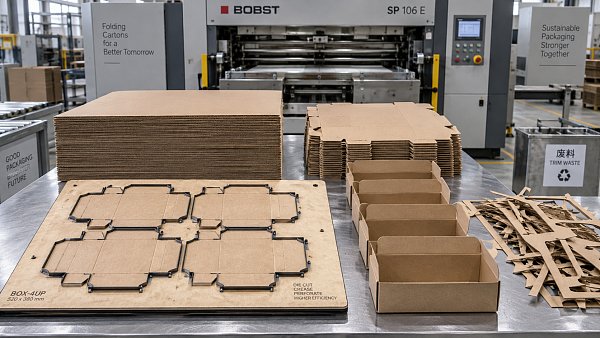
Stripping deserves more attention than it often receives during purchasing. Simple outer trimming is one thing; complex internal waste, small tabs, narrow slots, and display-style designs are another. The stripping configuration should be assessed against the difficult jobs that currently consume labor or slow the line. If the business intends to move toward more retail-ready packaging, internal cut-outs and presentation features may become more common, making stripping flexibility a capacity issue rather than an optional extra.
Automation should solve a proven constraint
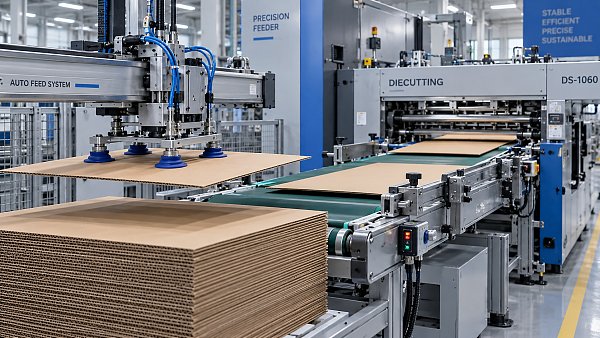
Automatic feeding, pre-feeding, stripping, blank separation, delivery logistics, and pallet handling can all be valuable. But automation should be selected because it addresses a measurable operating constraint, not because it makes the specification sheet look more advanced.
For example, an automatic feeder can improve consistency where manual loading causes frequent pauses or inconsistent sheet presentation. It may offer less benefit if the real restriction is a slow die change process or a downstream folder gluer that cannot accept the output. Likewise, automatic palletizing may make sense where finished stacks are repetitive and labor availability is a persistent concern, but it requires a stable delivery pattern and enough floor space for safe material flow.
Integration matters. A platen die cutter should be evaluated as part of the converting cell, including upstream printing or board supply and downstream folding, gluing, bundling, inspection, or palletizing. CPCS tracks this broader production-system view because isolated machine comparisons can miss the cost of handoffs, buffer storage, rejected blanks, and manual quality checks.
Look beyond purchase price to the cost of keeping the machine productive
The capital price is only one element of the decision. A more useful procurement review includes installation requirements, utilities, operator training, spare parts, consumables, planned maintenance, service response arrangements, and expected downtime exposure. None of these items should be estimated casually. They need to be clarified with the supplier and matched to the plant’s own service capability.
Parts availability is particularly important for corrugated packaging plants operating tight delivery schedules. Ask where critical spares are stocked, which items are considered wear parts, what preventive-maintenance tasks are expected from the operator, and whether remote diagnostics are available. The quality of the answers often says more about supplier readiness than a generic promise of “after-sales support.”
Energy use should also be considered in context. The relevant question is not merely the connected load. Buyers should understand the machine’s operating requirements, idle behavior, auxiliary systems, and whether the expected output justifies the installed capacity. A machine that is oversized for current order volumes may carry unnecessary operating and maintenance burden, even if it leaves room for future growth.
Supplier evaluation is a technical exercise, not only a commercial one
When comparing suppliers, procurement should involve production, maintenance, quality, and—where applicable—prepress or tooling personnel early. Each group notices a different risk. Production may focus on make-ready and delivery stability. Maintenance will look at access, component quality, lubrication, electrical documentation, and fault recovery. Quality teams will ask whether register and crease consistency can be verified across a run. Tooling personnel may identify compatibility issues that would otherwise surface after installation.
A structured factory acceptance discussion can prevent misunderstanding. The agreed test should define the board types, die designs, required output condition, acceptable inspection method, included accessories, and the responsibilities for commissioning. It is also sensible to confirm what is excluded: civil work, air supply, extraction, electrical connection, operator training duration, tooling, software interfaces, or production consumables.
Be cautious when a supplier presents a very broad machine range but gives limited detail about the exact configuration offered. “Automatic,” “high speed,” and “intelligent control” are not purchasing specifications. Request a configuration list that distinguishes standard equipment, selected options, and site-dependent interfaces. That document becomes useful later when comparing quotations that initially appear similar.
A practical comparison method before placing the order
A sensible shortlisting process is to score each machine against the jobs that generate most volume, most margin, and most operational difficulty. Those are not always the same jobs. Standard shipping cartons may drive volume, while short-run die-cut mailers or display packs create the most setup pressure. A machine selected solely around one category may leave the plant with an expensive gap elsewhere.
Create a comparison sheet that includes board range, practical format range, feeder design, register method, cutting and creasing adjustment, stripping capability, delivery arrangement, job changeover tasks, control functions, integration needs, utilities, maintenance access, service model, and commercial terms. Then attach evidence: demonstration observations, technical drawings, supplier confirmations, and references that can be verified directly. This makes the final decision easier to defend internally than relying on headline speed or a discounted offer.
The right platen die cutter for corrugated board is the one that matches the factory’s real production pattern and can maintain that match as order complexity changes. A disciplined buyer does not ask only, “What can this machine do?” The more valuable question is, “What can it do consistently, with our board, our dies, our operators, and our delivery commitments?”
Related News
 How to Calculate Short Run Die Cutting Costs Before Placing an OrderCalculate short run die cutting costs before you order. Learn how tooling, setup, material waste, and finishing affect your budget—and compare quotes to avoid hidden charges.Post-Press Kinematics Expert
 How a High Accuracy Sheet Feeder Reduces Misfeeds in Die CuttingDiscover how a high accuracy sheet feeder reduces die-cutting misfeeds, waste, and downtime. Learn how to choose the right system for more reliable production.Post-Press Kinematics Expert
 How to Choose a Platen Die Cutter Manufacturer for Reliable OutputChoose a platen die cutter manufacturer with proven output. Discover how material trials, service support, and clear acceptance criteria help reduce downtime and protect your investment.Post-Press Kinematics Expert
 How to Choose a Counterplate Manufacturer for Accurate CreasingChoose a counterplate manufacturer that delivers accurate creasing. Learn how to assess channel design, production trials, and repeatability to reduce setup waste and improve folding.Post-Press Kinematics Expert
 How Flatbed Steel Rule Dies Improve Cut Accuracy and Changeover SpeedFlatbed steel rule dies improve cut accuracy, crease quality, waste release, and changeover speed. Discover practical tooling tips for reliable, efficient converting.Post-Press Kinematics Expert
 How Platen Presses Support Precise Foil Stamping and Die CuttingPlaten Presses deliver precise foil stamping, clean die cutting, and reliable creasing for premium packaging. Discover setup practices that improve quality and reduce waste.Post-Press Kinematics Expert