How to Choose a Flatbed Die Cutting Press Manufacturer for Reliable Output
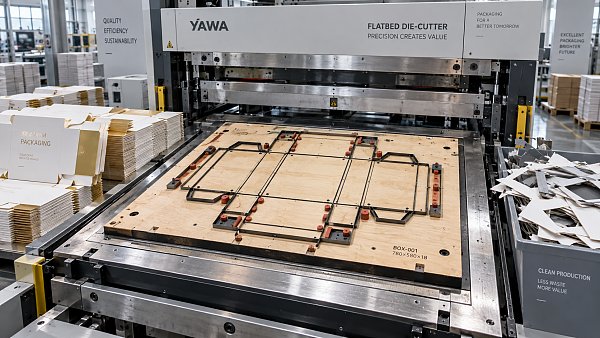
Selecting a flatbed die cutting press manufacturer is a production decision that will affect quality, waste, delivery performance, and maintenance workload for years. The lowest quotation can look attractive at the approval stage, but reliable output comes from the way the press feeds sheets, holds register, controls pressure, removes waste, supports changeovers, and performs after thousands of production hours.
A good machine can produce clean cartons on a stable, repeatable basis. A poorly matched machine may still run during a factory demonstration, yet create costly problems later: inconsistent creasing, damaged printed sheets, difficult stripping, frequent stops, long setup times, or dependence on a single experienced operator. The right supplier is therefore not simply the one offering the fastest stated speed. It is the one that can show how its equipment performs with materials, order patterns, tooling, and finishing requirements close to your own.
For a quick decision rule: choose a manufacturer only after confirming that its press has proven performance on your actual board grades and carton designs, that its service response and spare-parts process are clear, and that its automation level matches the work flowing through your plant. A press should be judged by usable output, not headline speed.
What to Ask a Flatbed Die Cutting Press Manufacturer Before Comparing Prices
Begin with the work, not the brochure. Define the sheet sizes, board types, calipers, printed surface conditions, carton styles, and expected daily order mix that the press must handle. A machine selected mainly for one large-volume carton may become inefficient when the plant also handles short runs, frequent design changes, delicate metallized board, laminated stock, or cartons with demanding stripping requirements.
Send each candidate manufacturer the same production brief. It should include representative samples, dielines where possible, expected lot sizes, current bottlenecks, and downstream requirements such as folder-gluer feeding or inspection. This makes quotations more comparable and exposes whether the supplier understands converting rather than merely assembling a machine.
Ask direct questions that require evidence:
- Which board grades and thickness ranges have been run on comparable installations?
- Can the supplier demonstrate feeding, die-cutting, stripping, and delivery using representative stock?
- What output figure is realistic after setup, quality checks, stoppages, and pile changes?
- Which consumables and wear parts need routine replacement, and what is the normal supply route?
- How are installation, commissioning, operator training, and remote troubleshooting handled?
- Can the press exchange job data or status information with existing workflow, inspection, or production-management systems?
Vague responses should be treated as a warning sign. A supplier does not need to promise perfection on every stock, but it should be able to describe operating limits honestly and explain how it addresses known risks.
Reliable Output Starts With Mechanical Stability
Die-cutting quality is often discussed as though it depends only on the cutting die. In practice, press condition and design determine whether a good die can perform consistently. Poor sheet control, uneven pressure, weak registration, or unstable gripper handling can turn an otherwise sound tooling job into a daily adjustment exercise.
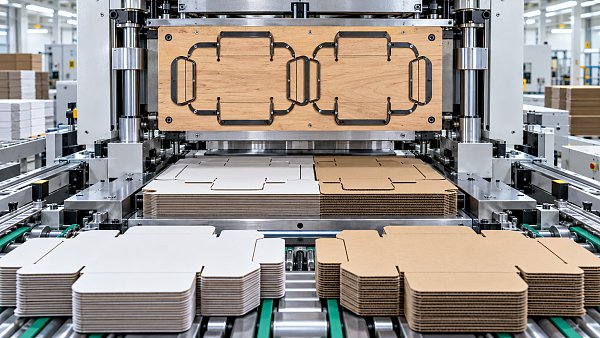
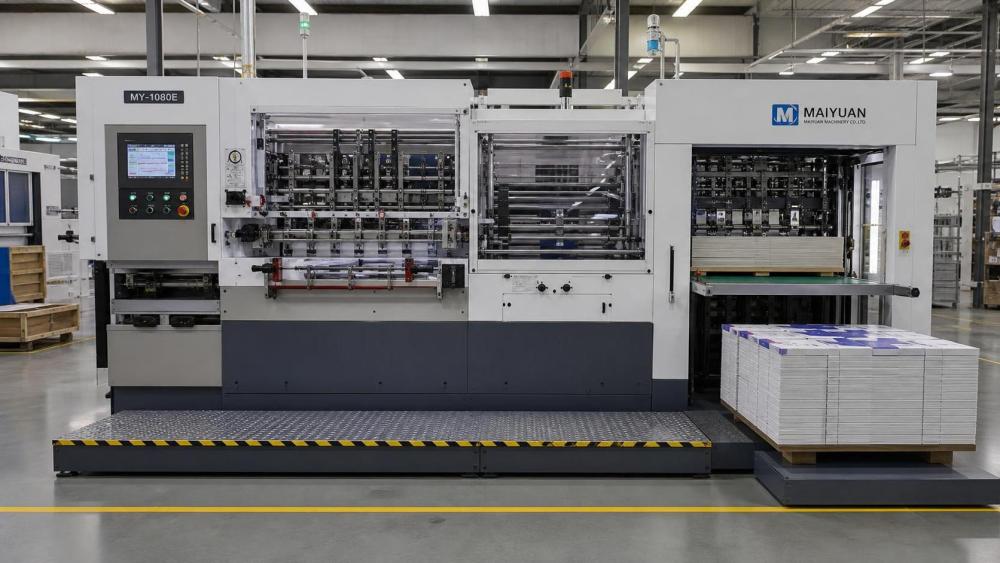
Look closely at the feeder, front and side lays, gripper system, platen pressure control, and delivery section. Their purpose is simple: every sheet needs to arrive in the same position, remain under control through the cutting station, and leave without scuffing, distortion, or pile instability. This becomes especially important on pre-printed sheets, cartons with tight graphic tolerances, and jobs where barcode placement or legal text must stay aligned.
Ask the manufacturer to explain how the machine handles warped board, static, powder residue, coated surfaces, and mixed material behavior. These are ordinary production conditions, not edge cases. A press that runs smoothly only on flat, clean, uniform sheets in a demonstration room gives limited confidence for real factory work.
Creasing quality deserves the same attention as cutting accuracy. Cartons may look acceptable immediately after die-cutting but fail later at folding because creases crack, are too shallow, or vary across the sheet. Check whether the supplier can support pressure setting, make-ready procedures, and tooling guidance for the substrates you use. The manufacturer should understand the interaction between board structure, grain direction, crease rule selection, counter material, and folding performance.
Do Not Treat Rated Speed as Production Capacity
Maximum cycles per hour are useful as a reference, but they are not the same as saleable output. Real capacity is reduced by job setup, die changes, stripping setup, feeder adjustments, inspection holds, delivery handling, and unplanned stops. A press with a slightly lower rated speed may deliver more acceptable sheets per shift if it is easier to set up and keeps running steadily.
This distinction matters most in plants handling many short or medium runs. If ten jobs must be completed in a day, a machine that saves meaningful time at every changeover can outperform a faster press that takes longer to prepare. Conversely, a long-run producer with stable carton formats may benefit more from high-speed operation, automatic non-stop feeding and delivery, and robust waste-removal capability.
Request a production trial that includes more than one job. A useful trial begins with a fresh setup, includes a material change or a design change, and continues long enough to reveal feeder behavior and waste stripping consistency. Record setup time, acceptable-sheet yield, operator intervention, reject causes, and the condition of the finished pile. This is more valuable than watching a press run one prepared job for a few minutes.
Choose Automation for the Order Mix You Actually Have
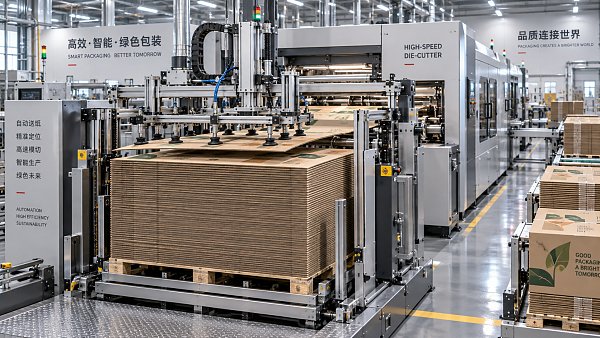
Automation is not automatically a better investment. It is valuable when it removes a repeatable constraint in your own workflow. Automatic feeder and delivery functions can reduce manual intervention on higher volumes. Automated setting features may be justified where order changes are frequent. Inline inspection can be worthwhile where print-to-cut registration, codes, or critical graphics create a high rework risk.
But added automation also brings more controls, sensors, maintenance needs, and training requirements. A facility with limited technical support should not assume that every advanced option will improve uptime. The key question is whether the supplier has a practical commissioning and support plan for the selected configuration.
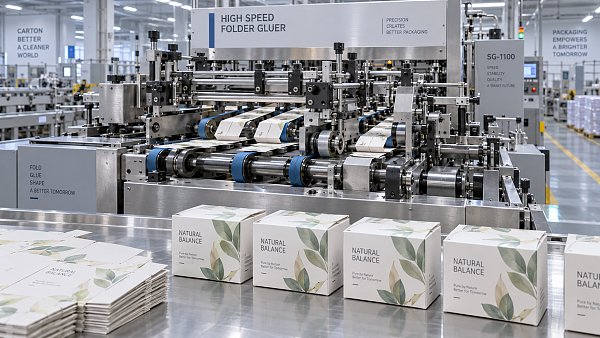
Consider the entire finishing line. The die-cutter may be only one constraint between printing, stripping, blanking, folding, gluing, inspection, and packing. If the delivery pile is difficult for the next process to handle, or if the press cannot communicate useful production status, the investment may solve one bottleneck while moving another downstream.
CPCS, a B2B information platform covering commercial print, corrugated packaging, converting equipment, and packaging factory automation, approaches equipment evaluation as a system question. That perspective is useful here: die-cutting performance should be assessed alongside material flow, job scheduling, quality control, labor availability, and the requirements of the equipment that follows it.
Service Capability Is Part of the Machine Specification
Many purchasing decisions give service too little weight because it is harder to compare than press dimensions or rated speed. Yet a delayed sensor, unavailable gripper component, unclear software diagnosis, or poorly managed installation can cost more than a modest difference in purchase price.
Ask for a written outline of the support model. It should clarify who handles commissioning, whether local engineers or trained partners are available, how remote support works, which parts are stocked regionally, and how technical issues are escalated. Avoid relying on general statements such as “global service network.” Ask for the process that applies to your installation location.
Training should cover more than basic start-up. Operators need to understand feeder adjustment, register correction, pressure balancing, stripping setup, fault recognition, daily inspection, and safe recovery after a stop. Maintenance staff need documentation, lubrication requirements, wear-part lists, electrical and pneumatic diagrams, and access to troubleshooting support.
A credible manufacturer will also discuss preventive maintenance openly. Presses that use high loads and repetitive motion need disciplined care. If the supplier presents maintenance as minimal or unnecessary, that is not a strength. It may indicate that the lifecycle discussion has not been serious enough.
Check References in Conditions Similar to Yours
Reference visits remain one of the strongest parts of due diligence. Try to visit a site producing comparable work, not simply a flagship installation. Observe the machine during normal production if possible. The useful details are often small: how often the operator touches the feeder, whether waste strips cleanly, how quickly the crew handles a routine stop, how the delivery pile looks, and whether the surrounding area suggests orderly maintenance.
Ask the reference user about installation quality, training depth, response during the first months, parts availability, and the gap between promised and achievable output. Questions about challenges usually produce more useful answers than questions about satisfaction. Every press has limitations; the important issue is whether those limitations were understood before purchase and supported after installation.
Be careful with references selected only for brand recognition. A well-known customer may run a different product mix, have a larger maintenance department, or operate with more specialized staff than your site. Similarity of operating conditions matters more than the size of the reference name.
Common Mistakes That Create Long-Term Cost
The first mistake is buying by nominal speed. The second is selecting a machine size without checking the full range of sheet formats and stripping layouts. Another common error is assuming that a press designed for folding cartons will perform equally well on every corrugated or heavier board application. Flatbed die-cutting is versatile, but material behavior, sheet condition, and carton design still set practical limits.
It is also risky to approve a machine based on a clean sample pack alone. Finished samples show that a result was achieved once. They do not show setup time, reject rate, operator effort, or whether that quality remains stable throughout a shift.
Finally, do not leave acceptance criteria until after the order is placed. Agree them in advance. They may include the substrates to be tested, permitted registration tolerance where relevant, cutting and creasing appearance, stripping performance, delivery condition, safety functions, training scope, documentation, and commissioning responsibilities. Exact technical thresholds should be agreed against the actual product specification rather than copied from a generic checklist.
A Practical Way to Make the Final Selection
Shortlist manufacturers only after the production brief is complete. Then score each proposal against the same criteria: application fit, demonstrated quality, usable throughput, changeover performance, automation relevance, service coverage, spare-parts approach, installation plan, and expected operating demands. Purchase price should remain visible, but it should not dominate the decision.
Where two suppliers appear technically close, choose the one that is more transparent about constraints and more precise about how the press will be supported in your environment. Reliable output is rarely created by a single feature. It comes from a well-matched machine, capable tooling, trained operators, stable materials, and a manufacturer that remains accountable after delivery.
The right flatbed die cutting press manufacturer should be able to prove that relationship with samples, trials, references, documentation, and a service plan tailored to the application. That is the basis for lower waste, dependable carton quality, and an investment that continues to make commercial sense after the initial purchase decision.
Questions Often Raised During Selection
Should a factory choose a flatbed or rotary die-cutter?
It depends on the product mix, board type, quality requirement, and run length. Flatbed presses are often considered where precise cutting, creasing, complex carton geometry, and stripping are central requirements. Compare actual jobs rather than choosing by machine category alone.
How important is a factory acceptance test?
It is one of the most useful risk-control steps. The test should use agreed materials and define what acceptable cutting, creasing, register, stripping, delivery, and operating stability look like before shipment.
Is a fully automatic press always the best choice?
No. Automation needs to match order volume, labor conditions, changeover frequency, technical capability, and downstream handling. Features that are rarely used can add cost and maintenance without improving effective output.
What should be included in the spare-parts discussion?
Confirm recommended start-up spares, high-wear parts, lead times, local availability, part identification, pricing terms, and the supplier’s process for urgent failures. A parts list without an availability plan is incomplete.
Related News
 How Flatbed Steel Rule Dies Improve Cut Accuracy and Changeover SpeedFlatbed steel rule dies improve cut accuracy, crease quality, waste release, and changeover speed. Discover practical tooling tips for reliable, efficient converting.Post-Press Kinematics Expert
 How Platen Presses Support Precise Foil Stamping and Die CuttingPlaten Presses deliver precise foil stamping, clean die cutting, and reliable creasing for premium packaging. Discover setup practices that improve quality and reduce waste.Post-Press Kinematics Expert
 How Pre-Breaking Units Reduce Cracking in Die-Cut Carton FoldsPre-Breaking Units help reduce cracking in die-cut carton folds by easing bend stress, improving fold accuracy, and supporting high-speed carton production.Post-Press Kinematics Expert
 How a High Pile Feeder Reduces Downtime in Die-CuttingHigh pile feeder solutions reduce die-cutting downtime, improve sheet supply stability, and help packaging plants increase throughput with fewer interruptions.Post-Press Kinematics Expert
 Carton Die Cutting for Folding Cartons That Reduces Setup WasteCarton die cutting for folding cartons reduces setup waste with stable registration, reliable creasing, smarter tooling, and repeatable production control.Post-Press Kinematics Expert
 How to Choose Hardened Die Cutting Knives for Longer Production RunsHardened die cutting knives for longer runs: learn how to balance hardness, edge profile, consistency, and total conversion cost for reliable results.Post-Press Kinematics Expert