How to Choose a Die Cutting Knife Supplier for Reliable Output
A reliable die-cutting result begins with a supplier that understands the job as a production condition, not merely as a knife profile. A cutting rule that performs well on one carton board, press format, or machine setup can create rough edges, incomplete cuts, excessive make-ready time, or premature failure in another. The right die cutting knife supplier should be able to translate the converting requirement into a suitable combination of rule material, bevel, height, hardness, bend accuracy, joint quality, and delivery condition.
Unit price remains relevant, but it is a weak indicator when viewed alone. A lower-cost knife can increase the real job cost if it requires more press adjustment, produces inconsistent stripping, damages the cutting plate, or causes rework after folding and gluing. Supplier selection should therefore start with the output required from the finished blank: clean cut edges, controlled crease behavior, stable registration, dependable stripping, and repeatable performance across the planned run length.
Start with the actual converting condition
Before comparing quotations, define the production conditions that the knife must handle. “Carton cutting” is not a sufficiently precise requirement. The substrate may be solid bleached board, coated duplex board, kraft liner, laminated sheet, microflute corrugated board, plastic film laminate, adhesive-backed material, or a printed sheet with varnish and foil. Each changes cutting resistance, compression behavior, dust generation, and the margin between a clean cut and a crushed edge.
The die-cutting method matters equally. Flatbed dies subject the rule to repeated vertical impact and compression. Rotary applications introduce different bending, mounting, and speed considerations. A supplier should ask which machine is used, the chase or cylinder dimensions, working pressure characteristics, expected speed, sheet size, and whether the work includes stripping, blanking, embossing, perforation, or creasing in the same pass. When these questions are absent, the proposed knife specification may be based on a generic assumption rather than the operating reality.
Material thickness should be discussed together with material structure. Two boards with a similar caliper can behave very differently when one has dense coating layers and the other has a more compressible middle layer. A blade that penetrates one stock cleanly may tear fibres on another, while a creasing rule selected only by height may crack a printed or coated surface during folding. The knife supplier does not need to control every part of the job, but should recognize where knife choice interacts with board, crease channel, rubbering, stripping layout, and machine pressure.
Read blade specifications as a system
Knife height, thickness, bevel type, hardness, and cutting edge geometry are often listed on product sheets. Those values are useful only when their relationship is understood. A narrow cutting rule can support detailed shapes and tight radii, yet it may be less tolerant of high compressive load or demanding board. A thicker rule can offer greater stability in large-format work, but it needs sufficient space in the die layout and may affect fine detail or stripping clearance.
Bevel selection deserves closer attention than it usually receives. The bevel influences penetration, edge durability, cutting pressure, and the way material separates after the cut. A sharper edge can reduce initial cutting force, which is useful for certain clean-cut requirements, but the edge may be less robust under abrasive or high-volume conditions. A more durable geometry may hold its edge longer, yet require a different press setting or backing condition. Neither is universally better. The relevant question is whether the supplier can explain why a proposed bevel matches the stock, run profile, and machine behavior.
Hardness also needs context. Higher hardness is commonly associated with wear resistance, but it can reduce tolerance for poor setup, difficult bending, or local overload. If the die incorporates small radii, intricate internal cuts, or frequent design revisions, forming quality and dimensional consistency may matter as much as edge life. Conversely, for repeated long runs on abrasive coated material, stable edge retention may deserve greater weight. A useful quotation distinguishes the base rule and edge treatment rather than presenting a single hardness claim as proof of suitability.
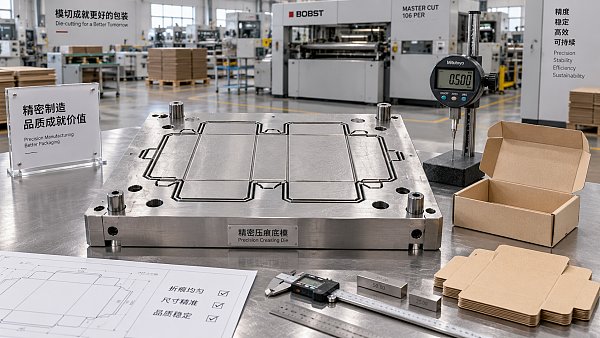
Ask whether supplied dimensions refer to nominal stock size, finished rule size, or a tolerance range after processing. Small differences in height can affect cutting balance across a die, particularly where cutting rule, crease rule, perforating rule, and specialty elements are combined. A supplier that documents tolerances and traceability by material batch gives the die-making process a more reliable starting point than one that only states a broad product category.
Evaluate forming accuracy, not just raw rule quality
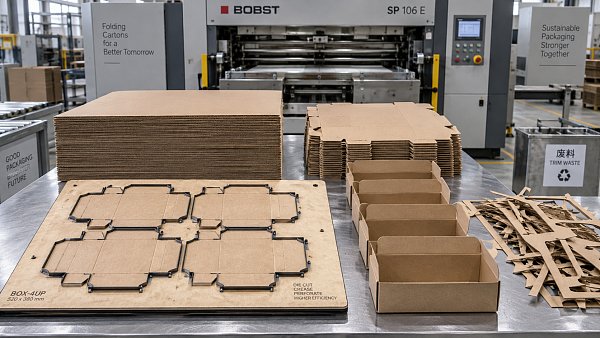
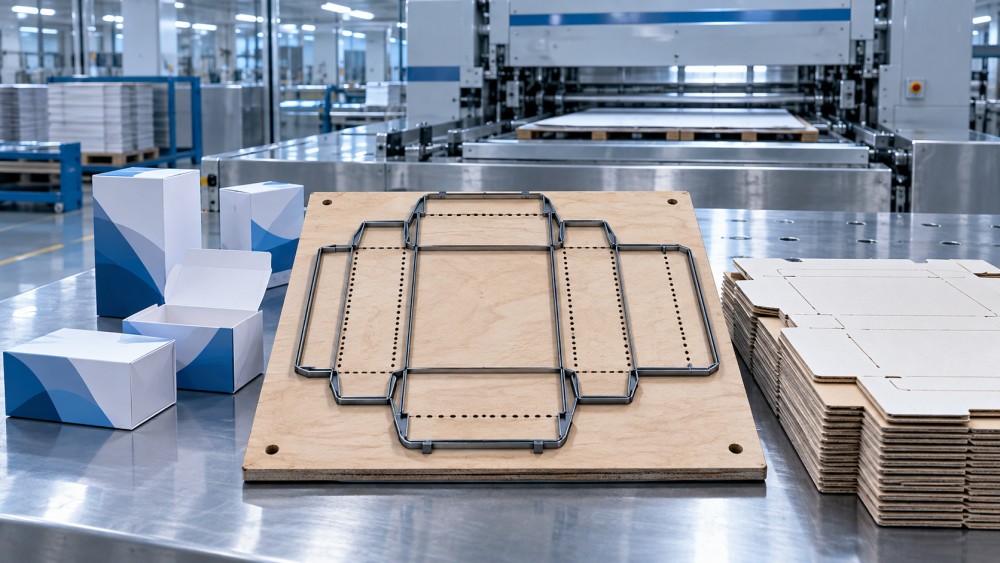
Even excellent steel can produce unreliable output when it is poorly bent, nicked, welded, or fitted. For formed die components, assess the supplier’s control over bend position, radius repeatability, joint alignment, and cut length. Tight internal contours, narrow bridges, and small text details place different demands on the rule than long straight cutting lines. Excessive deformation at a bend can alter the cutting edge, while inaccurate jointing can leave an unsupported point that shows up as a hanging chad, an incomplete cut, or irregular stripping.
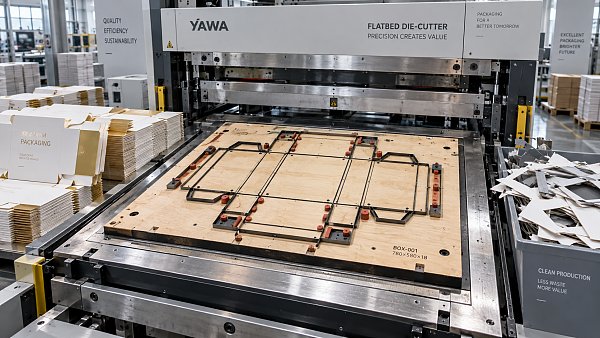
Laser-cut die boards and automated bending equipment can improve repeatability, but equipment names alone do not demonstrate a capable result. The important evidence is whether the supplier can work from the required drawing format, clarify ambiguous dimensions, maintain revision control, and return a formed layout that fits the board and stripping arrangement. A change in artwork, board grain direction, or waste bridge position can alter the die behavior. Reliable suppliers identify such changes before production rather than treating every revised file as a direct repeat order.
Examine the treatment of nicks carefully. Nicks hold waste in place until stripping, but their size and position affect both sheet stability and cut quality. Too little retention can allow waste to release early and interfere with delivery. Excessive or poorly placed nicks can leave visible tabs, tear coated stock, or make stripping unstable. The preferred nick pattern depends on blank geometry, substrate stiffness, delivery direction, and stripping configuration. A supplier should be able to discuss this as part of the die layout, not as an afterthought.
Separate cutting failures by likely cause
Many defects are incorrectly blamed on the cutting knife. A clean diagnosis prevents unnecessary changes in rule specification and avoids repeating the same problem after a new die is installed. Incomplete cutting across the whole sheet often points toward pressure, packing, platen condition, or height balance. A defect confined to one area may arise from localized board variation, uneven make-ready, a damaged rule section, or a die-board seating issue. Frayed cut edges can be related to a dull edge, but also to unsuitable bevel geometry, coated material behavior, or cutting against a worn counterplate.
This distinction should influence supplier discussions. A competent supplier does not automatically prescribe a harder knife after every wear complaint. The condition of the cutting plate, the cleanliness of the sheet, and the press setup can create similar symptoms. Requesting a structured failure review, supported by sample blanks, die details, and information on where the fault occurs, is more useful than asking for a stronger material without further evidence.
Test samples under representative conditions
A sample cut from a different substrate or evaluated at low speed provides limited assurance. Where output reliability is important, trial material should represent the intended board grade, coating, print treatment, and blank complexity. The evaluation should extend beyond the first acceptable sheet. Observe edge appearance, waste release, crease quality, cutting pressure stability, and whether adjustment increases as the run continues.
For a recurring design, retain a reference sample and record the rule specification, board type, counterplate condition, packing arrangement, and any local make-ready. This record makes future comparison more objective. It also reveals whether a performance change comes from a revised knife supply or from a different production condition. A supplier relationship becomes more dependable when both sides work from controlled reference information rather than memory.
Trial results should include difficult features, not only easy outer contours. Narrow slots, sharp corners, close-spaced cuts, small waste areas, coated fold lines, and areas next to heavy ink coverage are often where a die first reveals weakness. A sample that looks acceptable before folding may still fail later if the crease line cracks, the edge is compressed, or a small uncut section interferes with folder-gluer feeding.
Delivery reliability includes packaging and identification
Knife supply affects production scheduling, especially when a die must be repaired or rebuilt quickly. Lead time should be evaluated together with order acknowledgement, revision confirmation, dispatch communication, and the supplier’s ability to distinguish urgent replacement parts from standard replenishment. A promised delivery date has limited value if the wrong revision, incomplete set, or poorly protected formed rule arrives at the site.
Packaging should protect cutting edges and formed shapes from distortion during transport. Long rules need support that prevents bending; small intricate pieces need clear separation so that they are not tangled or damaged in handling. Each package should be identifiable by job reference, revision, profile, quantity, and component description. Where several rule types are used in one die, mixing them without clear labels adds avoidable assembly risk.
Availability of replacement lengths also matters. A supplier may be suitable for complete new dies but less useful when a short section must be replaced without altering adjacent elements. Discuss whether replacement rule can be matched to the original profile and whether the supplier retains relevant specification records. Substituting a visually similar rule with a different bevel, height, or edge condition can create local imbalance that is difficult to diagnose after installation.
Assess technical support through the quality of questions
Technical support is most valuable before an order is released and when a fault must be isolated quickly. Useful support is specific: it asks for material samples, machine details, die drawings, photographs of the defect, and the point in the process where failure appears. Vague advice to increase pressure or replace the rule may temporarily hide a problem while raising wear elsewhere in the die-cutting system.
Clarify how engineering changes are handled. A reliable process identifies the approved drawing revision, records material substitutions, and confirms deviations before production. This is particularly important for jobs with repeat orders, multiple delivery locations, or design updates issued close to a production date. A dependable die cutting knife supplier should make the supplied configuration visible enough that a later dispute can be traced to facts rather than assumptions.
Also consider support after installation. The relevant question is not whether assistance is advertised, but whether there is a practical route for reviewing a failed part, comparing it with the approved specification, and determining whether the cause lies in the knife, die construction, material, or machine condition. That process reduces repeated downtime far more effectively than an informal replacement policy.
Compare total operating exposure
Supplier comparison becomes clearer when the quotation is connected to the cost of output variation. Include the effects of make-ready time, material waste, die repair frequency, interrupted stripping, rejected blanks, and premature counterplate wear. These costs need not be estimated with false precision. The purpose is to distinguish a small purchase-price difference from a recurring production loss.
A practical comparison can assign greater importance to the conditions that are hardest to recover from. For a simple, low-volume blank, standard rule availability and delivery speed may dominate. For printed folding cartons with detailed stripping and sensitive crease appearance, profile consistency, forming accuracy, and technical response carry more weight. For abrasive or extended runs, edge durability and process stability become central. The supplier that fits the highest-impact conditions is usually the stronger choice, even when its initial quotation is not the lowest.
Reliable output comes from a controlled match between knife, die construction, substrate, press, and finishing path. Select the supplier that can define that match clearly, document it accurately, and maintain it when the job is repeated or changed.
Related News
 How to Calculate Short Run Die Cutting Costs Before Placing an OrderCalculate short run die cutting costs before you order. Learn how tooling, setup, material waste, and finishing affect your budget—and compare quotes to avoid hidden charges.Post-Press Kinematics Expert
 How a High Accuracy Sheet Feeder Reduces Misfeeds in Die CuttingDiscover how a high accuracy sheet feeder reduces die-cutting misfeeds, waste, and downtime. Learn how to choose the right system for more reliable production.Post-Press Kinematics Expert
 How to Choose a Platen Die Cutter Manufacturer for Reliable OutputChoose a platen die cutter manufacturer with proven output. Discover how material trials, service support, and clear acceptance criteria help reduce downtime and protect your investment.Post-Press Kinematics Expert
 How to Choose a Counterplate Manufacturer for Accurate CreasingChoose a counterplate manufacturer that delivers accurate creasing. Learn how to assess channel design, production trials, and repeatability to reduce setup waste and improve folding.Post-Press Kinematics Expert
 How Flatbed Steel Rule Dies Improve Cut Accuracy and Changeover SpeedFlatbed steel rule dies improve cut accuracy, crease quality, waste release, and changeover speed. Discover practical tooling tips for reliable, efficient converting.Post-Press Kinematics Expert
 How Platen Presses Support Precise Foil Stamping and Die CuttingPlaten Presses deliver precise foil stamping, clean die cutting, and reliable creasing for premium packaging. Discover setup practices that improve quality and reduce waste.Post-Press Kinematics Expert