How to Choose Laser Cut Steel Rule Dies for Clean Carton Cuts
A carton may look simple once it reaches the packing line, but the quality of its cut is decided much earlier—at the die specification stage. For technical evaluators, choosing laser cut steel rule dies is not merely a purchasing task. It is a decision that affects cut-edge cleanliness, crease consistency, carton geometry, stripping performance, waste rates, and the reliability of folding and gluing downstream.
The challenge is that two dies can appear similar on a quotation while behaving very differently on press. A die designed for short-run coated paperboard may not deliver the same result on abrasive recycled board. A fine-detail carton layout may require tighter rule placement, more carefully engineered bridges, and a more deliberate ejection strategy than a straightforward shipping carton. The right selection begins by connecting the die to the actual converting conditions rather than treating it as an isolated tool.
This guide provides a practical framework for evaluating laser cut steel rule dies for clean carton cuts, with attention to materials, rule geometry, die-board construction, supplier capability, and production realities.
Begin with the carton, not the die quotation
The most useful starting point is a complete description of the finished carton and the process that will produce it. Technical teams should avoid specifying a die based only on the artwork file or outside dimensions. The die must respond to the substrate, press configuration, run length, finishing requirements, and the carton’s behavior after conversion.
For folding cartons, key questions include board caliper, fiber composition, coating type, print coverage, grain direction, varnish or laminate layers, and the presence of foil or embossing. For corrugated packaging, flute profile, liner quality, board compression strength, moisture variation, and the direction of corrugation all matter. A clean cut on E-flute material may require a different cutting rule strategy from one used for double-wall corrugated board.
Also consider what happens after die-cutting. Does the carton pass through an automatic stripper? Will it be folded on a high-speed folder gluer? Are there narrow locking tabs, small hand holes, perforations, windows, or intricate internal cutouts? These features may determine whether a basic die build is sufficient or whether the project needs reinforced bridges, optimized rubbering, special stripping rules, or tighter manufacturing tolerances.
What “clean carton cuts” really means in production
Clean cutting is often reduced to the visual appearance of an edge. In reality, it is a broader production condition. A clean result means the cutting rule fully shears the material without excessive feathering, crushed edges, hanging fibers, incomplete cuts, delamination, or distortion around creases. It should also allow waste to release predictably and leave the carton blank stable enough for downstream handling.
On corrugated board, an apparently acceptable cut can still create problems if the liner is torn, the flute is crushed, or the blank loses squareness. On printed cartonboard, poor cutting may reveal itself as edge cracking, coating fractures, or visible chipping around high-value graphics. These defects are not always caused by the die alone, but the die specification is often where their prevention begins.
A technical evaluation should therefore look at the combined cutting system: die, counter plate or cutting plate, make-ready, press pressure, substrate condition, stripping arrangement, and operator setup. Laser cut steel rule dies perform best when these elements are treated as connected variables.
Rule selection: height, thickness, bevel, and edge condition
The cutting rule is the working edge of the die, and small differences in its profile can change the result significantly. Rule height must match the die-cutting equipment and the intended make-ready system. Inconsistent rule height across the die can lead to uneven pressure, incomplete cutting in some areas, and excessive compression in others.
Rule thickness is equally important. Thinner rule can support tighter radii and more intricate artwork, but it may be less suitable for heavy board or demanding production conditions. Thicker rule generally offers greater stability and durability, although it requires more space and may limit fine detail. The best choice is rarely the thinnest or heaviest option; it is the profile that fits the carton geometry and substrate resistance.
Bevel selection deserves close attention. Center-bevel cutting rule is commonly used where balanced cutting action is needed, while side-bevel configurations can help manage tight detail, difficult stripping, or directional cutting requirements. The angle and finish of the bevel influence penetration into the board and the release of the blank from the cutting surface. A poorly matched bevel may increase edge tearing or require excessive press pressure to achieve a full cut.
For demanding jobs, ask the die supplier how rule is selected for coated stock, recycled fiber content, laminated substrates, and corrugated combinations. “Standard rule” is not a complete technical answer when board characteristics vary from order to order.
Creasing rules should be evaluated alongside cutting rules
A carton can have perfectly cut edges and still fail in packing if its creases are weak, cracked, or poorly positioned. This is why laser cut steel rule dies should be reviewed as a cutting-and-creasing assembly, not just as a perimeter-cutting tool.
Creasing rule width, height, and profile must be matched to the board caliper and the receiving channel, matrix, or counter plate. If the crease is too aggressive, the board may split along the fold, particularly on heavily printed, coated, or laminated cartonboard. If it is too shallow, folding lines may wander or resist closing on the folder gluer. Corrugated substrates add another layer of complexity because the crease may need to bend liners and reshape flutes without creating a visibly crushed panel.
Technical evaluators should request confirmation that the supplier has considered crease-to-cut spacing, fold direction relative to grain, and the interaction between creasing rules and nearby fine cuts. Narrow panels, small dust flaps, and tightly nested designs are especially sensitive. Good die engineering protects the carton’s fold function before production discovers the problem.
The laser-cut die board affects accuracy and stability
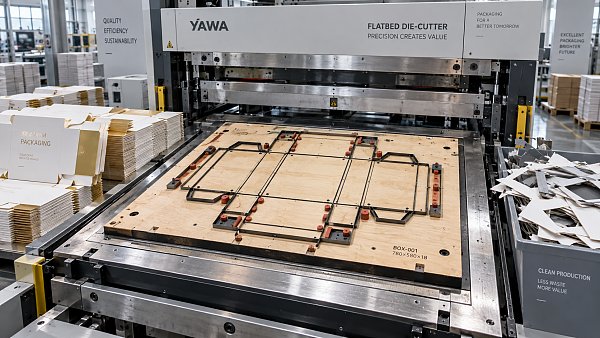
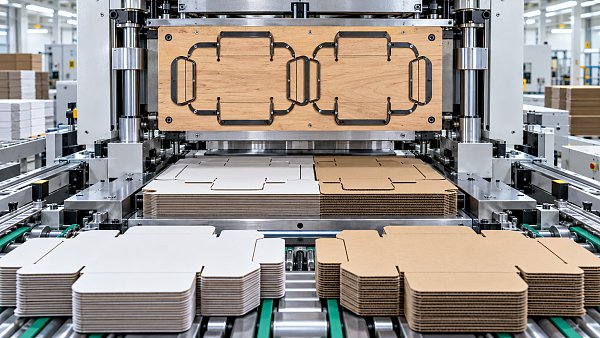
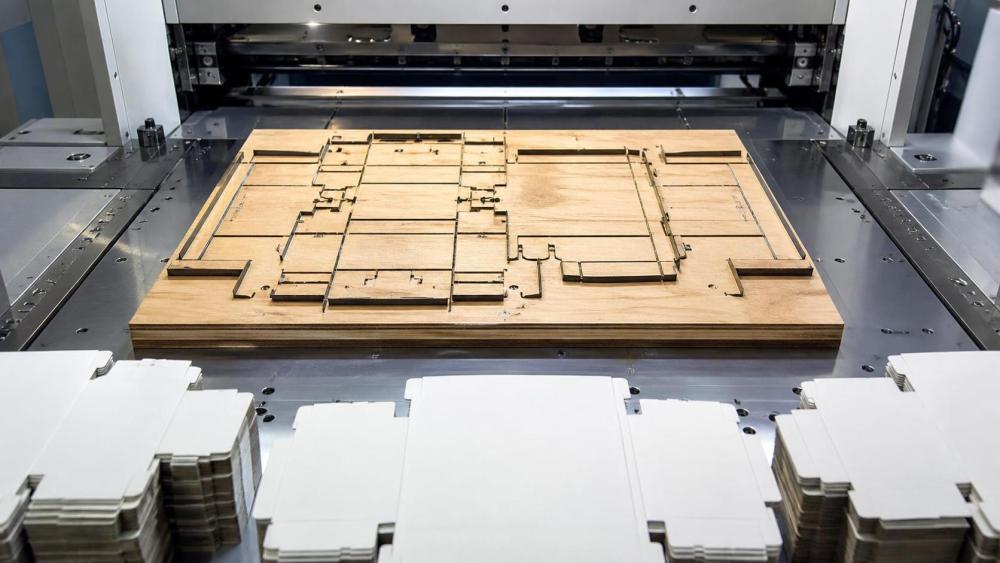
Laser cutting creates the slots that locate steel rules in the die board. Slot accuracy, kerf control, and board quality determine how securely the rules sit and how faithfully the die follows the digital layout. In a well-made die, rules are firmly retained, alignment is stable, and the finished tool remains flat under normal converting conditions.
Plywood is widely used for flatbed dies because it balances machinability, strength, and cost. Yet not all die boards perform the same way. Board thickness, density, layer consistency, moisture condition, and resistance to warping can influence rule retention and dimensional stability. For large-format dies or repeat production work, these details become more important because even modest movement can affect registration and cut quality.
Ask how the supplier manages laser kerf variation, especially in complex layouts with dense rule patterns. Excessively loose slots may reduce rule stability. Slots that are too tight can make rule insertion difficult and introduce stress into the board. The objective is controlled retention, not simply the fastest possible laser-cutting cycle.
Complex artwork needs a bridge and ejection plan
The more detailed the carton design, the less useful it is to judge a die only by its outline accuracy. Tiny apertures, rounded tabs, internal windows, sharp corners, and closely spaced cuts require careful bridge design. Bridges hold rule sections in position, but poorly placed bridges can create weak points, interfere with waste removal, or make rule replacement difficult.
Technical reviewers should look for a clear explanation of how the die builder handles fragile features. Are bridge locations chosen to protect rule stability without compromising the carton profile? Are narrow rule segments adequately supported? Has the supplier identified areas where the artwork may need a minor adjustment to improve manufacturability?
Ejection rubber is another part of the design, not an afterthought. Rubber type, height, hardness, and placement influence how the sheet releases after cutting. Too little ejection can lead to sticking, slow press operation, and unstable delivery. Too much or poorly positioned rubber can mark printed surfaces, distort small blanks, or push waste into the wrong path. High-coverage printing and delicate coated stocks often benefit from a more thoughtful rubbering layout than general-purpose work.
Match the die build to the converting equipment
A die that works well on one machine may require different preparation on another. Flatbed die-cutters, platen presses, and manual or semi-automatic converting equipment differ in pressure behavior, registration capability, stripping arrangements, and usable die size. The die must be compatible with the press, not just with the carton file.
Before approval, confirm the machine’s chase dimensions, die-board thickness requirements, rule-height standard, sheet travel direction, gripper margin, and stripping station configuration. If the job will move between plants or machines, identify the common tooling standard early. A technically correct die can still become an expensive delay if it does not fit the receiving equipment.
For corrugated packaging producers, it is also worth asking whether a flatbed steel rule die is the right production route at all. Laser cut steel rule dies are highly flexible for prototypes, short-to-medium runs, frequent design changes, and complex shapes. For very long repeat runs, a rotary die-cutting solution may offer different productivity advantages. The decision should reflect run profile, setup frequency, board format, and required finish—not habit.
A supplier review should go beyond lead time
Fast delivery matters, particularly when packaging launches are under pressure. However, a supplier’s value is better measured by the quality of its technical clarification process. A capable die maker will ask about material, machine, artwork revision status, stripping needs, crease performance, and production volume before finalizing the build.
Useful evaluation points include:
- CAD/CAM capability and ability to work from production-ready artwork files;
- experience with folding cartons, corrugated blanks, displays, or specialty packaging relevant to the job;
- control of rule height, slot quality, die-board flatness, and dimensional inspection;
- access to different cutting, creasing, perforating, and stripping rule profiles;
- recommendations for ejection rubber, matrix, counter plates, and make-ready materials;
- responsiveness when trial results require adjustment or replacement sections.
A supplier who flags a risk before manufacturing is often more valuable than one who simply accepts every drawing without comment. In technical purchasing, constructive questions are a sign of process understanding.
Use trials to verify the variables that drawings cannot show
Even the best specification cannot fully predict how a real substrate will respond at speed. A controlled trial is especially worthwhile for new board grades, premium printed cartons, difficult coatings, unusual flute combinations, or designs with fine structural features.
During the trial, inspect more than whether the blank separates. Check cut edges under normal lighting, fold and refold critical creases, review stripping behavior, measure key dimensions, and run samples through the intended folder gluer or packing process where possible. Look for buildup on rules, inconsistent penetration across the sheet, damage near printed graphics, and waste that fails to clear reliably.
Record the press setting, counter condition, substrate batch, and any make-ready adjustments. This information turns the trial into a repeatable setup reference rather than a one-time approval exercise. It also helps distinguish a die issue from a machine-pressure, material, or operator-setting issue.
Common selection mistakes that create avoidable waste
One frequent mistake is specifying the die before confirming the actual board. Nominal caliper alone is not enough; stiffness, coating, moisture, recycled content, and flute structure can change cutting behavior. Another is focusing on cut accuracy while overlooking crease quality and stripping. The result may be a blank that looks acceptable at the die-cutter but performs poorly during folding or packing.
Technical teams also sometimes accept a generic rule specification for highly detailed work, assuming laser cutting alone guarantees precision. Laser-cut slot placement is valuable, but clean results still depend on rule profile, bridge structure, rubbering, press compatibility, and practical artwork allowances.
Finally, do not treat die maintenance as separate from selection. Cutting rules dull, rubber compresses, boards can absorb moisture, and repeated handling can affect alignment. If the job is recurring, establish inspection points and replacement criteria from the start.
A practical decision path for technical evaluators
The most reliable choice of laser cut steel rule dies comes from a sequence of connected decisions: define the carton and material, verify the press conditions, select cutting and creasing rules as a system, assess die-board and bridge quality, plan ejection and stripping, then validate the result under realistic production conditions.
For packaging operations managing short runs, changing artwork, and tighter delivery windows, this discipline reduces the risk of discovering structural problems after printing has already been completed. It also supports a broader production goal: cleaner blanks, steadier converting performance, less material waste, and cartons that move through folding, gluing, coding, inspection, and packing with fewer surprises.
In a modern carton plant, the die is not a minor consumable. It is a precision interface between design intent and physical production. Choosing it with the same care given to printing, board selection, and automation will make clean cuts far easier to achieve—and far easier to repeat.
Related News
 How Flatbed Steel Rule Dies Improve Cut Accuracy and Changeover SpeedFlatbed steel rule dies improve cut accuracy, crease quality, waste release, and changeover speed. Discover practical tooling tips for reliable, efficient converting.Post-Press Kinematics Expert
 How Platen Presses Support Precise Foil Stamping and Die CuttingPlaten Presses deliver precise foil stamping, clean die cutting, and reliable creasing for premium packaging. Discover setup practices that improve quality and reduce waste.Post-Press Kinematics Expert
 How Pre-Breaking Units Reduce Cracking in Die-Cut Carton FoldsPre-Breaking Units help reduce cracking in die-cut carton folds by easing bend stress, improving fold accuracy, and supporting high-speed carton production.Post-Press Kinematics Expert
 How a High Pile Feeder Reduces Downtime in Die-CuttingHigh pile feeder solutions reduce die-cutting downtime, improve sheet supply stability, and help packaging plants increase throughput with fewer interruptions.Post-Press Kinematics Expert
 Carton Die Cutting for Folding Cartons That Reduces Setup WasteCarton die cutting for folding cartons reduces setup waste with stable registration, reliable creasing, smarter tooling, and repeatable production control.Post-Press Kinematics Expert
 How to Choose Hardened Die Cutting Knives for Longer Production RunsHardened die cutting knives for longer runs: learn how to balance hardness, edge profile, consistency, and total conversion cost for reliable results.Post-Press Kinematics Expert