How a Sheet Feeder for Paperboard Supports Faster Die Cutting
A reliable sheet feeder for paperboard is a critical link between material handling and high-speed die cutting. For operators, consistent sheet separation, accurate registration, and stable feeding directly influence die-cutting precision, machine uptime, and waste levels.
Understanding feeder performance helps packaging plants run demanding jobs faster while maintaining carton quality. The main point is simple: a die-cutter cannot perform consistently when sheets arrive inconsistently.
Why Feeding Stability Sets the Real Die-Cutting Speed
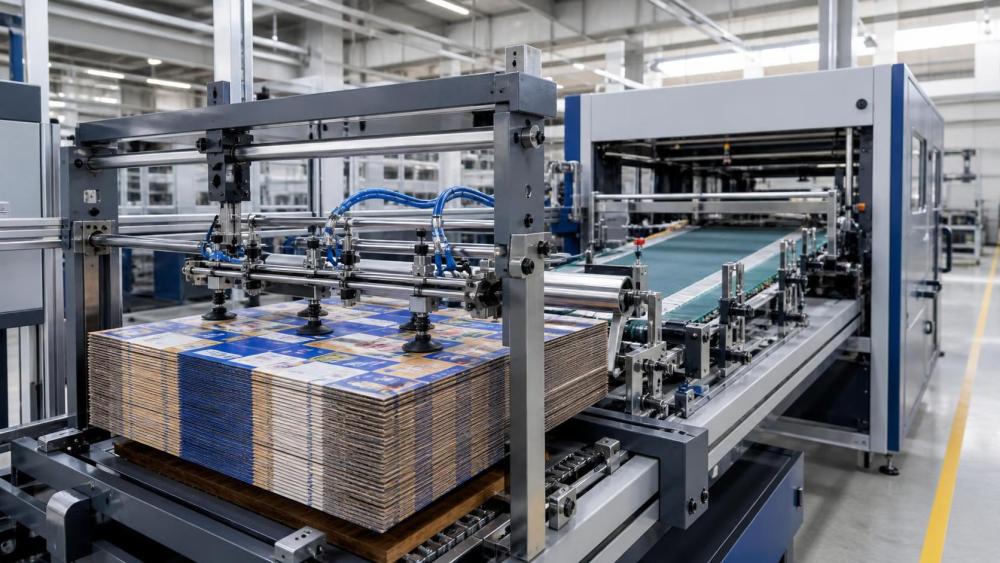
Operators often focus on the die-cutting section when production speed falls. However, many recurring slowdowns begin earlier, at the sheet feeder for paperboard.
A die-cutter may have sufficient mechanical speed, but unstable feeding forces operators to reduce the running rate. This protects registration, avoids jams, and prevents damaged sheets.
At high speed, every sheet must enter the machine at the correct time, in the correct orientation, and with controlled spacing from the next sheet.
If sheets overlap, skew, hesitate, or arrive with inconsistent timing, the downstream die-cutting process loses stability. Even small feed variations can create visible quality defects.
For carton, folding box, display, and paperboard packaging work, feed accuracy affects cutting position, crease alignment, stripping performance, and final blank consistency.
A stable feeder allows the operator to use more of the machine's available production capacity. It reduces the need for constant speed corrections during a run.
This does not mean every job should run at maximum speed. The right target is the highest stable speed that maintains quality and avoids repeated interruptions.
What a Sheet Feeder for Paperboard Must Control
A sheet feeder for paperboard does more than move material toward the die-cutter. It must separate sheets, transport them, register them, and deliver them predictably.
Separation is the first requirement. The feeder must lift or pull only one sheet at a time, despite variations in board surface, caliper, curl, and moisture.
Double-sheet feeding creates immediate risk. It can cause incomplete cutting, excessive pressure, damaged dies, stripping problems, or a machine stop that disrupts the entire job.
Transport stability is equally important. Feed belts, suction systems, wheels, brushes, and side guides must keep the sheet flat and controlled during acceleration.
Registration control ensures that the printed image, cut outline, crease line, and waste stripping pattern remain aligned. Poor registration turns acceptable printed sheets into waste.
The feeder must also accommodate board differences. Coated folding carton board, solid bleached sulfate, recycled board, duplex board, and laminated sheets do not behave identically.
Operators should treat feeder settings as material-specific production parameters, not as fixed machine settings that work equally well for every order.
How Stable Feeding Improves Die-Cutting Accuracy
Accurate die cutting depends on controlled sheet position at the moment the sheet reaches the cutting and creasing station. Feeding consistency makes that position repeatable.
When sheets enter skewed, side guides and front lays must correct more aggressively. At higher speeds, there is less time and tolerance for that correction.
Repeated sheet skew can produce cut-to-print misalignment, uneven trim margins, offset creases, and poor glue flap geometry. These defects affect downstream folding and gluing.
For printed cartons, registration errors are especially expensive. A small shift may expose unprinted edges, cut through graphics, or misplace barcodes and legal information.
A consistent feeder reduces the variation that downstream systems must absorb. This creates a more stable process window for the die-cutting, stripping, and delivery sections.
Operators can then make meaningful adjustments to die pressure, creasing rules, stripping pins, and delivery settings without constantly compensating for changing sheet behavior.
Better feeding also helps when running complex layouts. Tight tolerances, multiple windows, fine perforations, narrow waste bridges, and intricate carton shapes require stable sheet control.
Reducing Stops, Jams, and Waste During Long Runs
Production losses are not limited to obvious breakdowns. Short feeder stops, manual sheet corrections, and repeated re-starts can consume substantial time across a shift.
Each interruption may require the operator to clear sheets, inspect the die-cut section, reset the feeder, and confirm that registration remains within specification.
During frequent job changes, feeder instability also increases setup waste. Operators may need extra sheets to establish reliable separation, timing, and side-guide positioning.
A well-adjusted sheet feeder for paperboard reduces these hidden losses by maintaining consistent sheet pickup and transport after the initial setup is approved.
Waste reduction matters beyond material cost. Rejected printed sheets carry paperboard, ink, coating, printing time, labor, energy, and sometimes outsourced finishing costs.
Feeding reliability also protects delivery commitments. A job that stops repeatedly may miss its planned slot, disrupting folding, gluing, packing, and shipping schedules.
For operators, the practical goal is fewer interventions per thousand sheets. This is a more useful performance measure than maximum speed shown on the machine specification.
Paperboard Conditions That Commonly Cause Feeding Problems
Many feeder problems are material problems appearing at the machine. Before changing mechanical settings, operators should inspect the sheet stack and board condition.
Excessive curl can interfere with suction pickup, front-lay contact, and belt transport. Curl may result from humidity changes, uneven coating, printing, or storage conditions.
Static electricity can cause sheets to cling together, making separation difficult. It may also attract dust and create inconsistent delivery behavior at higher running speeds.
Surface finish matters as well. Smooth coated sheets can behave differently from rough uncoated board, while varnished or laminated sheets may require adjusted suction settings.
Board caliper variation can affect feeder timing, pile height control, and transport pressure. Mixed stock within one pile can create unpredictable performance during an otherwise stable run.
Dust, loose trim, and edge damage may block sensors or interfere with vacuum pickup. Clean stacks and orderly pile preparation are part of feeder performance.
Operators should also verify sheet squareness. Poorly trimmed sheets can create side-guide instability that no feeder adjustment can fully correct at production speed.
Practical Setup Checks Before Increasing Machine Speed
Fast die cutting starts with a disciplined setup routine. Increasing speed before confirming basic feeder settings often creates unnecessary stops and avoidable waste.
First, inspect the pile for sheet alignment, damaged corners, uneven stack height, and visible curl. Correct pile preparation before attempting to tune the machine.
Next, confirm that suction cups, feed belts, wheels, brushes, and separator components are clean. Dust buildup can reduce grip and create inconsistent sheet movement.
Set suction and air separation according to board weight, surface, and stiffness. Too little separation can cause missed sheets, while excessive air can disturb sheet alignment.
Check side-guide clearance carefully. Guides should control the sheet without creating drag, edge marking, or resistance that causes skew during transport.
Verify front-lay timing and sheet arrival. A sheet should register positively and consistently without bouncing, hesitation, or repeated impact against the front reference.
Run at a controlled speed first, inspect several samples, and then increase gradually. Watch not only cut quality but also feeder behavior between every cycle.
How Operators Can Diagnose Common Feeding Symptoms
Repeated double sheets usually point to insufficient separation, static, excessive vacuum, poor pile condition, or board surfaces that are sticking together.
Missed sheets may indicate low vacuum, blocked suction holes, worn cups, poor sheet lift, excessive board weight, or a pile that is not correctly positioned.
Skewed sheets often relate to uneven belt traction, misaligned side guides, poor pile alignment, board curl, or contamination on transport components.
Intermittent registration errors require a broader check. Review feeder timing, front-lay action, sheet edge quality, sensor condition, and whether the problem changes with speed.
Sheets marked by guides or wheels may be experiencing excessive pressure or friction. This is particularly important for coated, dark printed, or varnished carton materials.
When a fault appears only after extended running, inspect for heat, dust accumulation, gradual vacuum loss, pile height changes, or shifting material conditions.
Recording the material type, machine settings, speed, and observed symptom helps operators resolve repeat jobs faster and supports more consistent shift-to-shift performance.
Maintenance Practices That Protect Feeding Performance
Feeder maintenance should be planned around production risk, not only around visible failure. Worn parts often cause quality variation before they create a complete machine stop.
Suction cups should be inspected for hardening, cracks, contamination, and reduced flexibility. A worn cup may still work at low speed but fail during demanding runs.
Vacuum lines, filters, valves, and air controls require regular checks. Restricted airflow can create gradual pickup inconsistency that is difficult to identify during production.
Feed belts and transport wheels should remain clean and properly tensioned. Uneven traction is a common cause of sheet skew and timing variation.
Mechanical guides, bearings, shafts, and sensors also need inspection. Small amounts of play or misalignment can become significant when processing sheets at high cycle rates.
Maintenance teams should use operator feedback as diagnostic information. Operators often notice changes in sound, sheet movement, or adjustment sensitivity before alarms appear.
A simple preventive maintenance record can connect recurring feeder issues with specific materials, job types, components, or operating conditions across multiple production cycles.
Choosing the Right Performance Standard for Your Jobs
The best feeder configuration depends on the work mix. A plant running standard folding cartons faces different requirements from one producing laminated displays or heavy paperboard packaging.
High-volume repeat jobs benefit from stable preset recipes and documented material settings. Short-run work benefits from fast, clear adjustment points and responsive operator controls.
Plants handling diverse board grades should evaluate feeder flexibility, not only headline machine speed. Material adaptability often determines whether theoretical capacity becomes usable capacity.
For complex printed cartons, registration reliability may be more valuable than a small increase in cycles per hour. Fewer rejects can produce better overall output.
For less demanding unprinted packaging, robust sheet separation and reduced operator intervention may be the primary priorities. The correct balance depends on product requirements.
Operators should assess performance through usable output: accepted sheets, stable quality, low stop frequency, and manageable setup time over a complete production run.
This approach gives a more realistic view of feeder value than comparing nominal speed figures alone. Consistency is what allows die-cutting productivity to remain high.
Conclusion: Faster Die Cutting Begins Before the Die-Cutting Station
A sheet feeder for paperboard supports faster die cutting by delivering one correctly positioned sheet at a predictable time, cycle after cycle.
Reliable separation, transport, and registration reduce jams, protect die-cutting accuracy, lower waste, and help operators maintain stable production speed throughout the run.
For packaging operations, feeder performance should be treated as a core converting capability. Material preparation, setup discipline, cleaning, and maintenance all affect final output.
When operators understand the link between feeder behavior and downstream quality, they can solve problems earlier, run jobs more confidently, and achieve higher usable die-cutting capacity.