How a Sheet Feeder for Flatbed Die Cutter Reduces Setup Waste
How a Sheet Feeder for Flatbed Die Cutter Reduces Setup Waste
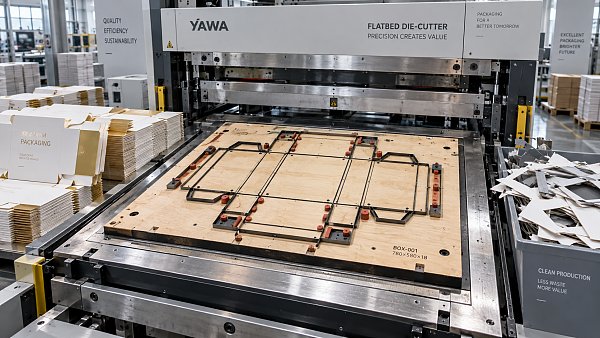
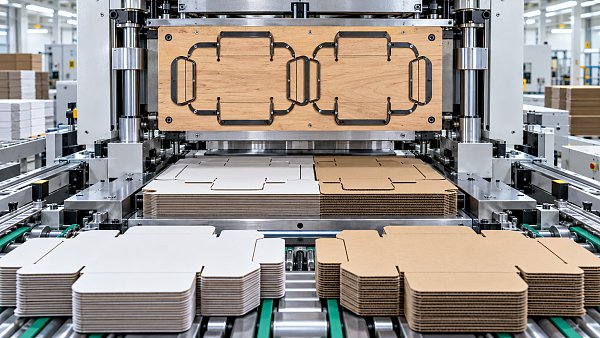
A sheet feeder for flatbed die cutter can significantly reduce setup waste by improving sheet alignment, feeding consistency, and changeover control before production reaches full speed. For operators handling short runs, tight tolerances, and frequent job changes, reliable feeding helps prevent misfeeds, damaged board, registration errors, and unnecessary stoppages. Understanding how feeder settings affect material use is essential for achieving stable die-cutting quality and lower operating costs.
In many carton and commercial print plants, setup waste is treated as an unavoidable part of die-cutting. A few sheets are expected to be lost while the operator checks register, adjusts side lays, confirms gripper position, and stabilizes stripping. Some loss is unavoidable, particularly when a new die, board grade, or printed design enters the machine. But repeated waste caused by unstable sheet delivery is different. It is often a feeder issue disguised as a die-cutting issue.
The first sheets through a flatbed die-cutter determine whether the rest of the setup will be controlled or reactive. If sheet arrival varies from cycle to cycle, the operator cannot tell whether a registration fault comes from the die, the printed sheet, the front lay, the side lay, or the feeder. Good feeding does not eliminate the need for careful setup. It gives the operator a stable starting point, so adjustments are based on real process conditions rather than random sheet movement.
Waste Begins Before the Sheet Reaches the Die
A flatbed die-cutter is usually judged by cutting pressure, creasing quality, stripping performance, and maximum running speed. Yet the machine can only work as accurately as the sheet presented to it. The feeder must separate one sheet from the pile, lift it without marking the surface, transport it without skewing, and place it at the registration section in a repeatable position. Any inconsistency in that sequence creates downstream uncertainty.
This is especially noticeable with printed folding carton board, laminated material, coated stocks, lightweight sheets, and corrugated board with variable flatness. Static electricity, sheet curl, warped edges, uneven pile height, surface friction, and moisture-related changes can all affect separation. A feeder may appear acceptable when running a simple, stable substrate, then become the source of expensive spoilage when a shorter, high-value job uses more demanding material.
Setup waste often grows in a familiar pattern. A sheet arrives slightly late or angled. The register correction is changed. The next sheet arrives differently, so the correction now appears wrong. The operator adjusts again, slows the machine, and sends more sheets through to confirm the result. When the fault is intermittent, this process consumes time and material without producing a reliable reference. The best response is not always another adjustment at the cutting section; it may be to return to the feeder and confirm sheet control first.
The Feeder Functions That Matter During Changeover
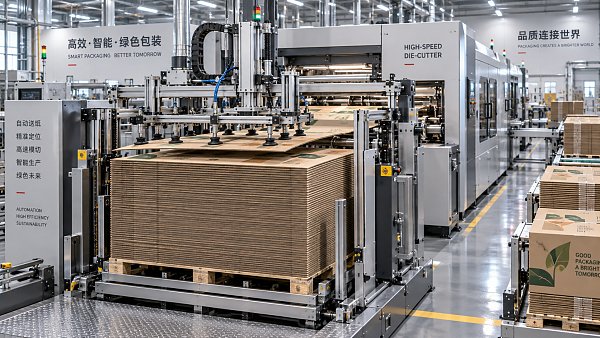
A sheet feeder for flatbed die cutter is not one component. It is a coordinated system that typically includes the pile platform, lifting control, separation head, suction elements, forwarding mechanism, sheet-detection devices, front registration, side registration, and timing controls. Exact machine designs differ, but operators should view these functions as a chain. A fault in one stage can be mistaken for a fault in another.
The pile must be prepared so that the top sheet is presented at a consistent height and the stack is square. If the pile is not properly jogged, side guides may correct only part of the problem. A skewed pile can cause the feeder head to lift unevenly, while sheets with raised corners may enter the transport path inconsistently. Operators sometimes focus on vacuum settings before checking pile condition, but the physical state of the load is often the more basic issue.
Separation is the next critical point. Too little suction may cause missed sheets; excessive suction or poorly positioned suckers can lift more than one sheet, deform lightweight stock, or leave marks on sensitive surfaces. Air settings are equally important. Separation air must help release the top sheet without disturbing the stack or causing flutter. There is no universal setting for all materials. A setting that works on one coated carton board may be unsuitable for a more porous, curled, or laminated sheet.

Forwarding and registration then determine whether the sheet reaches the cutting station in a controlled orientation. Timing between feeder movement and front-lay engagement matters as much as the visible guide positions. If the sheet hits the front lay with too much momentum, it may bounce or shift. If it arrives too slowly, machine timing may become unstable. Side-lay performance also depends on the condition of the sheet edge. A crushed, wavy, or poorly trimmed edge can produce inconsistent lateral reference even when the register system itself is functioning correctly.
Why Stable Feeding Reduces More Than Misfeeds
The obvious benefit of stable feeding is fewer double sheets, missed sheets, and machine stops. The more valuable benefit is faster decision-making during setup. When sheet delivery is repeatable, the operator can evaluate cutting register, crease position, stripping clearance, and print-to-die relationship with fewer trial sheets. The setup becomes a process of controlled refinement rather than repeated troubleshooting.
This matters particularly for pre-printed packaging. A die-cut blank may be structurally acceptable while still being rejected because a barcode is too close to a crease, a printed panel is shifted, a foil area no longer aligns, or a brand element sits outside its intended position. Feeding variation can make these faults appear random. If the same printed sheet reaches registration differently on successive cycles, the operator may spend unnecessary time questioning the printed stock or the die mounting.
Stable feeding also protects material that does not fail immediately. A sheet that is slightly misaligned may pass through the die-cutting section but create problems later at stripping, folding, gluing, or packing. Weak creases, incomplete stripping, distorted lock-bottom features, and inconsistent glue-panel geometry can all lead to rework or rejection after the die-cutter. Reducing setup waste therefore means preventing questionable sheets from becoming hidden process risk further down the line.
A Practical Setup Sequence for Operators
A disciplined setup sequence is usually more effective than trying to reach production speed quickly. The purpose is not to add paperwork or slow experienced operators down. It is to isolate variables in the order they influence the sheet.
- Confirm the job sheet size, grain direction where relevant, board type, printed-side orientation, and condition of the incoming pile before loading.
- Inspect pile edges and top-sheet flatness. Re-jog material if the stack is uneven, loose, or visibly skewed.
- Set separation components for the actual substrate, not simply the settings used on the previous order.
- Run at low speed long enough to observe individual sheet behavior at pickup, transport, and registration.
- Check that the sheet reaches front and side registration consistently before making fine die or stripping adjustments.
- Keep initial approved sheets separate from later setup sheets so quality checks are not confused with feeder-stabilization waste.
The sequence is simple, but it changes the diagnosis. If the sheet is not consistent at low speed, increasing speed rarely solves the problem. It usually makes the symptom more frequent and makes waste harder to trace. Conversely, if feeding is stable at a controlled speed but deteriorates at higher output, the investigation can focus on timing, airflow capacity, transport condition, or substrate behavior under faster cycling.
Common Feeder Problems That Consume Setup Sheets
Double-sheet feeding is one of the clearest warning signs, but it is not always caused by excessive suction. Sheets may cling together because of static charge, coating characteristics, humidity conditions, fresh ink, or tightly compressed piles. Mechanical separation parts can also wear over time. Before changing settings repeatedly, check whether the material itself has changed and whether the feeder’s contact surfaces, suction cups, air lines, and detection devices are clean and in usable condition.
Intermittent skew is another costly fault because it invites overcorrection. Possible causes include unequal pickup, pile misalignment, worn transport belts or wheels, incorrect side-guide position, inconsistent sheet edges, and contamination on components that contact the sheet. The key observation is whether the skew begins at pickup or develops during transport. Watching only the finished blank gives too little information.
Surface marking deserves attention as well. For premium packaging, even a small scuff, suction mark, or edge damage can make a setup sheet unusable. Operators may compensate by discarding more early sheets than necessary because they do not trust the feeder’s contact with the material. Clean suction cups, correct pickup location, appropriate air balance, and careful handling of printed surfaces are practical controls. The exact acceptable condition depends on the product specification, but visible damage should never be normalized simply because it occurs during setup.
Feeder Maintenance Is a Waste-Control Activity
Feeder reliability is often discussed as a maintenance concern, while setup waste is treated as an operations concern. In practice, they are closely linked. Dust in air lines, worn suckers, leaks in vacuum circuits, inconsistent valves, deteriorated belts, loose guide components, and dirty sensors can all turn a repeatable setup into a trial-and-error exercise.
A useful maintenance routine should connect observations to production symptoms. If operators repeatedly report late sheets, double sheets, or unexplained register movement on certain materials, those reports should be reviewed alongside feeder inspections. Replacing a worn component before it causes frequent stoppages is preferable, but the operational value is also lower make-ready loss and fewer questionable blanks. This is why maintenance records are more useful when they include material type, job behavior, and the feeder area checked, not merely the date of service.
For plants with connected production systems, feeder-related stops and setup sheets can be recorded by job. The data does not need to be complex to be useful. A recurring pattern—such as higher waste on one board grade, one sheet size, or one machine shift—can point to a process issue worth investigating. It may reveal a material-conditioning problem, an incomplete setup standard, or a component reaching the end of its practical service life.
Matching the Feeder to the Real Production Mix
When evaluating a new flatbed die-cutter or an automation upgrade, the feeder should be assessed against the real range of work, not only against the machine’s headline speed. Ask which sheet sizes, thicknesses, coatings, print methods, and board conditions are common in the plant. Consider whether jobs are long runs with stable material or frequent short runs requiring many changeovers. A feeder that runs well on standard carton board may require additional capability or careful setup procedures for warped corrugated sheets, metallized stock, heavily coated surfaces, or lightweight materials.
It is also worth looking at the complete line. Delivery stability, stripping configuration, inspection requirements, and downstream folder-gluer tolerances affect how much value stable feeding creates. A plant producing high-volume shipping cartons may focus on avoiding stops and board damage. A commercial printer converting branded folding cartons may place greater emphasis on print register, surface protection, and repeatable short-run setup. The feeder is not an isolated purchase decision; it is part of the material path.
CPCS examines this wider relationship across flatbed die-cutting, printing, corrugated conversion, inspection, and factory automation. The practical question is not whether one feeder feature sounds advanced. It is whether the machine, material, operator routine, and downstream process can work together with fewer corrections and fewer discarded sheets.
A Better Measure of a Successful Setup
A successful setup is not simply one that reaches rated speed. It is one that reaches stable production with a clear understanding of why the sheet is in register, why the cut and crease are correct, and why the next job can be set up with similar discipline. The sheet feeder for flatbed die cutter is central to that outcome because it establishes the consistency required by every later station.
When setup waste rises, start by observing the sheet path rather than assuming the die-cutting section is at fault. Check pile preparation, separation, airflow, pickup, transport, and register behavior in that order. Then compare the findings with the material and job requirements. This approach will not remove every trial sheet, but it makes the waste that remains easier to justify, control, and reduce over time.
Related News
 How Flatbed Steel Rule Dies Improve Cut Accuracy and Changeover SpeedFlatbed steel rule dies improve cut accuracy, crease quality, waste release, and changeover speed. Discover practical tooling tips for reliable, efficient converting.Post-Press Kinematics Expert
 How Platen Presses Support Precise Foil Stamping and Die CuttingPlaten Presses deliver precise foil stamping, clean die cutting, and reliable creasing for premium packaging. Discover setup practices that improve quality and reduce waste.Post-Press Kinematics Expert
 How Pre-Breaking Units Reduce Cracking in Die-Cut Carton FoldsPre-Breaking Units help reduce cracking in die-cut carton folds by easing bend stress, improving fold accuracy, and supporting high-speed carton production.Post-Press Kinematics Expert
 How a High Pile Feeder Reduces Downtime in Die-CuttingHigh pile feeder solutions reduce die-cutting downtime, improve sheet supply stability, and help packaging plants increase throughput with fewer interruptions.Post-Press Kinematics Expert
 Carton Die Cutting for Folding Cartons That Reduces Setup WasteCarton die cutting for folding cartons reduces setup waste with stable registration, reliable creasing, smarter tooling, and repeatable production control.Post-Press Kinematics Expert
 How to Choose Hardened Die Cutting Knives for Longer Production RunsHardened die cutting knives for longer runs: learn how to balance hardness, edge profile, consistency, and total conversion cost for reliable results.Post-Press Kinematics Expert