How a High Speed Feeder System Improves Die-Cutting Output
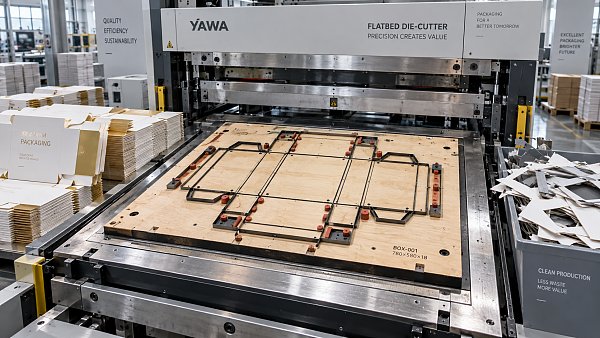
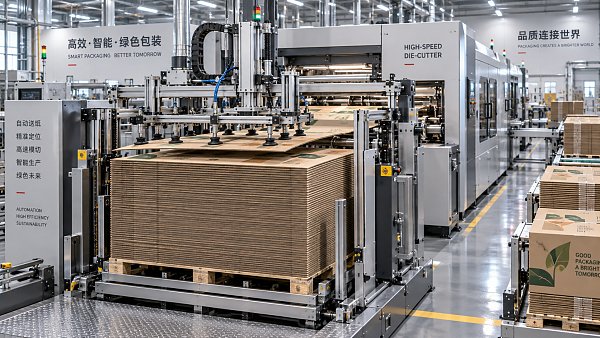
A high speed feeder system is more than a paper-handling upgrade for modern die-cutting operations. For technical evaluators, it directly influences sheet alignment, production continuity, setup efficiency, and the ability to maintain accurate die-cutting output at higher speeds. Understanding how feeder performance interacts with press stability, material variability, and downstream delivery systems is essential when assessing capacity, waste reduction, and long-term operating value.
On a flatbed die-cutter, the feeder is often judged by a simple question: how many sheets per hour can it deliver? That question matters, but it is incomplete. A feeder that reaches a high nominal speed while creating double sheets, skewed blanks, interrupted flow, or unstable registration does not improve real output. It merely moves the bottleneck downstream, where waste is more expensive and faults are harder to isolate.
The practical value of a high speed feeder system lies in its ability to deliver each sheet in the correct position, at the correct timing, and with enough consistency for the die-cutting, stripping, blanking, and delivery sections to operate as one controlled process.
Output Is Determined by Stable Sheets, Not Rated Machine Speed
Die-cutting productivity is usually expressed in sheets per hour, but actual production output is shaped by several losses that occur between the feeder pile and finished cartons. Stops for sheet separation errors, correction of front-lay alignment, clearing of jams, and re-registration after material changes can consume far more time than a machine’s top-speed specification suggests.
A well-designed high speed feeder system reduces these hidden losses. It maintains a reliable sheet stream so that the die-cutting platen can work at a stable operating rhythm. This is particularly important for folding cartons, litho-laminated corrugated sheets, retail displays, and other jobs where a small positional error may cause poor creasing, incomplete stripping, damaged printed graphics, or an unacceptable finished blank.
Technical teams should therefore distinguish between mechanical speed and productive speed. Mechanical speed is the maximum cycling capability of the equipment under favorable conditions. Productive speed is the sustained rate achieved with the actual board grade, print coverage, job layout, operator routine, quality requirement, and delivery configuration. The feeder has a decisive role in closing the gap between the two.
What the Feeder Actually Controls
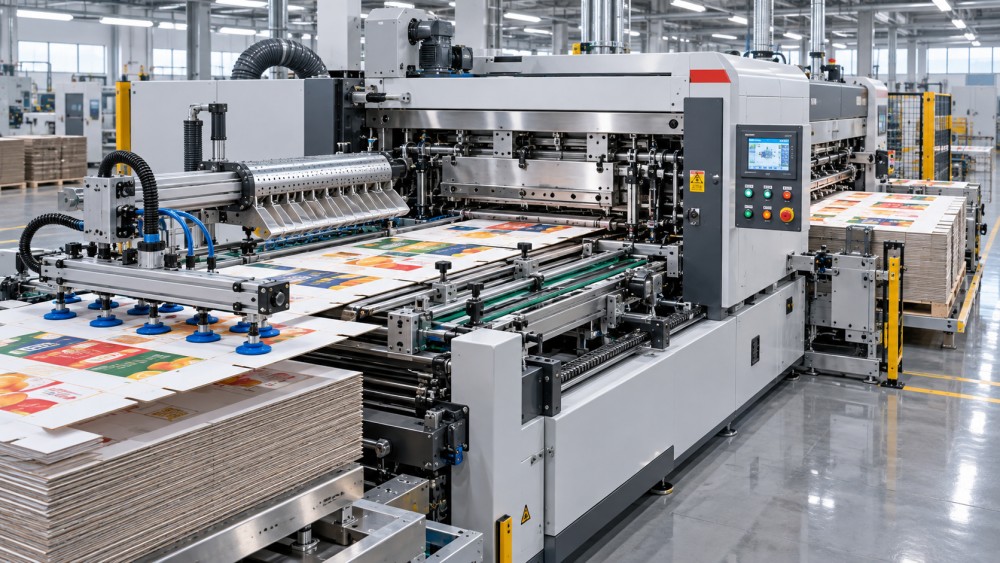
At its core, the feeder must separate a single sheet from the pile, transport it forward, align it accurately, and present it to the die-cutting section without damaging the substrate. This sequence sounds straightforward until it is applied to real production materials: curled board, static-prone coated sheets, lightweight stock, warped corrugated sheets, heavily printed cartons, or sheets with variable moisture content.
Most high-performance feeder systems combine several control functions:
- Sheet separation: suction heads, blowers, air knives, and mechanical separation devices work together to lift one sheet without pulling a second sheet along with it.
- Pile conditioning: adjustable side guides, pile-height monitoring, sheet support, and air settings help maintain a consistent feeding surface as the pile decreases.
- Transport timing: feed belts, vacuum transport, gripper control, and acceleration profiles synchronize sheet movement with the press cycle.
- Registration: front lays, side lays, pull lays, cameras, or electronic registration systems position the sheet before cutting begins.
- Error detection: double-sheet sensors, missing-sheet detection, skew monitoring, and overload protection prevent faults from becoming damaged tooling or large batches of waste.
These features should not be evaluated as isolated options. Their value depends on how well they work together under changing material conditions. For example, stronger suction may improve sheet pickup on heavy board but can create double-sheet risk on thin coated stock if air separation and sensor calibration are not matched. Likewise, aggressive feed acceleration may raise throughput on rigid sheets but introduce skew on less stable corrugated material.
Registration Begins Before the Sheet Reaches the Die
When a die-cutting defect appears near the cut-to-print relationship, teams often inspect the die, the chase, the gripper system, or the registration mechanism. Those areas deserve attention, yet many alignment problems begin earlier in the feeding process.
A sheet that enters the alignment station with inconsistent momentum, a slight diagonal orientation, or variable edge position creates a correction burden for the front and side lays. At lower speeds, the machine may compensate. As speed rises, the available correction window becomes smaller. Repeated micro-corrections can lead to inconsistent registration, reduced operating speed, or nuisance stops that operators learn to accept as “normal.”
A high speed feeder system improves die-cutting accuracy by reducing variation before registration occurs. Stable sheet separation and predictable transport make it easier for the alignment system to repeat its reference position cycle after cycle. This supports sharper cut-to-print accuracy, more consistent creasing locations, and cleaner stripping performance.
For printed folding cartons, the effect is immediately visible. Graphics, windows, embossed areas, foil-stamped elements, and carton edges must remain in their intended relationship. For corrugated packaging, registration stability supports clean slots, reliable hand holes, accurate score locations, and consistent fit during later folding and gluing. The product may be different, but the underlying requirement is the same: the sheet must arrive predictably.
Material Variability Is the Real Test
A feeder can look impressive during a short demonstration using flat, uniform stock. The more revealing question is how it behaves when the plant runs the mix of materials that actually generates revenue. This may include short-run branded cartons, recycled-content board, sheets with high ink coverage, laminated substrates, micro-flute corrugated board, or orders that arrive with less-than-ideal storage history.
Humidity, temperature, coating characteristics, fiber orientation, static charge, and sheet curl all affect feeder behavior. In corrugated converting, board flatness and flute structure add another layer of complexity. A sheet that is slightly bowed or warped may still be usable, but it places greater demands on suction distribution, transport support, guide adjustment, and timing control.
Technical evaluators should ask suppliers to explain adjustment ranges rather than relying only on broad claims of “material compatibility.” Useful discussions include the number and placement of suction heads, independent air zones, blower adjustment, feeder head motion, anti-static provisions, pile-lifting control, and the process used to change settings between lightweight and heavyweight materials.
Automation is valuable when it makes these changes repeatable. Recipe storage, servo-driven settings, preset air parameters, and job-based feeder configurations can shorten changeover time and reduce dependence on a single experienced operator. However, automated settings should still allow practical manual intervention. Packaging plants do not always receive perfectly conditioned materials, and operators need a clear way to respond without compromising safety or traceability.
Where Feeding Losses Appear in the Production Record
Feeder performance is sometimes underestimated because its losses are distributed across multiple production indicators. A stop may be recorded as a press interruption. A registration issue may be classified as a quality defect. Excessive make-ready sheets may be attributed to the die-cutting job rather than to unstable incoming sheet position.
A more useful review looks at the full sequence of losses:
- Sheets rejected because of doubles, misses, or skew;
- Time spent re-establishing stable feeding after pile changes;
- Reduced press speed needed to prevent alignment faults;
- Waste generated during setup and restart;
- Operator intervention required to maintain pile condition;
- Downstream disruptions in stripping, blanking, counting, or delivery.
This perspective changes the investment conversation. The feeder is not simply an upstream accessory; it is a capacity-enabling subsystem. If it reduces short interruptions and allows a die-cutter to remain stable through long production runs, it can improve schedule reliability as well as total output. For plants serving e-commerce, seasonal retail, pharmaceutical cartons, or fast-moving consumer goods, predictable delivery can be just as important as peak throughput.
Integration with Stripping and Delivery Cannot Be Ignored
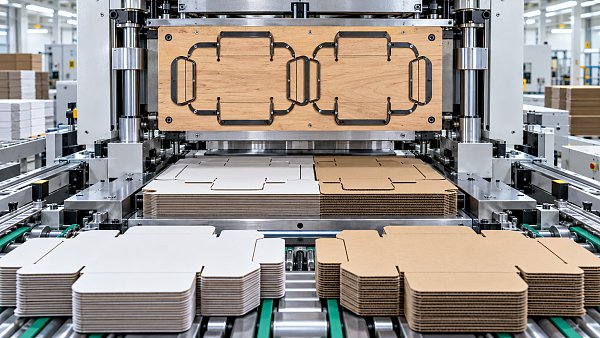
Die-cutting output does not end when the cut is made. A sheet that enters accurately but leaves the machine in an unstable condition can still limit production. Stripping stations, blanking systems, and delivery sections depend on repeatable sheet movement and controlled deceleration. At high speed, poor synchronization can produce pile disorder, damaged edges, incomplete blank separation, or delivery jams.
This is why a high speed feeder system should be evaluated as part of a complete sheet path. The feeder, registration section, die-cutting station, stripping frame, waste removal, blanking module, and delivery stacker must share compatible timing logic. A system may have a strong feeder on paper, yet underperform if downstream handling cannot accept the same sustained production rhythm.
For technical assessment, it is useful to observe the machine during a continuous run rather than only during setup. Watch the sheet path from pickup to delivery. Does the sheet remain controlled? Are operators frequently touching the pile or adjusting guides? Does speed remain stable after the first few minutes? Does the delivery remain orderly as the pile builds? These observations often reveal more than a single maximum-speed figure.
Evaluating a High Speed Feeder System: Questions That Matter
When comparing flatbed die-cutters or planning an upgrade, technical evaluators can use the feeder specification as a structured review point. The goal is not to select the machine with the most features, but to understand whether the design matches the plant’s substrate mix, order profile, quality tolerance, and staffing model.
Maintenance Discipline Protects Feeding Accuracy
Even a capable feeder loses consistency when routine maintenance is delayed. Dust from paperboard and corrugated materials can affect suction performance, sensor reliability, belt grip, and air flow. Worn suckers, damaged feed belts, blocked air lines, and poorly calibrated sensors often create intermittent faults—precisely the kind that consume operator attention and lower confidence in high-speed operation.
A practical maintenance plan should include inspection of suction cups and valves, cleaning of air circuits and sensors, verification of feeder timing, examination of transport belts and rollers, and checks for guide wear. The key is not merely to schedule these tasks, but to link them to observed production behavior. If double-sheet alarms rise for a particular board grade, maintenance teams should investigate the interaction between material condition, air settings, and mechanical wear rather than treating each alarm as an isolated event.
Connected production systems can make this easier. When feeder alarms, stop reasons, speed reductions, and job data are collected in one environment, a plant can identify recurring patterns. This supports more informed decisions about operator training, preventive maintenance, material handling, and future automation investments.
A Better Basis for Capacity Planning
For a packaging producer, the strongest argument for a high speed feeder system is rarely “faster feeding” alone. The more meaningful benefit is stable, usable capacity. If the feeder helps maintain alignment, minimizes stoppages, shortens recovery after job changes, and protects downstream delivery performance, the die-cutter can produce more acceptable work within the same shift structure.
That distinction matters when evaluating capital expenditure. A machine with a lower rated speed but robust feeding behavior across the plant’s usual substrate range may generate more saleable output than a faster machine that requires ideal sheets, frequent intervention, and conservative operating settings. The right evaluation should account for uptime, make-ready waste, operator workload, maintenance demands, and the quality cost of misregistered or poorly stripped blanks.
In modern commercial print and corrugated packaging operations, production systems are increasingly judged by their ability to cope with variation. Shorter runs, more frequent design changes, higher expectations for print quality, and pressure to control paper waste all make sheet handling more consequential. The feeder is where that control begins.
A properly specified high speed feeder system does not replace sound die design, disciplined maintenance, or skilled operation. It gives those elements a more stable foundation. For technical evaluators, that is the central lesson: reliable die-cutting output is built sheet by sheet, long before the cutting rule meets the board.
Related News
 How Flatbed Steel Rule Dies Improve Cut Accuracy and Changeover SpeedFlatbed steel rule dies improve cut accuracy, crease quality, waste release, and changeover speed. Discover practical tooling tips for reliable, efficient converting.Post-Press Kinematics Expert
 How Platen Presses Support Precise Foil Stamping and Die CuttingPlaten Presses deliver precise foil stamping, clean die cutting, and reliable creasing for premium packaging. Discover setup practices that improve quality and reduce waste.Post-Press Kinematics Expert
 How Pre-Breaking Units Reduce Cracking in Die-Cut Carton FoldsPre-Breaking Units help reduce cracking in die-cut carton folds by easing bend stress, improving fold accuracy, and supporting high-speed carton production.Post-Press Kinematics Expert
 How a High Pile Feeder Reduces Downtime in Die-CuttingHigh pile feeder solutions reduce die-cutting downtime, improve sheet supply stability, and help packaging plants increase throughput with fewer interruptions.Post-Press Kinematics Expert
 Carton Die Cutting for Folding Cartons That Reduces Setup WasteCarton die cutting for folding cartons reduces setup waste with stable registration, reliable creasing, smarter tooling, and repeatable production control.Post-Press Kinematics Expert
 How to Choose Hardened Die Cutting Knives for Longer Production RunsHardened die cutting knives for longer runs: learn how to balance hardness, edge profile, consistency, and total conversion cost for reliable results.Post-Press Kinematics Expert