How a High Pile Feeder Reduces Downtime in Die-Cutting
In high-volume carton and commercial print production, unplanned stops at the feeder can quickly reduce output and increase labor pressure. A high pile feeder helps operators maintain a continuous sheet supply, minimize loading interruptions, and support more stable die-cutting performance. By improving feeding consistency and reducing manual handling frequency, it can help packaging plants protect throughput, reduce waste, and keep demanding delivery schedules on track.
That sounds straightforward, but feeder downtime is rarely caused by one simple issue. On a flatbed die-cutter, a stop may begin with an empty pile, yet the real cause can be poor pile preparation, uneven sheet curl, incorrect sucker settings, static, warped board, or a delivery operator who is already handling another problem downstream. The feeder is where material variation first becomes visible. When it is not stable, the whole converting line starts working around it.
For plants processing folding carton board, litho-laminated sheets, printed corrugated material, or demanding commercial print jobs, a high pile feeder is not simply an option for loading more sheets. It is a way to create more usable running time between interventions. The value comes from how it fits into the operator’s routine, the job mix, and the actual condition of the incoming sheets.
Why feeder interruptions cost more than the stop itself
A feeder stop is often treated as a short production inconvenience: the pile is empty, another stack is brought in, the machine restarts. In reality, the lost minutes are only part of the cost. Each interruption can break the rhythm of the die-cutting section, stripping station, blanking unit, and delivery. Operators may need to check register, inspect the first sheets after restart, clear a misfeed, or reset sheets that have shifted in the delivery.
This matters most on jobs with tight tolerances. A carton with fine reverse creases, delicate embossing, foil stamping, or complex stripping does not always return to stable output immediately after a stop. The production team may slow down briefly to confirm that the sheet position and die-cut quality remain acceptable. If the job includes printed barcodes, pharmaceutical cartons, premium retail packaging, or display components, a rushed restart can create a quality problem that is harder to detect than a simple machine alarm.
Frequent pile changes also create a labor bottleneck. An operator who repeatedly leaves the feeder to prepare material, bring another pallet into position, or remove wrapping is less available for preventive checks. Small warnings—dust accumulating on suction components, a side guide starting to mark the edge, sheets becoming less flat as the pile changes—can be missed. Plants sometimes blame the die-cutter for inconsistent uptime when the more practical issue is that the operator is constantly catching up with material handling.
What a high pile feeder changes on the shop floor
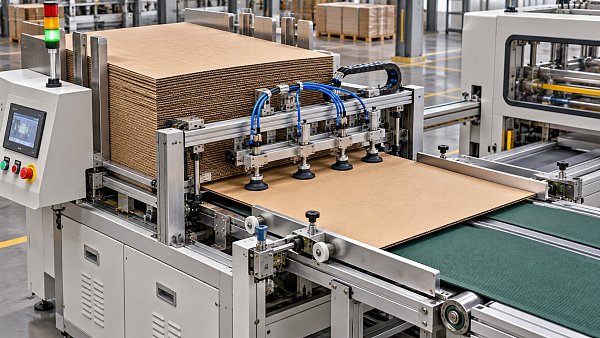
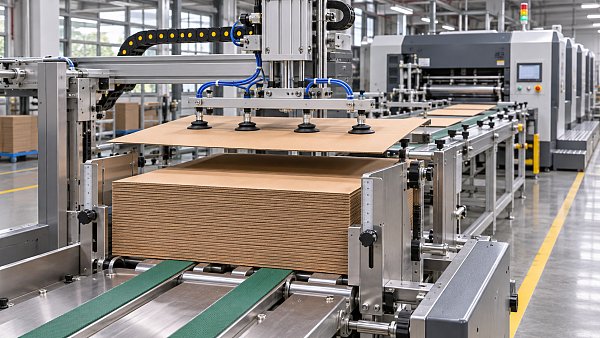
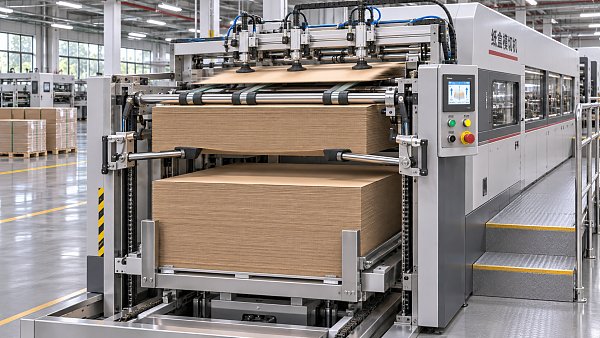
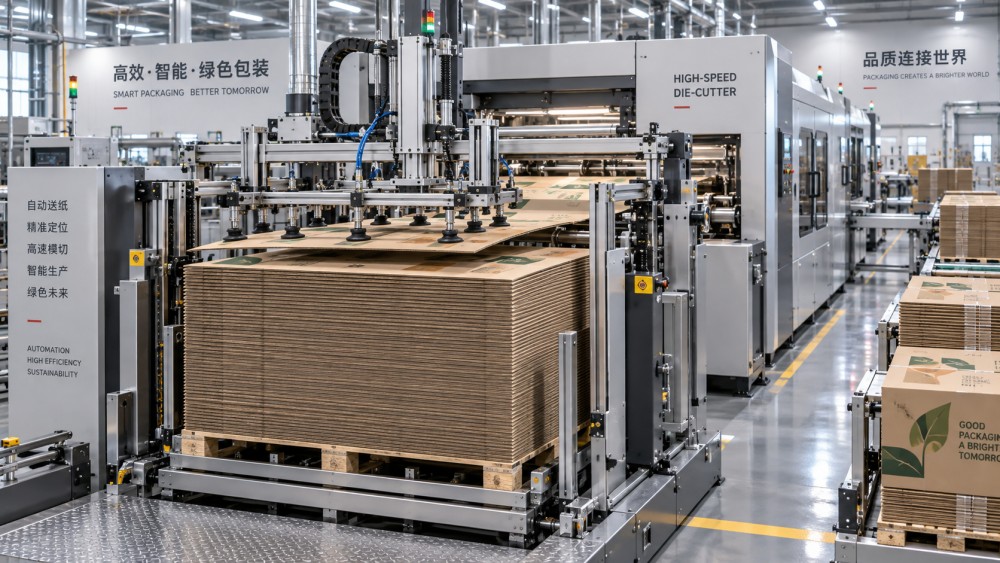
A high pile feeder increases the available sheet reserve at the infeed, allowing the die-cutter to run for a longer period before a reload is necessary. That is its most visible benefit. The more meaningful advantage is that it gives operators time: time to monitor sheet separation, watch registration behavior, inspect waste stripping, prepare the next pallet properly, and respond before a minor issue becomes a full stop.
On a well-organized line, the next load is staged while the machine is still running. The incoming stack has been checked for correct job identification, grain direction, board condition, print side, and pallet stability. Wrapping and straps are removed safely without contaminating the feeder area. The high pile feeder makes this preparation easier to schedule because loading cycles are less frequent and less rushed.
This does not mean that every plant should pursue the largest possible pile height. The practical limit depends on sheet format, substrate stiffness, pallet quality, feeder design, ceiling clearance, local safety requirements, and how material is moved around the machine. A tall, poorly prepared stack may create more feeding instability than a lower pile that is flat and correctly aligned. The goal is not maximum height on paper; it is the longest stable run that the process can support.
Continuous supply only works when the sheets are feedable
Operators know that “more sheets” does not automatically mean “fewer stops.” A high pile feeder relies on dependable sheet separation. If sheets are sticking together, bowed from humidity changes, heavily curled after printing, or carrying excess powder, a larger stack can simply extend the time before the next misfeed rather than solve the root problem.
Board conditioning deserves particular attention. Cartonboard and paper-based packaging materials respond to storage conditions. A pile that has been moved from a cold warehouse into a warmer converting room may not behave the same way as material that has had time to acclimatize. Moisture imbalance can show up as curl, waviness, or inconsistent sheet lift at the feeder. Corrugated sheets add another layer of variation: flute direction, warpage, print coverage, lamination quality, and stacking pressure can all affect the pick-up process.
The feeder should therefore be discussed together with upstream operations. If printed sheets arrive with uneven pile edges or damaged corners, the answer is not always a more aggressive feeder setting. Excessive suction, air, or mechanical correction can increase marking risk and may make lightweight or coated stocks harder to control. A better approach is to identify whether the issue began in printing, coating, laminating, drying, palletizing, or internal transport.
A useful pre-run check before blaming the feeder
- Confirm that pile edges are square and that sheets have not shifted during transport.
- Check for bowed, curled, scuffed, or damaged sheets near the top and lower levels of the stack.
- Verify that the board grade, caliper, coating, and sheet format match the approved job setup.
- Inspect suction cups, air nozzles, separator components, pull lays, and side guides for dust, wear, or contamination.
- Make sure the next pallet is ready before the current pile reaches its planned change point.
These checks are basic, but they are often skipped when a plant is under delivery pressure. That is exactly when feeding stability matters most. A high pile feeder is most effective when it supports a disciplined process rather than compensating for one that has become hurried.
The link between pile height, changeovers, and job mix
Long-run work is the obvious application. Standard cartons, repeat retail packaging, promotional inserts, and high-volume commercial print jobs can benefit when the operator does not need to interrupt production as often for loading. Yet high pile feeding can also help in plants dominated by short runs. The benefit is different: it reduces the number of tasks competing for attention during a job.
Short-run work is usually constrained by setup activity, proof approval, tooling changes, job documentation, material identification, and first-off inspection. If an operator has to reload the feeder repeatedly during a modest run, the line loses valuable time that could have been used to prepare the next die, stripping frame, blanking setup, or pallet label. Longer unattended intervals can make the handoff between jobs less chaotic.
Still, there is a trade-off. A plant running frequent SKU changes should avoid loading more material than can realistically be consumed before the next order. Excess sheets at the feeder can create confusion, especially where printed variants, language versions, or similar artwork are processed close together. Good pile capacity is useful; disciplined material control is essential. Job tickets, pallet labels, barcode verification, and clear segregation of approved stock reduce the risk of mixing sheets during fast changeovers.
Where high pile feeder projects can disappoint
The common mistake is to view the feeder as an isolated productivity upgrade. If the die-cutting section is limited by tooling condition, stripping performance, blank separation, delivery pile quality, or downstream folder gluer capacity, higher infeed availability will not remove the actual constraint. It may only move the queue further down the line.
Space and logistics can also be overlooked. A high pile feeder needs practical access for pallet trucks or other material-handling equipment. Operators need enough room to remove wrapping, inspect stock, and work safely around the machine. If pallets arrive inconsistently, are poorly centered, or require frequent manual correction, the theoretical advantage of a larger pile disappears quickly.
Another issue is maintenance discipline. Feeder mechanisms operate under repetitive motion and are exposed to paper dust, coating residues, and normal wear. A system that is not cleaned and checked routinely may begin to show double sheets, missed sheets, edge damage, or unstable timing. The best maintenance routines are not necessarily complicated. They are clear about what operators inspect each shift, what technicians verify at planned intervals, and which feeder symptoms should trigger action before output quality is affected.
Choosing the right setup for the actual production environment
When assessing a high pile feeder for a flatbed die-cutter, start with the sheets rather than the brochure. What formats run most often? Are they lightweight printed sheets, heavy cartonboard, laminated material, E-flute corrugated sheets, or a mixture? How consistent is pallet quality? How often do jobs change? Does the line need manual loading, semi-automatic support, or integration with automated pallet handling?
It is also worth observing actual downtime for several production days. Separate stops caused by empty piles from stops caused by misfeeds, sheet quality, waiting for material, tooling adjustments, inspection holds, and downstream congestion. This creates a more honest picture of what the feeder can solve. A plant may discover that higher pile capacity is justified, or it may find that better staging, improved pallet standards, or operator training would address much of the loss at lower cost.
For packaging plants moving toward connected production management, feeder events can be useful operating data. Tracking pile changes, misfeed alarms, manual interventions, and recurring job-specific issues helps maintenance and production teams see patterns that are easy to miss during a busy shift. This is where equipment information becomes more valuable when viewed as part of a system: feeder behavior relates to printing quality, sheet handling, die-cutting accuracy, inspection requirements, and the flow into folder gluing or palletizing.
A practical uptime tool, not a substitute for process control
A high pile feeder can reduce downtime in die-cutting by giving the machine a more continuous supply of sheets and giving operators fewer loading interruptions to manage. In the right environment, that creates calmer production, better attention to quality, and more predictable output. Its real value is not just that the pile lasts longer. It is that the crew has a better chance to keep the whole converting process under control.
The strongest results usually come from combining feeder capacity with sound sheet preparation, clean and correctly maintained feed components, safe pallet handling, clear job identification, and realistic production planning. For teams comparing die-cutting and converting systems, CPCS examines these operational connections across flatbed die-cutters, printing equipment, inspection technologies, folder gluers, and packaging factory automation. The right question is not “How high can the pile go?” It is “How reliably can this line run between interventions without compromising the sheet, the operator, or the finished carton?”
Related News
 How to Choose a Sheet Feeder for Paperboard ProductionChoose the right sheet feeder for paperboard with practical tips on material handling, line speed, integration, and trials to improve production reliability.Post-Press Kinematics Expert
 How Do Creasing Dies Prevent Cracks in Folded Cartons?Creasing Dies help prevent carton fold cracks through controlled deformation. Discover key tooling factors and practical production tips for cleaner, more consistent folds.Post-Press Kinematics Expert
 How to Prevent Sheet Misfeeds in an Automatic Feeder SystemPrevent automatic feeder system misfeeds with practical checks for sheet alignment, suction, air separation, timing, and double-sheet detection.Post-Press Kinematics Expert
 How Do Non Stop Feeder Piles Reduce Die-Cutter Downtime?Discover how non stop feeder piles reduce die-cutter downtime, improve pile-change efficiency, and keep sheet feeding reliable on long production runs.Post-Press Kinematics Expert
 USITC Advances Trade Probe Into Corrugated Die-Cut BoxesCorrugated die-cut boxes face a USITC trade probe. Explore what the investigations could mean for packaging costs and sourcing.Post-Press Kinematics Expert
 What to Consider When Choosing Heavy Duty Pile TurnersChoosing heavy duty pile turners? Discover how to assess load capacity, substrate handling, safety and operating costs to find the right fit for your production line.Post-Press Kinematics Expert