How a High Accuracy Sheet Feeder Reduces Misfeeds in Die Cutting
A high accuracy sheet feeder reduces misfeeds by separating one sheet at a time, controlling its movement, and delivering it to the die-cutter within the required timing and position window. The benefit depends on how well the feeding system handles the actual board, sheet sizes, and production speeds used on the line. A feeder that runs smoothly with flat demonstration stock may behave differently with curled folding carton board or warped corrugated sheets.
Before specifying an upgrade, identify whether the recurring problem is a double feed, a missed sheet, skew, or inconsistent registration. These faults can look similar at the delivery end, but they require different corrections. Reliable feeding starts with understanding where control is lost between the pile and the cutting station.
Identify which part of the feeding process is failing
A misfeed is not a single failure mode. Two sheets entering together usually indicate poor separation or sheets sticking together. A missing sheet can result from weak pickup, an unstable pile height, or a sheet that cannot release cleanly. A sheet arriving at an angle points toward uneven traction, unsuitable guide settings, or distorted material.
Registration errors need closer examination. If the sheet reaches the registration section correctly but the cut still shifts relative to the print, the cause may involve gripper condition, registration components, tooling position, or dimensional changes in the substrate. Replacing the feeder will not automatically resolve those issues.
Record faults by stock grade, sheet format, operating speed, and pile condition. A total stoppage count alone can hide a pattern. If faults cluster around one material or occur immediately after pile replenishment, that points toward a more specific intervention than a general increase in feeder capacity.
How a high accuracy sheet feeder controls separation and movement
It makes single-sheet separation more repeatable
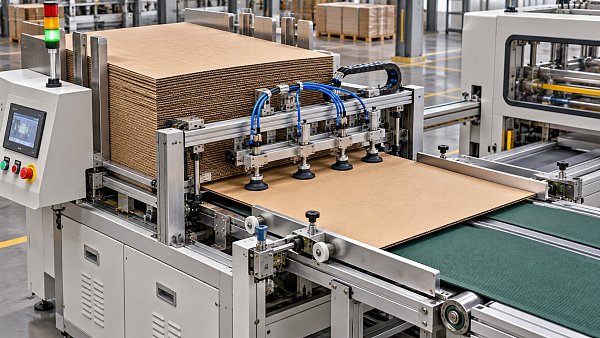
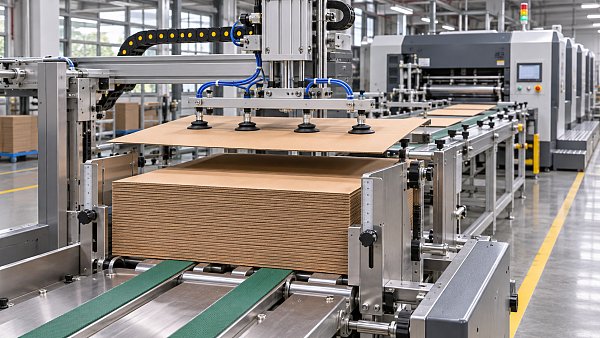
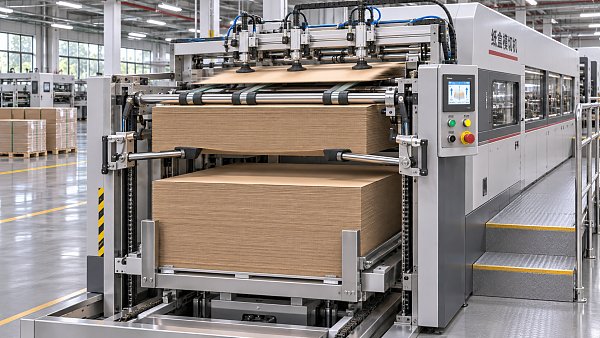
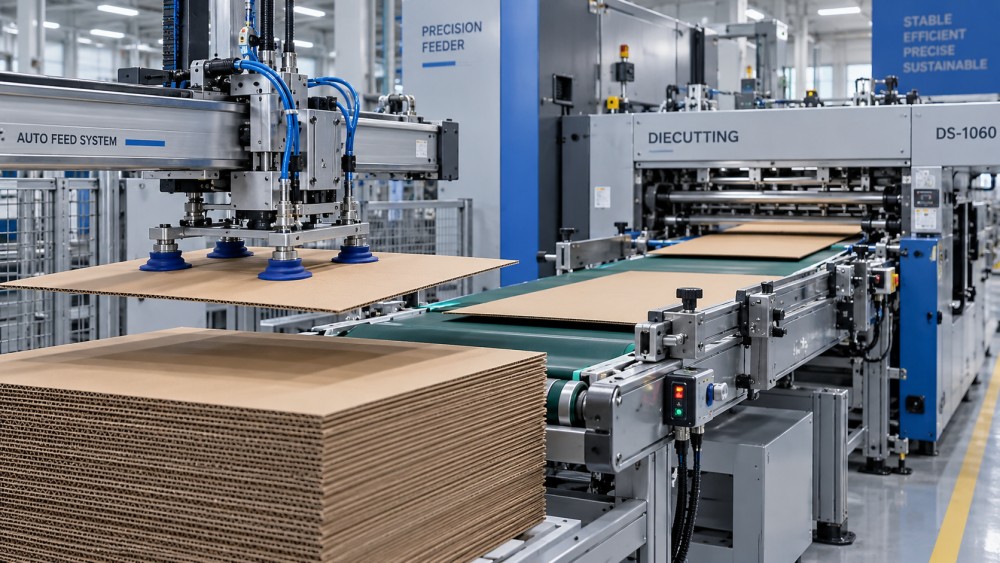
Many sheet-fed flatbed die-cutters use suction components to lift or advance sheets, with air assistance helping separate the upper sheets. Other configurations, including corrugated converting equipment, may use bottom-feed or lead-edge mechanisms. The appropriate arrangement depends on the machine architecture and substrate.
In a suction-based system, reliable separation requires the pickup position, vacuum, air delivery, and pile height to work together. Too little holding force can allow a sheet to slip or remain in the pile. Excessive suction or poorly directed separation air can disturb adjacent sheets or deform lightweight stock. Simply increasing vacuum is therefore an unreliable cure for every missed feed.
Controlled pile elevation helps maintain a consistent relationship between the top sheet and the pickup mechanism. As the pile becomes lower, automatic height control limits changes in pickup conditions. Well-adjusted separators and air settings then help the selected sheet release without dragging the next one along.
It preserves sheet orientation during transfer
After separation, the sheet must move without rotating, slipping, or buckling. Uneven traction can cause one side to advance faster than the other. Dust on belts, worn rollers, misplaced suction elements, or uneven pressure can all contribute.
Suitable vacuum belts, rollers, guides, and acceleration profiles help maintain controlled movement. Servo-controlled drives can support repeatable motion and synchronization, but their value depends on mechanical condition and setup. A precise drive cannot compensate for a belt that loses grip or a sheet that catches against a guide.
Material support also matters. A large, flexible sheet can sag between transfer points, while warped corrugated board may contact the transport unevenly. The feeder needs to support and move these materials without introducing excessive drag, marking printed surfaces, or crushing flute structure.
It delivers the sheet within the registration window
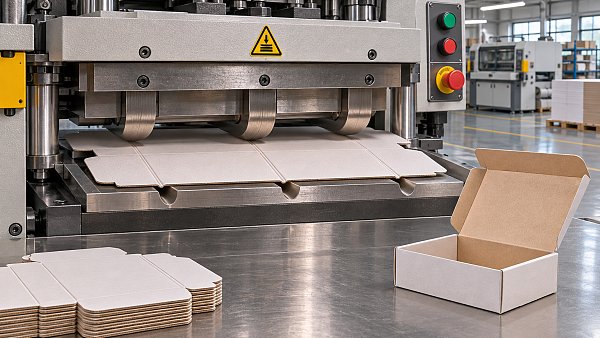
On many flatbed die-cutters, front and side registration devices establish sheet position before grippers carry it into the press. The feeder’s job is to deliver each sheet predictably enough for that registration process to complete.
A sheet arriving too late may not register fully before transfer. One arriving too early or too aggressively may rebound, buckle, or become unstable at the stops. Consistent timing reduces these disturbances and helps the registration section perform its intended function.
The arrangement differs on rotary die-cutting systems, where controlled advance and synchronization with the rotating tooling may be central to registration. This is why feeder suitability must be assessed against the receiving machine’s requirements, rather than through a standalone claim of feeding accuracy.
Detection limits damage, but does not fix the cause
Double-sheet detection, sheet-presence sensors, and arrival monitoring can prevent a feeding fault from becoming a jam or a batch of damaged work. Depending on the machine design, detection may trigger a stop, inhibit the next operation, or divert material through an available rejection path.
These functions are protective controls. They do not separate stuck sheets or restore traction. A system that detects every double feed but stops repeatedly still has a production problem.
Detection technology must also suit the material. Thick, laminated, or corrugated substrates can create different sensing conditions from thin paper. During evaluation, test the actual stock range and examine both missed detections and nuisance trips. The sensor location and machine response must allow enough time to act before the faulty sheet reaches a damaging position.
Fault messages should distinguish problems wherever practical. An operator who can identify a pickup failure, double sheet, or late arrival has a better basis for adjustment than one receiving the same generic alarm for every interruption.
Match the feeder to the board you actually process
Sheet dimensions and nominal thickness do not describe the full feeding challenge. Stiffness, porosity, surface friction, coating, curl, moisture condition, and edge quality influence separation and transport. Two boards of similar thickness can require different settings.
For printed folding cartons, surface protection and cut-to-print registration may dominate the assessment. Pickup and transport components need to handle coatings without scuffing, while separation must remain stable when sheets develop static or tend to stick.
For corrugated work, warp and uneven contact often deserve more attention. A feeding arrangement may need to accommodate variable board shape while avoiding excessive compression. Forceful flattening can introduce marking or flute damage, and severely distorted board may remain difficult to feed consistently.
Define an acceptable incoming-material condition alongside the equipment specification. Poorly jogged piles, damaged leading edges, unstable stacks, and inconsistent upstream board quality can overwhelm an otherwise capable feeder. Where faults follow a particular batch, investigate material preparation before changing machine settings across every job.
Frequent job changes create another requirement: repeatable setup. Stored recipes can help restore settings, but suction positions, guides, and other mechanical adjustments may still need attention. Assess how easily the equipment returns to stable production after changing sheet size or material.
Evaluate performance through a representative production trial
A short demonstration at maximum speed provides limited evidence of reliable feeding. A useful trial includes routine materials, difficult but acceptable stock, and the formats that matter most to production. It should also expose changes in pile condition and normal operating interruptions.
Use the following sequence to make the results comparable:
- Establish the baseline. Record feeding faults, related downtime, rejected sheets, operating speed, and setup time on the existing process. Separate feeder stops from tooling, stripping, and delivery problems.
- Select representative stock. Include relevant thicknesses, finishes, sheet sizes, and acceptable variations in curl or warp. Avoid relying solely on material selected for easy feeding.
- Run through normal transitions. Observe startup, sustained running, pile replenishment, controlled stops, and restarts. Where possible, include operation across different pile levels.
- Check output quality. Examine cut-to-print position, creasing consistency, surface marking, and board damage as well as alarm counts.
- Repeat a job change. Check whether routine operators can restore stable settings without prolonged specialist intervention.
Define “accuracy” in the acceptance criteria. Sheet position at the feeder exit, timing at the registration section, and finished cut-to-print accuracy describe different results. A tolerance needs a measurement location, a material condition, and an operating speed to become useful.
Track feeding faults against the number of sheets processed, and assess downtime separately. A small number of difficult jams can consume more production time than several brief, controlled stops. The strongest evidence is a repeatable increase in acceptable finished output under comparable conditions.
Check integration before approving a retrofit
A replacement feeder must match the existing die-cutter mechanically and functionally. Sheet transfer height, entry geometry, drive synchronization, registration layout, and control interfaces all influence whether the upgrade will work as intended.
Clarify which system controls the feeding cycle and how faults propagate through the line. Emergency stops, guarded access, restart sequences, and upstream conveying need coordinated behavior. Adding faster feeding to a press with worn registration components or unstable gripper transfer may simply move the bottleneck.
Utilities and maintenance access also affect reliability. Vacuum leakage, restricted air supply, clogged filters, and paper dust can gradually change pickup performance. Include cleaning access, replacement of wear parts, and diagnostic support in the installation review. A component that is difficult to inspect or service can turn a minor feeding issue into extended downtime.
Recipe management and production data should support daily decisions. Useful records link faults to jobs, materials, and settings, allowing recurring causes to be identified. Connectivity has practical value when it shortens diagnosis or makes changeovers more consistent.
Base the investment on stable, usable output
The commercial benefit of precise feeding comes from fewer interruptions, less damaged material, shorter recovery, and more predictable schedules. Calculate that benefit from the plant’s own production records. Include setup labor, cleaning, consumables, service requirements, and installation downtime alongside the purchase price.
A higher nominal speed has limited value if the line must repeatedly slow down for difficult stock. Likewise, fewer feeding alarms are insufficient evidence if finished registration or surface quality deteriorates. Good sheets produced during normal working time provide a more useful measure of improvement.
Before committing to equipment, prepare a material matrix, classify the current feeding faults, and agree on a production trial with measurable acceptance conditions. That gives the supplier a clear operating problem to solve and gives the plant a practical basis for deciding whether better separation, more controlled transfer, improved detection, or upstream material correction will deliver the required result.
Related News
 How to Choose a Sheet Feeder for Paperboard ProductionChoose the right sheet feeder for paperboard with practical tips on material handling, line speed, integration, and trials to improve production reliability.Post-Press Kinematics Expert
 How Do Creasing Dies Prevent Cracks in Folded Cartons?Creasing Dies help prevent carton fold cracks through controlled deformation. Discover key tooling factors and practical production tips for cleaner, more consistent folds.Post-Press Kinematics Expert
 How to Prevent Sheet Misfeeds in an Automatic Feeder SystemPrevent automatic feeder system misfeeds with practical checks for sheet alignment, suction, air separation, timing, and double-sheet detection.Post-Press Kinematics Expert
 How Do Non Stop Feeder Piles Reduce Die-Cutter Downtime?Discover how non stop feeder piles reduce die-cutter downtime, improve pile-change efficiency, and keep sheet feeding reliable on long production runs.Post-Press Kinematics Expert
 USITC Advances Trade Probe Into Corrugated Die-Cut BoxesCorrugated die-cut boxes face a USITC trade probe. Explore what the investigations could mean for packaging costs and sourcing.Post-Press Kinematics Expert
 What to Consider When Choosing Heavy Duty Pile TurnersChoosing heavy duty pile turners? Discover how to assess load capacity, substrate handling, safety and operating costs to find the right fit for your production line.Post-Press Kinematics Expert