How a Die Cutter Gripper System Improves Sheet Control and Accuracy
How a Die Cutter Gripper System Improves Sheet Control and Accuracy
A die cutter gripper system is easy to overlook when a machine is running well. Operators tend to focus on the die, stripping station, feeder, or delivery because those areas make faults visible. Yet many recurring problems begin earlier: a sheet is picked up inconsistently, held unevenly, carried with a slight angle, or released before it is fully under control. At low speed, the defect may be minor. At production speed, it can become a registration issue, an uneven crease, a poor stripping result, or a full stoppage.
For folding cartons, labels, display packaging, and printed corrugated work, sheet position is the reference point for nearly every downstream action. The printed image, cutting rule, crease rule, embossing area, stripping pins, and delivery stack all depend on the sheet arriving in the same location every cycle. A stable die cutter gripper system does not correct a poorly prepared sheet or an inaccurate die. It does, however, preserve the sheet position established at the feeder and maintain that position through the cutting and transfer sequence.
This distinction matters in practical troubleshooting. If a machine shows random variation rather than a consistent offset, operators should not automatically adjust side guides or chase registration settings. The cause may be mechanical grip, gripper timing, worn components, poor sheet condition, or an unstable handoff between sections.
What the Gripper System Actually Controls
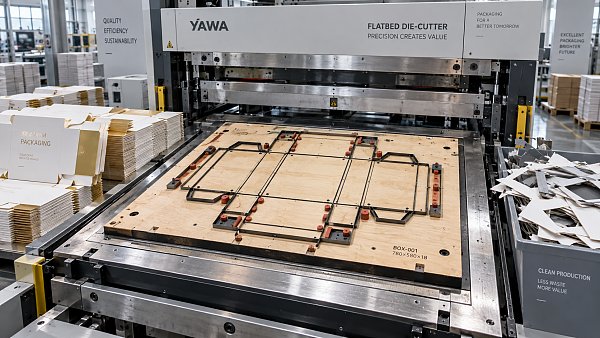
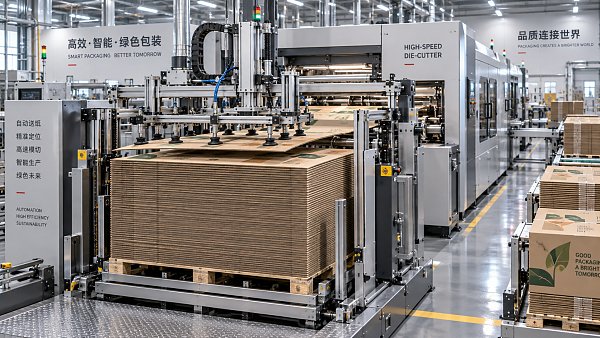
On a typical flatbed die-cutter, grippers take control of the leading edge after the feeder has registered the sheet. The gripper bar or gripper chain then transports it through the platen and onward to stripping and delivery. The working principle is straightforward: clamp the leading edge securely, hold it at a repeatable position, carry it without slip or rotation, and release it at the correct point. In reality, each stage is affected by sheet thickness, stiffness, coating, grain direction, print coverage, static charge, humidity, machine speed, and the condition of the gripper components.
A useful way to view the system is as a controlled interface between the sheet and the machine. It must apply enough force to prevent movement, but not so much that it marks, crushes, tears, or distorts the leading edge. It must also grip across the sheet consistently. If one side holds more firmly than the other, the sheet can pivot slightly as acceleration changes. That movement may be too small to notice at the gripper bar, yet large enough to affect fine print-to-cut registration.
The system therefore influences more than dimensional accuracy. It affects the reliability of stripping, the appearance of score lines, blank separation, delivery pile quality, and the amount of waste generated during make-ready and production.
Why Good Sheet Control Produces Better Cutting and Creasing
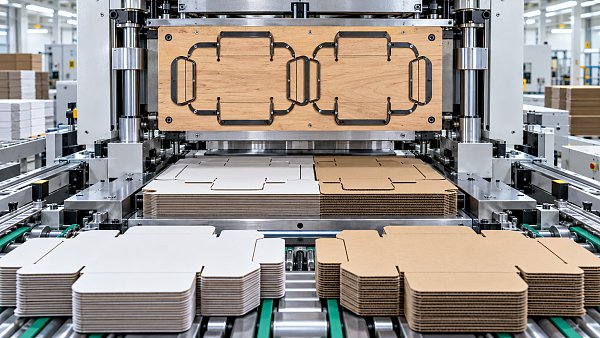
The die-cutting station is often described as the point where accuracy is created. More precisely, it is where die accuracy is transferred to a sheet that must already be positioned correctly. A well-made die cannot compensate for a sheet that arrives skewed or shifts under dynamic load. When grip is stable, the sheet enters the platen in the intended orientation and the cutting, creasing, perforating, and embossing tools engage predictable areas of the printed layout.
This is especially relevant for work with narrow borders, windows, metallic decoration, security features, pharmaceutical carton graphics, barcode areas, or tightly matched panels. A small positional shift can expose white edges, move a cut too close to a printed element, or weaken a crease line. The defect may pass through die-cutting but become obvious later at the folder gluer, when panels no longer fold symmetrically or glue flaps do not meet as intended.
Creasing is also affected by sheet control in a less obvious way. If the sheet pulls unevenly while passing through the machine, repeated stress at the front edge can alter how the board sits against the lower tools. On demanding substrates, that can contribute to inconsistent crease appearance or folding behavior. The gripper system is not the sole cause of crease variation—rule selection, matrix condition, make-ready, board moisture, and die pressure remain important—but stable transport removes one major variable.

The Common Signs of a Gripper-Related Problem
Operators can often distinguish a gripper issue from a feeder or die issue by looking for patterns. A consistent cut-to-print offset across every sheet may point to registration setup, die positioning, or artwork-related factors. Variation from sheet to sheet is more likely to involve feeding, gripping, transport, or material behavior. A fault that becomes more severe as speed rises deserves particular attention because acceleration, vibration, and timing expose marginal grip.
- Intermittent skewing, often more visible on wide sheets or lightweight stock.
- Random registration drift despite apparently stable feeder settings.
- Marking, cracking, or tearing near the gripped leading edge.
- Uneven stripping or incomplete blank separation that appears only on part of the sheet.
- Poor delivery stack formation, especially when sheets arrive with a slight rotational error.
- More frequent jams after a change in board grade, coating, or moisture condition.
These symptoms should not be treated as proof by themselves. A warped sheet, incorrect feeder head settings, static, worn side lays, or transfer timing can produce similar results. The practical approach is to inspect the whole sheet path while using the gripper mechanism as a defined checkpoint: was the sheet correct when it entered the grippers, and did it remain correct after being carried forward?
Grip Force Is Not a “More Is Better” Setting
One common response to sheet slip is to increase clamping force. That may solve the immediate problem, but it can introduce a different one. Excessive pressure can leave visible gripper marks, damage coated surfaces, weaken the leading edge of sensitive board, or make release less predictable. With laminated, metallized, heavily printed, or varnished stock, surface behavior may differ significantly from uncoated board. The correct setting is the lowest reliable grip that prevents movement through the full operating cycle.
Uniformity matters as much as the force itself. Gripper fingers, pads, springs, shafts, and mounting points should act consistently across the bar. A single contaminated or worn gripper can create local slip. If an operator sees one side of the sheet drifting while the other remains stable, comparing the condition and closure of the grippers across the width is often more useful than making broad registration adjustments.
The sheet edge must also be suitable for gripping. Dust buildup, coating residue, damaged leading edges, curled sheets, or excess powder from printing can reduce friction and prevent uniform contact. Cleaning the grippers without addressing the incoming sheet condition usually produces only a temporary improvement.
Material Changes Need a Fresh Check
A die-cutter may run one carton board grade smoothly and struggle with the next job even when the design appears similar. Material changes alter the interaction between the sheet and the transport system. Thickness affects clamping geometry; stiffness changes how the trailing area follows the leading edge; coatings alter friction; and moisture can influence flatness and dimensional stability. Corrugated sheets bring additional considerations, including flute direction, panel rigidity, crush sensitivity, warp, and the quality of the leading edge after upstream processing.
Before committing to full speed after a job change, it is sensible to observe several sheets through the feeder, gripper transfer, platen, stripping, and delivery sections. This should be a real production check, not just a confirmation that the first sheet cuts correctly. Look for repeatability at the intended speed, inspect the gripped edge, and compare cut-to-print position at multiple points on the sheet. If the job has demanding registration requirements, retain approved samples as an operating reference rather than relying on visual memory.
Maintenance That Protects Accuracy
The most effective maintenance routines are usually simple and disciplined. Grippers operate in an environment with paper dust, coating debris, stripping waste, lubricant risk, and continuous cyclic motion. Small deposits or wear can become production issues long before a component visibly fails. The machine manufacturer’s service instructions should remain the primary reference for lubrication points, inspection intervals, adjustment methods, approved cleaning materials, and replacement criteria.
In day-to-day operation, the checks worth making include cleanliness of gripping surfaces, freedom of movement, finger alignment, closure consistency, spring or actuator condition, and any evidence of looseness in the gripper bar or chain path. Operators should also pay attention to unusual sound, changing vibration, and repeated marks at the same area of the sheet. These are not minor cosmetic observations; they can be early signals of changing mechanical behavior.
Do not mix routine cleaning with unapproved adjustment. Gripper timing and transport synchronization are linked to the machine’s mechanical design and safety procedures. Where timing, chain tension, or gripper-bar alignment is suspected, the appropriate maintenance technician and OEM documentation should be involved. An improvised correction may shift the symptom while creating a more difficult fault elsewhere in the machine.
Sheet Control Is a System Issue, Not Just a Gripper Issue
A reliable die cutter gripper system works within a wider sequence: conditioned material, correctly set feeder, stable registration, clean grippers, accurate platen setup, effective stripping, and controlled delivery. If one part of that sequence is unstable, the grippers may be blamed for defects they did not create. For example, a sheet entering at an angle can be gripped securely in the wrong position. Conversely, a perfectly aligned feeder cannot maintain accuracy if the sheet slips after transfer.
This is why production teams benefit from recording faults in process terms. Instead of noting only “bad registration,” record the job material, grain direction where relevant, speed, feeder condition, defect location, whether variation is repeatable, and whether it changes after the gripper transfer. Such records help maintenance teams isolate patterns and help supervisors decide whether the next action is material conditioning, setup correction, component inspection, or a review of the die and stripping layout.
In more connected packaging plants, machine alarms, job data, vision inspection results, and quality records can support this analysis. The value is not in collecting more data for its own sake. It is in linking a defect to the conditions under which it occurred, particularly on short runs where operators have less time to learn a job through repeated adjustment.
A Practical Standard for Operators
There is no universal grip setting or single acceptance figure that applies to every die-cutting job. The operating standard should be based on the approved job specification, the equipment manufacturer’s limits, the substrate’s behavior, and the quality requirements of the finished package. In practice, a stable process means the sheet is held without visible damage, repeats its position throughout the run, produces acceptable cut-to-print alignment, strips reliably, and reaches delivery without creating a stacking problem.
For operators, the most useful habit is to check for cause before making correction. Verify the sheet at entry, examine the grip condition, observe what changes with speed, and inspect the finished blank rather than judging only at the platen. That approach prevents unnecessary adjustments and protects valuable printed material from avoidable waste.
CPCS follows these practical links across flatbed die-cutting, stripping, folder gluing, print registration, inspection, and packaging-factory automation because equipment performance is rarely defined by one station alone. When reviewing a machine issue or evaluating an upgrade, the relevant questions are not only about nominal speed. They include material range, gripper design, maintenance access, registration method, operator adjustment requirements, integration with inspection, and how consistently the whole line controls each sheet from feed to finished carton.
Related News
 How Flatbed Steel Rule Dies Improve Cut Accuracy and Changeover SpeedFlatbed steel rule dies improve cut accuracy, crease quality, waste release, and changeover speed. Discover practical tooling tips for reliable, efficient converting.Post-Press Kinematics Expert
 How Platen Presses Support Precise Foil Stamping and Die CuttingPlaten Presses deliver precise foil stamping, clean die cutting, and reliable creasing for premium packaging. Discover setup practices that improve quality and reduce waste.Post-Press Kinematics Expert
 How Pre-Breaking Units Reduce Cracking in Die-Cut Carton FoldsPre-Breaking Units help reduce cracking in die-cut carton folds by easing bend stress, improving fold accuracy, and supporting high-speed carton production.Post-Press Kinematics Expert
 How a High Pile Feeder Reduces Downtime in Die-CuttingHigh pile feeder solutions reduce die-cutting downtime, improve sheet supply stability, and help packaging plants increase throughput with fewer interruptions.Post-Press Kinematics Expert
 Carton Die Cutting for Folding Cartons That Reduces Setup WasteCarton die cutting for folding cartons reduces setup waste with stable registration, reliable creasing, smarter tooling, and repeatable production control.Post-Press Kinematics Expert
 How to Choose Hardened Die Cutting Knives for Longer Production RunsHardened die cutting knives for longer runs: learn how to balance hardness, edge profile, consistency, and total conversion cost for reliable results.Post-Press Kinematics Expert