How a Die Cutter Chase Frame Affects Changeover Time and Costs
For a procurement team comparing flatbed die-cutting equipment, a die cutter chase frame can look like a minor detail beside press speed, feeder capacity, stripping configuration, or automation options. On the factory floor, however, it often becomes highly visible at the least convenient moment: a short-run job is waiting, the next die is ready, operators are working around a difficult lock-up system, and a production schedule is already beginning to slip.
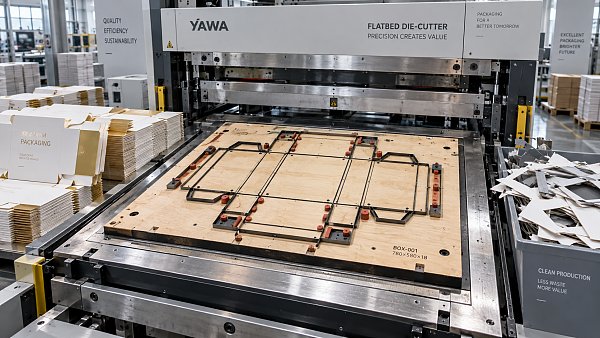
The chase frame is the working interface that holds the cutting die, counterplate arrangement, and related tooling in the die-cutting section. Its design affects how quickly a die can be installed, how reliably it stays positioned, how easily operators can access it, and how much adjustment is needed before acceptable cartons begin leaving the delivery. For plants handling frequent SKU changes, seasonal packaging, pharmaceutical cartons, premium folding boxes, or mixed short- and medium-run work, these details can materially influence conversion cost.
That is why a machine comparison based only on purchase price and maximum strokes per hour can miss an important part of the investment picture. The better question is not simply, “How fast does this die-cutter run?” It is, “How much productive time does it preserve between jobs, and what does its chase system demand from the people operating it?”
Where the Chase Frame Enters the Cost Equation
A die-cutting cycle has two very different economic phases. One is productive running time, when sheets are converted into saleable cartons. The other is non-productive time: removing the previous die, installing new tooling, setting position, making pressure adjustments, testing sheets, correcting registration, and clearing material before the machine reaches stable output.
The die cutter chase frame sits at the center of that second phase. A rigid, well-designed chase allows a prepared die to be mounted with repeatable reference points and secure clamping. A poorly matched or cumbersome arrangement can turn a nominal changeover into a longer sequence of manual corrections. The direct labor cost may be easy to see. Less visible are delayed downstream folding and gluing, idle stripping stations, missed delivery windows, added waste, and the pressure placed on supervisors trying to recover lost capacity later in the shift.
For a high-volume producer running a limited range of repeat jobs, the impact may be manageable. For a carton plant with many order changes each day, the same design difference can become a permanent operating burden. Procurement should therefore treat chase-frame performance as part of overall equipment availability, not as a simple mechanical specification.
Changeover Time Is More Than Die Installation
It is tempting to judge a chase system by asking how many minutes it takes to physically place a die in the machine. That is useful, but incomplete. The practical changeover begins when the previous job has been cleared and ends only when the new job is running at an acceptable speed with cartons meeting cutting, creasing, stripping, and registration requirements.
A chase frame affects several parts of this interval:
- Die removal and insertion: The frame opening, access path, handling method, and locking mechanism determine how safely and quickly operators can exchange tooling.
- Repeatable positioning: Consistent locating references reduce the need to move the die repeatedly to correct sheet-to-die alignment.
- Clamping stability: A die that shifts, relaxes, or is unevenly secured can create cutting variation, poor crease quality, or recurring registration checks during the run.
- Makeready adjustment: Frame rigidity and the condition of the lock-up system influence the amount of pressure balancing and test-sheet work needed before production stabilizes.
- Access for troubleshooting: Operators need practical access to fastening points, waste stripping elements, cutting rules, and counterplate areas. A technically fast system is less valuable if routine correction is awkward.
In other words, the goal is not merely a “quick-release” label. The goal is a controlled and repeatable process in which the next job starts with fewer unknowns.
Conventional Chase Systems and Quick-Change Designs
Not every plant needs the same chase-frame configuration. A conventional fixed or manually secured chase can be a sensible choice where jobs are long, die formats are relatively consistent, operators are experienced, and capital discipline is the main priority. These systems are mechanically straightforward and may suit plants where tooling changes are infrequent.
But conventional does not automatically mean low cost. If the system relies heavily on manual lock-up, hand alignment, multiple fastening points, and repeated checking, its apparent simplicity may be offset by lost production time. This becomes especially relevant when a packaging producer moves from long repeat orders to a more variable mix of retail promotions, e-commerce-ready packaging, versioned graphics, and smaller customer batches.
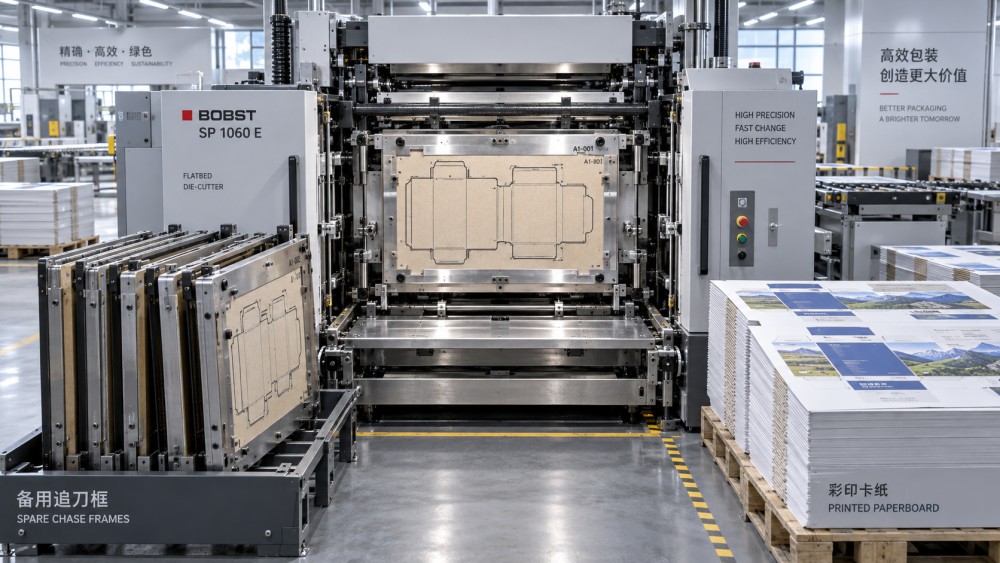
Quick-change chase frame systems are designed to reduce the handling and alignment burden. Depending on the machine architecture, they may use standardized locating points, pre-set frames, rapid locking devices, assisted insertion, or cassette-style arrangements. Their value is strongest when tooling can be prepared outside the press and installed with minimal adjustment at the machine.
Still, purchasers should be cautious about broad claims. A rapid chase exchange does not guarantee a rapid job change if stripping tools, blanking tools, feeder settings, delivery settings, or sheet registration controls still require extensive manual work. The chase frame should be evaluated as one element of an integrated changeover workflow.
A Procurement View: Questions That Expose the Real Difference
Supplier demonstrations can make any changeover look smooth when the job has been rehearsed and tooling is in perfect condition. A more useful evaluation follows the normal rhythm of the plant. Ask suppliers to explain what happens when an operator changes from one realistic carton format to another, with a different die layout, substrate, and stripping requirement.
The Hidden Link Between Frame Rigidity and Waste
Changeover time receives attention because it is measurable and immediate. Waste deserves equal attention. During makeready, sheets may be consumed while operators correct cutting depth, crease definition, stripping behavior, or die-to-sheet position. With expensive coated board, metallized substrates, specialty paper, or brand-critical printed sheets, this material loss is not trivial.
A rigid and accurately manufactured die cutter chase frame supports consistent load transfer during the cutting cycle. That does not eliminate the need for correct die preparation, packing, platen condition, or pressure settings. It does, however, create a more stable foundation for these variables. When a frame or lock-up system permits movement, distortion, or inconsistent seating, the result may be uneven cutting and more trial-and-error adjustment.
For procurement teams, the implication is clear: ask how the machine maintains chase flatness, positional accuracy, and clamping force over time—not only when new. The quality of guide surfaces, locking components, and service access matters because die-cutting machines work under repeated load. A specification sheet may list a large maximum format, but a plant needs confidence that the machine will handle its normal job mix consistently over years of operation.
Existing Tooling Can Change the Investment Decision
Many buying projects underestimate the financial effect of tooling transition. A plant may own a large library of cutting dies, stripping boards, blanking tools, chase frames, and accessories built around a particular machine format or mounting convention. If a new die-cutter requires a different frame geometry, different locating points, or a new tool standard, the investment extends beyond the press itself.
This does not mean that compatibility should always override a better machine design. Sometimes moving to a more standardized or automated chase system is justified, particularly when it supports a future production strategy centered on faster job turnover. The key is to make the conversion cost visible early. Procurement should request a compatibility assessment that classifies existing tooling into three groups: directly reusable, reusable with modification, and fully replaceable.
The same review should include the supplier’s frame options. A second chase frame may appear to be an accessory, but it can be operationally important. With multiple frames, one job can be prepared offline while another is running. Whether that produces real savings depends on workflow, staffing, die preparation space, and the availability of matching stripping or blanking tooling. It should be justified by the plant’s order profile rather than added automatically.
Do Not Isolate the Chase From the Full Changeover System
In carton converting, bottlenecks tend to move. A fast die cutter chase frame can reduce the die exchange stage, only for the plant to discover that job change time is now dominated by feeder adjustments, pull-lay settings, stripping setup, delivery configuration, or inspection approval. This is why the most reliable purchasing decisions look across the entire line of work.
For example, a plant serving pharmaceutical or cosmetics customers may place special value on registration consistency, code readability, inspection procedures, and traceability. A corrugated converter may be more concerned with board variation, large-format handling, crease performance, and rapid adaptation between shipping-case designs. A commercial printer moving into packaging may need a system that tolerates frequent artwork and substrate changes while remaining manageable for a developing operator team.
In each case, the ideal chase-frame solution is different. The frame should support the plant’s actual production pattern, not an abstract definition of speed.
How to Build a More Realistic Cost Comparison
A useful total-cost review does not need false precision. It needs disciplined assumptions. Start with the number of job changes expected per shift or per week. Then compare the likely difference in setup duration between shortlisted machines, including die handling, alignment, test-sheet production, and routine adjustments. Add the labor involved, the value of lost machine time, expected makeready waste, and any tooling conversion or spare-frame requirements.
Consider the less obvious costs as well: training time for operators, safety risks associated with manual die handling, maintenance labor for clamps and guides, and the commercial cost of an unstable schedule. A chase design that is easy for one highly experienced operator may not be equally effective across all shifts. Standardized positioning and clear setup procedures can reduce dependence on individual skill, which is increasingly important in plants facing labor turnover or difficulty recruiting experienced converting personnel.
Rather than accepting a generic return-on-investment calculation, ask each supplier to work from your job data. A sample of representative orders—short, medium, repeat, complex stripping, and difficult substrates—will reveal more than a headline speed claim.
What a Good Specification Should Include
When the buying process reaches technical specification, the die cutter chase frame should be described with more care than simply “included.” Define the maximum and minimum usable die size, frame construction, locking arrangement, die locating method, compatibility with existing tooling, number of frames supplied, and the process for changing or servicing wear components. If quick-change functionality is expected, identify what is manual, assisted, or automated.
It is also sensible to ask for documented training on die mounting, safe handling, inspection of clamping points, and troubleshooting of registration-related issues. The best mechanical design can still lose value if operating practice is inconsistent. Acceptance testing should include repeatable changeover conditions relevant to the plant, rather than only maximum-speed production of a simple sample job.
A Small Component With a Large Operational Role
The die cutter chase frame will rarely be the feature that dominates a capital-equipment presentation. Yet it has a direct influence on the daily experience of operating a flatbed die-cutter: how confidently a die is installed, how long the machine waits between orders, how much board is consumed before approval, and how predictable the shift becomes.
For buyers, that makes the frame a practical indicator of machine design maturity. Evaluate it alongside feeder performance, stripping automation, registration control, inspection capability, maintenance access, and digital job-management integration. A lower initial price can be attractive, but a system that repeatedly absorbs labor, waste, and productive capacity may prove more expensive over its working life.
The strongest choice is the one that fits the plant’s tooling base, job-change frequency, operator capability, and growth plan. When procurement examines the chase frame in that broader context, it becomes easier to compare converting equipment on the basis that matters most: reliable output at a controllable cost.
Related News
 How Flatbed Steel Rule Dies Improve Cut Accuracy and Changeover SpeedFlatbed steel rule dies improve cut accuracy, crease quality, waste release, and changeover speed. Discover practical tooling tips for reliable, efficient converting.Post-Press Kinematics Expert
 How Platen Presses Support Precise Foil Stamping and Die CuttingPlaten Presses deliver precise foil stamping, clean die cutting, and reliable creasing for premium packaging. Discover setup practices that improve quality and reduce waste.Post-Press Kinematics Expert
 How Pre-Breaking Units Reduce Cracking in Die-Cut Carton FoldsPre-Breaking Units help reduce cracking in die-cut carton folds by easing bend stress, improving fold accuracy, and supporting high-speed carton production.Post-Press Kinematics Expert
 How a High Pile Feeder Reduces Downtime in Die-CuttingHigh pile feeder solutions reduce die-cutting downtime, improve sheet supply stability, and help packaging plants increase throughput with fewer interruptions.Post-Press Kinematics Expert
 Carton Die Cutting for Folding Cartons That Reduces Setup WasteCarton die cutting for folding cartons reduces setup waste with stable registration, reliable creasing, smarter tooling, and repeatable production control.Post-Press Kinematics Expert
 How to Choose Hardened Die Cutting Knives for Longer Production RunsHardened die cutting knives for longer runs: learn how to balance hardness, edge profile, consistency, and total conversion cost for reliable results.Post-Press Kinematics Expert