How a Carton Ejector for Die Cutter Improves Blank Handling
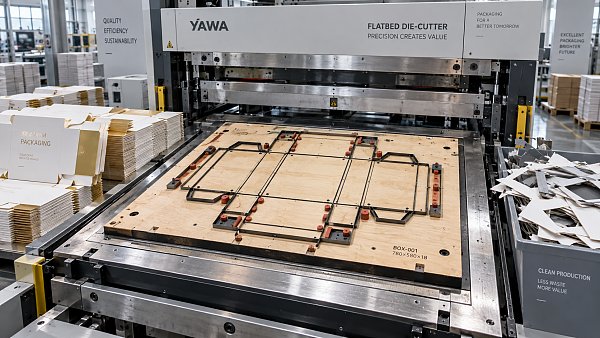
At the delivery end of a die-cutting line, the work is often judged by what happens in a few seconds: whether each carton blank leaves cleanly, remains properly oriented, and reaches the next process without interruption. A carton ejector for die cutter may look like a secondary mechanism compared with the feeder, platen, or stripping section, yet it has a direct influence on the usable output of the entire converting line.
For technical evaluators, the question is not simply whether an ejector removes blanks from a die-cutter delivery. The more meaningful questions are whether it separates difficult stock consistently, protects the die-cut profile and crease lines, matches the actual production mix, and prevents downstream accumulation. In carton converting, a delivery problem rarely stays at the delivery. It can become a folder-gluer stoppage, a quality inspection exception, a stack instability issue, or a labor-intensive sorting task.
This makes the carton ejector for die cutter an important part of blank handling automation, particularly in operations processing folding cartons, retail-ready packs, corrugated displays, and other die-cut products with variable shapes, cut-outs, windows, or lightweight substrates.
Blank Handling Is a Production-Control Issue, Not Just a Delivery Function
A die cutter creates value through accurate cutting, creasing, stripping, and repeatable registration. But those results must be transferred into an orderly stream of finished blanks. If sheets overlap incorrectly, cling together, rotate during transfer, or land in uneven stacks, the line loses the stability gained in earlier stages.
Carton blanks are not always easy to handle. Static electricity can cause lightweight printed board to adhere. Fresh ink, varnish, coatings, or humidity variations can change surface friction. Complex die-cut layouts may leave narrow bridges, delicate tabs, or asymmetrical shapes that respond unpredictably to mechanical contact. Corrugated blanks introduce a different set of concerns: board warp, flute direction, dust, and dimensional variation can all affect delivery behavior.
In a manual or lightly automated setup, operators compensate by watching the delivery closely, separating blanks, realigning stacks, and clearing jams before they become serious. This experience is valuable, but it is also difficult to scale. As run speeds rise and job changeovers become more frequent, relying on constant human correction creates a fragile process.
A well-designed carton ejector provides a controlled way to move, separate, divert, or discharge blanks after die-cutting. Depending on machine design and application, it may work with grippers, belts, vacuum-assisted handling, air blast, mechanical fingers, joggers, stack delivery elements, or coordinated conveyor sections. Its purpose is not merely to push material away. It must create a predictable handoff.
What a Carton Ejector for Die Cutter Actually Changes
The effect of an ejector becomes clearer when blank handling is examined as a sequence rather than a single event. The blank must release from the stripping or delivery area, travel without damage, maintain spacing, enter a stacking or conveying zone, and remain available for the next operation. A weakness in any one of these stages can limit overall throughput.
Cleaner separation between successive blanks
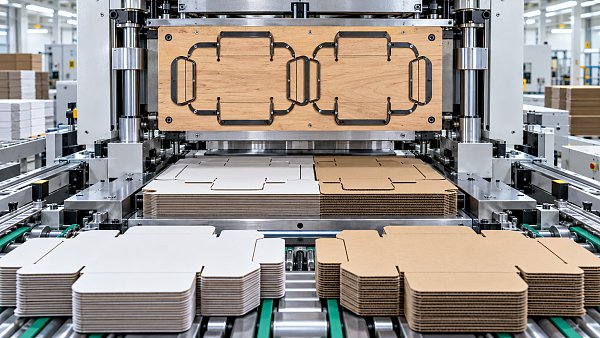
At speed, two blanks that remain in contact can behave like one unstable sheet. This may lead to doubles in a stack, skewed orientation, or intermittent downstream feeding. An ejector helps establish separation by applying controlled motion at the correct point in the delivery cycle. The objective is a consistent gap, not excessive force.
For technical teams, this distinction matters. An aggressive discharge action might solve a sticking issue while creating scuffing, edge damage, or crease disturbance. Effective ejection balances the force applied to the substrate with the blank’s stiffness, geometry, coating, and travel speed.
More reliable stack formation
Many post-press problems begin with a stack that looks acceptable from a distance but contains irregular layers. Uneven stacking affects count accuracy, bundle preparation, inspection, and feeder performance on a folder gluer or secondary converting machine. By guiding blanks into a repeatable delivery pattern, a carton ejector can reduce the random movement that causes stack edges to drift.
The benefit is especially relevant for cartons with narrow side panels, deep windows, perforations, or extensive stripping. These structures may have less rigidity than a simple rectangular blank and can be more sensitive to impact or uncontrolled drop height.
Fewer interruptions at the delivery end
Stopping a die cutter to correct an accumulating delivery is expensive beyond the immediate lost minutes. The machine must stabilize again, the operator may need to inspect the stack, and the next few sheets may require closer attention. When stoppages repeat, the nominal mechanical speed of the die cutter becomes less meaningful than its stable net output.
An ejector does not eliminate every delivery-related issue; material defects, incorrect stripping setup, and poor static control still require attention. However, it reduces the need for operators to intervene in routine blank discharge, allowing them to focus on registration, stripping performance, waste monitoring, and quality verification.
The Ejector Must Be Evaluated Alongside the Full Delivery Architecture
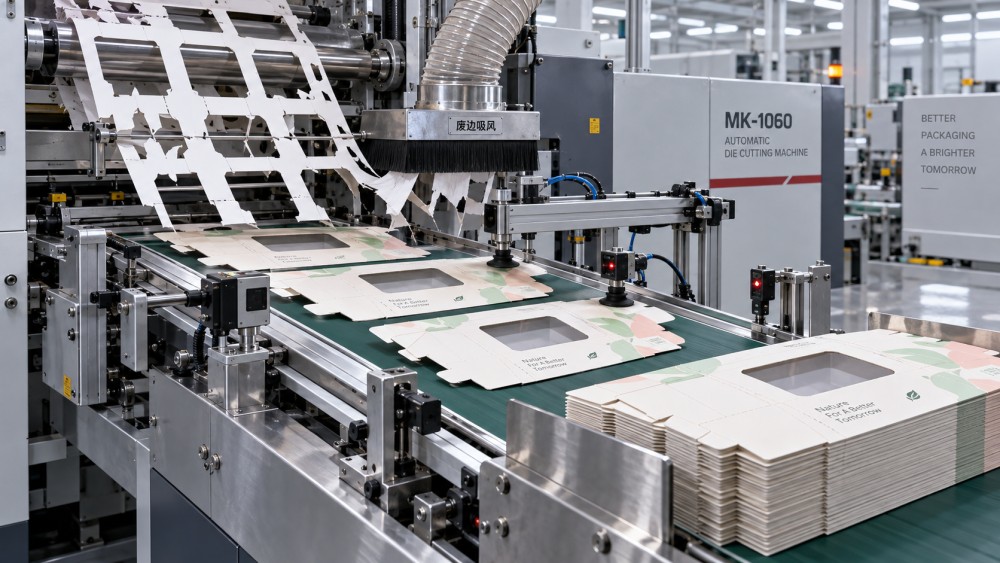
A common purchasing mistake is to assess the ejector as an isolated accessory. In practice, its performance depends on the wider system. A technically sound evaluation should examine how the ejector interacts with the delivery gripper system, deceleration path, anti-static equipment, joggers, conveyor interface, stack lift, and controls.
For example, if blanks enter the ejection zone with inconsistent timing, the ejector may appear unreliable even though the root cause lies upstream. If the stack elevator does not maintain the correct receiving height, the blanks may bounce or curl after ejection. If static is severe, mechanical separation alone may not be sufficient. The best outcome comes from coordinated material handling rather than a single forceful mechanism.
Material Behavior Should Drive the Setup Strategy
Technical evaluation is strongest when it is based on representative production materials. A carton ejector for die cutter that performs well on uncoated, rigid board may need different settings for metallized board, laminated carton stock, micro-flute corrugated sheet, or digitally printed material with variable surface properties.
Coated folding cartonboard can be vulnerable to surface marking if contact points are poorly positioned or pressure is excessive. Lightweight stock may flutter unless guided carefully. Heavy solid board requires enough positive control to prevent incomplete discharge. Corrugated blanks may need allowances for warp and changes in board stiffness caused by moisture or flute profile.
The geometry of the blank is equally important. A large central window reduces structural support. Long, narrow extensions can catch on guides. Fine perforations can weaken a panel that would otherwise tolerate normal ejection force. These are not exceptional conditions in modern packaging production; they are routine consequences of increasingly differentiated brand designs.
During trials, evaluators should request more than a clean rectangular sample. The test set should include high-coverage print, the smallest and largest practical formats, blanks with complex stripping, and stock that reflects normal variation. Watching the machine handle only ideal material can create false confidence.
Where Automation Produces the Most Practical Value
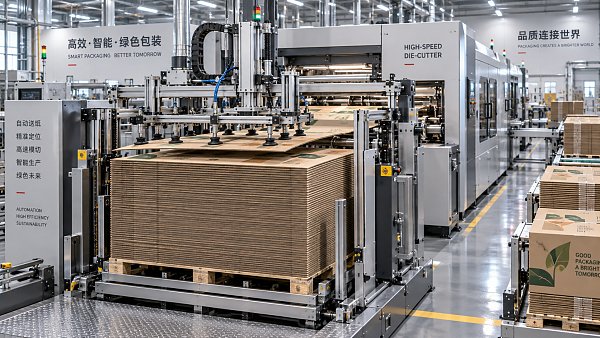
The strongest business case is often found in operations where the die cutter feeds a connected workflow. A stable blank stream supports inline or near-line inspection, automatic counting, banding, palletizing, and transfer to folder gluing. Once a plant adopts automated material movement in one area, unpredictable delivery becomes a bottleneck that is harder to tolerate.
Short-run carton production is another important case. Frequent job changes increase the pressure to achieve usable output quickly after setup. If every new design requires extended attention at the delivery section, the time saved in faster makeready elsewhere can disappear. Adjustable ejector settings, recipe-based controls, and clear repeatability from job to job can therefore be as valuable as maximum speed.
Labor availability also changes the calculation. Skilled operators bring judgment that no mechanism entirely replaces, especially when unusual materials or complex structural designs are involved. Yet a system that requires an operator to continuously catch, separate, and align blanks is using skilled labor for a task that should be mechanically stable. Automation gives operators more room to manage process quality rather than repeatedly recover from material flow problems.
Technical Risks That Should Not Be Overlooked
More automation is not automatically better blank handling. An ejector that is poorly matched to the application can introduce its own quality risks. Excessive acceleration may mark printed surfaces or crack sensitive crease areas. Incorrect guide settings can create edge scuffing. Poorly synchronized motion can produce intermittent doubles that are difficult to detect until a later process.
Maintenance deserves equal attention. Dust from board cutting and stripping can accumulate around sensors, belts, suction components, and moving guides. Worn contact parts may gradually change ejection behavior without triggering an immediate alarm. A practical maintenance plan should define cleaning intervals, inspection points, wear-part replacement criteria, and functional checks after major job changes.
Controls and diagnostics should also be reviewed. When a blank-handling fault occurs, can the operator identify whether it originated from sheet arrival, ejection timing, stack height, vacuum performance, or downstream backup? Clear fault visibility reduces recovery time and prevents trial-and-error adjustment. For integrated packaging plants, this information can also support production data analysis and preventive maintenance planning.
A Useful Acceptance Test for Technical Evaluators
Instead of judging performance by an impressive demonstration speed, establish acceptance criteria around sustained process stability. Observe whether blank separation remains consistent over a meaningful production interval. Inspect top, middle, and bottom layers of delivered stacks. Check for scuffing, edge deformation, double blanks, skew, incomplete ejection, and variation after speed changes.
It is also worthwhile to test stoppage and restart behavior. Some systems run smoothly once settled but require substantial intervention after a brief stop, a stack change, or a material splice. In real carton production, these events are unavoidable. The equipment should recover predictably without turning every interruption into a manual sorting exercise.
Where downstream equipment is available, the evaluation should extend beyond the die cutter. Feed a representative delivered stack into the next process and measure whether its behavior supports reliable operation. A carton ejector should be judged by the condition of the blanks it supplies, not only by the motion visible at the delivery station.
From Ejection to a More Stable Converting System
A carton ejector for die cutter is a relatively focused piece of handling equipment, but its value reaches across the converting line. Better separation supports cleaner stacks. Cleaner stacks reduce operator correction and improve downstream feeding. More stable feeding helps protect quality, delivery schedules, and the economic return of the die-cutting cell.
For technical evaluators, the right decision is rarely based on a single feature or headline speed. It comes from matching the ejection method to substrate behavior, carton geometry, required automation level, maintenance capability, and the machines that receive the finished blanks. When assessed in that wider context, the ejector becomes more than a discharge device: it becomes a control point for dependable carton flow.
Related News
 How Flatbed Steel Rule Dies Improve Cut Accuracy and Changeover SpeedFlatbed steel rule dies improve cut accuracy, crease quality, waste release, and changeover speed. Discover practical tooling tips for reliable, efficient converting.Post-Press Kinematics Expert
 How Platen Presses Support Precise Foil Stamping and Die CuttingPlaten Presses deliver precise foil stamping, clean die cutting, and reliable creasing for premium packaging. Discover setup practices that improve quality and reduce waste.Post-Press Kinematics Expert
 How Pre-Breaking Units Reduce Cracking in Die-Cut Carton FoldsPre-Breaking Units help reduce cracking in die-cut carton folds by easing bend stress, improving fold accuracy, and supporting high-speed carton production.Post-Press Kinematics Expert
 How a High Pile Feeder Reduces Downtime in Die-CuttingHigh pile feeder solutions reduce die-cutting downtime, improve sheet supply stability, and help packaging plants increase throughput with fewer interruptions.Post-Press Kinematics Expert
 Carton Die Cutting for Folding Cartons That Reduces Setup WasteCarton die cutting for folding cartons reduces setup waste with stable registration, reliable creasing, smarter tooling, and repeatable production control.Post-Press Kinematics Expert
 How to Choose Hardened Die Cutting Knives for Longer Production RunsHardened die cutting knives for longer runs: learn how to balance hardness, edge profile, consistency, and total conversion cost for reliable results.Post-Press Kinematics Expert